

Titanium vs Aluminum: Camp Cookware Weight Comparison
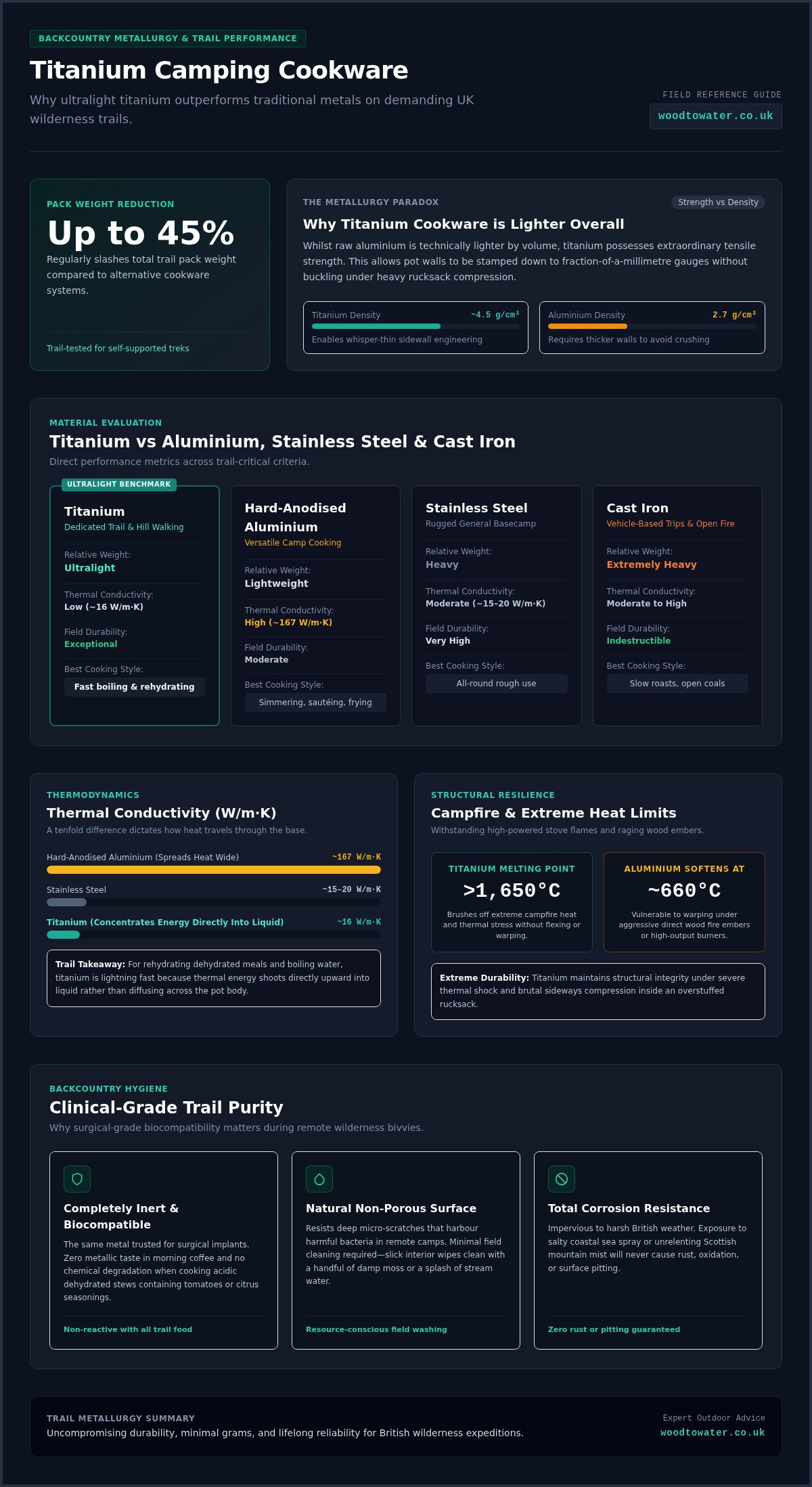
Raw aluminium is technically lighter by volume than raw titanium, yet titanium camping cookware regularly slashes trail pack weight by up to 45%. Thanks to the metal's extraordinary tensile strength, gear makers can engineer pot walls whisper-thin without sacrificing trail-tested durability; you gain an ultralight setup that survives harsh conditions without buckling.
If you have spent long days carrying excessive pack weight across rugged terrain, you know every single gram counts. Yet nobody enjoys scraping scorched food from a thin pot base or enduring the irritating rattle of an awkward, mismatched cookset inside their rucksack.
You don't have to compromise between saving ounces and enjoying a decent meal at camp. In this guide, you will discover how titanium camping cookware performs on the trail, compares to other metals, and streamlines your lightweight pack. We will break down the exact weight and durability benefits, explore simple simmering techniques to prevent burnt dinners, and help you select the ideal nested pot and stove combination for your kit.
Key Takeaways
- Discover why titanium camping cookware offers an unbeatable strength-to-weight ratio whilst remaining completely non-reactive to acidic trail food.
- Compare the thermal performance and pack weight of titanium against aluminium and stainless steel to match your backcountry cooking style.
- Master practical flame control and simmering techniques to prevent hot spots and stop dehydrated meals from scorching.
- Identify your ideal pot capacity and folding handle configuration to build an efficient, rattle-free nested cook kit.
- Learn how benchmark designs like TOAKS Titanium Cookware streamline your lightweight kitchen setup for challenging British conditions.
Why Titanium Camping Cookware Rules the Ultralight Trail
Every long-distance trek eventually turns into a battle against pack weight. When you are traversing high ridges in driving drizzle, your kit needs to be uncompromisingly light and tough. While traditional campsite setups often lean towards robust options like cast iron cookware for vehicle-based trips, moving fast under your own steam demands a completely different design philosophy. This is precisely why dedicated hill walkers rely on titanium camping cookware for self-supported wilderness treks.
The Strength-to-Weight Advantage for Hikers
The core secret lies in metallurgy. Raw titanium has a density of roughly 4.5g/cm³ compared to aluminium's 2.7g/cm³. Yet titanium pots regularly emerge lighter overall. Why? Exceptional tensile strength allows manufacturers to stamp sidewalls down to fraction-of-a-millimetre gauges without compromising integrity. An aluminium pot engineered that thin would buckle under moderate thumb pressure.
These unique properties of titanium let you crush steep ascents without carrying dead metal weight. A featherweight titanium pot easily withstands the brutal sideways compression of an overstuffed rucksack. To balance your load effectively alongside your cook system, cross-check your entire setup with The Ultimate Hiking Gear Checklist for UK Trails in 2026.
Material Purity and Trail Hygiene
Beyond grams saved, titanium delivers clinical-grade purity in the field. It is completely inert and biocompatible; surgical implants rely on the very same metal. It won't leach unpleasant metallic notes into your morning coffee, nor will it degrade when exposed to acidic dehydrated stews containing tomatoes or citrus seasonings.
Field maintenance is remarkably straightforward:
- Natural non-porous surface: Resists deep scratches that harbour harmful bacteria in remote camps.
- Resource-conscious cleaning: A handful of damp moss or a splash of sterilised stream water cleans the slick interior cleanly.
- Total corrosion resistance: Exposure to salty sea spray or unrelenting Scottish mountain mist will never cause rust or surface pitting.
Titanium camping cookware effortlessly bridges the gap between pure minimalism and trail reliability, giving you a bombproof cook pot that lasts a lifetime of rough bivvies.
Titanium vs Aluminium, Stainless Steel, and Cast Iron Cookware
Choosing the right camp cookware comes down to your destination and menu. While expedition hikers obsess over base weight, car campers prioritise steady heat retention. Heavier materials have their place; vehicle-based adventurers often prefer robust cast iron cookware because thick iron walls retain heat beautifully for campfire stews. On foot, however, your priorities shift entirely.
| Material | Relative Weight | Thermal Conductivity | Field Durability | Best Cooking Style |
|---|---|---|---|---|
| Titanium | Ultralight | Low (~16 W/m·K) | Exceptional | Fast boiling, rehydrating |
| Hard-Anodised Aluminium | Lightweight | High (~167 W/m·K) | Moderate | Simmering, sautéing, frying |
| Stainless Steel | Heavy | Moderate (~15–20 W/m·K) | Very High | All-round rough use |
| Cast Iron | Extremely Heavy | Moderate to High | Indestructible | Slow roasts, open coals |
Thermal Conductivity and Heat Distribution
Thermal performance sets these metals apart. Aluminium boasts a thermal conductivity of around 167 W/m·K, spreading heat evenly across the base. Titanium sits closer to 16 W/m·K. That tenfold difference means titanium concentrates energy directly above the burner head.
For boiling water to rehydrate meals, titanium camping cookware is lightning fast; heat shoots straight into the liquid. But if you fancy frying fresh trail pancakes, aluminium distributes heat better to prevent scorching.
Durability Under Rugged Campfire and Stove Use
Where titanium truly shines is sheer resilience. Aluminium softens around 660°C, meaning high-powered flames or raging wood fires can warp it. Titanium melts above 1,650°C, brushing off extreme thermal stress without flexing.
Campfire embers will bake black carbon soot onto titanium's exterior, yet its underlying structural integrity stays rock solid. Thanks to the metal's naturally excellent corrosion-resistance, you won't suffer rust or pitting, even when packing damp gear alongside sharp tent pegs. If you want to streamline your trail kitchen with rugged, field-ready pots, explore the lightweight options at woodtowater.co.uk to suit your next route.
How to Cook Effectively with Titanium Pots Without Burning Food
A scorched ring of charred meal in the centre of a pot is a classic bushcraft rite of passage. Because titanium transfers heat right where the burner hits, cooking thick meals can feel treacherous. Yet with a few simple technique adjustments, you can prepare satisfying camp meals in titanium camping cookware without ever having to scrub burnt pasta off the base.
Mastering Burner Control and Simmering
Most compact canister burners concentrate a blowtorch-like flame into a narrow circle. Dialling back output is vital. Pairing your pot with sensitive, micro-regulated camping gas stoves lets you maintain a steady, whisper-low simmer rather than an aggressive blaze. If your stove lacks fine valve control, a lightweight mesh flame diffuser placed over the burner head will disperse thermal energy across the pot base.
Material science explains why these manual adjustments matter; studying how to cook effectively with titanium reveals that keeping food constantly moving prevents energy from stagnating in one spot. For deep insights on matching burner heads with narrow pots, explore our Best Camping Stoves: Professional Guide to Camp Cooking.
Optimal Meal Styles for Titanium Pots
Titanium thrives on liquid-based cuisine. Dehydrated trail meals, ramen, broths, and couscous are ideal pairings because circulating water disperses heat naturally throughout the pot. Dense foods like thick oats or cheesy risottos require constant, vigilant stirring.
The smartest trail culinary trick is the boil-and-soak method:
- Bring to a rolling boil: Heat your water and ingredients with the titanium lid firmly secured to trap rising steam and build core heat rapidly.
- Cut the flame early: Turn off the gas the moment boiling occurs; this immediately eliminates the risk of scorching.
- Insulate and wait: Slip the closed pot into an insulated cozy or wrap it inside a spare woolly hat for ten minutes to let trapped thermal energy finish cooking the meal.
Pack a tiny, flexible silicone spatula in your kit. It scrapes every morsel from the corners cleanly, saving precious washing water and protecting your titanium camping cookware from unnecessary abrasions.
Key Features to Look For in a Titanium Cookset
Selecting the right titanium pot requires looking past pure weight figures. Practical trail ergonomics, pack dimensions, and clean nesting architecture will dictate how smoothly your camp kitchen functions after a punishing day in the hills. Dialling in these specific features transforms basic titanium camping cookware into a silent, streamlined cook system.
Pot Capacity and Nesting Architecture
Match your pot volume directly to your trail routine. A minimalist 550ml mug works well if you only heat water for single brews, while a generous 1100ml to 1600ml pot suits duos melting snow or cooking shared rations. For the solo hiker, a 750ml pot hits the ultimate sweet spot.
A classic 750ml profile swallows a standard 100g gas canister, an ultralight canister burner, and a compact piezo lighter with room to spare. Avoid frustrating metal clatter inside your rucksack on rocky descents; wrap your canister in a small microfibre cloth before stowing it. This trick silences trail rattles entirely and doubles as an absorbent camp towel for cleaning condensation off your shelter.
Lid Functionality and Handle Configurations
Lid and handle details make a massive difference when operating in cold, wet weather:
- Vented strainer lids: Integrated steam perforations allow smooth steam release and let you drain pasta cooking water without losing dinner in the dirt.
- Internal volume markings: Embossed millilitre and fluid ounce gradations eliminate guesswork when measuring exact rehydration ratios.
- Folding wire vs bail handles: Butterfly handles fold tight against curved walls for compact packing, whereas an arched bail handle allows secure suspension over open campfire embers.
- Silicone heat grips: Removable silicone tubing over wire handles protects cold fingers against conductive burns without adding noticeable weight.
Complementary Titanium Tableware and Cutlery
Keep your dining system equally purposeful. Eating dehydrated meals directly from deep pouches demands a long-handled polished titanium spork to keep greasy knuckle stains off your hands. While true minimalists drink tea directly from their solo cookpot, packing an ultralight companion mug lets you nurse hot coffee whilst rehydrating breakfast.
When cooking multi-course rations or dividing portions between two hikers, add ultra-tough camping plates to keep wild camps tidy and organised. Ready to upgrade your lightweight kit? Browse our curated outdoor cooksets at Wood To Water to configure your ideal rattle-free setup.
Building Your Lightweight Camp Kitchen with Wood To Water
Assembling a reliable backcountry kitchen means choosing gear engineered by people who actually spend their nights under canvas. At Wood To Water, we test kit against the grim reality of driving UK rain, boggy moors, and freezing ridge tops. When shaving grams without sacrificing field resilience is your top priority, TOAKS Titanium Cookware stands out as the industry benchmark for lightweight performance.
Selecting the Right TOAKS Cook System
Finding your ideal setup hinges on how you hike. The TOAKS 750ml pot remains the uncontested gold standard for solo wild camping; it houses your entire brew kit seamlessly whilst keeping pack weight down to mere grams. If you travel as a pair or prefer open-fire cooking, a larger 1100ml pot with an overhead bail handle provides the extra volume needed for melting snow and heating two hearty portions at once.
Every piece of TOAKS titanium camping cookware features precision-machined tolerances, folding handles that stay rigid during pours, and exceptionally thin walls. For a deeper breakdown of how this brand reshaped lightweight expeditions, read our full guide on Why TOAKS Titanium Cookware is the Choice for Ultralight Hikers in 2026.
Care, Cleaning, and Removing Rainbow Discoloration
After your first intense cook over a canister burner or wood embers, you will notice vibrant purple, blue, and gold swirls bloom across the base. This thin oxide layer is completely natural. It forms when raw titanium meets intense heat; it does not weaken the metal or alter the flavour of your food.
To preserve your gear for years of hard use, follow these straightforward care rules:
- Use natural abrasives: Scour away stubborn carbon soot from campfires using cold water and a pinch of fine wood ash from your fire pit.
- Avoid bleach: Never soak titanium in harsh chlorine bleaches or caustic oven cleaners, as these chemicals attack the protective oxide film and pit the surface.
- Air dry fully: Let your pot dry completely before nesting fuel canisters inside to prevent trapped moisture from rusting steel canister bases.
Final Preparations for the British Wilderness
Never test unfamiliar kit for the first time in a mountain gale. Fire up your burner at home, test your nesting order, and verify how quickly your pot reaches a rolling boil. On exposed fells, pair your cookset with a lightweight folding foil windshield to stop gusts robbing your stove of heat and wasting expensive gas canisters.
Equipping yourself with dependable, trail-tested hardware takes the hassle out of wilderness cooking. When you are ready to trim your base weight and hit the hills, explore lightweight camping gear at Wood To Water to secure your next adventure kit.
Streamline Your Pack for the Miles Ahead
Trimming excess grams transforms how you experience the trail. Investing in titanium camping cookware delivers an unbeatable strength-to-weight balance, resisting rucksack crush damage whilst ensuring pure-tasting meals in all weather. Once you master gentle flame control and the boil-and-soak method, scorched pots become a thing of the past.
Building a dependable camp kitchen means trusting gear tested for arduous British hiking conditions. As authorised stockists of proven outdoor brands including TOAKS and Jetboil, Wood To Water curates field-ready hardware designed to withstand demanding terrain. Our dedicated UK-based customer support team provides prompt dispatch nationwide, making it simple to dial in your kit before the weekend arrives.
Take the dead weight off your shoulders and focus on the summit ahead. Upgrade your trail kitchen with titanium cookware at Wood To Water and enjoy warm, effortless meals on your next wilderness adventure.
Frequently Asked Questions
Is titanium camping cookware safe to cook with over open flames?
Yes, titanium camping cookware is completely safe to use over open flames and glowing campfire coals. With a melting threshold well above 1,600°C, titanium easily withstands heat that would soften or warp aluminium alloys. Wood fires will leave black carbon soot on the exterior, but the structural integrity remains uncompromised. Just ensure you remove any silicone handle sleeves beforehand, as direct flames will melt protective rubber coatings.
Why does food stick and burn so easily in titanium pots?
Food burns easily because titanium has low thermal conductivity, concentrating intense heat directly above your stove burner rather than dispersing it across the base. This creates localised hot spots where thick food adheres and scorches rapidly. Cooking without sufficient liquid or neglecting to stir constantly will quickly char your ingredients. You can prevent sticking by using micro-regulated burners on their lowest simmer setting or by prioritising water-rich meals.
How do I clean burnt food from the bottom of a titanium camping pot?
To clean scorched food without damaging the metal, simmer a few centimetres of water with a spoonful of baking soda or fine wood ash to soften the char. Let the warm mixture soak for ten minutes, then gently scrape the residue loose using a silicone scraper or wooden spoon. Avoid harsh wire scouring pads or caustic bleaches, as these can pit the metal surface and ruin the finish.
Can you boil water faster in titanium compared to aluminium cookware?
Boiling times between the two metals are remarkably close, but aluminium often edges ahead slightly because it conducts heat roughly ten times faster. However, because titanium camping cookware features extremely thin sidewalls, thermal energy transfers directly into the liquid with minimal resistance. In real-world trail conditions with a fitted lid and windscreen, a thin titanium pot boils half a litre of water within three to four minutes.
What size titanium pot is best for solo hiking in the UK?
A 750ml pot is the undisputed sweet spot for solo wilderness trekking across the UK. This capacity provides ample volume to boil water for a generous dehydrated pouch meal and a hot brew in a single boil. Crucially, a 750ml vessel offers the ideal internal dimensions to nest a standard 100g gas canister, a folding micro-stove, and a mini lighter, keeping your kitchen compact and rattle-free.
Why does my titanium cookware develop blue and purple rainbow colours?
Rainbow hues appear naturally when titanium is exposed to intense heat, triggering a harmless process known as thermal oxidation. As the metal heats up above high-output burners, its microscopic oxide surface layer thickens and refracts light into vivid shades of purple, blue, and gold. This colouring is entirely aesthetic; it does not degrade structural strength, produce toxic fumes, or alter the pure flavour of your trail food.
Is it worth buying a titanium frying pan for camping?
Generally, no, unless you strictly intend to warm pre-cooked rations or rehydrate simple liquid dishes. Due to poor heat distribution, bare titanium creates intense hot spots that will scorch eggs, meats, or pancakes almost instantly. If your trail cooking involves gourmet frying and delicate sautéing, a hard-anodised aluminium pan is far more practical. Titanium performs best when treated as a dedicated boil-and-simmer pot.
Can you nest a standard gas canister inside a 750ml titanium pot?
Yes, a standard 100g isobutane gas canister nests comfortably inside a 750ml titanium pot alongside a compact folding stove. Most outdoor cookware brands engineer their 750ml diameters specifically around standard canister dimensions. For the smoothest fit, place your micro-burner at the bottom, slip the canister on top, and tuck a mini lighter into the remaining gap. Wrapping the canister in a thin cloth stops scratches and silences pack rattle.