

Best Camping Stoves: Professional Guide to Camp Cooking
The most powerful camping stove in your kit isn't necessarily the one with the highest output; it's the one that actually lights when you're shivering on a wind-swept ridge. We've all experienced the frustration of gear failing in high winds or feeling the literal weight of an over-packed rucksack during a long-distance trek. It's easy to feel overwhelmed by a confusing array of fuel types and rising costs, especially when you just want a reliable hot meal before the light fades.
We've personally vetted the top performers to help you discover the ideal camping stove for your next adventure, whether you're looking for ultralight titanium wood burners from TOAKS or high-speed integrated systems like the Jetboil Flash. You'll learn how to achieve faster boil times whilst keeping your pack weight to an absolute minimum. We'll preview the latest 2026 performance standards and provide a clear path to a reliable, four-season cooking setup that is easy to maintain and won't let you down when it matters most.
Key Takeaways
- Learn how to select the right fuel type for your specific environment, ensuring your burner performs reliably whilst keeping weight under control.
- Discover how integrated systems like the Jetboil Flash use heat-exchange technology to provide rapid boil times for efficient trail meals.
- Explore the benefits of titanium wood burners for an immersive bushcraft experience that helps you organise a truly ultralight pack.
- Find your ideal camping stove by using our professional framework to balance weight, stability, and group cooking requirements.
- Master essential maintenance tips and the use of accessories like windshields to maximise fuel efficiency and gear longevity in any weather.
Understanding Camping Stove Fuel Types: Gas, Liquid, and Solid
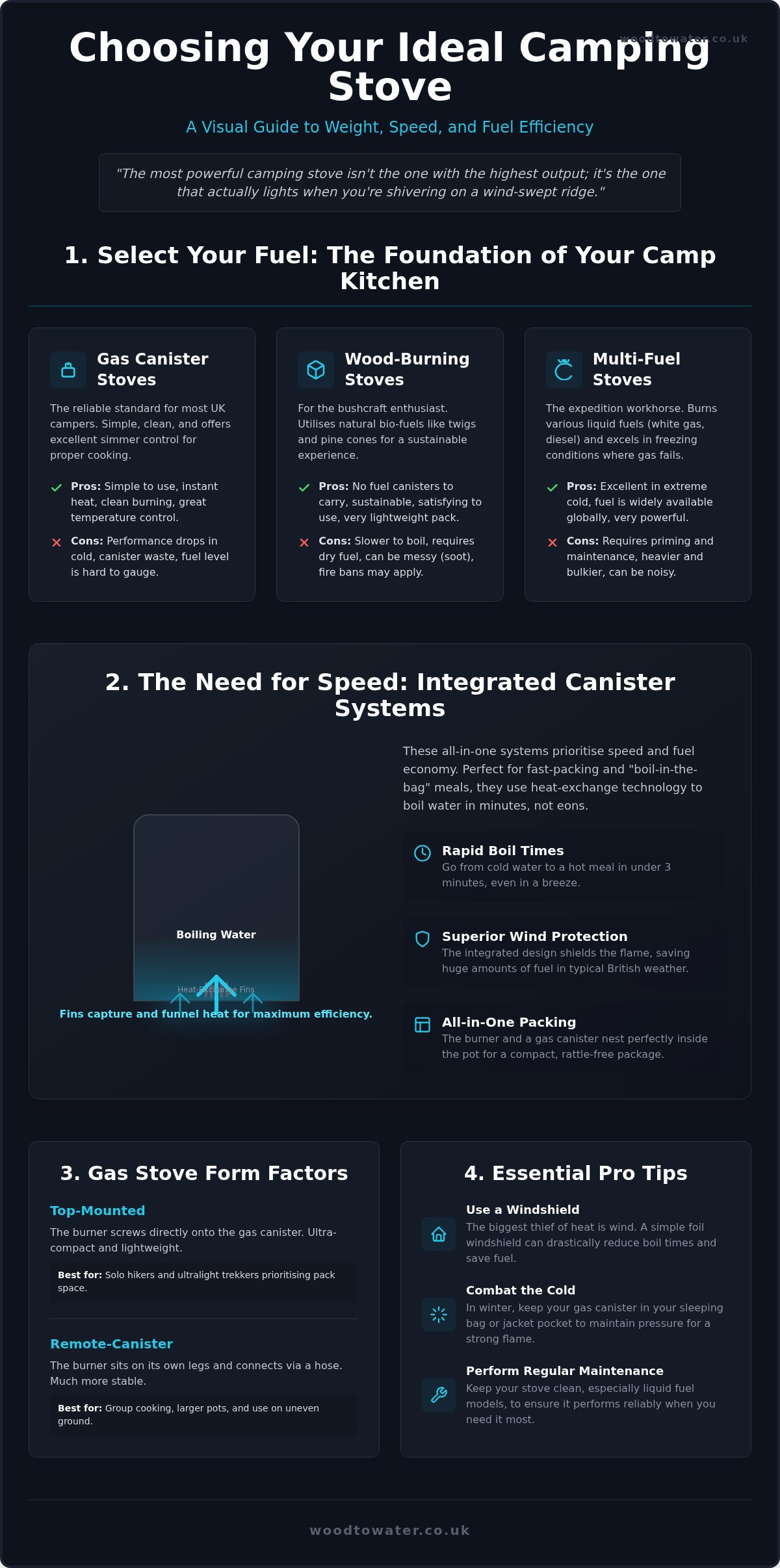
Choosing a camping stove starts with the fuel. In the UK, we generally categorise systems into three groups: gas, liquid, and solid bio-fuels like wood or pellets. Looking back at the history of portable stoves, we've moved from heavy kerosene burners to the refined, lightweight systems we use today. Your choice depends on where you're going and what you're eating. If you're planning a long-distance trek on remote wilderness routes, fuel availability is your biggest concern. You don't want to carry weeks of gas if you can't restock at a local shop along the way.
Gas Canister Stoves: The Reliable Standard
For most of us, camping gas stoves are the default choice for a reason. They're incredibly simple to use. Most modern models use the EN417 screw-on canister, which is the standard across the UK. You just screw the burner on, turn the valve, and click your igniter. It's instant heat without the mess.
You'll usually choose between two styles:
- Top-mounted: These sit directly on the canister. They're tiny and light, perfect for solo hikers who prioritise pack space.
- Remote-canister: The burner sits on its own legs and connects to the gas via a hose. These are far more stable on uneven ground and safer for larger pots.
One huge advantage of gas is simmer control. Unlike older liquid fuels that are often "all or nothing", a decent gas valve lets you cook a proper meal without burning the bottom of your pan. It makes the difference between a charred mess and a perfect outdoor dinner.
Wood-Burning and Multi-Fuel Alternatives
If you prefer a slower pace or want to embrace "Leave No Trace" principles, the Bushbox Essentials range offers a fantastic alternative. These stoves burn twigs and pine cones found on the forest floor. It's a sustainable way to cook that completely eliminates the need to carry heavy, half-empty metal canisters in your rucksack. It's a satisfying way to connect with your surroundings whilst keeping your pack weight down.
For extreme expeditions where gas canisters aren't sold, multi-fuel stoves are the workhorses. They can burn almost anything from white gas to diesel. Whilst they require more maintenance and a bit of faff to prime, their reliability in freezing conditions is unmatched. Whether you want the speed of gas or the self-sufficiency of wood, picking the right fuel for your camping stove is the first step to a successful camp kitchen.
Integrated Canister Systems: Speed and Efficiency on the Trail
Integrated systems are the high-performance choice for the modern trail. They prioritise speed and fuel economy above all else. The secret lies in the heat-exchange fins welded to the base of the pot. These fins capture heat that would otherwise escape around the sides, funnelling it directly into your meal. This efficiency means you carry less fuel. For a three-day trek, the weight savings are significant. You won't just boil water faster; you'll use significantly less gas than a standard camping stove.
These systems are perfect for "boil-in-the-bag" meals like 5 Minutes to Delhi. When you're cold and tired on an exposed fell, waiting ten minutes for dinner feels like an eternity. With an integrated burner, you're usually eating in three. The design also offers superior wind protection. In the UK, wind is the biggest thief of heat. Because the burner is shielded by the pot base, it remains remarkably efficient even in a stiff breeze. Everything also packs down into a single unit, with the burner and gas canister fitting neatly inside the pot.
Why Integrated Systems Win for Fast-Packing
When you're looking at how to choose a backpacking stove, the total system weight is key. The Jetboil Trailcook 1.2L serves as a fantastic benchmark for solo hikers. It is an all-in-one solution where the components nestle inside the main cooking vessel. This eliminates kit clutter and saves precious space in your rucksack. It is a streamlined approach that lets you focus on the hike rather than rummaging for loose components in the bottom of your bag.
Managing Performance in Cold UK Weather
UK winters present a challenge for gas systems. As temperatures drop toward freezing, the pressure inside the canister falls. This leads to a weak, sputtering flame. To combat this, some high-end models feature pressure-regulated valves. These maintain a consistent flow of fuel regardless of how much gas is left or how cold it is outside. If you don't have a regulator, try keeping your canister in your sleeping bag overnight or inside your jacket before cooking. A warm canister always performs better. For those planning a winter expedition, investing in a regulated camping stove ensures reliability when the frost hits. You can explore our full range of integrated cooking systems to find the perfect match for your next peak.
The Bushcraft Approach: Titanium Wood Stoves and Bio-Fuel
Whilst integrated gas systems focus on pure speed, the bushcraft approach celebrates the process. Using a wood-burning camping stove turns mealtime into a mindful ritual. You aren't just clicking a button; you're engaging with your environment by gathering fuel from the forest floor. This method is ideal for those who want to organise an ultralight pack without the burden of metal gas canisters. It's about self-sufficiency and a deeper connection to the outdoors.
Efficiency in these stoves comes from the "chimney effect". This design draws cold air in through the base, feeding oxygen to the fire and forcing heat upwards through a narrow chamber. This allows you to reach high temperatures using only a handful of dry twigs or pine cones. However, wild campers must remain ethical. Always follow "Leave No Trace" principles by foraging only dead, fallen wood and ensuring your stove is used on a fire-safe surface to protect the ground beneath. In the UK, checking local bylaws is essential, especially in protected areas where foraging rules may vary.
Titanium Wood Stoves for Ultralight Adventures
Titanium is the gold standard for minimalist hikers. It offers a strength-to-weight ratio that stainless steel simply cannot match. When every gram counts on a multi-day trek, switching to a titanium camping stove can shave significant weight from your base load. It's also remarkably resistant to corrosion. In the damp UK climate, gear often stays wet for days; titanium won't rust or degrade, ensuring your kit lasts for years of hard use. Pairing these stoves with TOAKS Titanium Cookware creates a cohesive, featherweight kitchen that performs in all conditions.
Bushbox Essentials: Modular Design and Versatility
The Bushbox Essentials range is a masterclass in functional design. These stoves feature a clever flat-pack or folding mechanism, allowing them to slide into a side pocket of your rucksack without taking up any internal volume. Their modular nature is their greatest strength. You can use them as a traditional wood burner, or swap in a Trangia spirit burner or charcoal for more controlled heat. The chimney effect is defined as the process where rising hot air creates a vacuum that pulls fresh oxygen into the fire, allowing for a clean, intense burn with minimal fuel. This versatility makes them a reliable companion for everything from local woodland overnights to serious wilderness expeditions.
Choosing Your Stove: Weight, Boil Time, and Stability
Selecting the right camping stove involves a careful balance between group size, trip duration, and your intended menu. If you're a solo hiker on a weekend blast, a tiny 70g burner might suffice. However, for a group of four on a week-long trek, you'll need a burner with a wider flame spread and a stable base for larger pots. Simmer control is equally vital if you plan on cooking fresh ingredients rather than simply rehydrating meals. Without a fine-tuned valve, you'll likely burn your dinner. You should also calculate your fuel needs to avoid carrying dead weight. A standard 100g canister typically yields around 10 to 12 litres of boiled water. Knowing your specific boils per canister helps you pack exactly what you need.
The diameter of the pot supports is another often-overlooked factor. Tiny burners are excellent for narrow mugs, but they lack the reach to safely hold a 2-litre pot or a frying pan. If your pot overhangs the supports significantly, the setup becomes dangerously unstable. Always match your stove's physical footprint to the size of the cookware you intend to use.
Stability and Safety on Uneven Ground
Top-mounted stoves sit high and can be prone to tipping. Remote canister stoves sit much lower to the ground, which provides far better stability for heavy pots. If you prefer a top-mounted model, always use a canister stabiliser; these folding tripods are essential for preventing spills on the uneven terrain of a typical campsite. Safety is also a major concern when cooking near camping tarps or under a tent porch. Never cook in a fully enclosed space because of the risk of carbon monoxide poisoning. Always maintain a clear metre of space around your flame to avoid melting your shelter or damaging your expensive kit.
Weight vs Performance: Finding the Balance
The lightest stove on the shelf isn't always the best performer in the field. On a wind-whipped summit or an exposed plateau, a tiny minimalist burner might struggle to boil water at all, wasting precious gas in the process. A slightly heavier integrated system often saves weight over a long trip because it uses fuel so much more efficiently. This is a vital lesson for those on the Duke of Edinburgh programme. Reliability and ease of use should always come before ultra-minimalist gear. You don't want to be faffing with a finicky setup when you're exhausted and the rain is closing in. You can browse our expert-curated selection of camping gas stoves to find a reliable partner for your next adventure.
Essential Cooking Accessories and Stove Maintenance
A high-performance camping stove is only half the battle. To get the best from your kit, you need a curated selection of accessories that support your cooking style. We always advocate a "buy once, cry once" philosophy. Investing in premium gear from the start saves you money and frustration in the long run. Don't forget a reliable ignition source; always carry a backup like a ferrocerium rod or waterproof matches, even if your burner has a built-in piezo igniter that works perfectly at home.
Selecting the right camping plates and cutlery is about more than just aesthetics. For integrated systems, long-handled spoons are essential for reaching the bottom of deep pots without getting your knuckles covered in food. If you're using titanium cookware, pair it with plastic or silicone utensils to avoid the unpleasant scratching sound of metal on metal. These small choices make a huge difference to your comfort at the end of a long day on the trail.
Protecting Your Stove: Windshields and Cases
Wind is the ultimate efficiency killer in the UK outdoors. Even a light breeze can double your boil time and fuel consumption by stripping heat away from the pot before it can do its job. A simple folding windshield creates a micro-climate around your burner, ensuring every gram of gas goes toward heating your water. For those looking for reliable additions to their kit, Fire-Maple gear offers excellent, durable accessories that provide professional-level performance without a massive price tag.
Protection during transit is also vital for gear longevity. Hard cases prevent delicate burner heads or folding pot supports from being crushed or bent in your rucksack. If your stove didn't come with one, a small padded pouch or even a repurposed plastic container can protect the moving parts from dirt and grit. It's a simple step that keeps your equipment in top condition for years.
Long-Term Maintenance for Your Cooking Kit
Reliability comes from regular care. For wood-burning stoves, carbon deposits and sticky soot will build up on the walls over time. Use a soft brush or a damp cloth to wipe these down after each trip to prevent them from transferring to the rest of your gear inside your bag. If you notice a weak or yellow flame on your gas burner, you might have a clogged jet. You can often clear this in the field by using a tiny jet-cleaning tool or a thin wire to gently remove debris from the nozzle.
When the season ends, store your stove in a dry, room-temperature environment to prevent any moisture from causing corrosion. Remove gas canisters and check the valve threads for any signs of wear. A quick inspection now ensures your camping stove is ready to go the moment the next adventure calls. Proper maintenance isn't just about cleanliness; it's about knowing your gear won't let you down when you're miles from the nearest shop.
Equip Your Next Outdoor Kitchen
Finding the right camping stove is about matching your fuel strategy to your environment. Whether you prioritise the rapid boil times of a Jetboil system or the sustainable, immersive experience of a Bushbox wood burner, your choice defines how you experience the trail. We've explored how stability on uneven ground and a commitment to regular maintenance are what keep your gear reliable for years of hard use in the wild.
At Wood To Water Outdoors, we only stock expert-tested gear that's built for the realities of UK conditions. We're an authorised dealer for industry leaders like Jetboil and Bushbox, meaning every item in our inventory has been vetted for performance. We also offer free UK delivery on qualifying orders to help you get your kit ready for the next peak. Browse our curated range of high-performance camping stoves and start planning your next great escape with confidence.
Whatever trail you choose, having a reliable way to cook a hot meal makes every adventure better. We'll see you out there.
Frequently Asked Questions
Which camping stove is best for wild camping in the UK?
The best camping stove for UK wild camping is one that balances weight with wind resistance. Integrated systems like the Jetboil Flash are popular for their speed on exposed ridges. If you prioritise a minimalist setup, a titanium wood burner or a tiny screw-on gas burner is ideal. These options keep your pack weight low whilst ensuring you have a reliable heat source for the damp, unpredictable conditions of the British fells.
Can I use a camping stove inside my tent or porch?
You should never use a camping stove inside a fully enclosed tent. The risk of carbon monoxide poisoning is invisible and deadly; additionally, the fire hazard is extreme with synthetic fabrics. If you must cook in the porch during heavy rain, ensure the door is wide open for ventilation. Maintain a clear one-metre distance from all materials and keep the stove on a stable, fire-safe surface to prevent accidental tipping.
How long does a 230g gas canister typically last?
A standard 230g gas canister usually lasts between 60 and 90 minutes of total burn time. In practical terms, this equates to boiling approximately 12 to 15 litres of water depending on your stove's efficiency and the ambient temperature. Wind significantly reduces this lifespan. If you use a high-efficiency system like the Jetboil Flash, you will likely get more boils per canister than with a basic, unshielded screw-on burner.
Are wood-burning camping stoves legal to use in the UK?
Wood-burning stoves are legal in the UK, but their use depends on local land permissions. In Scotland, they are generally accepted for wild camping under the Outdoor Access Code if you follow Leave No Trace principles. In England and Wales, you technically need the landowner's permission. Many Forestry England campsites now permit them in designated areas; however, you must always check for temporary fire bans during dry spells to prevent wildfires.
What is the difference between a butane and propane mix?
The main difference is performance in cold weather. Propane has a much lower boiling point, meaning it stays as a gas and continues to flow even in freezing conditions. Butane is less effective below 5°C. Most UK gas canisters use a mix of both, often including isobutane, to provide a reliable camping stove experience throughout all four seasons. This blend ensures your burner stays lit even when the frost hits your campsite.
Which stove is best for the Duke of Edinburgh (DofE) Award?
For the Duke of Edinburgh Award, stability and ease of use are the top priorities. Integrated canister systems are often recommended because they're difficult to knock over and simple to light. These all-in-one designs reduce the risk of losing small parts in the grass. We've vetted many systems and find that reliability is more important than pure weight for DofE groups who need a hot meal after a long day.
How do I stop my camping stove from blowing out in the wind?
Using a dedicated windshield is the most effective way to protect your flame. Even a light breeze can double your boil time and waste precious fuel. If you don't have a windshield, try to position your stove behind a natural barrier like a rock or a rucksack. Choosing a low-profile remote canister stove also helps; these sit closer to the ground where the wind is naturally less intense than on a tall canister.
Is titanium worth the extra cost for a camping stove?
Titanium is definitely worth the investment for long-distance hikers and bushcraft enthusiasts who value an ultralight pack. It is significantly lighter than stainless steel but offers superior strength and corrosion resistance. A titanium camping stove won't rust even if it stays damp in your bag for days. Whilst the initial cost is higher, the durability and weight savings make it a "buy once, cry once" piece of essential kit.
