

The Ultimate Hiking Gear Checklist for UK Trails in 2026
The most dangerous item in your rucksack isn't a blunt knife or a dead phone; it's often that heavy cotton hoodie that refuses to dry. We've all been there, shivering on a windswept ridge whilst the mist rolls in, wondering why our pack feels like it's filled with lead. It's easy to feel overwhelmed by technical jargon like hydrostatic head or wicking, but choosing the right hiking gear shouldn't feel like a chore.
We agree that the British weather is a beast of its own, often delivering four seasons in a single afternoon. This guide promises to help you master the hills with a comprehensive, trail-tested checklist designed to keep you dry, safe, and comfortable in any conditions. You'll gain the confidence to pack light without sacrificing your safety or warmth.
We'll explore the essential "British Layering System" to manage moisture, highlight lightweight must-haves like TOAKS titanium cookware, and cover the latest safety tech for 2026. Whether you're planning a local stroll or a multi-day expedition, here is everything you need to organise your kit for the year ahead.
Key Takeaways
- Understand why a physical Ordnance Survey map and compass remain non-negotiable for safe navigation amongst the UK's unpredictable peaks.
- Master the "No Cotton" rule and the British Layering System to ensure your hiking gear keeps you dry and warm in any weather.
- Learn how to organise your pack effectively using internal dry bags to protect your kit from the harshest horizontal rain.
- Discover the practical benefits of specialist items like Origin Outdoors "Drytogo" Gaiters for tackling mud and boggy trails with ease.
- Optimise your trail nutrition by choosing efficient, expert-vetted tools such as Jetboil systems and ultralight TOAKS titanium cookware.
The Safety Foundation: Navigation and Emergency Essentials
Safety isn't just a checklist; it's a mindset. Before you even lace up your boots, your primary goal is ensuring you can find your way home if the mist drops or the sun sets earlier than expected. High-quality hiking gear provides a safety net, but only if you know how to use it when things go wrong. We've personally vetted every essential in this section to ensure they stand up to the brutal reality of a sudden winter storm or a soggy spring afternoon.
Navigation Beyond the Smartphone
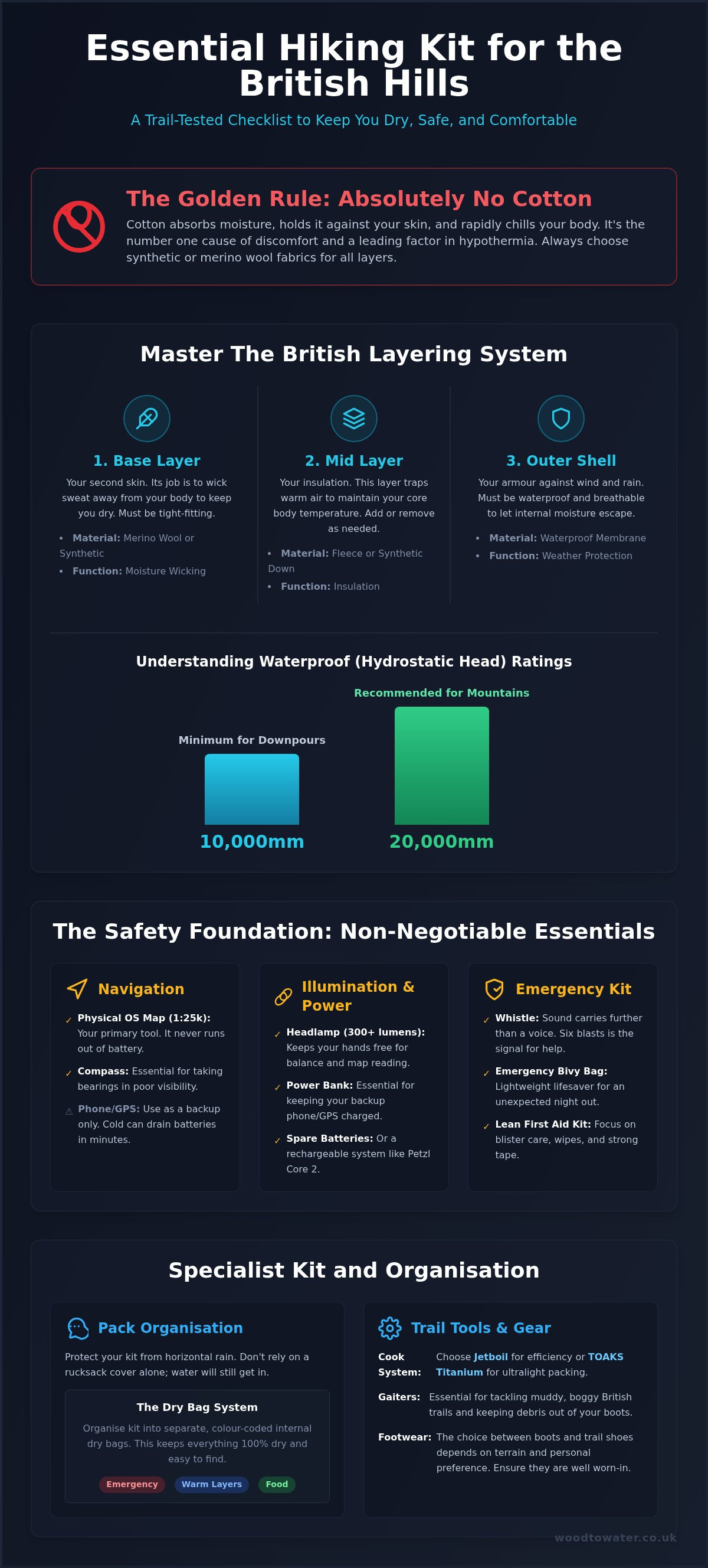
Relying solely on a smartphone for navigation is a common mistake that often leads to calls for Mountain Rescue. Cold temperatures, particularly in exposed upland areas, can drain a modern phone battery from 40% to zero in minutes. Wet screens are also notoriously difficult to operate. A physical Ordnance Survey (OS) map, specifically the 1:25,000 Explorer series, remains non-negotiable. It doesn't require signal and it never runs out of power.
Mastering a compass is equally vital. You should be able to take a bearing and follow it even in "whiteout" conditions where landmarks vanish. Whilst apps like the OS Maps app (currently version 5.6.1.1461) are brilliant for quick checks, they should remain a secondary tool. If you prefer digital precision, use a dedicated GPS device as a high-accuracy backup; these are built to withstand the bounces and drenchings that would kill a standard phone.
Illumination and Power Management
If you're delayed on the trail, a handheld torch is a hindrance because it occupies a hand you need for balance or climbing. A reliable headlamp is the only sensible choice for trail safety. It keeps your hands free to use trekking poles or consult your map. We recommend a model with at least 300 lumens and a long burn time on its lowest setting.
Managing your electronics is much easier with the Petzl Core 2 Rechargeable battery. This allows you to charge via USB whilst keeping the option to swap in standard AAA batteries as a backup. Always pack a lightweight power bank too. Ensuring your emergency contact device stays live is critical, especially since services like what3words are now used by over 75 emergency services across the UK to pinpoint locations within a three-metre square.
Finally, never head out without a whistle and an emergency bivy bag. A whistle's sound carries much further than a human voice, and a lightweight foil or polyethylene bivy can be the difference between a cold night and a fatal one. Your first aid kit should stay lean; focus on blister care, antiseptic wipes, and high-adhesion tape to keep you moving whilst on the trail.
The British Layering System: Managing Moisture and Warmth
Cotton is the enemy of the British hiker. Whilst it feels comfortable at home, cotton fibres absorb moisture and hold it against your skin; this leads to rapid cooling and potential hypothermia in the damp UK climate. A successful hiking gear strategy relies on the "No Cotton" rule. Instead, opt for synthetic polyester or merino wool. These materials move moisture away from your body, ensuring you stay dry even when you're working hard on a steep ascent.
Your base layer is your first line of defence. It should be tight-fitting to prioritise wicking capabilities. Once sweat is moved away from the skin, your mid-layer takes over. This layer, typically a fleece or synthetic down jacket, traps warm air to maintain your core temperature. We prefer synthetic insulation for the UK because, unlike natural down, it still provides warmth if it gets damp from humidity or light spray.
The outer shell is your armour. When choosing a waterproof jacket, look at the hydrostatic head (HH) rating. For reliable protection in a sudden downpour, you need a minimum rating of 10,000mm; however, 20,000mm is far better for prolonged exposure in mountainous terrain. This shell must be breathable to let internal moisture escape, or you'll end up "boiled in the bag" from your own sweat. Don't forget waterproof trousers; they are essential for those days when the rain is falling horizontally across exposed moorlands.
The Three-Layer Philosophy
Don't wait until you're shivering or soaking to adjust your kit. The secret to the British Layering System is constant management. If you feel a "hot spot" of sweat building up, unzip your vents or shed a layer immediately. When you stop for a break, put your mid-layer back on before you cool down. For those long lunch stops in exposed areas, many experienced hikers carry lightweight camping tarps to create a quick, dry microclimate away from the wind and rain.
Footwear and Sock Selection
Your choice between traditional hiking boots and modern trail shoes depends on the terrain. Boots offer essential ankle support for rocky paths on rugged summits, whilst trail shoes are excellent for well-maintained lowland tracks. Regardless of the shoe, use a "two-sock" system. A thin liner sock under a thicker wool-blend trekking sock reduces friction, which is the primary cause of blisters. Always break in new boots on short local walks before committing to a full day on the fells; your feet will thank you for it.
The Carry System: Packs and Internal Organisation
Your rucksack is the foundation of your comfort on the trail. Even the most expensive hiking gear feels like a burden if it isn't carried correctly. A well-designed daypack should act as an extension of your body, not an anchor dragging you backwards. To achieve this, prioritising an adjustable harness and a padded hip belt is essential; these features transfer the weight from your shoulders to your stronger pelvic bones, preventing fatigue during long days in the hills.
When packing, think about your centre of gravity. Centring the heaviest items, like your water bladder or stove, close to your back and roughly in the middle of the pack prevents the rucksack from pulling you off balance. Smaller essentials like snacks, a compass, or your phone should live in accessible hip-belt pockets. This allows you to refuel and navigate without constantly stopping to take your pack off, maintaining your forward momentum.
Choosing Your Backpack
Matching your pack volume to your objective is the first step. For a standard UK summer day hike, a 20 to 30-litre pack is usually plenty. However, if you're exploring 1-man tents for your first solo wild camp, you'll likely need to step up to 45 or 50 litres to accommodate your sleep system. Look for a "trampoline" back system if you run hot. These suspended mesh panels create a gap for airflow, significantly reducing that uncomfortable "sweaty back" feeling during steep climbs.
Keeping Your Kit Dry
The UK is famous for horizontal rain that can bypass even the best external pack covers. In high winds, a pack cover often acts like a sail, tugging at your shoulders or blowing away entirely. Internal dry bags are a far superior solution. We recommend colour-coding your dry bags. Use red for your first aid kit, blue for spare warm layers, and green for food; this makes finding specific items much faster when you're sheltering in a dark tent or under a tree.
Protecting your sensitive electronics and spare socks with roll-top sacks is mandatory for British trails. Don't forget a dedicated map case for your paper OS maps. Even "waterproof" maps can become pulpy and unreadable if exposed to constant rain and friction for hours on end. Keeping your map visible and dry ensures you can stay on track regardless of what the clouds are doing.
Trail Nutrition and Hydration Strategies
A long day on the fells requires more than just physical grit; it requires a calculated approach to fuel and fluid. Dehydration is a subtle thief of energy. It often starts as a mild headache before evolving into total exhaustion. To stay ahead, we recommend calculating your water needs by accounting for your total elevation gain and the forecasted temperature. As a general rule, aim for 500ml of water for every hour of moderate activity. A hydration bladder is a game-changer here. It allows for frequent, small sips whilst you move, which is far more effective than gulping half a litre from a bottle every two hours.
Nutrition is equally vital for maintaining your pace. Pack high-energy, lightweight snacks like nuts, dried fruit, and jerky to graze on throughout the day. These keep your blood sugar stable and prevent the dreaded "bonk" halfway up a climb. Whilst cold sandwiches are fine for a summer stroll, a warm meal is a massive morale booster on a damp UK trail. There is something truly restorative about a hot brew or a steaming pouch of food when the wind is whipping across a ridge. It provides both physical warmth and a necessary psychological reset.
Efficient Trail Cooking
For those who value speed and convenience, the Jetboil camping cooking range is the gold standard. These integrated systems boil water in under two minutes, even in breezy conditions, making them perfect for a quick lunchtime brew. If you're an ultralight enthusiast looking to shave every possible gram from your pack, TOAKS Titanium Cookware offers incredible durability without the weight. Titanium doesn't leach metallic tastes into your food and heats up incredibly quickly.
When selecting a camping gas stove, always consider the fuel type. Isobutane-propane mixes are generally better for the cooler UK climate than straight butane, which can struggle to vaporise in near-freezing temperatures. Having a stove that performs in the cold is an essential part of your safety hiking gear.
Water Purification on the Go
Whilst many UK mountain streams look crystal clear, they can still carry bacteria from livestock or wild animals. Unless you're at the very source of a high-altitude spring, always use a lightweight filter or chemical tablets. Modern hollow-fibre filters are fast and add almost no weight to your kit. Remember to clean your hydration system thoroughly after every trip. Stagnant water in a tube is a breeding ground for mould, which can ruin your equipment and your health. Ready to upgrade your trail kitchen? Explore our curated selection of reliable camping gas stoves to find your perfect match.
Specialist Gear for the British Environment
British trails are unique. You might start a hike in a sunny valley and find yourself knee-deep in a peat bog an hour later. Standard hiking gear often misses the mark for these specific, soggy challenges. This is where specialist kit like Origin Outdoors "Drytogo" Gaiters becomes your secret weapon. They act as a durable seal between your boots and trousers, preventing mud and bog water from seeping over the top of your footwear. It's a simple addition that makes a massive difference to your comfort during a long day on the fells.
Don't underestimate the utility of trekking poles for steep terrain. Whilst some see them as optional, they are essential for protecting your knees during jarring descents on rugged mountain paths. They provide two extra points of contact; this is vital when you're navigating slippery, wet rock or loose scree. By distributing your weight more evenly, they reduce fatigue and help you maintain a steady pace even when the light begins to fade.
The Tarp and Hammock Advantage
If you're moving beyond day hikes, consider the versatility of camping tarps. In the UK, a tarp is often more useful than a tent for a quick lunch stop. You can pitch it in seconds to escape a sudden downpour whilst you use your stove. For those interested in woodland wild camping, the DD Frontline Hammock is a game-changer. It allows you to camp comfortably on uneven or soggy ground where a tent simply wouldn't work. Hammocks also support "leave no trace" ethics, as they don't crush delicate ground vegetation or require flat, cleared earth.
Essential Tools for the Prepared Hiker
Preparation doesn't stop at your clothing. A small bushcraft essential kit is incredibly useful for field repairs, such as fixing a torn rucksack strap or a broken zip. We also recommend carrying a lightweight foam "sit pad". It weighs next to nothing but provides a dry, warm surface for your rest stops; this saves you from the chill of damp rocks or grass. Finally, always pack spare laces and a basic multi-tool. These simple items allow for quick field maintenance, ensuring a minor gear failure doesn't end your expedition prematurely. By curating your kit with these specialist items, you'll be ready for whatever the wilderness throws your way.
Ready for the Ridge: Your Next Adventure Starts Here
Mastering the British hills is about more than just physical fitness; it's about having total confidence in the kit on your back. By embracing the British Layering System and organising your pack with internal dry bags, you've already solved the primary challenges of our unpredictable climate. You now understand how to fuel effectively with integrated stove systems and why specialist items like gaiters are your best defence against the damp.
Investing in reliable hiking gear shouldn't be a guessing game. We've spent years personally vetting every item to ensure it stands up to the realities of the UK wilderness. We specialise in ultralight titanium and bushcraft essentials to help you move faster and stay comfortable. You can also benefit from free UK delivery on qualifying orders.
Find your perfect trail companions at Wood To Water Outdoors and start planning your next expedition. The fells are calling, and now you're truly ready to answer. See you out there!
Frequently Asked Questions
What are the 10 essentials for hiking in the UK?
The ten essentials for British trails focus on self-reliance in changeable conditions. You should carry a physical map and compass, a reliable headlamp, first aid supplies, and a multi-tool for repairs. Additionally, ensure you have an emergency shelter like a bivy bag, fire-starting tools, and extra food and water. Finally, always pack spare warm layers and sun protection to handle the UK's notoriously unpredictable weather shifts.
Is it better to wear hiking boots or trail shoes for a UK trek?
Your choice depends entirely on the terrain and your personal preference for support versus speed. Sturdy hiking boots provide essential ankle protection and keep your feet dry when crossing boggy ground or loose scree. Conversely, lightweight trail shoes offer better breathability and agility on well-maintained lowland paths. For most rugged UK peaks, boots remain the safer bet for beginners needing extra stability on uneven, wet surfaces.
How do I choose the right size backpack for a day hike?
We recommend a 20 to 30-litre capacity for a standard day hike. This provides enough space for your waterproofs, spare layers, and lunch without becoming cumbersome. At Wood To Water Outdoors, we vet our packs to ensure they have adjustable harnesses that distribute the weight of your hiking gear comfortably across your hips. This prevents shoulder strain during long ascents and keeps your load stable.
Why is it important to avoid cotton clothing when hiking?
Cotton is highly absorbent and slow to dry, which makes it dangerous in damp environments. When cotton gets wet from sweat or rain, it loses its insulating properties and draws heat away from your body. This can quickly lead to a "sweat chill" or even hypothermia in the wind. Stick to synthetic fibres or merino wool, which wick moisture away and keep you warm even when damp.
Do I really need a physical map if I have a GPS on my phone?
Yes, a physical Ordnance Survey map and a compass are non-negotiable safety tools. While smartphone apps are convenient, they are prone to battery failure in cold weather and can be difficult to use in heavy rain. A paper map doesn't require a signal or power source to function. It serves as your primary backup if your electronics fail or if you lose GPS accuracy amongst high peaks.
What is the best way to prevent blisters on a long hike?
Preventing blisters starts with properly fitting footwear that has been thoroughly broken in before your trip. Using a "two-sock" system with a thin liner under a thicker wool-blend sock can significantly reduce friction. If you feel a "hot spot" developing, stop immediately and apply zinc oxide tape or a specialised blister plaster. Keeping your feet dry by using gaiters also helps maintain skin integrity on boggy trails.
How much water should I carry for a full day of hiking?
You should generally aim to carry at least two litres of water for a full day on the trail. This amount may need to increase if you are tackling significant elevation or if the weather is unusually warm. Using a hydration bladder encourages frequent sipping, which is more effective than drinking large amounts at once. Always research whether there are reliable, clean water sources along your route for refilling.
Are trekking poles actually worth using for beginners?
Trekking poles are definitely worth the investment for beginners. They provide extra stability on slippery or uneven ground and significantly reduce the impact on your knees during steep descents. By engaging your arms, they also help you maintain a consistent rhythm and better posture. We consider them an essential part of your hiking gear for maintaining balance whilst navigating the UK's more challenging and technical mountain paths.
