

The Ultimate UK Camping Checklist: Professional Gear Guide
Have you ever reached your pitch in the pouring rain only to realise you've packed three spare torches but forgotten the one specific tool needed to fix your stove? It's a common frustration for even the most seasoned outdoorsmen. We've all felt the literal weight of overpacking unnecessary kit whilst still worrying about forgetting a critical safety item. Mastering your next expedition starts with a professional camping checklist that prioritises utility over sheer quantity. You need gear that survives the unpredictable British climate without weighing you down on the trail.
We've curated this guide to help you build a streamlined kit list that guarantees confidence in the wild. You'll discover how to choose equipment that actually works; whether that's a versatile DD Frontline Hammock for a comfortable night's sleep or ultralight TOAKS titanium cookware for your trail meals. We'll walk you through the essential hardware, technical specifications, and safety gear required to stay warm and dry. From the fells of the Lake District to the rugged Highlands, this is your roadmap to a better, more comfortable outdoor experience.
Key Takeaways
- Adopt an "essential vs luxury" mindset to strip back unnecessary weight whilst maintaining a high standard of safety.
- Access a comprehensive camping checklist that addresses the specific technical requirements of the damp and varied British climate.
- Optimise your camp kitchen by selecting the right stove and hydration filters to ensure reliable performance in the field.
- Master the three-layer clothing system to manage your body temperature effectively during sudden weather shifts.
- Explore expert-vetted shelter options, including why a professional hammock setup can often outperform a traditional tent in rugged terrain.
The Fundamentals of a Professional Camping Checklist
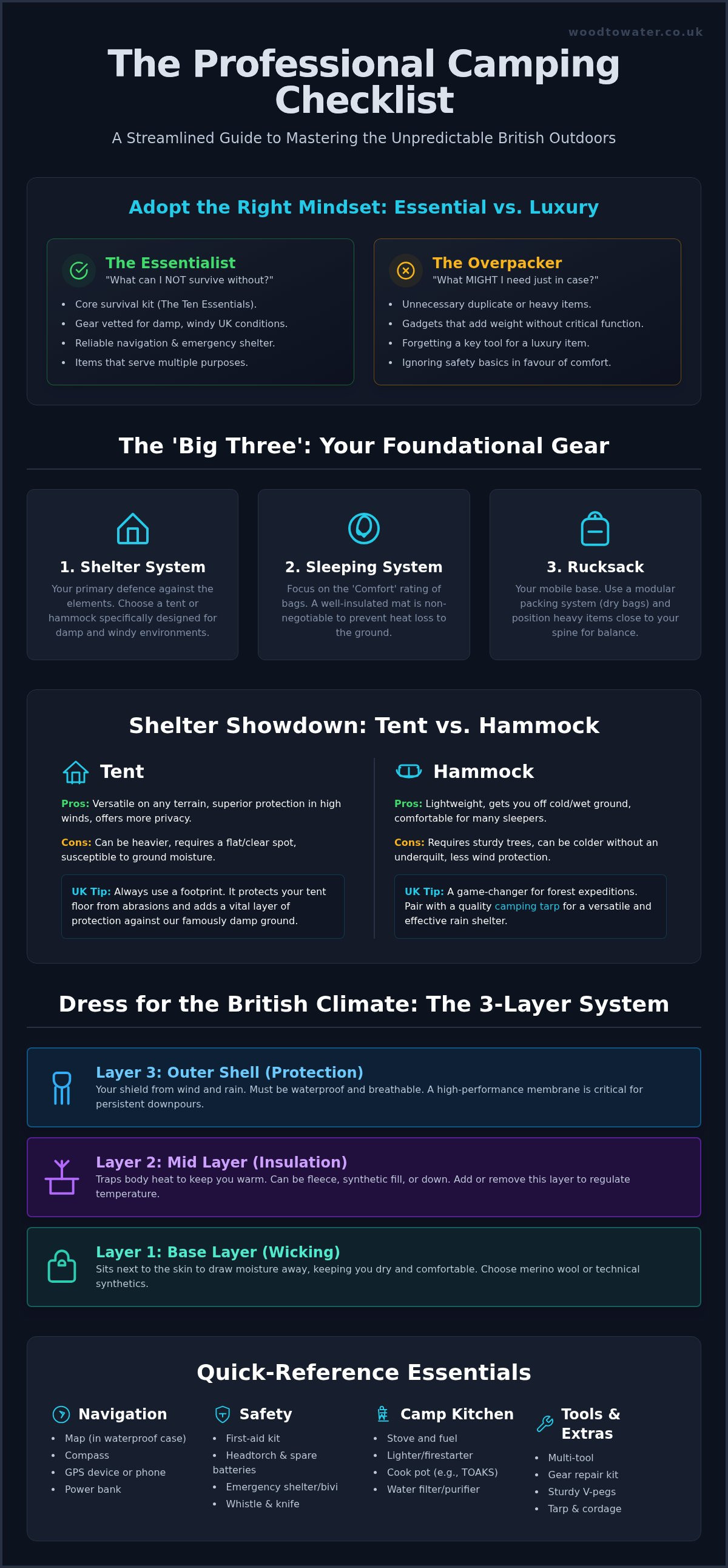
Building a professional camping checklist requires a shift in perspective. It's about moving from a "what might I need" approach to a "what can I not survive without" mindset. In the unpredictable British wilderness, every gram in your pack must earn its place. This isn't just about saving your knees; it's a fundamental safety requirement. Forgetting a critical item like a navigation tool or an emergency shelter isn't merely an inconvenience when the mist rolls in over the fells. Following established systems like The Ten Essentials ensures you have the core survival kit covered before you even think about luxury extras.
At the heart of your kit list are "The Big Three": your shelter, your sleeping system, and your pack. These are your most significant investments and your primary defences against the elements. Whether you prefer the lightweight versatility of 1-man tents or the elevated comfort of camping hammocks, these items form the foundation of your expedition. Vetting this gear specifically for the damp, windy conditions of the UK is vital. A tent that excels in the dry heat of the Mediterranean might fail miserably during a persistent Welsh downpour.
Organising Your Gear for Efficiency
Efficiency on the trail depends on how you categorise your kit. Items you need frequently, such as your map, compass, and snacks, should live in accessible pockets or the lid of your pack. Your heavy items should be positioned close to your spine and centered vertically to maintain your balance. We recommend using a modular packing system; dry bags and colour-coded pouches allow you to find exactly what you need without emptying your entire rucksack into the mud. This organisation keeps your kit dry and ensures you can set up camp quickly when the light begins to fade.
Adapting the List for UK Weather
In Britain, weather is rarely a static event. You must prepare for four seasons in a single day, which means your camping checklist needs to be highly adaptable. Waterproofing is a spectrum; whilst a lightweight DWR (Durable Water Repellent) coating might handle a light drizzle, you'll need a high-performance membrane for a day of horizontal rain. Wind protection is equally critical in the uplands. A steady wind can strip body heat faster than the ambient temperature suggests. Always pack versatile layers that can be added or removed as you move between sheltered valleys and exposed ridges.
Shelter and Sleeping Systems: Your Home in the Wild
Your shelter is your primary sanctuary; it's the thin wall between you and a sleepless night in the rain. Mastering your camping checklist means understanding the difference between survival and comfort. Don't overlook the footprint. In the UK, the ground is rarely dry. A footprint protects your tent floor from abrasions and adds an extra layer of moisture protection against rising damp. If you're heading out alone, explore our range of 1-man and 2-man tents to find a lightweight home that doesn't compromise on durability. You'll also find some great baseline advice in The Camping and Caravanning Club's essential checklist, which is a brilliant starting point for any UK trip.
Tents vs. Hammocks: Which Should You Pack?
If you're planning a forest expedition, the DD Frontline Hammock is a game-changer. It's lightweight, gets you off the damp ground, and features a built-in mosquito net for those summer midge seasons. However, hammocking requires specific accessories like reliable suspension lines and a protective tarp. A quality camping tarp is perhaps the most versatile piece of shelter you can own. It provides a dry communal area for your group or functions as a minimalist bivi setup for ultralight hikers.
Maximising Sleep Comfort
A dedicated camping pillow is a small luxury that pays massive dividends in sleep quality. Bundled clothes often shift in the night, leaving you with a stiff neck. We also suggest using a bag liner; it keeps the inside of your sleeping bag clean and can add a few extra degrees of warmth on a chilly Scottish night. For more site selection tips, refer to our essential wild camping equipment guide. Before you set off, why not browse our Onewind Outdoors collection for high-performance shelter accessories that won't let you down?
The Camp Kitchen: Cooking and Hydration Essentials
After a long day on the trail, a hot meal is more than just fuel; it's a massive boost for morale. Your camping checklist must include a reliable cooking system that suits your environment and group size. Whilst spirit burners are silent and reliable, many modern hikers prefer the speed and convenience of gas. If you're looking for efficiency, check out our high-performance camping gas stoves for fast trail cooking. Don't forget hydration. Carrying all your water isn't always practical, so include a lightweight filter or purification tablets to safely use natural sources found in the wild.
Lightweight cookware is a worthy investment for any serious trekker. Budget plastic sets are common, but they often lack durability and can be difficult to clean in the field. Professional-grade materials offer better heat distribution and longevity. For those who enjoy the ritual of a real fire, a compact wood-burning stove like the BE bushbox provides a sustainable way to cook whilst using fuel found on the forest floor. It's an excellent addition for anyone focusing on bushcraft skills alongside their standard camping routine.
Efficiency with Integrated Stove Systems
For those who value speed and packability, integrated systems like the Jetboil are the gold standard. These stoves excel at rapid boiling; the Jetboil Flash can heat half a litre of water in just 100 seconds. When planning your fuel, consider that a standard 100g gas canister is usually sufficient for a weekend of solo boiling. However, cold temperatures and high winds can significantly increase fuel consumption. Always use a windshield or find a sheltered spot to cook. It's a simple way to maximise your fuel efficiency and save weight in your pack.
Durable Cookware and Food Prep
TOAKS Titanium cookware is the professional choice for ultralight hikers because it offers an incredible strength-to-weight ratio. It won't warp under high heat and doesn't add a metallic taste to your food. Organising your "mess kit" is about more than just stacking pots. Use your cookware to store smaller items like your lighter, a small bottle of biodegradable soap, or your spork to save precious pack space. A titanium spork is a versatile alternative to carrying a full cutlery set; it's durable enough for tough camp chores and light enough to disappear in your pocket. Having a curated kit ensures you spend less time rummaging and more time enjoying your meal. This efficiency extends to personal hygiene too; you can visit Reset Razor to find sustainable shaving solutions that help maintain an eco-friendly presence in the wild.
Bushcraft Tools and Practical Accessories
Tools are the backbone of a successful camp. A professional camping checklist should always account for utility items that solve problems before they become emergencies. A reliable cutting tool is non-negotiable for tasks ranging from slicing vegetables to preparing kindling. Whilst a standard lighter is handy, it's prone to failure in the cold or wet. We recommend carrying a ferrocerium rod or waterproof matches as a backup. These tools ensure you can always get a flame going, even in a typical British downpour. Browse our curated bushcraft essentials for professional-grade tools that stand the test of time.
Multi-tools offer a compact way to carry a workshop in your pocket. When choosing one, prioritise functions like pliers for handling hot cookware and a screwdriver for tightening loose tent poles. Avoid overly complex models with dozens of features you'll never use; they just add unnecessary weight to your pack. Focus on high-quality steel that won't rust after a weekend in the woods.
Essential Tools for the Modern Camper
A versatile camp knife should be robust enough for wood prep but fine enough for food. A fixed-blade knife is often more durable for heavy tasks, whilst a high-quality folding knife is easier to carry. If you're planning a fire, a folding saw is a sustainable choice for processing deadwood without damaging living trees. This allows you to gather fuel efficiently without the weight of an axe. Ensure you have a reliable light source by reading our camping torch guide to keep your workspace safe after sunset.
Reliable Lighting and Power
Lighting is a critical safety component of any camping checklist. A headlamp is superior for most tasks because it keeps your hands free for cooking or pitching your shelter in the dark. Lanterns are better suited for creating a warm atmosphere inside your tent or under a tarp. To keep these devices running, a high-capacity power bank is essential for modern expeditions. Find out why camping accessories like spare batteries are non-negotiable for multi-day trips. Managing your power ensures you're never left in the dark when you need your navigation tools the most.
For those who prefer basecamps or sites with electric hookups, having a reliable and identifiable power setup is just as important as having a good power bank. Using professional-grade, personalised extension cords from Fourman Industries allows you to easily distinguish your cables from others, which is particularly useful in shared power hubs or busy campsites.
Technical Clothing and Personal Safety
Your body is your most valuable asset on any expedition. A professional camping checklist isn't complete without a technical clothing strategy that accounts for the volatile British weather. One golden rule for the UK trails is to avoid cotton at all costs. Cotton is highly absorbent; once it gets wet from rain or sweat, it stays wet and saps your body heat. Stick to synthetic fibres or merino wool to stay warm and dry. Footwear is another area where many campers stumble. Whilst high-quality boots provide necessary support, your choice of socks is just as important. They manage friction and moisture; without them, even the best boots will cause painful blisters. We also recommend adding Origin Outdoors 'Drytogo' Gaiters to your kit list to keep mud and moisture from creeping over the top of your boots during boggy moorland crossings.
Safety items are the components of your camping checklist you hope never to use, but they are non-negotiable for responsible trekking. Beyond clothing, your personal safety kit must include a high-pitched emergency whistle and a signal mirror. These lightweight tools allow you to signal for help over long distances if you become injured or lost. They are reliable, require no batteries, and work when phone signals fail.
The Art of Layering for UK Trails
Your backcountry first aid kit should be curated for the specific risks of the trail. Essential components include antiseptic wipes, sterile dressings, and plenty of blister pads. Navigation requires a dual approach for maximum safety. Digital GPS tools and phone apps are incredibly convenient for quick checks, but they are vulnerable to battery failure and cold temperatures. Always carry an analogue map and compass as your primary backup. They don't require power and are essential for navigating through thick mist or heavy rain when a screen might become difficult to use. Mastering these tools ensures you remain in control of your journey, regardless of the conditions.
Prepare for the Wild with Total Confidence
Mastering the British wilderness starts with a shift in mindset. By focusing on a high-performance sleeping system and a technical layering strategy, you've already solved the most significant challenges of our unique environment. A professional camping checklist is your blueprint for safety; it ensures you carry only what is essential whilst maintaining peak performance in the field. Whether you're sleeping elevated in a hammock or cooking a hot meal on a rapid-boil stove, the right gear turns a potential survival situation into a comfortable and rewarding expedition.
At Wood To Water, we are more than just a retailer. We are a team of passionate curators who have personally vetted every item in our inventory to ensure it stands up to the damp and windy reality of UK trails. You can rely on our expertly curated bushcraft and camping range to deliver durability when you need it most. Upgrade your expedition kit at Wood To Water Outdoors and take advantage of our national UK delivery on all professional gear. We are trusted by seasoned outdoor enthusiasts across the country; let us help you gear up for your next unforgettable journey. See you on the trail!
Frequently Asked Questions
What are the top 5 absolute essentials for any camping trip?
The five absolute essentials for any trip are a reliable shelter, a temperature-rated sleeping system, water purification, a cooking stove, and a navigation kit. These core items ensure you stay dry, warm, and hydrated whilst navigating safely. A professional camping checklist prioritises these high-stakes items above all else. Without a solid foundation in these five categories, your safety in the unpredictable British wilderness is compromised regardless of what luxury extras you carry.
How can I reduce the weight of my camping pack whilst staying safe?
You can reduce weight by upgrading your heaviest items, specifically your shelter, pack, and sleeping system. Switching to TOAKS Titanium Cookware is an easy way to shed grams without losing durability. Avoid packing "just in case" items that serve only one purpose. Instead, choose multi-functional gear and remove redundant clothing. Weighing every item helps you identify where unnecessary mass is hiding, allowing for a more comfortable trail experience without sacrificing safety.
Is it better to use a tent or a hammock for camping in the UK?
Choosing between a tent and a hammock depends entirely on your environment. Tents are superior for exposed upland areas where trees are scarce. However, the DD Frontline Hammock is often the better choice for wooded areas because it gets you off the damp ground and away from uneven roots. Hammocks provide exceptional comfort and ventilation in summer, whilst a sturdy tent offers better protection against the high-velocity winds found on British mountain ridges.
What is the best way to keep my gear dry in heavy rain?
The most effective way to keep gear dry is to use a multi-layered waterproofing system. Use a waterproof pack liner for your main rucksack and individual dry bags for your sleeping bag and electronics. Don't rely solely on a pack cover, as wind can easily blow rain behind it. For your person, wearing Origin Outdoors 'Drytogo' Gaiters prevents moisture from entering your boots, ensuring your feet stay dry even when trekking through long, sodden grass.
How do I choose the right size backpack for a multi-day trip?
Choosing the right backpack size depends on the duration of your trip and the bulk of your gear. For a standard weekend, a 40 to 50 litre pack is usually sufficient for most enthusiasts. If you're heading out for a multi-day expedition, you may need a 60 to 70 litre rucksack to accommodate extra food and fuel. Always ensure your gear fits inside the pack rather than strapping items to the outside, which can affect your balance.
What should be in a basic camping first aid kit?
A basic first aid kit should include antiseptic wipes, sterile dressings, medical tape, and various plasters. In the UK, blister pads and tick-removal tweezers are non-negotiable additions for any trail. You should also carry personal medication, ibuprofen, and rehydration salts. Keep these items in a dedicated waterproof pouch that is easily accessible. Regularly check expiry dates and replenish any used supplies immediately after returning home to ensure your kit is always ready as a critical component of any camping checklist.
How do I maintain my camping gear after a trip to ensure it lasts?
Proper maintenance starts with ensuring every item is bone-dry before storage. Never leave a damp tent or sleeping bag compressed in its stuff sack, as this leads to mould and fabric degradation. Clean your cookware thoroughly and check your stove for any fuel blockages. Wipe down your tools and apply a light coat of oil to carbon steel blades. Storing your sleeping bag loosely in a large mesh bag helps maintain the loft and thermal efficiency.
Can I use a wood-burning stove at any UK campsite?
You cannot use a wood-burning stove at every UK campsite; rules vary significantly between locations. Many commercial sites allow them if they are raised off the ground, but some ban them entirely to protect the grass. In National Parks like the Cairngorms, seasonal fire bans often prohibit any form of flame. Always check local byelaws and site rules before using a BE bushbox. If a fire ban is in place, stick to a gas stove for safety.