

Duke of Edinburgh Award Equipment: The Essential DofE Kit List
Your rucksack shouldn't feel like you're lugging a small boulder across the Peak District. It's a common worry for every participant; the fear that an overweight pack or confusing jargon like hydrostatic head ratings will ruin the experience. We've seen far too many explorers struggle with gear that isn't fit for purpose or, worse, fails when the weather turns on the moors. Selecting the right duke of Edinburgh Award equipment is about more than just ticking boxes on a list. It's about finding that perfect balance between durability and weight so you can actually enjoy the journey.
We agree that the sheer volume of kit options can be daunting. That's why we've put together this expert-curated guide to help you master your DofE kit list with reliable, lightweight, and expedition-ready gear. You'll get a clear, actionable breakdown of vetted essentials that are worth the investment for their longevity. We'll demystify the technical specs and show you exactly what works for rugged UK trail conditions. By the end, you'll have the confidence to pack your bag and head out, knowing your gear is ready for whatever the hills throw at you.
Key Takeaways
- Learn how to tailor your gear requirements for Bronze, Silver, and Gold levels to ensure you don't carry unnecessary weight.
- Master the "Big Three" by selecting the correct rucksack capacity and splitting tent loads with teammates for maximum efficiency.
- Identify the most reliable duke of Edinburgh Award equipment for trail cooking, including rapid-boil stove systems and ultralight titanium cookware.
- Discover why a technical layering system and structured, waterproof footwear are non-negotiable for staying comfortable in unpredictable UK weather.
- Get expert strategies for internal waterproofing and smart weight distribution to keep your kit dry and your pack perfectly balanced.
Navigating the Duke of Edinburgh Award Equipment Requirements in 2026
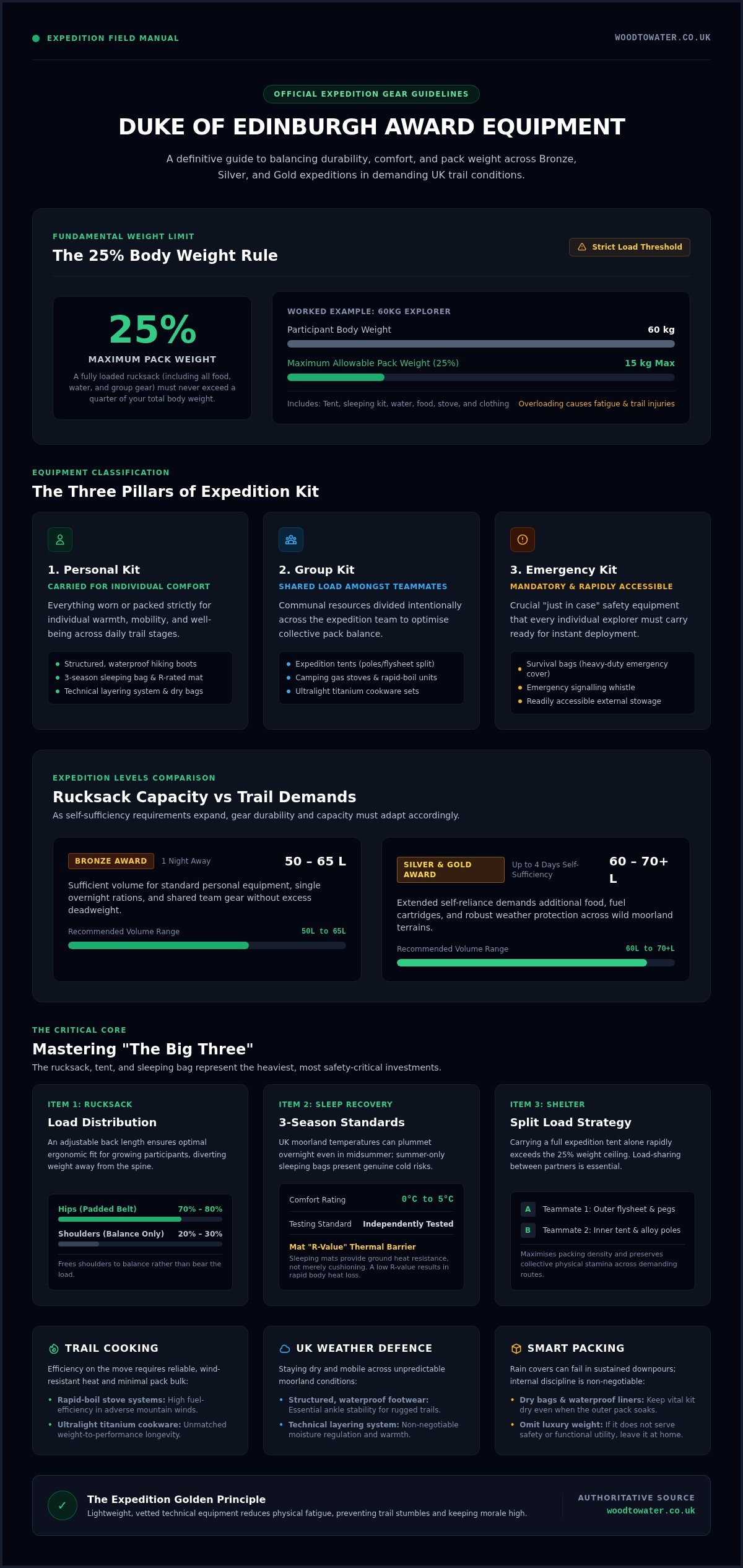
Choosing the right duke of Edinburgh Award equipment begins with understanding the three pillars of expedition gear: personal, group, and emergency kit. Personal items include everything you wear or carry for your own comfort, such as boots and sleeping bags. Group kit, like tents and camping gas stoves, is shared amongst teammates to distribute the load. Finally, emergency kit covers the "just in case" items like survival bags and whistles that every participant must have accessible.
As you progress through the Duke of Edinburgh's Award expedition framework, the demands on your gear increase. A Bronze expedition only requires one night away; by the time you reach Gold, you're looking at four days of self-sufficiency. This step up means your gear needs to be more durable and significantly lighter. The golden rule for any level is the weight limit; your fully loaded pack should never exceed 25% of your body weight. If you're a 60kg student, that's a maximum of 15kg including food and water. It's a strict threshold that forces you to think carefully about every gram.
Budget often dictates choices, but there's a catch. "Cheap" equipment is almost always made from heavier, bulkier materials. A heavy pack leads to sore shoulders and blisters, which can quickly drain your morale. Finding the middle ground involves investing in specific technical items that offer the best weight-to-performance ratio without breaking the bank.
The Official DofE Kit List vs. Personal Choice
The official kit list is a brilliant framework, but it's exactly that: a baseline. You don't have to buy the exact brands mentioned to pass your kit check. In fact, many participants find better value and performance in technical alternatives. Focus on the essentials first. Items like dry bags and waterproof liners are non-negotiable for keeping your gear dry in a downpour. Avoid "luxury" items that add unnecessary bulk. If it doesn't serve a functional purpose or keep you safe, it's probably better left at home.
Why Quality Gear Matters for Expedition Success
Reliable kit is your best friend when the weather turns sour on the moors. There's a massive psychological boost in knowing your tent won't leak and your stove will light in high winds. Lightweight gear isn't just about comfort; it reduces physical fatigue, which prevents the clumsy trips and trail injuries that happen when you're exhausted. Investing in high-quality gear transforms a challenging expedition into a manageable adventure, ensuring you have the tools to succeed in any environment.
The Big Three: Selecting Your Tent, Sleeping Bag, and Rucksack
While technical fabrics are essential for the trek, many groups also choose to commemorate their journey with custom team apparel; RAW Merch offers high-quality printing for hoodies and t-shirts that are perfect for team building and post-expedition celebrations.
Your "Big Three" items, the rucksack, tent, and sleeping bag, are the heaviest pieces of duke of Edinburgh Award equipment you'll carry. They also happen to be the most critical for your safety and recovery. While you should always consult the official DofE Expedition Kit List as your baseline, choosing technical gear that prioritises weight and packability can make your trek significantly more enjoyable. For Bronze expeditions, a 50 to 65 litre rucksack is usually plenty for a single night. Once you move to Silver or Gold, you'll likely need 60 to 70+ litres to accommodate the extra food and fuel required for longer stretches on the trail.
Sleeping bags are often where participants compromise; however, the UK climate is unforgiving. A 3-season bag with an independently tested comfort rating between 0°C and 5°C is the non-negotiable standard. Don't rely on a "summer" bag; even in July, temperatures on the moors can plummet overnight. Pair your bag with a high-quality sleeping mat. It's a mistake to think mats are just for cushioning. Their real job is insulation. Look for the "R-value" of a mat; this measures its ability to resist heat loss to the cold ground. A mat with a low R-value will leave you shivering, regardless of how thick your sleeping bag is.
Rucksack Fitting and Comfort
A poorly fitted pack is a recipe for a miserable expedition. Since many participants are still growing, look for rucksacks with adjustable back lengths to ensure the weight sits correctly. The goal is to transfer 70% to 80% of the pack's weight onto your hips through a padded hip belt. This leaves your shoulders free to balance rather than bear the brunt of the load. Look for external attachment points for items like sleeping mats, but ensure you have a durable rain cover to keep everything dry. You can explore our range of 1-man and 2-man tents to find shelter options that fit perfectly inside or on your pack.
Shelter Options: Tents and Tarps
Traditional DofE teams often share a large tent to split the weight. However, technical 1-man tents are becoming a popular choice for Silver and Gold participants who prefer their own space or need to manage specific weight requirements. Whatever you choose, check the hydrostatic head (HH) rating. For the UK, a flysheet needs at least a 3,000mm rating to withstand sustained rain. Beyond the tent, camping tarps are incredibly versatile. They serve as excellent group cooking shelters or emergency rain covers if you need to stop and check your map in a downpour. If you want to ensure your shelter is truly expedition-ready, browsing the vetted gear at Wood To Water is a great place to start.
Trail Cooking and Hydration: Efficiency on the Move
Expedition morale often lives and dies by the quality of your evening meal. After a long day on the trails, you don't want to spend forty minutes coaxing a sluggish stove into life. Efficiency is the priority here. Modern duke of Edinburgh Award equipment has moved far beyond the heavy, soot-covered kits of the past. For many participants, the Jetboil Flash is a complete game-changer for fast morning starts. It can boil half a litre of water in roughly 100 seconds, meaning your team is fed, caffeinated, and back on the move whilst others are still waiting for their first bubble.
Weight management continues to be a theme when selecting your kitchen kit. Using TOAKS Titanium Cookware allows you to shave significant grams off your total pack weight without sacrificing durability. Titanium cookware improves the DofE experience by reducing pack bulk and allowing for more efficient nesting of gear. When it's time to eat, high-calorie, lightweight options like 5 Minutes to Delhi Ready Meals provide the 3,000 to 4,000 calories required for a strenuous walking day without the weight of traditional tinned food.
Gas Stoves vs. Spirit Stoves
Traditional spirit stoves like the Trangia are reliable but bulky. Many teams now prefer camping gas stoves for their speed and precise flame control. Safety is paramount; DofE regulations strictly prohibit pierceable canisters. You must use self-sealing threaded cartridges that comply with the EN417 standard. These allow you to safely unscrew the stove for transit. For a deeper dive into modern setups, check out our Ultimate Guide to Jetboil Systems.
Lightweight Eating Utensils
You don't need a full cutlery set in the wild. A single long-handled titanium spoon is usually the only utensil required, especially if you're eating directly from a meal pouch. It reaches into the corners of the bag so you don't get messy knuckles. For food prep, camping plates that double as cutting surfaces are excellent for keeping your kit list lean. Staying hydrated is equally vital. You must carry a minimum of 2 to 3 litres of water. Water bladders offer easy access via a straw, but many explorers still prefer the indestructible nature of a wide-mouth bottle for easy filling at camp taps.
Technical Clothing and Footwear for UK Expedition Weather
The "No Cotton" rule is the most important lesson you'll learn before heading out. Cotton is a sponge; it absorbs moisture, dries slowly, and saps your body heat. When choosing your duke of Edinburgh Award equipment, you must adopt a technical layering system. This involves a synthetic or merino wool base layer to wick sweat, a fleece mid-layer for insulation, and a breathable waterproof outer shell. This modular approach allows you to adjust your temperature quickly as you move from steep climbs to exposed ridges.
Your feet are your most valuable asset on the trail. DofE supervisors typically insist on boots with structured ankle support and deep-lugged soles. Soft trainers or trail runners simply won't cut it when you're navigating boggy ground or uneven paths with a heavy pack. Inside those boots, socks are the unsung heroes of blister prevention. Look for a wool and synthetic blend that cushions the foot and manages moisture. Never wear cotton socks; they'll bunch up, stay damp, and cause friction within minutes.
Protecting Your Feet: Boots and Gaiters
New boots are stiff. You need to start breaking them in at least six weeks before your expedition to avoid painful hotspots. Even the best waterproof boots can be overwhelmed by deep mud or long, wet grass. This is why Origin Outdoors 'Drytogo' Gaiters are essential for crossing wet UK terrain. They provide a barrier between your boots and trousers, keeping water from seeping over the top. For a complete look at what you need, check out The Ultimate Hiking Gear Checklist for UK Trails.
Waterproofs: Beyond the Basics
A cheap "waterproof" jacket often feels like wearing a plastic bag. You'll stay dry from the rain but get soaked from your own sweat. High-quality outer layers use breathable membranes that let moisture vapour out whilst keeping water droplets away. Check for technical features like taped seams and storm flaps over the zips. These details distinguish truly waterproof gear from mere water-resistant fashion items. Don't forget your overtrousers; they're vital wind protection on exposed moors, even if the sun is shining. If you're ready to upgrade your expedition wardrobe, you can shop our curated selection of technical clothing to find gear that actually performs.
Organising Your Kit: Packing Strategies and Maintenance
Even the best duke of Edinburgh Award equipment will feel like a burden if it isn't organised correctly. Packing is a skill that directly impacts your centre of gravity and stamina. You want the heaviest items, such as your food and stove, positioned close to your spine and mid-back. This keeps the weight over your hips rather than pulling you backwards. Use a "Russian Doll" approach to waterproofing by combining a heavy-duty rucksack liner with smaller, colour-coded dry bags for your clothes and sleeping bag. External rain covers often fail in high winds; double internal protection is the only way to ensure a dry night's sleep.
The Art of Packing a Rucksack
A logical packing order keeps you efficient on the trail. Start by lining your pack with a waterproof liner. Place your sleeping bag at the very bottom because it's light, bulky, and you won't need it until camp. Next, pack your heaviest kit in the middle section, keeping it tight against the back panel. Fill the remaining space with lighter items like spare layers. Your "brain", the top lid of the pack, should hold things you need quickly. This includes snacks, a first aid kit, and your headlamp. Avoid hanging gear on the outside of your pack. It shifts your balance and risks snagging on branches. For a complete list of trail essentials, refer to our Essential Hiking Checklist.
Electronics and Power Management
Cold weather is a notorious battery killer. Keep your electronics and spare batteries inside your sleeping bag at night to preserve their charge. For reliable lighting, the Petzl Core 2 Rechargeable battery is a brilliant power upgrade that ensures your headlamp won't dim when you need it most. Whilst phones and GPS units are helpful, they are no substitute for a physical compass and a map protected by a waterproof case. Technology can fail; your ability to read a paper map won't. Always prioritise these traditional navigation tools.
Once you return home, don't just dump your bag in the garage. Clean your boots, dry your tent completely to prevent mould, and store your sleeping bag uncompressed to maintain its loft. Proper maintenance ensures your duke of Edinburgh Award equipment stays in peak condition for your next level or future adventures. Taking care of your gear now means it will be ready to perform when you're back on the moors.
Ready to Conquer the Trails with Confidence?
Preparing for an expedition is about more than just ticking boxes; it's about setting yourself up for success and safety in the great outdoors. You now have the blueprint for managing your pack weight, mastering the technical layering system, and selecting efficient cooking setups that won't slow you down. By choosing high-quality duke of Edinburgh Award equipment, you're not just buying gear; you're investing in your comfort and resilience against the unpredictable UK weather. Our team of passionate outdoor enthusiasts has expertly vetted every item to ensure it stands up to the rugged demands of the moors.
We want to make your preparation as seamless as possible. At Wood To Water, we offer free UK delivery on orders over £80, so you can focus on your navigation skills rather than your shipping costs. Browse our curated DofE Expedition Collection at Wood To Water to find reliable, lightweight gear that makes every mile more manageable. Your next adventure is waiting. Pack smart, stay dry, and enjoy every moment of the journey ahead!
Frequently Asked Questions
What is the most important piece of DofE equipment to invest in?
High-quality walking boots are arguably the most critical investment for any level of the award. Your feet bear the entire weight of your body and gear over uneven terrain, so a pair with excellent ankle support and a waterproof membrane is essential. While you can often borrow tents or stoves from your school, footwear is a personal item that needs to be broken in specifically for your feet to ensure a pain-free trek.
Can I use a normal school rucksack for my DofE expedition?
You cannot use a standard school rucksack for a multi-day expedition. These bags lack the structural internal frame and padded hip belt needed to transfer weight from your shoulders to your hips. A proper expedition rucksack, typically between 50 and 70 litres, is designed to carry heavy loads comfortably for hours. Using a school bag will likely lead to severe back pain and strained shoulders before you've even finished the first day.
Do I really need walking boots for the Bronze Award?
Yes, walking boots are a mandatory requirement even for the Bronze Award. Trail runners or trainers don't provide the necessary ankle stability for hill walking with a loaded pack. Most expedition supervisors will fail a participant at the kit check stage if they arrive in soft footwear. Boots with a deep-lugged sole and a waterproof lining are the standard for duke of Edinburgh Award equipment to ensure safety on rugged UK trails.
How heavy should a DofE rucksack be for a 14-year-old?
A fully loaded expedition pack should never exceed 25% of the participant’s total body weight. For a typical 14-year-old, this usually means a maximum weight of around 10kg to 13kg, depending on their build. This total includes all food, water, and shared group gear like tents or stoves. Keeping your pack within this threshold is vital for preventing exhaustion and maintaining a steady pace throughout the two-day trek.
What is the best way to prevent blisters during a DofE trek?
The best way to prevent blisters is a combination of well-fitted, broken-in boots and technical hiking socks. You should start wearing your boots at least six weeks before your expedition to soften the materials. Avoid cotton socks; they trap moisture against the skin, which causes friction. Instead, choose synthetic or wool-blend socks that wick sweat away. If you feel a "hot spot" developing, apply a blister plaster immediately before the skin breaks.
Is a Jetboil allowed on a Duke of Edinburgh expedition?
Yes, the Jetboil Flash is an excellent choice for DofE expeditions, provided your supervisor approves gas stoves. These systems are incredibly fast for boiling water, which is ideal for rehydrating meals like 5 Minutes to Delhi Ready Meals. However, safety rules strictly prohibit pierceable gas canisters. You must use self-sealing threaded cartridges that meet the EN417 standard. This allows you to safely disconnect the burner for transport, ensuring you comply with official safety guidelines.
What should I pack in my personal first aid kit for DofE?
Your personal first aid kit should focus on common trail ailments rather than major trauma. Essential items include various sizes of waterproof plasters, antiseptic wipes, and plenty of blister-specific dressings. Since you'll be cooking on gas stoves, carrying specialised hydrogel dressings from Burn-Fix is a smart way to manage accidental scalds or minor burns. You should also pack a small roll of zinc oxide tape, safety pins, and a pair of tweezers for removing ticks or splinters. Don't forget any personal medication you require, along with a small supply of paracetamol for minor aches.
Double waterproofing is the only reliable method for keeping duke of Edinburgh Award equipment dry during sustained UK downpours. Start with a heavy-duty rucksack liner inside your bag. Then, pack your sleeping bag and spare clothes into individual, colour-coded dry bags. External rain covers often blow off in high winds; these internal layers are your primary defence. Keeping your kit dry isn't just about comfort; it’s a critical safety measure against the cold.