

Essential Hiking Checklist: Must-Have Gear for Every Trail
What if the difference between a triumphant summit photo and a miserable, sodden retreat was just three inches of space in your rucksack? It’s a question every hillwalker eventually faces when the British weather decides to deliver four seasons in a single afternoon. We’ve all been there, standing on a ridge as the temperature drops, suddenly wishing we hadn't left that extra layer or the torch at home.
You want to explore the wilder corners of the UK with total peace of mind, and we’re here to make sure you’re ready for whatever the trail throws your way. This comprehensive hiking checklist is our expert-vetted guide to the gear you actually need. We’ll help you strip away the dead weight while prioritising the high-quality essentials that keep you safe, dry, and comfortable.
We're diving into the science of the British layering system, the navigation tools used by over 75 emergency services across the country, and the reliable kit that won't let you down. By the end of this guide, you’ll have a clear, printable list of must-haves and the confidence to tackle more challenging terrain with ease.
Key Takeaways
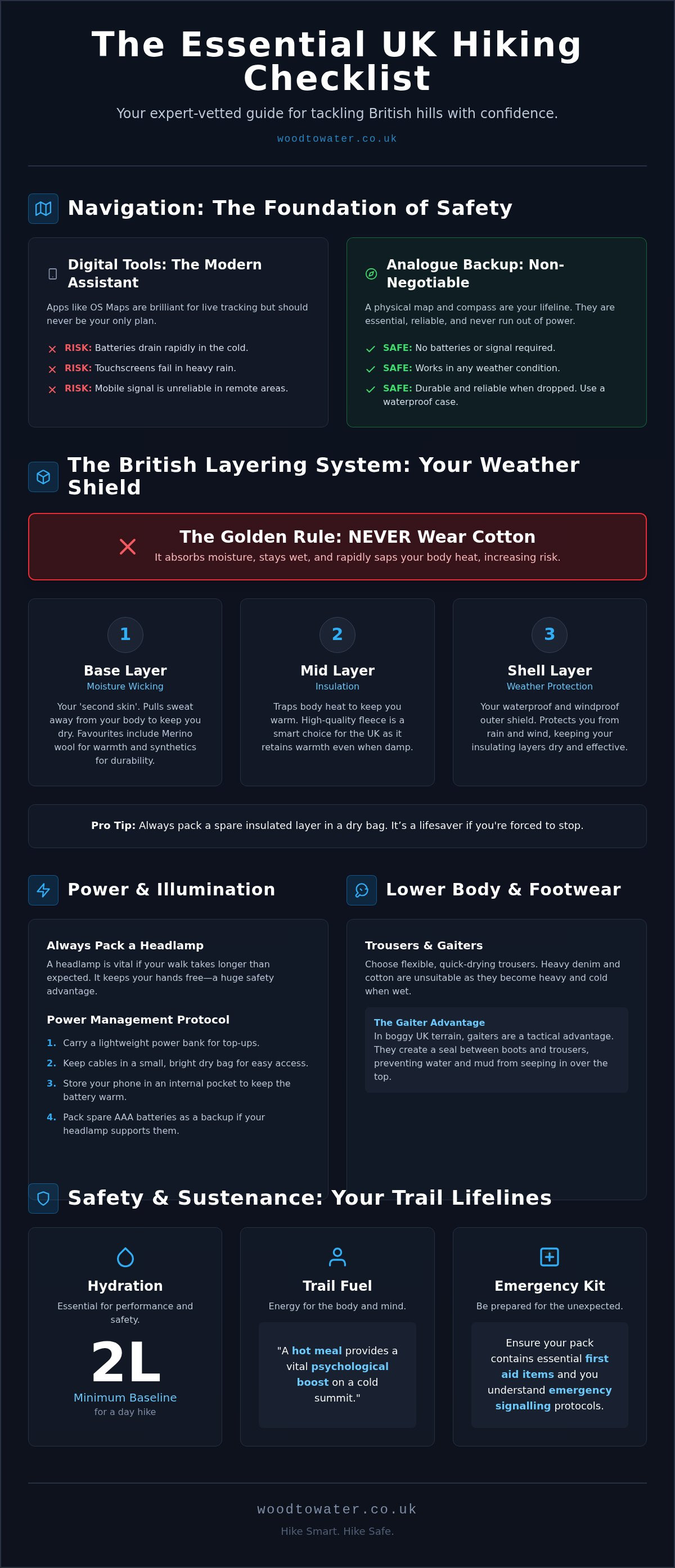
- Never rely solely on your phone. Carrying a physical map and compass is a non-negotiable safety rule if your battery won't last the day.
- Master the three-layer system to stay dry; it's vital to avoid cotton fabrics that trap moisture and lead to rapid cooling.
- Understand why a two-litre water baseline is essential for day hikes and how a hot meal provides a vital psychological boost on a cold summit.
- Use our expert-vetted hiking checklist to ensure your rucksack contains the essential first aid items and emergency signalling protocols needed for a safe trip.
- Optimise your pack by integrating multi-use bushcraft tools that reduce weight without compromising on your safety or trail comfort.
The Core Essentials: Navigating the British Landscape
Navigation isn't just a suggestion; it's the foundation of your safety. When the mist rolls in on a Scottish Munro or a Welsh ridge, knowing exactly where you are becomes your top priority. It's why navigation sits at the very top of any credible hiking checklist. While modern tech is brilliant, the British landscape is famous for swallowing mobile signals and draining batteries in the cold. We follow a philosophy similar to The Ten Essentials, where being able to find your way home is non-negotiable.
Navigation Beyond the Smartphone
Apps like OS Maps, which is currently on version 5.6.1.1461, are game-changers for hillwalkers. They provide incredible detail and live tracking, but they shouldn't be your only plan. Relying on a screen in a downpour is risky; touchscreens often misbehave when wet and batteries can plummet in low temperatures. This is where the analogue backup rule comes in. A physical Ordnance Survey map and a reliable baseplate compass are essential. They don't need a signal, they don't break if dropped, and they never run out of juice. Keep your paper maps in a waterproof case or buy the laminated Active versions to ensure they survive the inevitable British rain.
Power and Illumination on the Trail
If your walk takes longer than expected, a torch is your most important tool for avoiding a Mountain Rescue call-out. We always recommend a headlamp over a handheld torch. It keeps your hands free for scrambling or using trekking poles, which is a huge safety advantage. For long-term reliability, the Petzl Core 2 Rechargeable battery is a superb investment for your kit. It offers consistent power and eliminates the need for carrying piles of single-use alkaline batteries; plus, it performs better in the chilly conditions often found on UK summits.
Managing your electronics requires a bit of tactical redundancy. Don't let a dead battery end your day early. We suggest following these simple steps to keep your rucksack organised:
- Carry a lightweight power bank to top up your phone or headlamp.
- Keep all charging cables in a small, bright dry bag so they're easy to find.
- Store your phone in an internal pocket close to your body to keep the battery warm.
- Pack a spare set of AAA batteries if your headlamp accepts them as a backup.
A little preparation goes a long way. By ensuring you have both high-tech tools and reliable manual backups, you can focus on the views rather than worrying about your battery percentage.
Weather-Proofing Your Walk: The Technical Layering System
In the UK, your clothing is your first line of defence. Generic advice often misses the mark for British conditions, where dampness is a constant companion even when it isn't raining. A solid hiking checklist must prioritise the technical layering system: base, mid, and shell. This approach allows you to dump heat on a steep ascent and trap it instantly when you reach a windy summit. The golden rule? Never wear cotton. It absorbs sweat, stays wet, and saps your body heat, which can lead to rapid cooling. Proper clothing is just as vital as carrying a map, a sentiment echoed by the National Park Service hiking essentials guide.
The Base and Mid-Layer Foundation
Your base layer should be a second skin that wicks moisture away. Merino wool is a favourite for its natural odour resistance and warmth, whilst synthetics are often more durable and dry faster during high-intensity scrambles. Over this, your mid-layer provides insulation. While down is incredibly light, it often fails when damp. For the UK, a high-quality fleece is usually the smarter choice as it retains warmth even when moist. Always pack a 'spare' insulated layer in a dry bag at the bottom of your rucksack. It’s the item you hope you never have to wear, but it’s a life-saver if you’re forced to stop for any length of time.
Lower Body Protection and Gaiters
Forget heavy denim or thick cotton trousers; you need flexible, quick-drying fabrics that won't weigh you down after a heavy shower. In the boggy terrain common across the UK, keeping your feet dry is a constant battle. This is where the tactical advantage of Origin Outdoors 'Drytogo' Gaiters becomes clear. They create a seal between your boots and trousers, preventing water and mud from seeping over the top. Even the best waterproof boots can't stop a peat bog from entering through the ankle. Speaking of boots, ensure they are thoroughly broken in before tackling a long trail to avoid the misery of blisters. You can find more essential bushcraft gear to help you stay prepared for these rugged environments.
Protecting your extremities is the final piece of the puzzle. A lightweight hat and waterproof gloves should be in your pack year-round. Don't forget a spare pair of wool socks; nothing boosts morale like a dry change of footwear halfway through a sodden day. When evaluating your outer shell, look for a balance between breathability and absolute waterproofness. You want a jacket that lets sweat escape while keeping the horizontal rain out.
Trail Fuel and Hydration: Efficiency on the Go
Staying energised isn't just about calories; it's about maintaining your focus and morale when the weather turns. Calculating your water needs is a vital part of your hiking checklist, and for a full day on the hills, a two-litre baseline is the gold standard. Dehydration leads to fatigue. It causes poor decision-making; these are risks you can't afford on technical terrain. To source high-performance fuel for your trek, you can discover Fastgear Australia and their range of endurance nutrition. Including high-energy snacks and a robust hydration plan on your hiking checklist ensures you have the stamina to reach the summit and get back down safely.
The debate between bladders and bottles comes down to personal preference and rucksack organisation. Hydration bladders allow for frequent, small sips without stopping, which is more effective for staying hydrated on the move. They also sit close to your back, providing better weight distribution. However, bottles are easier to refill and monitor. If you're planning a longer expedition, carry water purification tablets or a filter as a backup. You'll also need lightweight camping accessories like bowls and sporks to keep your eating solutions efficient and packable.
Fast Trail Cooking Systems
On a freezing ridge, a hot meal is more than just sustenance; it’s a massive psychological boost. For speed and efficiency, the Jetboil system is hard to beat. It can boil water in under two minutes, allowing you to prep a warm drink or meal during a short break. If you're looking to shed every possible gram from your rucksack, TOAKS Titanium Cookware is the gold standard for weight-conscious hikers. Titanium is incredibly durable yet feather-light. It’s the perfect choice for serious trekkers who refuse to carry unnecessary bulk.
For your trail food, aim for nutritional density. You need a mix of slow-release carbohydrates and proteins for sustained energy. Quick-prep options like 5 Minutes to Delhi Ready Meals are fantastic for efficient trail stops. They're lightweight and easy to store. These meals provide a flavourful, high-calorie boost without the need for complex prep. By prioritising quality over quantity, you'll keep your pack light and your energy levels high from the first mile to the last.
Safety, First Aid, and Emergency Preparedness
Safety gear is the weight we all carry but hope we never have to use. It is the insurance policy on your hiking checklist that transforms a minor mishap into a manageable story rather than a mountain rescue headline. In the UK, where conditions can deteriorate in minutes, being prepared for an emergency stay on the hill is a fundamental skill. It isn't just about having the gear; it's about knowing how to use it to signal for help or stay warm when you're forced to stop moving.
Building a Personal First Aid Kit
A generic, shop-bought kit is a good start, but a seasoned hiker knows to customise it. Your rucksack should always contain a generous supply of blister care; a single hot spot can turn a pleasant walk into a painful crawl. Antiseptic wipes, varied sterile dressings, and zinc oxide tape are essential for managing scrapes and strains on the trail. Don't forget any personal medications and a basic survival card that lists your emergency contacts and any allergies. To ensure your supplies remain effective, always store your first aid kit inside a dedicated waterproof dry-bag. There is nothing more frustrating than reaching for a bandage only to find it's been turned into a sodden pulp by a heavy downpour.
Emergency Shelters and Survival
If you're injured or the mist becomes too thick to navigate, your body temperature will drop rapidly once you stop walking. A lightweight bivvy bag is a life-saver that takes up almost no room in your pack. It provides an immediate windproof and waterproof layer that traps your body heat. For those walking in small groups, a shared shelter can provide a vital micro-climate for warmth and morale. Alternatively, a camping tarp offers incredible versatility for emergency weather protection and can be pitched quickly to provide a dry space for a casualty. To signal for help in the mountains, blow six short, sharp blasts on your whistle, wait for one minute, and then repeat the sequence until you receive a response.
Personal safety also involves the steps you take before you even put your boots on. Always tell a reliable person your exact route and your expected return time. This ensures that if you aren't back as planned, the right people know where to start looking. Combining these simple protocols with a robust hiking checklist gives you the confidence to explore more remote areas safely. You can browse our curated selection of safety essentials to ensure your kit is ready for your next adventure.
The Pro-Hiker’s Edge: Curated Gear for 2026
Once you’ve mastered the basics, the next step is refining your kit for maximum efficiency. Taking your hiking checklist to the next level involves looking at how gear can serve multiple purposes. Pro-hikers often integrate bushcraft utility into their standard setup to handle the unpredictable nature of the British wilderness. It isn't about carrying more; it’s about carrying smarter items that offer a tactical advantage when conditions get tough. This hybrid approach ensures you're prepared for more than just a walk; you're ready to manage the environment around you.
Bushcraft-Inspired Utility
A small, fixed-blade knife is a versatile tool that often outperforms a standard folding multi-tool in the field. It’s sturdy enough for splitting small pieces of wood for an emergency fire or performing precise gear repairs that would snap a smaller blade. Reliability is everything when you're miles from the nearest road. For fire-starting, we suggest moving beyond a simple box of matches. A ferrocerium rod is a must-have; it produces sparks at 3,000°C even when soaking wet and never runs out of fuel. You can find professional-grade trail tools in our Bushcraft Essentials collection that are designed to withstand the rigours of the trail. Using multi-use items, such as high-tensile paracord, allows you to reduce your pack weight whilst maintaining a high level of preparedness for emergency lashing or repairs.
Resting in Comfort
Recovery is often overlooked on a long trek, but your body needs more than just a quick seat on a damp rock. The DD Frontline Hammock is a brilliant, lightweight alternative to sitting on wet ground during your lunch breaks. It’s incredibly packable and sets up in minutes between two trees, providing a dry, elevated station to offload your rucksack and rest your joints. This small luxury can significantly boost your morale and physical recovery during a challenging day. Whilst your hammock is set up, take the time to reorganise your gear for the afternoon. Keep your most-needed items, like your headlamp and spare layers, in easily accessible pockets so you don't have to rummage in the dark if the light fades faster than expected.
Before you set off, perform a final rucksack check to ensure your load is perfectly balanced. Your heaviest gear should be placed close to your spine and centred to maintain your centre of gravity on uneven ground. A well-organised hiking checklist ensures that every item has a dedicated home in your pack, making your walk smoother and more enjoyable. By adopting these pro-hiker habits, you’ll find that you can tackle more challenging terrain with less fatigue and greater confidence in your equipment.
Ready for Your Next British Adventure?
Preparation is the key to enjoying the British landscape safely and comfortably. By now, you'll realise that a solid hiking checklist is about more than just a waterproof jacket; it's about carrying the right navigation backups, mastering the technical layering system, and choosing ultralight fuel systems. Whether you’re a casual weekend walker or a seasoned trekker, having vetted gear in your rucksack gives you the freedom to focus on the trail rather than worrying about your kit.
We’ve done the hard work of testing the equipment so you don't have to. From the rapid boiling of Jetboil systems to the feather-light durability of TOAKS titanium and the versatile comfort of DD Hammocks, our curated selection is built specifically for the UK's unique conditions. Our expert UK-based customer support team is always on hand to offer advice from one enthusiast to another.
Explore our full range of expert-vetted hiking gear at Wood To Water Outdoors and enjoy fast UK delivery on all your essential trail gear. The mountains are calling, and you finally have the confidence to answer.
Frequently Asked Questions
What are the 'Ten Essentials' for a day hike in the UK?
The 'Ten Essentials' adapted for the UK include navigation (map and compass), a headlamp, spare warm clothing, a first aid kit, a knife or multi-tool, fire-starting gear, extra food, a minimum of two litres of water, and an emergency bivvy bag. Don't forget sun protection for high-altitude exposure. These items form the core of any safe hiking checklist, ensuring you can handle a sudden change in weather or an unexpected delay on the trail.
How do I choose the right size rucksack for a day hike?
For a standard day hike, a rucksack between 20 and 35 litres is usually ideal. This capacity allows you to comfortably pack your waterproofs, a spare warm layer, your lunch, and at least two litres of water. For those seeking premium options, BagAge provides a range of high-quality branded rucksacks designed for trail durability. If you're carrying extra safety gear or a small stove like a Jetboil, aim for the larger end of that scale and ensure the pack has a supportive waist belt to distribute weight away from your shoulders during long climbs.
Absolutely, because your jacket only protects your upper body. In the UK, wind often drives rain horizontally, and walking through long, wet grass will soak through standard hiking trousers in minutes. Wet legs lead to rapid cooling and general misery. Carrying lightweight waterproof over-trousers or using Origin Outdoors 'Drytogo' Gaiters ensures your lower half stays dry and protected. It's a small addition to your pack that makes a huge difference in trail comfort.
What is the best way to prevent blisters while hiking?
Prevention starts with high-quality, moisture-wicking wool socks and boots that have been thoroughly broken in. Many seasoned hikers use a "two-sock" system, wearing a thin liner sock under a thicker hiking sock to reduce friction against the skin. If you feel a "hot spot" developing, stop immediately and apply a blister plaster or zinc oxide tape. Keeping your feet dry is also vital, so carry a spare pair of dry socks in your rucksack.
Can I use my phone as my primary navigation tool?
Your phone is a brilliant secondary tool, but it shouldn't be your only tool. Cold temperatures can drain a smartphone battery in less than an hour, and touchscreens often become unresponsive when wet. Always carry a physical Ordnance Survey map and a compass as your non-negotiable backup. These analogue tools don't rely on satellites or battery power, ensuring you can always find your way home if your technology fails in a remote valley.
What should I do if I get lost on a UK mountain?
If you become disoriented, the first rule is to stay calm and stop moving. If visibility is poor, stay put to avoid wandering into dangerous terrain. Use your whistle to signal for help with six short blasts every minute. If you have a signal, apps like what3words can help emergency services pinpoint your exact location within a three-metre square. Always keep your emergency bivvy bag accessible to stay warm whilst you wait for assistance.
How much water should I carry for an 8-hour hike?
You should carry at least two litres of water for an eight-hour hike. This is a baseline, and you may need more if the terrain is particularly steep or if the weather is unusually warm. Staying hydrated is essential for maintaining your concentration and physical stamina. If you're worried about pack weight, consider using a hydration bladder. This allows you to take small, frequent sips whilst moving, which is more effective than drinking large amounts at once.
Is it worth carrying a stove for a simple day hike?
Carrying a stove is highly recommended, especially during the colder months. A compact system like a Jetboil Flash allows you to brew a hot drink or prepare a warm meal in under two minutes. This provides a vital psychological boost and helps maintain your core temperature when you're resting on a chilly summit. It transforms a simple lunch break into a proper recovery session, giving you the energy needed to complete your hiking checklist items.