

Bushcraft Fire Lighting UK: Ultimate How-To Guide for 2026
Have you ever spent an hour kneeling in damp moss, desperately blowing on a flickering ember only for it to hiss and die? It’s a frustrating rite of passage that most of us have faced whilst practising bushcraft fire lighting UK. Our climate is notoriously unforgiving; British forests often feel more like sponges than fuel sources. Finding dry tinder amongst the drizzle can feel impossible, especially when your matches are damp and your confidence is low. Even seasoned outdoorsmen have been humbled by a sudden downpour or a misty morning where the air feels heavy with moisture.
We believe that successful fire lighting is a system of moisture management rather than just a lucky spark. This guide will help you master the essential skills needed to ignite a flame in any weather, from identifying the best natural starters to building a safe, reliable outdoor campfire pit. We’ll look at the most effective tools for 2026 and the techniques required to maintain heat when the ground is saturated. You’ll learn how to turn a sodden environment into a warm, sustainable camp centre; giving you the freedom to enjoy the outdoors regardless of the forecast.
Key Takeaways
- Learn to identify the three essential stages of fire and how to source reliable fuel whilst exploring the damp British landscape.
- Discover why a high-quality ferrocerium rod is the ultimate tool for bushcraft fire lighting UK, especially when matches and lighters fail in the rain.
- Master the "Leave No Trace" protocol for building a safe outdoor campfire pit that protects the soil and prevents dangerous underground peat fires.
- Understand the 2026 legalities and regional rules for fire lighting to ensure your wild camping remains responsible and within the law.
- Explore contained fire solutions like the BE bushbox that offer a portable, efficient alternative to traditional open ground fires.
Mastering the Fundamentals of Bushcraft Fire Lighting in the UK
The Fire Triangle in a Damp British Climate
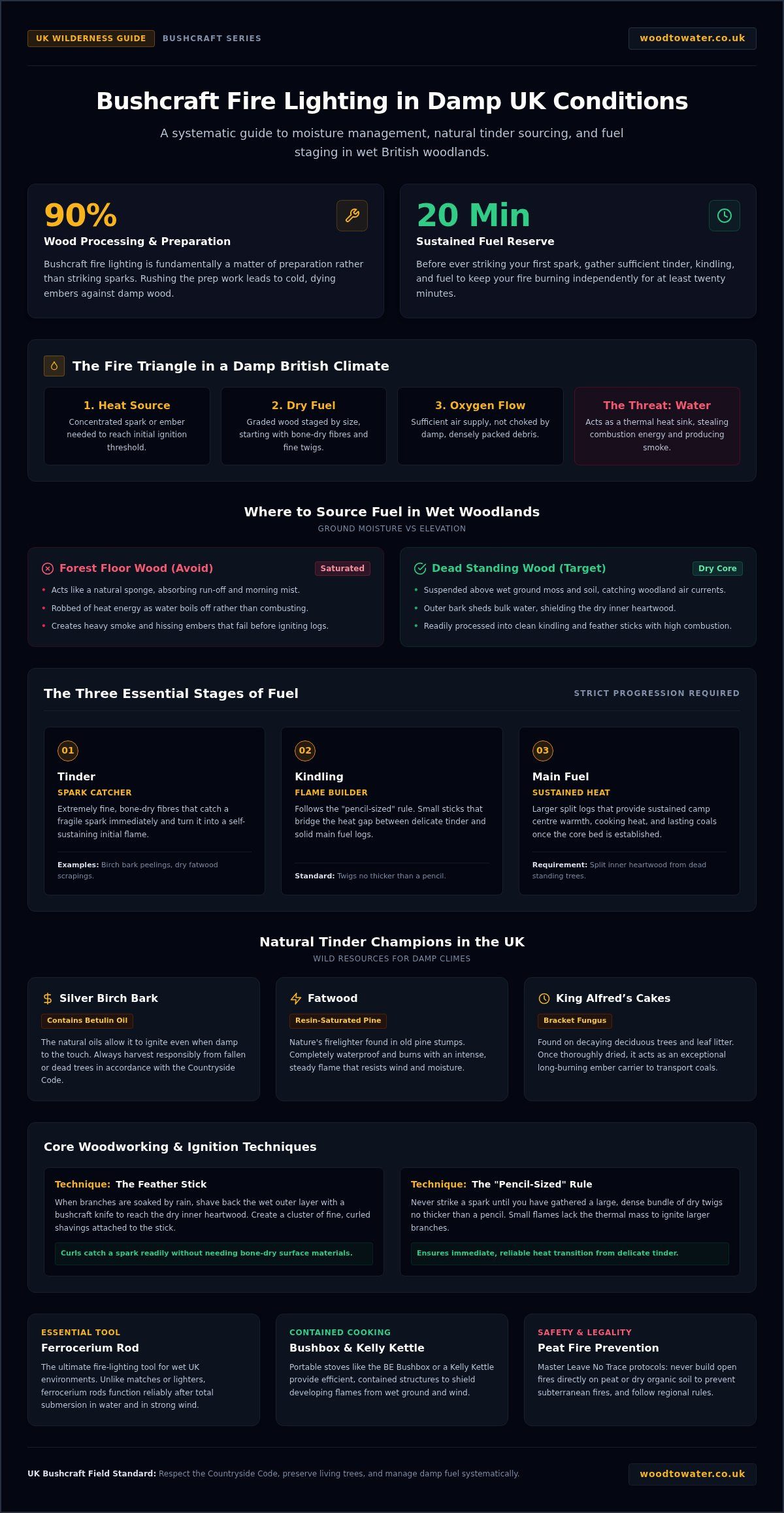
The fire triangle is the essential foundation of any successful outdoor flame. It consists of three parts: heat, fuel, and oxygen. In the UK, moisture is your primary enemy. Water in the air and fuel acts as a heat sink, absorbing the energy you're trying to build. This prevents combustion and leaves you with nothing but smoke. Studying traditional fire making methods shows that balance is key, especially when oxygen flow is restricted in dense, damp woodlands.
Why UK Conditions Demand Specific Skills
Preparation is everything. Before you strike your first spark, you should have enough tinder, kindling, and fuel to keep the fire going for at least twenty minutes. This "fire preparedness" ensures that once you get that initial flame, it has every chance of growing into a sustainable heat source. If you're using a portable stove like the Bushcraft Essentials bushbox, you still need to follow these fundamentals. The stove provides the structure, but your understanding of the fire triangle provides the life. Even when using a Kelly Kettle to boil water, your ability to source the right natural fuel remains the most important tool in your kit. Master these basics, and you'll have the confidence to face any weather the British Isles can throw at you.
Preparing Your Tinder and Fuel for a Reliable Flame
Processing wood is 90% of the work in bushcraft fire lighting. If you rush the preparation, you'll likely spend the rest of the evening fighting a losing battle against the damp. Successful bushcraft fire lighting UK requires a disciplined approach to the three stages of fuel: tinder, kindling, and main fuel. Tinder is your spark-catcher; it needs to be fine and bone-dry. Kindling bridges the gap, taking the initial flame and building enough heat to ignite your main fuel logs. Without a clear distinction between these stages, your fire will likely smoulder and die before it ever provides real warmth.
Sourcing Natural Tinder Amongst British Woodlands
Silver Birch bark is a lifesaver in the UK. Its natural oils, specifically betulin, allow it to ignite even when it feels damp to the touch. You can usually find it peeling from dead trees, but always remember to follow The Countryside Code advice to ensure you aren't damaging living specimens. Another powerhouse is Fatwood. This resin-saturated wood from old pine stumps is essentially nature's firelighter; it's waterproof and burns with an intense, steady flame. Amongst the damp leaf litter, you might also find King Alfred’s Cakes, a bracket fungus that acts as an excellent ember-carrier once dried.
Processing Wood: From Kindling to Main Fuel
When everything is soaked, you must look inside the wood. Whilst the outer bark of a branch might be saturated, the inner heartwood often remains dry. Mastering the feather stick technique allows you to shave back the wet exterior and create a cluster of fine, dry curls that catch a flame easily. For your first stage of kindling, follow the "pencil-sized" rule. Gather a large bundle of twigs no thicker than a pencil before you even think about striking a spark. This ensures you have enough immediate fuel to grow the flame.
Ground moisture is a constant thief of heat in the British Isles. Never build your fire directly on the cold, wet earth. Construct a log "raft" by laying a platform of dry sticks or split logs to act as a barrier. For those who want to be even more prepared, using a Petromax Charcoal Maker allows you to create your own high-quality charcoal from local wood, providing a sustainable and intense heat source for future trips. Getting your fuel prep right is the difference between a frustrating night and a successful camp. If you need to upgrade your kit for the next expedition, take a look at our curated bushcraft essentials to find tools that make processing fuel a breeze.
Choosing the Right Fire Lighting Tools for Your Kit
Choosing your kit is about finding tools that perform when you’re tired, cold, and wet. For bushcraft fire lighting UK, standard gas lighters or matches often fall short because they can’t handle a stiff breeze or a sudden downpour. Traditional flint and steel is a fantastic skill to learn, but it requires high-quality charred material to catch a spark. For absolute reliability, most seasoned outdoorsmen turn to the ferrocerium rod. You can find professional-grade ignition tools in our Bushcraft Essentials collection to ensure you're never left in the dark.
The Reliability of Ferrocerium Rods
A high-quality ferro rod (firesteel) is immune to the dampness that ruins matches. These rods produce a shower of sparks at approximately 3,000°C, which is hot enough to ignite even the most stubborn tinder. Success comes down to your technique. Scrape the rod, don’t pull the striker away; instead, keep the striker still and pull the rod backwards. This allows you to direct the sparks exactly where you need them without knocking over your carefully built tinder nest. Unlike mechanical lighters, there are no moving parts to break or fuel to leak, making them a truly essential part of your long-term kit.
Modern Solutions: The BE Bushbox and Kelly Kettle
Sometimes, the best way to manage a fire in the UK is to contain it. A BE bushbox is a brilliant portable solution that uses a chimney effect to draw in oxygen. This extra airflow helps damp wood burn more efficiently and keeps your fire off the saturated ground. If your main goal is a quick brew, the Kelly Kettle is a classic choice. It uses a hollow-core design to boil water in minutes using only a handful of twigs or dry leaves. These contained fire pits are excellent for reducing your environmental impact whilst providing a reliable heat source.
No kit is complete without a proper bushcraft knife. You need a blade that can handle batoning through logs to reach dry wood and shaving fine curls for feather sticks. Always ensure you are following The Countryside Code when selecting your site and using your tools. Responsible tool use ensures we protect the wild spaces we love whilst staying safe ourselves. Having the right tools won't just make your life easier; it builds the confidence you need to enjoy the outdoors in any season.
How to Build and Manage an Effective Outdoor Campfire Pit
Building a fire pit in the UK requires more than just clearing a spot on the ground. Because our soil is often rich in organic matter, a poorly placed fire can ignite roots or even start a subterranean peat fire. These can smoulder for days before surfacing elsewhere as a full-blown wildfire. To truly master bushcraft fire lighting UK, you must understand that the structure of your pit is just as important as the spark itself. A well-managed pit contains heat, protects the environment, and makes cleanup much easier when it's time to move on. If you're looking to bring that same outdoor warmth to your own garden, you can find out more about high-quality furniture designed for stylish patios.
Always look for mineral soil, sand, or rock for your site. Avoid areas with thick leaf litter or overhanging branches that could catch a stray spark. Once you've found a safe spot, dig a shallow pit and line it with stones to help contain the embers. If the wind is biting, consider building a simple reflector wall from green logs or large stones; this bounces radiant heat back towards you rather than letting it escape. To keep your work area dry during a typical British drizzle, setting up a camping tarp is a smart move. It provides a dry sanctuary for you and your fuel whilst you work.
Step-by-Step Construction Guide
Follow these steps to build a fire that lasts:
- Step 1: Lay a base of dry logs or a thick layer of bark. This insulates your fire from the damp earth, preventing it from sucking the heat out of your initial flame.
- Step 2: Place a small "nest" of the tinder you prepared earlier in the centre of your outdoor campfire pit. This should be fluffy and ready to catch.
- Step 3: Build a small teepee or log-cabin structure around the tinder using thin kindling. Ensure there is plenty of space for oxygen to flow; a fire needs to breathe.
- Step 4: Ignite the tinder using your ferro rod. Once the kindling catches, slowly add larger fuel. Don't rush; let the heat build until the heavy logs can sustain themselves.
Managing the fire is an ongoing process. Keep your fuel organised and within reach so you don't have to leave the fire unattended. As the evening winds down, let the logs burn to ash. In 2026, UK fire services recorded over 1,132 wildfires by mid-August, so complete extinguishment is vital. Use the "drown, stir, drown, feel" method; the ash must be cold to the bare hand before you depart. If you want to keep your camp setup lightweight and efficient, check out our selection of durable camping tarps to stay protected from the elements.
Fire Safety and Responsible Bushcraft Practices
Mastering bushcraft fire lighting UK comes with a heavy weight of responsibility. The legal landscape in Britain is strict; in England and Wales, lighting an open fire without landowner permission constitutes civil trespass. Even in Scotland, where access rights are broader, the Scottish Outdoor Access Code dictates that you should use a stove rather than an open fire whenever possible. If you don't follow these rules, you risk more than just a fine. You risk damaging fragile ecosystems that take decades to recover. A responsible bushcrafter knows that the best fire is one that leaves no evidence it ever existed.
The Leave No Trace Principles for Campfires
Leave No Trace (LNT) is the gold standard for outdoor ethics. If you're in a popular area, always use existing fire rings to minimise your impact on the land. Keep your fires small; you only need enough heat to cook your meal or warm your hands. Burning huge logs is wasteful and creates a larger scar on the ground. Once your ashes are completely cold, you should scatter them widely amongst the undergrowth rather than leaving a pile of grey soot. Using a contained system like the BE bushbox is a brilliant way to adhere to LNT principles, as it keeps the heat concentrated and off the soil.
Essential Safety Gear for Every Expedition
Safety shouldn't be an afterthought. Always keep a dedicated water source or a fire-retardant blanket within arm's reach of your hearth. This is especially vital in the UK, where peat soil is common. Peat can ignite underground and smoulder for days or even weeks before surfacing as a wildfire. In 2026, UK fire services attended 1,132 wildfires between January and August alone, many of which were caused by escaped campfires. A responsible bushcrafter never leaves a fire unattended, even for a moment. If you're worried about the risks of an open flame, switching to a high-efficiency stove like the Jetboil Flash is a safer alternative for quick meals.
When it's time to break camp, your extinguishment process must be thorough. Use the "drown, stir, drown, feel" method. Pour water on the embers, stir them with a stick to expose hot spots, and pour more water until the ash is cold to the bare hand. Naturalising the site is the final step. If you cut a "sod" or piece of turf earlier, replace it carefully and water it in. If you built a fire on mineral soil, rake the area so it looks undisturbed. Your goal is to make sure the next person through the woods never realises you were there. If you need reliable gear to help you manage your camp safely, explore our Kelly Kettle collection for efficient, contained boiling.
Ready to Ignite Your Next Adventure?
Mastering the skill of bushcraft fire lighting UK transforms your experience of the outdoors from a struggle against the elements into a confident partnership with nature. By focusing on meticulous fuel preparation and understanding the physics of combustion, you've built the foundation needed to stay warm in any weather. Success in our damp climate depends on sourcing resinous tinders like fatwood and using reliable ignition tools that won't fail when the drizzle sets in. Your commitment to "Leave No Trace" ethics ensures that our wild spaces remain protected for everyone to enjoy.
If you're ready to upgrade your kit, we've curated the best tools for the job. Explore our full range of professional gear at Wood To Water Outdoors. We stock expert, UK-vetted equipment from leading brands like Bushcraft Essentials and Petromax; our friendly, knowledgeable customer support team is always here to help. Don't let the British weather hold you back. Get out there, practise your skills, and enjoy the unique satisfaction of a perfectly built campfire.
Frequently Asked Questions
Is it legal to light a fire in the UK countryside?
In England and Wales, you must have the landowner's explicit permission to light a fire. Lighting one without consent constitutes civil trespass and can lead to prosecution for criminal damage. In Scotland, the Outdoor Access Code allows for small, controlled fires, but campers are strongly encouraged to use a stove instead. Always check for local Public Spaces Protection Orders (PSPOs) which often ban fires on moorlands to prevent wildfires.
What is the best natural tinder to find in British woods?
Silver Birch bark is the most reliable natural tinder in the UK because its betulin oils allow it to ignite even when damp. Fatwood, which is resin-saturated wood from old pine stumps, is another waterproof powerhouse for bushcraft fire lighting UK. You can also look for dry grasses or King Alfred’s Cakes fungus. These materials catch sparks easily and provide enough heat to ignite your smaller kindling twigs.
How do I light a fire if all the wood on the ground is wet?
Avoid gathering fuel from the forest floor as it acts like a sponge for ground moisture. Look for "dead standing wood" instead; these are branches that have died but remain attached to the tree. Use a bushcraft knife to baton through the saturated outer bark to reach the dry heartwood inside. Carving feather sticks from this dry core creates the surface area needed for a flame to take hold.
What is a "Leave No Trace" campfire and how do I make one?
A Leave No Trace fire ensures the ground looks undisturbed after you leave. Use an elevated platform like the BE bushbox to prevent scorching the topsoil and killing essential microorganisms. If you must build on the ground, use mineral soil or sand as a base. Always extinguish the fire completely using the "drown and stir" method until the ashes are cold. Scatter the cold remains widely to hide your site.
Do I need a permit to build an outdoor campfire pit?
Formal permits are rare; the requirement is usually landowner permission. However, many National Parks and local councils enforce strict byelaws or seasonal bans, particularly between April and September when wildfire risks are highest. In some areas, lighting a fire can result in a fixed penalty notice. Always research the specific rules for your chosen location by checking the Forestry Commission or local authority websites before you start digging.
How can I keep my fire lighting kit dry whilst hiking in the rain?
Store your tinder, matches, and ferrocerium rod in a dedicated waterproof dry bag or a gasket-sealed tin within your rucksack. It is also a smart habit to collect dry tinder as you hike. Tuck small pieces of birch bark or dry grass into your pockets or a dry pouch throughout the day. This keeps your primary ignition materials protected from the elements and ready for immediate use when you reach camp.
What are the best trees in the UK for fire lighting fuel?
Birch is the best for starting a fire, whilst Ash is legendary for burning well even when relatively fresh. For a long-lasting cooking fire, Oak and Beech are superior because they produce dense, long-lasting embers. Avoid using softwoods like Willow or Poplar for your main fuel; they burn through far too quickly and provide less heat. Understanding these species is a core part of successful bushcraft fire lighting UK.
Can I use a bushcraft stove instead of an open fire pit?
Using a bushcraft stove is often the more responsible and efficient choice. Portable twig stoves like the BE bushbox create a chimney effect that burns fuel more completely and produces less smoke. They are much easier to manage than an open pit and significantly reduce the risk of underground peat fires. Many campsites that prohibit open ground fires will still allow contained stoves, making them a versatile addition to your kit.