

Best Camping Gear 2026: The Essential UK Buyer’s Guide
Buying more gadgets won't save a wet weekend in the hills; your setup is only as good as the system behind it. Most outdoor enthusiasts have suffered through sodden sleeping bags, bent alloy pegs, and packs bursting with redundant clutter. It's frustrating to pour good money into cheap kit that folds under a sudden Atlantic front, leaving you cold and exhausted instead of enjoying the trail. Packing reliable camping gear shouldn't feel like a high-stakes gamble against unpredictable British skies.
You already know that venturing into the UK outdoors requires genuine resilience from your equipment. Rather than accumulating random novelties, real comfort comes from treating your shelter, sleep, and cook systems as one integrated, weatherproof unit. In this 2026 guide, you'll discover how to choose durable, high-performance essentials tailored to handle biting winds and relentless drizzle without burdening your pack. We'll break down the ultimate modular checklist across robust shelters, reliable sleep mats, and efficient stoves to help you head into the wild with total confidence.
Key Takeaways
- Build a resilient setup by organising your camping gear around four non-negotiable core pillars: shelter, sleep comfort, trail nutrition, and pack organisation.
- Compare the structural stability of high-rated tents against the elevated flexibility of hammocks to match terrain and changing UK conditions.
- Balance weight and heat efficiency by matching integrated gas systems or versatile stoves with lightweight titanium and hard-anodised cookware.
- Protect expedition safety with dependable hands-free illumination, dry storage systems, and rugged gaiters built for sodden bogs.
- Master a progressive five-step curation and garden-testing methodology to guarantee complete field readiness before heading into remote terrain.
Essential Camping Gear: Core Equipment for British Outdoor Adventures
Camping in Britain means preparing for four seasons in a single afternoon. A bright morning across the fells can turn into horizontal sleet by tea time. Heading into these changeable landscapes demands a disciplined, systems-based approach rather than chucking random gadgets into a holdall. While boot-bound car campers can haul bulky air beds and steel fire pits, moving on foot requires strict balance. Pack-portable equipment must protect against biting drafts while keeping total weight manageable. Understanding foundational camping equipment ensures every single item in your pack pulls its weight in the field.
Prioritise insulation and waterproofing above everything else. Camp novelties won't dry out your thermal layers or reheat frozen fingers after seven hours trekking across soaked moorland. Investing in durable, high-grade essentials saves money over time; low-cost alternatives often split at the seams during their first real downpour.
The Four Pillars of a Reliable Outdoor Kit
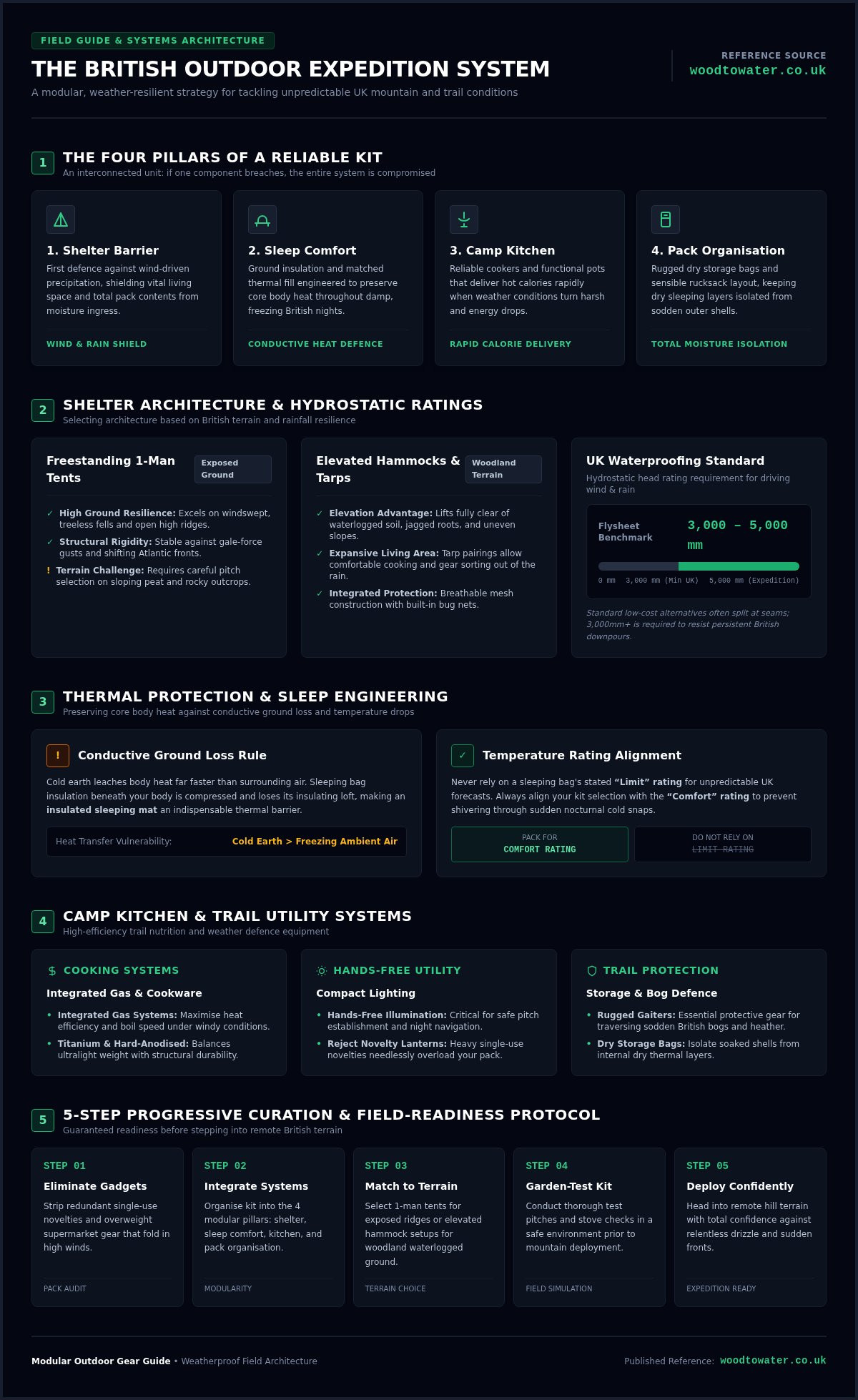
An effective wild setup rests on four non-negotiable foundations:
- Shelter: Your first barrier against wind-driven precipitation, shielding living space and essential pack contents.
- Sleep Comfort: Ground insulation and thermal fill engineered to preserve core body heat throughout damp, freezing nights.
- Camp Kitchen: Reliable cookers and functional pots that deliver hot calories quickly when conditions turn harsh.
- Pack Organisation: Rugged dry bags and sensible rucksack layout, keeping dry sleeping layers fully isolated from sodden outer shells.
These elements function as an interconnected system. If your pack organisation leaks, your sleep system fails, regardless of how warm your sleeping bag claims to be. Striking the balance means choosing weather-resilient kit that defends against sustained damp without needlessly overloading your spine.
Avoiding Common Pitfalls When Buying Gear
Bargain supermarket camping kit often carries massive hidden weight penalties and fragile components that fail when gale-force gusts hit. Equally problematic is carrying redundant single-use novelties; heavy novelty lanterns and unwieldy multi-tools drain physical energy with every mile covered. Keep your focus on robust multi-functional gear like compact lighting from Flextail Gear to minimise bulk. For a thorough walkthrough on refining your pack before stepping onto the hill, explore our professional camping checklist to streamline your loadout.
Shelter and Sleep Systems: Evaluating Tents, Hammocks, and Insulation
Selecting your shelter system requires balancing terrain realities with British rainfall patterns. Mainstream advice often assumes you will pitch on manicured grass, but UK wild camping usually presents sloping peat, dense bracken, or rocky outcrops. Paying attention to hydrostatic head ratings ensures your flysheet resists sustained downpours. A rating of 3,000mm to 5,000mm provides a dependable barrier against driving wind and persistent rain. Beneath you, an insulated sleeping mat provides essential conductive protection; cold earth leaches warmth from your body far faster than surrounding air.
Tents versus Technical Hammock Setups
Pitching choices dictate your shelter architecture. Freestanding 1-man tents excel on exposed, windswept high ground where trees are absent. Conversely, elevated camping hammocks, featuring breathable mesh and integrated bug nets, shine in woodland terrain. They lift you completely clear of waterlogged soil, jagged roots, and uneven slopes. Pairing an elevated hammock with versatile camping tarps creates an expansive, weatherproof living area where you can comfortably sort gear and cook out of the rain.
Mastering Warmth: Sleeping Bags and Under-Insulation
Never rely on a sleeping bag's "limit" rating when packing camping gear for a chilly forecast. Always select kit aligned with the stated "comfort" temperature to avoid shivering through cold snaps. Suspended campers must address underneath draughts, as compressed bag insulation allows convective heat loss beneath you; consult our comprehensive hammock insulation guide to dial in underquilts effectively. When selecting sleeping bags for typical UK expeditions, weigh the advantages carefully:
- Synthetic Linings: Retain thermal loft when wet, dry rapidly on the move, and handle sustained British damp without collapsing.
- Down Insulation: Offers unmatched warmth-to-weight ratios and compresses tiny, but requires meticulous waterproofing against moisture.
Ventilation and Condensation Control Strategies
Warm breath meets freezing flysheets in humid weather, creating heavy condensation that many campers mistake for leaking fabric. Prevent morning puddles by pitching your shelter to capture cross-breezes through built-in vents while keeping the solid outer edge angled against prevailing gusts. Opting for dual-skin designs with breathable inner mesh linings keeps dripping condensation away from your sleep system, ensuring your down or synthetic layers remain completely dry. If you want to refine your personal camp configuration, explore the vetted range of shelters and accessories at Wood To Water Outdoors.
Camp Kitchen and Nutrition: Choosing Stoves, Cookware, and Rations
Cooking in exposed environments tests your kit just as severely as rain tests your tarp. Gusting winds strip away heat from exposed burner flames, turning a five-minute boil into an agonising wait that burns through precious gas. A dependable camp kitchen must deliver hot meals quickly, especially when windchill saps your core body temperature. Balancing thermal efficiency against pack weight ensures you stay properly fuelled without hauling unnecessary bulk across the hills. Selecting the right cooking setup transforms campsite morale after a punishing day on the trail.
Integrated Gas Stoves versus Alternative Fuel Burners
Integrated setups like the Jetboil Flash and JetBoil Trailcook 1.2L pair a regulated burner directly with an insulated, heat-exchanger pot. This design locks out crosswinds, boiling half a litre of water in roughly one hundred seconds with minimal fuel waste. For traditionalists who prefer simmering fresh ingredients, classic remote-canister camping gas stoves offer wide pot supports and precise flame adjustment. Campers seeking complete woodland self-reliance can turn to biomass twig burners like the BE bushbox; they utilise dry twigs and pinecones, eliminating the need to carry heavy gas canisters altogether.
Selecting Cookware: Titanium, Aluminium, and Cast Iron
Cookware materials determine both durability and practical kitchen utility:
- Titanium: Ultra-tough and feathery light, TOAKS Titanium Cookware is the gold standard for solo wild campers who primarily need to boil water for dehydrated rations.
- Hard-Anodised Aluminium: Spreads heat evenly across the base, preventing burnt spots when gently simmering sauces or frying trail breakfasts.
- Cast Iron: Indestructible and heat-retentive, heavy cast iron cookware remains the undisputed champion for open-fire embers at fixed basecamps.
Pair your pots with shatterproof camping plates that resist drops onto rocky ground and wipe clean using minimal fresh water.
Camp Nutrition: Quick Fuel for Long Days Outdoors
Multi-day hillwalking demands between 3,000 and 4,500 calories daily to offset heavy pack hauling and constant cold exposure. Pre-cooked pouch meals, such as 5 Minutes to Delhi Ready Meals, provide calorie-dense, warming sustenance in minutes without coating pots in greasy residues. Simply boil the pouch inside your water vessel; your meal heats thoroughly while providing clean hot water for tea. Always carry a compact hollow-fibre filter or chlorine dioxide tablets to treat moorland stream water safely before boiling.
Essential Trail Utility: Illumination, Tools, and Wet-Weather Protection
Staying warm and dry inside your shelter is only half the battle. Surviving the British backcountry requires active trail utility: kit that protects you while moving through rough, trackless terrain and helps you manage unexpected delays after sundown. Navigating mist-shrouded ridges or pitching a tarp in driving rain demands hands-free lighting and dependable weatherproofing. Cold upland temperatures rapidly drain lithium and alkaline power cells, making disciplined energy management essential. Selecting purpose-built camping gear for your personal utility layer ensures you maintain safety margins when conditions deteriorate.
Headlamps and Night Camp Illumination
Torches held in hand severely limit your mobility during night-time camp chores. A quality headlamp delivering 300 to 450 lumens gives ample beam throw to spot distant trail markers, while lower settings conserve power during meal preparation. Modern hybrid systems simplify charging in the wild; pairing your head torch with a dedicated rechargeable unit like the Petzl Core 2 battery ensures consistent runtime without relying on disposable cells. Red-light modes protect your natural night vision and prevent blinding campmates during late-night map checks.
Footwear Protection: Conquering Wet UK Trails
Sodden peat hags, deep heather, and wet bracken quickly overwhelm even premium waterproof hiking boots by seeping down past your ankle cuffs. Rugged accessories provide vital extra defence on sodden ground:
- Gaiter Barriers: Hardwearing options like Origin Outdoors Drytogo Gaiters seal the critical gap between your trousers and boot collars, blocking bog water, mud, and heather scratches.
- Dry Footwear Rotation: Keep dedicated, ultra-thick wool socks sealed away purely for sleeping inside your shelter.
- Mid-Hike Protection: Prevent blisters by strapping gaiters tightly before crossing saturated valley floors and marshy river banks.
Gear Organisation: Dry Bags and Pack Protection
External elastic rucksack covers regularly catch high winds, turn into sails, or snag against sharp mountain rocks. Storing your essential load inside separate roll-top dry bags provides far superior water protection. Isolate soaking tarps, wet gaiters, and muddy stakes in outer mesh pouches while sealing your sleeping bag and spare clothing deep inside heavy-duty, taped dry sacks. Modern camp convenience also benefits from compact electric pumps and ultra-light campsite accessories from Flextail Gear to inflate sleeping mats effortlessly without adding moist breath into internal insulation. To upgrade your personal expedition readiness, explore our full collection of field-tested trail essentials at Wood To Water.
Building Your Camping Kit: Curation, Maintenance, and Field Readiness
Assembling a high-performance outdoor setup is not about buying every product on a retail shelf; it is about deliberate curation. Selecting reliable camping gear requires testing your setup long before stepping foot on a windswept plateau. Pitch your shelter in the back garden first. Boil a pan of water in gusty conditions behind your shed. Practising your drill in a controlled environment ensures you understand your equipment's nuances when darkness and sideways rain hit in the wilderness.
Five Steps to Assembling Your Custom Setup
Follow a structured methodology to build a dependable, mission-appropriate gear loadout:
- Define the Mission: Match your kit to your specific activity, whether that means lightweight fell walking, woodland bushcraft, or a static family basecamp.
- Secure Core Life Support: Invest first in proven shelter and sleep insulation before looking at secondary campsite comforts.
- Select an Efficient Cooker: Choose a stove system matched to your cooking style and fuel availability across the UK seasons.
- Audit Weight Ruthlessly: Lay out every item at home; remove single-use novelties, backup cutlery, and excessive spares.
- Conduct a Garden Shakedown: Pitch your full system overnight close to home to identify draughts, condensation spots, or missing stakes.
Care and Maintenance: Protecting Your Investment
Proper post-trip maintenance directly dictates gear longevity. Never pack away tents, tarps, or sleeping bags whilst damp; unpack and hang them loosely in a well-ventilated room immediately upon returning home. Mildew can destroy polyurethane waterproof coatings within days. Clean titanium and hard-anodised pots without abrasive scouring pads to preserve smooth finishes, and rinse out silt from hydration bladders. Regularly treat dirty tent zips with a soft brush and apply silicone zip lubricant to prevent jamming on future wet-weather expeditions.
Expert Advice and Field-Tested Gear at Wood To Water
Generic mass retailers rarely test what they stock, often leaving buyers to decipher marketing claims alone. At Wood To Water, our team consists of passionate adventurers and bushcraft specialists who field-test kit in genuine British conditions. We curate proven brands that deliver uncompromised reliability across unpredictable hills and damp woodlands. Whether you need tailored advice on cold-weather hammock systems or want to explore our complete collection of outdoor camping gear, we ensure your pack is built to perform season after season.
Gear Up with Confidence for Your Next UK Adventure
Mastering the British elements comes down to treating your kit as a cohesive, weather-resilient system. Investing in dependable shelter, dialing in your thermal sleep layers, and packing an efficient stove turns unpredictable forecasts into rewarding nights under canvas or stars. Every gram in your rucksack should have a clear job; ruthless editing and garden trials will always beat carrying redundant campsite gadgets.
When you choose reliable camping gear, you buy peace of mind across rugged fells and boggy moorlands. Wood To Water provides field-tested equipment hand-picked by active UK outdoor enthusiasts and bushcraft specialists. Our curated inventory brings together industry-leading names like DD Hammocks, Jetboil, and TOAKS cookware to ensure your loadout holds up against relentless wind and rain. With fast nationwide shipping and dedicated customer advice from our expert team, stepping out onto the hill has never felt more secure. Explore our field-tested camping gear today, pack your rucksack with total confidence, and make your next expedition one to remember.
Frequently Asked Questions
What is the most essential piece of camping gear for beginners?
A reliable sleep mat provides the most critical foundation for any beginner setup. Many novices assume a thick sleeping bag guarantees warmth, but lying down compresses the underside insulation entirely. A quality mat blocks conductive heat loss into cold, damp soil. Paired with a weatherproof shelter, getting your ground barrier right ensures you stay warm, sleep soundly, and wake up ready for the trail.
How much should a standard overnight camping rucksack weigh?
A sensible total pack weight for an overnight UK hill adventure sits between 10kg and 14kg, including food and water. Keeping your base weight around 7kg to 9kg ensures comfortable mileage without placing excessive strain on your knees and lower back. Weigh each piece of camping gear individually on kitchen scales at home so you can spot unnecessary pack bloat before stepping out.
Are camping hammocks as warm as traditional tents in cold weather?
Hammocks match the thermal comfort of traditional tents, provided you insulate underneath properly. Cold air circulating beneath an elevated sleeper quickly pulls heat away through compressed bedding. Adding an external fitted underquilt or an insulated foam pad eliminates this convective chill effectively. When combined with a broad, low-pitched tarp, a technical hammock creates a remarkably cosy microclimate in freezing woodland conditions.
Why is titanium cookware preferred over aluminium for backpacking?
Titanium provides an exceptional strength-to-weight ratio that allows manufacturers to forge incredibly thin, ultralight pot walls. It resists dents, scratches, and acidic food corrosion far better than untreated metals, easily handling years of rough wilderness travel. While aluminium excels at gentle simmering by dispersing heat evenly, titanium remains the superior choice for minimalist backpackers whose primary goal is boiling water rapidly.
What hydrostatic head rating is required for heavy UK rainfall?
A flysheet requires a minimum rating of 3,000mm hydrostatic head to withstand sustained, wind-driven British rain. While 1,500mm might cope with light summer showers, high winds force moisture straight through weaker fabrics. Tent groundscreens demand even greater resilience; look for 5,000mm to 10,000mm ratings underneath to prevent water pressing through when kneeling or sleeping on saturated, boggy turf.
How do I prevent condensation from building up inside my tent?
Maximising airflow by keeping high and low ventilation ports fully open stops internal moisture accumulation. Condensation forms when warm, moisture-laden breath strikes cold outer tent flysheets in humid air. Never cook inside your inner tent, and pitch your shelter broadside to gentle breezes to maintain cross-ventilation. Keep soaking clothing, boots, and wet pack covers sealed away inside waterproof sacks rather than strewn across the floor.
Is an integrated gas stove better than a multi-fuel camping burner?
Integrated gas systems work best for quick weekend treks where speed, wind protection, and fuel efficiency are paramount. They boil water in mere minutes and pack down compactly inside their own insulated pots. Multi-fuel burners suit extended expeditions or freezing winter journeys where standard gas canisters lose operational pressure; they burn white gas, paraffin, or petrol reliably in sub-zero alpine temperatures.