

Hammock Insulation Guide: Staying Warm in Your Camping Bed Whilst Wild Camping
Why does a five-season sleeping bag still leave you shivering when you're suspended just a few feet off the forest floor? It's a frustrating reality for many; you've found the perfect pair of trees and a stunning British view, only to wake at 2 am with a frozen back. This common issue, known as Cold Butt Syndrome, occurs because your body weight compresses the loft in your sleeping bag, leaving you vulnerable to the biting air below. Understanding the mechanics of hammock insulation is the only way to stay truly warm whilst wild camping.
You shouldn't have to choose between a warm back and a lightweight pack. We understand the confusion over underquilts versus mats, especially when you're trying to keep your kit minimal for a winter trek. This guide promises to help you master your setup so you can enjoy a cosy night under the stars in any season. We'll explore how to use the DD Frontline Hammock as a versatile base and look at innovative insulation solutions from Onewind Outdoors. From protecting your micro-climate to choosing the right tarp, you'll gain the confidence to camp through the shoulder seasons with a reliable, professional sleep system.
Key Takeaways
- Uncover why standard sleeping bags fail in the air and how to banish "Cold Butt Syndrome" from your wild camping trips for good.
- Compare underquilts and sleeping mats to decide which primary layer offers the best balance of warmth and packability for your next trek.
- Master the art of hammock insulation by perfecting your diagonal lay and removing the pesky air gaps that cause middle-of-the-night chills.
- Find out why synthetic insulation is such a reliable ally in the damp British weather and how to pick the right seasonal rating for your gear.
- Explore advanced setups like cocoons and top quilts to build a high-performance, lightweight system that handles even the coldest winter nights.
Understanding "Cold Butt Syndrome": Why Your Camping Bed Needs Special Insulation
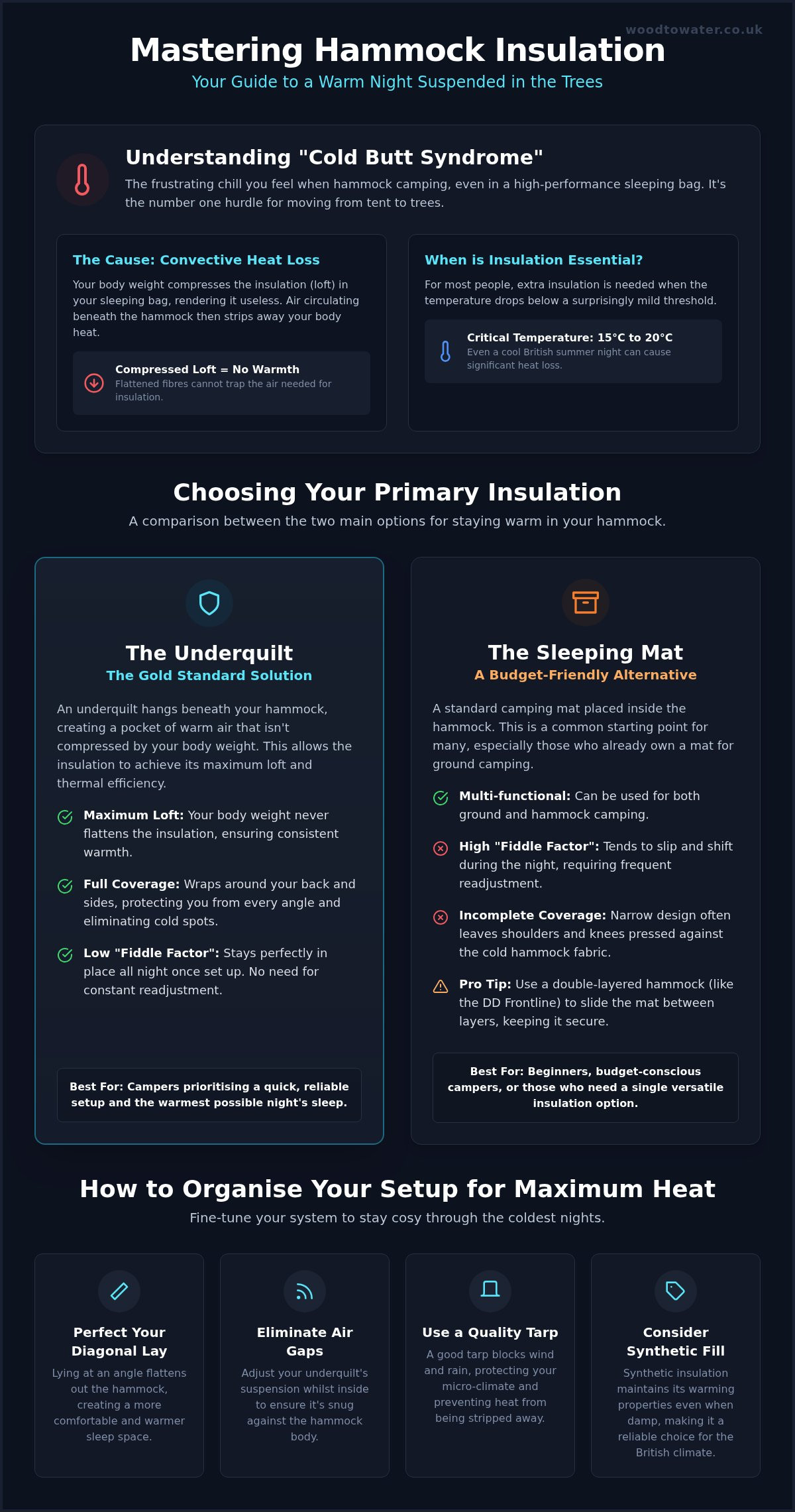
If you've ever spent a night in a hammock only to wake up with a freezing underside, you've experienced Cold Butt Syndrome (CBS). It's the primary hurdle for anyone moving from a tent to the trees. Whilst your high-end sleeping bag might be rated for sub-zero temperatures, it won't save you once you're suspended. This is because your body weight flattens the insulation beneath you, leaving nothing but a thin layer of nylon between your skin and the cold night air. To stay warm, you need a dedicated hammock camping sleep system that protects your back from the elements. We treat warmth as a holistic setup rather than just a single piece of gear.
The Physics of Compressed Insulation
The secret to staying warm lies in "loft." Loft is the air trapped within insulation fibres that actually provides warmth. When you're in a tent, you use a camping mat to block conductive heat loss, which is the transfer of heat from your body to the cold ground. In a hammock, the challenge shifts to convective heat loss. This occurs when moving air flows under your hammock and strips away your body heat from every angle. Even a 4-season sleeping bag fails here because your weight crushes the down or synthetic fill. Without uncompressed hammock insulation hanging beneath you, that gentle midnight breeze becomes a thermal vacuum, pulling heat directly out of your core.
When Does Hammock Insulation Become Essential?
Many beginners assume they only need extra layers in the dead of winter. However, the "drop-off" temperature for most people is surprisingly high, usually around 15°C to 20°C. Below this point, your body can't generate enough heat to overcome the constant cooling effect of the air circulating beneath the DD Frontline Hammock or similar models. In the UK, even a mid-summer night can easily dip to 10°C, making some form of under-protection essential for a decent night's rest. Wind speed plays a massive role too; a light breeze can make a mild evening feel decidedly chilly. Using a quality camping tarp helps block the wind, but it won't replace the need for dedicated hammock insulation to keep your micro-climate stable.
Underquilts vs. Sleeping Mats: Choosing Your Primary Insulation
Choosing your primary layer of hammock insulation usually comes down to a battle between what you already own and what provides the best night's sleep. Most hikers start with a standard camping mat because they're familiar and multi-functional. However, as you spend more time in the trees, the limitations of a flat mat in a curved hammock become obvious. Understanding the dangers of heat loss is vital for any wild camper; if your insulation doesn't wrap around your sides, you'll still feel the bite of the wind.
The "fiddle factor" is the biggest difference here. A mat requires constant wrestling to stay centred, whilst an underquilt stays put once it's clipped on. If you enjoy a quick, fuss-free setup at the end of a long hike, the quilt wins every time.
The Case for the Hammock Underquilt
An underquilt is the gold standard for a reason. It hangs underneath your hammock, meaning your body weight doesn't compress the fill. This allows the insulation to maintain its full loft and trap a thick layer of warm air. We often recommend Onewind Outdoors gear for this because their suspension systems are incredibly intuitive. You can adjust them whilst lying inside, which helps eliminate those annoying cold spots. A full-length quilt is a total game-changer; it protects everything from your head to your toes simultaneously without the need for extra foot pads.
Using a Sleeping Mat in a Hammock
If you aren't ready to invest in a dedicated quilt, a sleeping mat is a viable budget-friendly option. The trick is keeping it in place. Standard mats tend to squirm out from under you as you move. This is where the DD Frontline Hammock shines; its double-layered base allows you to slot a mat between the fabric layers. This keeps the mat secure and prevents it from sliding. You'll still face a trade-off, though. Mats are narrow, so your shoulders and knees often press against the uninsulated sides of the hammock. It's a great ultralight solution for summer, but for true four-season comfort, a quilt is hard to beat.
Your choice depends on your camping style. If you're an ultralight hiker who occasionally swaps between a tent and a hammock, a mat offers great versatility. For those dedicated to the trees, a professional quilt provides a level of comfort that a mat simply can't match. If you want to see the difference for yourself, take a look at our curated range of Onewind insulation systems to find your perfect fit.
Advanced Insulation: Top Quilts, Cocoons, and Thermal Liners
Once you've secured your under-protection, the next step in mastering hammock insulation is managing the heat escaping from the top and sides. Staying warm in the wild is all about efficiency. You need to understand the physics of heat transfer to realise that a standard sleeping bag isn't always the best tool for the job. Advanced systems like top quilts and cocoons offer a more tailored approach to the unique geometry of a hanging bed, ensuring no calorie of body heat is wasted whilst you sleep.
Top Quilts: The Freedom of Movement
Wrestling with a sleeping bag zip whilst suspended in the air is a struggle every hammock camper knows well. Top quilts eliminate this hassle entirely. They are designed with a foot box to keep your toes warm but remain open at the back. Since the insulation underneath you would be compressed and rendered useless anyway, removing it saves significant weight and bulk. This makes them a cornerstone of ultralight outdoor gear setups. They provide better freedom of movement and allow you to vent easily if you start to overheat during a mild spring night.
The Hammock Cocoon and Peapod Systems
For those brave enough to tackle deep winter expeditions, a standard quilt setup might feel a bit breezy. This is where the cocoon system comes into its own. A cocoon literally encases the entire hammock and the sleeper inside a single insulated tube. This setup creates a completely sealed micro-climate, blocking every possible draft. While they offer the ultimate in warmth, they do come with trade-offs. They can be bulkier than modular systems and some campers find the restricted visibility and access a bit daunting. However, if you're planning a static winter camp where temperatures will stay well below freezing, the cocoon is a formidable piece of kit.
Layering remains the smartest way to handle the unpredictable UK climate. Adding a silk or thermal liner to your setup can boost your temperature rating by several degrees for very little extra weight. It also protects your hammock insulation from oils and dirt, extending the life of your gear. By combining these elements, you can build a modular system that is just as effective for a breezy coastal camp as it is for a frosty woodland night. This flexibility ensures you stay comfortable regardless of how the weather turns during your trip.
How to Organise Your Setup for Maximum Heat Retention
Even the most expensive hammock insulation will fail if your setup is sloppy. A common mistake amongst beginners is lying straight down the centre of the hammock. This creates a "banana" curve that forces the underquilt to sag away from your lower back, creating a massive thermal leak. You must aim for a diagonal lay. By positioning your head and feet at opposite angles to the centre line, you create a flatter surface. This allows the insulation to wrap snugly around your body without being stretched too thin or leaving pockets of cold air. It's a simple adjustment that makes a massive difference to your thermal efficiency.
Eliminating the Air Gap
The primary cause of a shivering night is the dreaded air gap. If there is even a small space between the bottom of your hammock and the underquilt, cold air will circulate and strip away your warmth. Most modern quilts use shock cords to pull the insulation tight against the hammock fabric. You want the quilt to cradle you like a second skin without being so tight that it crushes the loft. To ensure you've got it right, you should perform the "hand test" by reaching under yourself whilst lying in the hammock to feel for any voids or sagging sections. If you find a gap, tighten the end cinches to seal the system and keep the heat where it belongs.
The Tarp as a Thermal Shield
In the damp and breezy British climate, wind is a constant threat to your comfort. It acts like a thermal vacuum, pulling heat directly out of your hammock insulation through convection. Your camping tarp is your first line of defence against this cooling effect. On windy nights, pitch your tarp as low as possible and use a steep "A-frame" shape to block the breeze. If you're camping in exposed areas, consider using a tarp with "doors." These extra flaps enclose the ends of your setup, creating a pocket of dead air that stays much warmer than the surrounding environment.
Don't forget to pre-warm your core before you climb in for the night. Your insulation is designed to trap heat, not generate it; if you get in cold, you'll stay cold. Use your Fire-Maple gear to brew a hot tea or prepare a warm meal just before bed. A few minutes of light movement, like a quick walk or some star jumps, will also help. Just be careful not to work up a sweat. Damp base layers are the enemy of warmth in the wild. Protect your insulation from the wind today by choosing a high-quality camping tarp from our vetted collection.
Choosing the Right Hammock Insulation for the British Climate
Selecting the right hammock insulation for the UK requires a strategy that accounts for moisture just as much as temperature. Our climate is notoriously damp, and that humidity plays havoc with gear performance. Whether you're planning a misty autumn night in the woods or a frosty winter camp in one of our national parks, your choice of fill material and seasonal rating will determine whether you sleep soundly or spend the night shivering. We believe in gear that's been vetted for these specific conditions; this ensures you don't carry unnecessary weight or risk a cold night due to gear failure.
Down vs. Synthetic in the UK
Down insulation is prized for its incredible warmth-to-weight ratio and compressibility. However, it has a significant weakness in the British woods: humidity. Traditional down loses its loft and insulating properties when it gets damp, clumping together and leaving you cold. If you choose down, looking for treated "hydrophobic" versions is a must. For many, synthetic Onewind insulation is the more reliable "workhorse" choice. It retains most of its insulating power even when damp and dries out much faster than down. If you're worried about the extra bulk of synthetic gear, you can offset the weight elsewhere. Many of our customers use TOAKS Titanium cookware to keep their total pack weight manageable whilst prioritising the reliability of a synthetic quilt.
Building Your Modular System
You don't need to buy a different underquilt for every month of the year. A modular approach is far more cost-effective. A high-quality 3-season underquilt is a fantastic starting point, covering you from early spring through to late autumn. When the winter temperatures truly bite, you can boost your setup by adding a thermal liner or a second lightweight underblanket. This layered approach gives you the flexibility to adjust your hammock insulation based on the specific forecast. If you're unsure where to start, visiting a specialist bushcraft store for expert advice can save you from making an expensive mistake.
Before you head out on your next wild camping expedition, use this final checklist to ensure a cosy night:
- Check your underquilt's seasonal rating against the lowest forecasted temperature.
- Ensure your tarp is large enough to protect your insulation from sideways rain.
- Pack a dry set of base layers specifically for sleeping to avoid dampness.
- Confirm your suspension shock cords are in good condition to prevent sagging.
- Bring a hot water bottle or pre-warm your core with a hot meal or drink.
Ready to upgrade your sleep system? Explore our full range of hammock insulation at Wood To Water Outdoors and find the perfect kit for your next adventure. Our team at Wood To Water Outdoors is always on hand to help you choose the right gear for your specific needs.
Master Your Sleep System for Every British Season
Stepping away from the cold ground shouldn't mean sacrificing a warm night's sleep. By understanding the mechanics of loft compression and the importance of a snug, gap-free setup, you've already won the battle against Cold Butt Syndrome. Whether you choose a versatile mat for summer treks or a professional underquilt for frosty winter expeditions, the right hammock insulation transforms your wild camping experience from a shivering ordeal into a cosy retreat. It's about protecting your micro-climate so you can focus on the beauty of the woods rather than the bite of the wind.
We're dedicated to helping you find the perfect kit for the unpredictable UK climate. As official stockists of DD Hammocks and Onewind, our inventory is expertly vetted for UK conditions to ensure reliability when you're deep in the British wilds. Wood To Water Outdoors offers free UK delivery on qualifying orders to get your gear to you faster. It's time to stop worrying about the forecast and start enjoying the unique perspective that only a night in the trees can provide.
Browse our curated collection of Hammock Insulation and Underquilts at Wood To Water Outdoors and take the first step towards your most comfortable night under the stars yet. You've got the knowledge; now get the gear and enjoy the adventure!
Frequently Asked Questions
Do I really need an underquilt if I have a 0-degree sleeping bag?
Yes, you definitely need an underquilt regardless of your sleeping bag rating. Your body weight flattens the bag's insulation against the hammock fabric, removing the air pockets needed to trap heat. This leaves your back exposed to convective heat loss from the moving air beneath you. A 0-degree bag only protects your top and sides; without dedicated hammock insulation underneath, you'll still wake up with a cold back.
Can I use a regular yoga mat for hammock insulation?
You can use one, but a yoga mat is far from ideal. They are typically too narrow to cover your shoulders and knees, and they lack the thermal resistance of a dedicated camping mat. You'll likely find it slips around during the night, leaving you with cold spots. If you're on a budget, a closed-cell foam camping mat is a much more effective and durable alternative for wild camping.
What is the best temperature rating for a UK all-rounder underquilt?
A 3-season underquilt rated between 0°C and -5°C is the most versatile choice for the UK. This rating handles the unpredictable British weather from early spring through to late autumn. Since our nights are often damp and breezy, having that extra thermal buffer is essential even during a mild summer. For deeper winter expeditions, you can easily boost this setup modularly by adding a thermal liner or a second lightweight blanket.
How do I stop my underquilt from slipping during the night?
Start by adjusting the shock cord suspension to ensure the quilt is snug against the hammock base. Most hammock insulation from specialists like Onewind features secondary cinches at the ends; tighten these to seal any air gaps. If the quilt still shifts, ensure you're using a proper diagonal lay, as this keeps the fabric taut whilst you sleep. Some hammocks also feature small plastic hooks designed to keep the underquilt in alignment.
Are hammock cocoons better than underquilts for winter?
Cocoons provide an impressive thermal seal by encasing the entire hammock, making them great for static winter camps. However, a high-quality underquilt is usually more practical for most campers. Underquilts offer better modularity, allowing you to vent easily if the temperature rises. They are also generally lighter and less restrictive than a full cocoon system. Unless you're facing extreme, consistent sub-zero temperatures in the Highlands, a modular quilt setup is often the better investment.
Can I use hammock insulation with a 1-man tent or bivi bag?
No, underquilts are not suitable for ground-based camping in a tent or bivi. Their design relies on hanging freely beneath you to maintain the loft that traps warm air. If you place an underquilt on the ground, your body weight will compress the insulation, rendering it ineffective against the cold earth. For 1-man tents or bivi bags, you should always use a dedicated sleeping mat to protect against conductive heat loss.
How do I clean and store my hammock underquilt to maintain loft?
Proper storage is vital; never leave your quilt compressed in a stuff sack for long periods. Instead, store it loosely in a large mesh bag or hang it in a dry cupboard to preserve the loft. When it needs cleaning, use a specialist technical wash rather than standard detergent. Hand wash or use a gentle machine cycle, then tumble dry on a very low heat with a few clean tennis balls to restore the insulation's bounce.
Is down or synthetic insulation better for camping in the UK?
Synthetic insulation is typically the superior choice for the damp British environment. It retains its insulating properties even when wet and dries much faster than down. While down is lighter and more packable, it can clump and lose its warmth if it absorbs moisture from our humid air. For reliable, workhorse performance in the UK woods, synthetic options from brands like Onewind offer peace of mind during those misty, drizzly wild camping trips.
