

Understanding Hydrostatic Head: Tent Waterproofing Explained
You wake up at 3:00 am to the rhythmic drumming of a Lake District downpour, only to feel a cold, damp patch spreading across your favourite sleeping bag. It's the moment every camper dreads; the sudden realisation that your gear isn't quite as waterproof as you'd hoped. If you're currently staring at technical spec sheets and feeling a bit overwhelmed, you aren't alone. You're likely asking, "What does Hydroststic head mean on tents?" and more importantly, how much of it do you actually need to stay dry during a British summer?
We understand that confusing jargon can make choosing new kit feel like a chore, but getting this right is essential for your comfort and confidence on the trail. This guide explains exactly how these ratings work so you can stop worrying about waking up in a puddle. We'll show you how to find the perfect balance between waterproofness and pack weight; we'll also share our best tips for keeping your gear performing at its best for years to come.
Key Takeaways
- Discover the answer to what does Hydroststic head mean on tents and how manufacturers calculate these vital ratings in the laboratory.
- Identify the ideal rating for the British climate; we explain why 1500mm is the baseline for summer adventures and how wind changes the rules.
- Learn why a high rating is only half the story. You'll see why taped seams and clever geometry are essential for a dry night's sleep.
- Find out how to maintain your kit's performance so your tent remains a reliable, rugged shelter for years to come.
- Get a practical checklist for inspecting gear before you buy; this ensures you choose the right protection for your specific outdoor pursuit.
Decoding Hydrostatic Head: The Measure of Tent Waterproofness
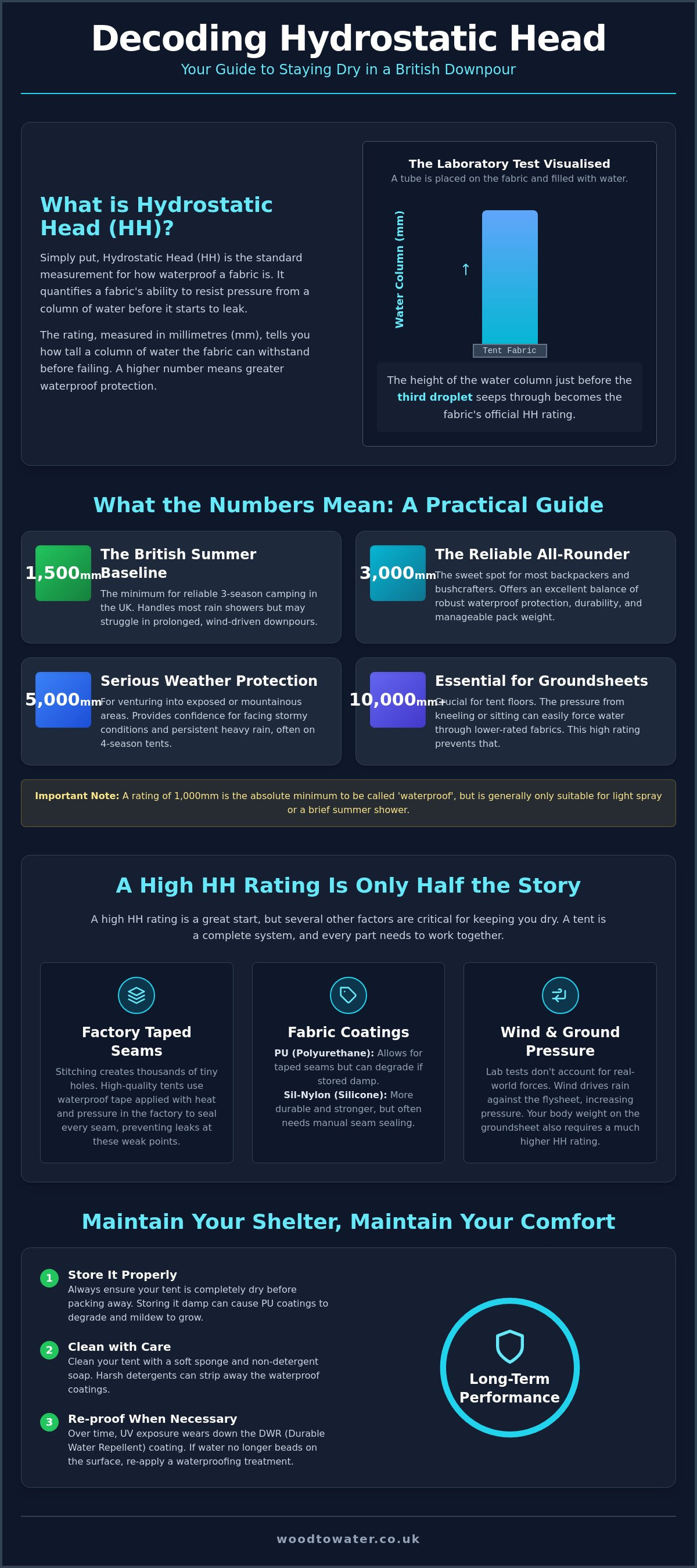
You might be looking at a spec sheet and wondering, "What does Hydroststic head mean on tents?" and why it matters for your next trip. Simply put, Hydrostatic head (HH) is the technical way we measure a fabric's ability to resist water pressure. Imagine a clear, 10cm diameter tube placed vertically over a piece of tent material. Technicians fill this tube with water; the height in millimetres at which the water finally seeps through the fabric becomes its HH rating. If a tent has a 3,000mm rating, it means the fabric can support a three-metre column of water before failing. It's a static test that gives us a clear baseline for performance.
In the UK, there's no single legal minimum that dictates when a manufacturer can use the word "waterproof". Most industry experts agree that 1,000mm is the entry point for basic protection. However, the British weather is rarely basic. A rating that works for a garden camp-out will likely fail you on a windswept ridge in Snowdonia. Knowing your numbers helps you choose kit that actually matches your environment.
Why Millimetres Matter in Heavy Downpours
Pressure is the real enemy of a dry night. When rain sits on your flysheet, gravity and the weight of the water create a constant force against the fabric's fibres. It's helpful to understand the difference between three common terms. Water-resistant fabrics offer the lowest protection, usually only handling light spray. Water-repellent materials feature a coating that makes moisture bead and roll off the surface. Truly waterproof fabrics are the gold standard for camping; they use a solid barrier to block penetration even when the rain is lashed against the tent by a gale. The weave of the fabric also plays a role. Ripstop weaves offer incredible strength and are often paired with high-quality coatings; Taffeta is a smoother alternative that is frequently used in lightweight setups. Both rely on the HH rating to prove their worth in a storm.
The Standard UK Rating System
When you browse our range of 1-man tents, you'll encounter a wide spectrum of ratings. Most reliable bushcraft gear sits between 2,000mm and 5,000mm for the flysheet. Brands like 3FULGear focus on this range because it offers a brilliant balance of protection and portability. You might see groundsheets rated up to 10,000mm; this is because sitting or kneeling on the floor creates much higher pressure than rain hitting the roof. High ratings are useful, but more isn't always better. A sky-high HH rating usually means a heavier, less breathable tent. The goal is to find the right level of protection without turning your shelter into a heavy, sweaty sauna.
The Laboratory Test: How Manufacturers Calculate HH Ratings
How does a manufacturer actually prove their gear can handle a storm? They use a specific laboratory procedure known as the Suter Test. Brands like 3FULGear rely on this static pressure method to verify their fabrics meet high performance levels. During the test, a machine forces water against a section of fabric under steadily increasing pressure. The technician watches closely for the exact moment the barrier fails. The process continues until exactly three drops of water penetrate the material. This specific failure point defines the rating you see on the label. When people ask, "What does Hydroststic head mean on tents", they are essentially asking about the results of this precise, scientific measurement.
It's vital to remember that these tests occur in a vacuum. Technicians use pristine, brand-new fabric in a climate-controlled room. They follow strict international standards for waterproof testing to ensure consistency across the industry. This controlled environment eliminates variables like temperature or humidity that could skew the results. Whilst this provides a level playing field, it doesn't account for the grit, UV rays, or folding that happens in the wild. The rating is a snapshot of the fabric's potential at its absolute best. It serves as a benchmark rather than a guarantee of lifelong performance.
PU vs Silicone Coatings: Impact on Waterproofness
The type of coating used significantly affects how that HH number behaves over time. Polyurethane (PU) coatings are common because they provide a high initial rating and allow for factory-taped seams. However, PU can degrade if stored damp. On the other hand, Silicone coatings (Sil-Nylon) often show a lower HH on paper but offer superior durability and tear strength. This is why many high-end camping tarps used in bushcraft favour silicone; it remains supple and waterproof through years of hard use. If you're planning a trip where reliability is non-negotiable, it pays to explore our curated range of high-performance tarps and shelters.
Why Ratings Vary Between Brands
Not all numbers are created equal. Some reputable brands report a "minimum" rating, meaning every single batch of fabric produced must hit that number. Others report an "average" across several tests, which can be slightly misleading. You should also be wary of "marketing inflation" in budget tents. A 5,000mm rating on a cheap supermarket tent isn't the same as a 3,000mm rating from a specialist manufacturer. Premium brands use higher quality chemicals and application methods; this makes their lower numbers more reliable in a real British downpour. Choosing a vetted brand ensures you aren't just buying a number on a box.
To find high-performance gear that avoids retail markups, you can learn more about Direct-to-Consumer Product Sales from specialist brands like Fieldward Supply Co., which focus on delivering rugged equipment directly to the end user.
Choosing the Right Rating for the Temperamental British Climate
Choosing a tent based on a lab score is one thing, but pitching it in a Scottish glen during a gale is quite another. When you ask, "What does Hydroststic head mean on tents" in the context of the UK, you have to account for wind speed. A static column of water in a lab doesn't simulate a 50mph gust forcing rain directly into the fabric fibres. This wind pressure effectively increases the force of the water; it means a tent that stays dry in a gentle garden shower might fail during a mountain storm. With England experiencing rainfall 35% above the long-term average in the winter of 2025/2026, choosing the right baseline has never been more important for your comfort.
For most campers, a rating of 1,500mm to 2,000mm is the absolute minimum for a typical UK summer. It'll handle moderate showers, but it might struggle if you're caught in a prolonged downpour. If you're heading into the hills for multi-day trekking, the sweet spot is usually between 3,000mm and 5,000mm. This provides a safety buffer against the erratic weather patterns found in the Lake District or the Highlands. Remember that there are many factors beyond HH rating that determine if you stay dry, but these numbers give you a solid foundation to build upon.
Recommended HH Ratings for UK Conditions
- Summer Festivals and Lowland Camping: 1,500mm to 2,000mm. This is lightweight and sufficient for sheltered spots and fair-weather forecasts.
- Three-Season Wild Camping: 3,000mm to 5,000mm. Essential for the Highlands or the Peaks where wind and rain are more intense. Our range of 2-man tents often features these rugged specifications.
- Winter Expeditions and Extreme Weather: 5,000mm+. This level of protection is designed for year-round use and high-altitude environments where the weather is truly relentless.
The Groundsheet Exception: Why You Need 5000mm+
You might notice that groundsheets often have much higher ratings than the flysheet. This isn't a mistake. Whilst the flysheet's job is to shed rain, the groundsheet must resist standing water whilst under incredible pressure. When you kneel or sit inside your tent, you create massive localised pressure on a small area of fabric. This can easily exceed the resistance of a low-rated material, forcing moisture through the floor. We always recommend a groundsheet rating of at least 5,000mm to 10,000mm. To preserve this protection, consider using a footprint; it acts as an extra barrier against sharp stones and grit that can degrade your tent's waterproof coating over time.
Why a High HH Rating Isn’t the Only Thing Keeping You Dry
It's very easy to get fixated on the numbers when you're comparing gear. You might have a firm handle on the answer to "What does Hydroststic head mean on tents", but a high rating is only one part of the survival puzzle. A fabric with a massive 10,000mm rating is effectively useless if the seams aren't properly secured. Think of it like a high-tech bucket with a hole in the bottom; the material itself is incredible, but the construction fails at the first hurdle. Staying dry requires a holistic approach to tent design and maintenance.
Beyond the raw HH rating, your tent relies on a Durable Water Repellent (DWR) coating. This invisible chemical layer makes water bead and roll off the surface before it can even test the fabric's HH barrier. If the DWR fails, the fabric "wets out", becoming heavy, cold, and prone to sagging. Tent geometry is equally vital. A well-designed shelter uses steep angles to shed water quickly. Flat spots or "dips" in the flysheet allow water to pool; this creates constant, heavy pressure that eventually forces moisture through even the best coatings. To keep your kit in top condition, you can browse our bushcraft essentials for the right maintenance gear and seam sealers.
The Role of Taped Seams and Zips
Every time a needle passes through fabric to create a seam, it leaves a tiny hole. These needle holes are the primary entry points for leaks in a storm. Most modern tents come with factory-taped seams, where a waterproof tape is heat-bonded over the stitches. However, some high-end silicone-coated tents require hand-sealing with specialist liquids because tape won't stick to the silicone. Don't overlook the zips either. Look for water-resistant zips or substantial storm flaps that deflect rain away from these vulnerable openings. These secondary defences are just as important as the fabric itself.
Condensation vs Leaking: The Common Misconception
One of the most frequent mistakes campers make is assuming their tent is leaking when it's actually just suffering from condensation. High HH fabrics, especially those with thick PU coatings, are often less breathable. This traps the moisture from your breath and damp clothes amongst the air inside the tent. On a cold British night, this moisture hits the flysheet and drips back down, creating what we call "internal rain". To tell the difference, check the seams. If the moisture is evenly spread across the fabric and not dripping specifically from a stitch line, it's likely condensation. Improving ventilation is the only way to solve this, regardless of how high your HH rating is.
Finding Your Ideal Tent and Maintaining Its Performance
Choosing the right shelter is about more than just chasing the highest number on a spec sheet. By now, you've got a solid answer to the question, "What does Hydroststic head mean on tents", but your final choice should reflect your specific style of camping. A tent's performance isn't static. Over time, UV rays from the sun and general abrasion from grit and sand will slowly degrade the waterproof coatings. This reduces the effective HH rating of your kit. To extend the life of your primary shelter, we often recommend using lightweight camping tarps as a sacrificial layer in harsh conditions.
Before you commit to a purchase, run through this quick inspection checklist to ensure you're getting a truly rugged piece of gear:
- Flysheet vs Groundsheet: Ensure the floor has a significantly higher rating (5,000mm+) than the roof to handle the pressure of kneeling.
- Seam Quality: Look for consistent, clear factory taping or a plan for hand-sealing if you choose a sil-nylon model.
- Ventilation: Check for high-level vents that will prevent condensation whilst keeping rain out.
- Reinforcement: Inspect guy-line attachment points for extra stitching and fabric backing to prevent tearing in high winds.
Matching Ratings to Your Outdoor Pursuit
If you're an ultralight hiker, you'll likely prioritise a lower weight. A 2,000mm flysheet is often the perfect compromise; it offers reliable protection without adding unnecessary bulk to your pack. Conversely, if you're base camping or bushcrafting in one spot for several days, you should look for heavy-duty 5,000mm+ fabrics. These thicker materials offer better longevity and resistance to the elements. For a great balance of these features, you can explore our versatile range of 2-man tents which are built specifically for the unpredictable British environment.
Aftercare: How to Restore Your Tent’s Waterproofing
Your tent's performance will naturally dip after a few seasons of hard use, but you don't need to replace it immediately. Proper cleaning is the first step. Never use standard household detergents; these are designed to break down oils and will strip away your waterproof coatings. Use a specialist tech-wash instead. Once the fabric is clean, you can re-apply a DWR spray to bring back that satisfying "beading" effect. Make it a habit to perform a seasonal gear maintenance check. Inspect the seams for any lifting tape and apply a fresh sealer if you spot any gaps. A little bit of care goes a long way in keeping you dry on the trail.
Ready for Your Next Wild Adventure?
You now have the knowledge to navigate technical spec sheets with total confidence. You understand that answering "What does Hydroststic head mean on tents" is just the first step in staying dry amongst the elements. By balancing a solid HH rating with smart construction and regular aftercare, you can pitch your shelter with peace of mind. Always remember to prioritise a higher rating for your groundsheet to handle localised pressure. Keeping your gear clean and re-proofing the fabric regularly will ensure it remains a reliable barrier against the weather for years to come.
We only stock expert-vetted gear designed to handle the realities of the British trail. Our selection is trusted by the UK bushcraft community for its reliability and rugged durability. Explore our curated range of waterproof tents and tarps at Wood To Water Outdoors and enjoy free UK delivery on all orders over £70. Choosing high-quality kit is the best way to ensure you stay comfortable; it lets you focus on the landscape rather than the leaks.
See you out in the wild!
Frequently Asked Questions
Is a 2000mm hydrostatic head good for a tent in the UK?
A 2,000mm rating is a solid baseline for typical British summer camping in lowland areas. It provides enough protection for moderate rain showers and light wind. However, if you're heading into the mountains or camping during the wetter winter months, you might prefer a higher rating. It's a great balance for those who want a lightweight setup without sacrificing essential protection during fair-weather trips in the countryside.
What is the minimum hydrostatic head for a groundsheet?
You should look for a minimum of 5,000mm for a tent groundsheet to ensure moisture doesn't seep through. Unlike the flysheet, the floor must withstand the pressure of your body weight when you're kneeling or sitting. This localised pressure can force water through lower-rated fabrics. For maximum durability and peace of mind in boggy conditions, many seasoned campers prefer ratings closer to 10,000mm paired with a protective footprint.
Can a tent with a high HH rating still leak?
Yes, even a tent with a massive HH rating can leak if the seams aren't taped or the zips lack storm flaps. The fabric itself might be impenetrable, but water often finds its way through needle holes or exposed fastenings. Poor pitch quality can also lead to water pooling; this creates extra pressure. This is why understanding what does Hydroststic head mean on tents is only one part of choosing reliable gear for your adventures.
Does a higher hydrostatic head make a tent heavier?
Generally, a higher HH rating leads to a heavier tent because it requires thicker coatings or more robust fabrics. To achieve those high numbers, manufacturers often apply multiple layers of Polyurethane (PU). Whilst this makes the material more waterproof, it adds significant bulk and weight to your pack. This is the primary trade-off that ultralight hikers must consider when they are planning multi-day treks in the hills.
How often should I re-waterproof my tent flysheet?
You should aim to re-waterproof your flysheet every one to two seasons, depending on how often you use it. If you notice that rain is no longer beading on the surface and is instead soaking into the fibres, it's time for a treatment. Regular cleaning with a specialised tech-wash followed by a fresh DWR spray will maintain the fabric's integrity and keep your shelter performing at its best throughout the year.
Is 3000mm hydrostatic head enough for heavy rain?
A 3,000mm rating is perfectly adequate for heavy rain and is often considered the "sweet spot" for UK wild camping. It offers a robust barrier that can handle prolonged downpours and moderate wind pressure without leaking. Whilst higher ratings exist, they often come with a weight penalty; 3,000mm provides a reliable level of safety for most three-season adventures in the Lake District or the rugged Highlands.
What is the difference between HH and DWR?
HH measures the fabric's internal ability to resist water pressure, whilst DWR (Durable Water Repellent) is a surface coating that makes water bead off. Think of DWR as the first line of defence that prevents the fabric from "wetting out". If the DWR fails, the HH barrier still keeps the water out, but the tent becomes heavy and cold. Both are essential components for a dry night's sleep in the wild.
Why do some expensive ultralight tents have lower HH ratings?
Expensive ultralight tents often have lower HH ratings to keep the weight as low as possible for long-distance hikers. These brands use premium, high-tenacity fabrics that are incredibly strong despite having thinner coatings. They rely on superior design and high-quality Silicone treatments to provide protection. For many experts, a reliable 1,500mm rating from a top-tier brand is more trustworthy than a cheap tent claiming a much higher, unverified number.