

The Benefits of Titanium Camping Gear for UK Backpackers
That persistent ache in your shoulders halfway up a challenging ascent isn't a rite of passage; it's a sign your gear is working against you. We've all experienced the fatigue of a heavy rucksack on a multi-day trek or the disappointment of a cheap pot warping over a high-heat stove. You've likely put up with the strange, metallic taste of aluminium just to save a few quid, but your wild camping kit should be an asset, not a burden. Investing in titanium camping gear isn't just about shaving grams; it's about upgrading your entire outdoor experience with equipment that's biocompatible, incredibly strong, and practically indestructible.
In this guide, you'll discover why titanium is the gold standard for UK wild camping and how to build the perfect ultralight kit for a lifetime of adventure. We'll look at the practical benefits of TOAKS Titanium Cookware and show you how to create a compact, efficient cooking system that lasts. From understanding weight-to-strength ratios to avoiding gear failure in the middle of remote wilderness, we'll help you streamline your pack so you can focus on the view rather than the weight on your back.
Key Takeaways
- Learn why titanium’s incredible strength-to-weight ratio makes it the ultimate choice for conquering steep UK trails without the usual rucksack fatigue.
- Discover how biocompatible materials ensure your trail meals taste exactly as they should; avoiding the metallic tang often found with cheaper aluminium alternatives.
- Compare titanium, aluminium, and stainless steel to identify which material suits your specific cooking style and adventure budget.
- Master the art of "nesting" your gear to create a compact, rattle-free titanium camping system that saves vital space in your pack.
- Find the perfect volume for your needs by exploring the curated TOAKS Titanium Cookware range, from solo 550ml pots to larger shared kits.
The Titanium Revolution: Why it is the Ultimate Choice for UK Camping
Titanium isn't just a buzzword for high-end gear; it's a chemical powerhouse. Technically defined as a transition metal, it boasts the highest strength-to-density ratio of any metallic element. For the UK wild camper, this isn't just a dry scientific fact. It's the difference between a rucksack that feels like a lead weight and one that feels like an extension of your body. Choosing titanium camping equipment means you're carrying gear that is as strong as steel but nearly half the weight. It's the ultimate solution for those who want to push their limits without being held back by heavy, outdated materials.
We often hear the phrase "buy once, cry once" in outdoor circles. Whilst the initial investment might be higher than aluminium, titanium is a lifetime material. It doesn't rust, it won't snap under pressure, and it certainly won't leave you hungry because a handle fell off in the middle of a moor. There's also a distinct aesthetic appeal to it. High-quality titanium finishes have a rugged, professional look that ages beautifully. Over time, the metal often develops a unique blue or purple patina from heat exposure, marking your gear with the history of your adventures. For those who admire this blend of durability and timeless style, you can visit Nicholas Wells Antiques to find rare furniture that brings a similar level of craftsmanship to your home.
What Makes Titanium Different from Traditional Gear?
Traditional outdoor cooking often forces a difficult choice. You either lug around heavy cast iron cookware for durability or settle for flimsy, cheap aluminium that dents if you pack it too tightly. Titanium bridges this gap perfectly. One of its most impressive features is the natural oxide layer that forms instantly upon exposure to air. This makes it exceptionally corrosion-resistant, even in the damp, salty environments of the British coastline. You can explore the chemical properties of titanium to see why it remains stable under extreme temperature fluctuations. It won't warp when you're blasting it with a high-powered gas stove, and it won't leach metallic tastes into your morning coffee.
The Ultralight Movement in the British Isles
Every single gram matters when you're halfway up a steep ascent in the Highlands or navigating the boggy trails of the Peak District. The modern British explorer is moving away from the "heavy bushcraft" style of previous generations. We're seeing a significant shift towards nimble exploration, where speed and comfort are prioritised. By integrating titanium camping gear into your kit, you can transition to a smaller, more agile rucksack. This doesn't just save your knees; it changes how you interact with the landscape. You're less fatigued, more observant, and far more likely to enjoy the journey rather than just enduring the slog. It's about being prepared for the environment without being weighed down by it.
Strength Without the Weight: The Science and Benefits of Titanium Gear
Titanium is a chemical anomaly that offers a perfect balance for the modern backpacker. It provides roughly 45% weight savings compared to stainless steel whilst maintaining incredible structural integrity. This strength allows manufacturers to produce incredibly thin-walled pots that transfer heat with surprising efficiency. You'll find your water reaching a rolling boil much faster than with thick-walled steel alternatives. It's the perfect partner for high-performance gas burners or a roaring bushcraft wood stove. Choosing titanium camping gear ensures your pack remains as light as possible without sacrificing the durability needed for the rugged UK terrain.
Beyond the weight savings, there's the matter of taste. We've all had a morning coffee ruined by a lingering metallic aftertaste from a cheap pot. Titanium is completely flavour-neutral. Your expensive artisan coffee or carefully seasoned dehydrated meal will taste exactly as intended. The metal's high melting point (over 1,600°C) also means it won't warp or degrade even if you're using it over intense, focused heat sources. It's a material designed to thrive where others fail.
Biocompatibility and Health on the Trail
Titanium's biocompatibility is a game changer for health-conscious hikers. It's used in medical implants because it doesn't trigger an immune response. Unlike aluminium, which can leach into acidic foods, or non-stick coatings that eventually peel and end up in your dinner, titanium is completely inert. It's a non-porous material that won't harbour bacteria or old food smells. This makes it incredibly easy to sanitise with just a quick rinse in a stream and a wipe down. You can enjoy your trail stew knowing your gear isn't adding any unwanted chemicals to the menu. One of the greatest joys of a titanium camping setup is this absolute peace of mind regarding food safety.
Durability: The Lifetime Investment
The British weather is notoriously hard on equipment. Salt-laden air on the South West Coast Path or the persistent drizzle of the Lake District can cause lesser metals to pit and rust. Research into titanium's corrosion resistance shows that it naturally forms a protective oxide layer that is virtually impenetrable. It also possesses a unique structural memory. Whilst an aluminium pot might stay crushed after being squashed in a tight pack, titanium has a "springiness" that helps it retain its shape under pressure. It's a true lifetime investment that won't let you down when you're miles from the nearest road. If you're ready to lighten your load, exploring our selection of titanium plates is a great place to start your ultralight journey.
Titanium vs Aluminium vs Stainless Steel: Choosing Your Camp Kitchen
Selecting the right material for your trail kitchen is a balancing act between weight, performance, and your bank balance. Whilst we've established that titanium is the gold standard for weight, it's helpful to see how it stacks up against the old guard of aluminium and stainless steel. Stainless steel is incredibly tough and easy to clean, but it's roughly 40% heavier than titanium. Aluminium is the lightest alternative and conducts heat beautifully, yet it lacks the structural "spring" of titanium and can dent or warp under pressure. For the serious backpacker, titanium camping gear represents the peak of this evolution; offering the durability of steel with a weight profile that rivals aluminium.
Your choice often depends on the type of adventure you're planning. If you're heading out for a single night at a local campsite where the car is only a few hundred yards away, the weight of stainless steel or even the even heat spread of cast iron cookware might be perfectly acceptable. However, as soon as your trip extends into multi-day territory or involves significant elevation gain, those extra grams in your rucksack start to feel like kilograms. Titanium becomes the logical choice for anyone looking to move faster and stay out longer.
The Weight vs Cost Trade-off
Is the price hike for titanium worth it for a weekend camper? If you're only heading out once a year, aluminium might suffice. But for the regular enthusiast, titanium offers superior long-term value. Instead of replacing cheap, warped aluminium pots every few seasons, a single titanium investment can last a lifetime. Minimalist hikers prioritise titanium because it tackles one of the "Big Three" weight areas (shelter, sleep system, and kitchen). Shaving several hundred grams from your cookset is one of the easiest ways to transform a heavy pack into a nimble one.
Thermal Performance: Boiling vs Simmering
Think of titanium as the Formula 1 of the camp kitchen. It's designed for speed, specifically when it comes to boiling water. Because the walls of a titanium pot are so thin, heat transfers almost instantly to the liquid inside. This makes it the most efficient choice for "boil-in-the-bag" meals or a quick morning brew. The trade-off is that titanium doesn't distribute heat across its surface as evenly as other metals, which can lead to "heat spots." If you're trying to simmer a delicate sauce or fry an egg, you'll need to manage your flame carefully or use a heat diffuser. For most UK wild campers, the trade-off is well worth the rapid boil times and featherweight feel in the pack.
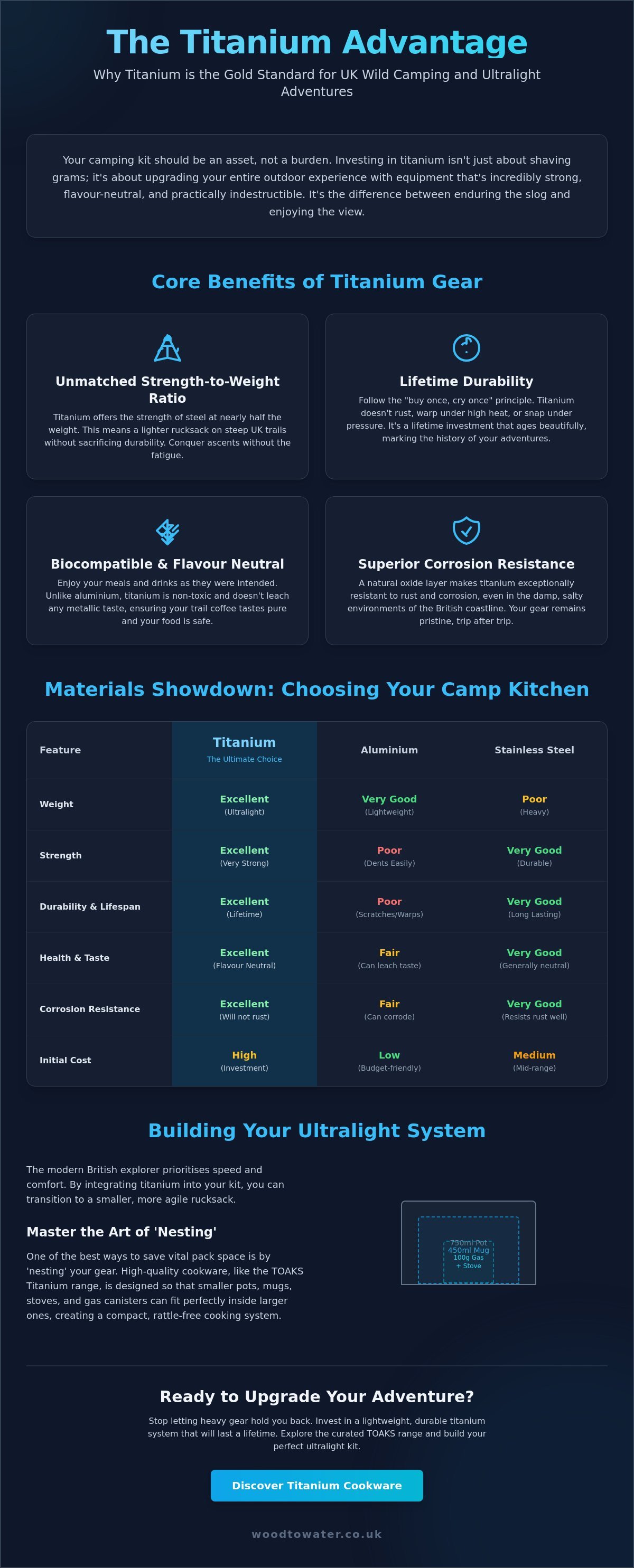
Building Your Ultralight System: From Solo Pots to Multi-Fuel Stoves
Building a titanium camping system isn't just about buying individual items; it's about how they work together to save space and weight. A well-organised kit feels like a puzzle where every piece has a purpose. Start by choosing the right volume for your typical trek. A 550ml pot is the sweet spot for a solo minimalist who only needs to boil water for a brew and a dehydrated meal. If you're trekking as a pair, an 1100ml pot allows you to cook for two whilst remaining lighter than a single steel pot. Combining these vessels with reliable camping gas stoves creates a high-performance kitchen that fits in the palm of your hand. It's the most efficient way to approach titanium camping for anyone serious about long-distance trails.
Versatility is key when you're out in the wilds of the Peak District or the Highlands. Many titanium pots feature lids with steam holes and bail handles. These handles are essential if you plan on suspending your dinner over a small fire, as they offer far more stability than folding side handles alone. Using a lid every time you cook can also reduce boil times by up to 20%, saving you precious fuel over the course of a multi-day trip.
The Art of Nesting: Maximising Rucksack Space
Space is at a premium in a 40-litre rucksack. Nesting is the secret to a compact, rattle-free hike. A standard 100g gas canister fits perfectly inside a 750ml titanium pot, with enough room on top for a small folding stove and a lighter. To prevent that annoying metallic clinking whilst you walk, tuck a small piece of microfibre cloth or a sponge between the items. This doesn't just silence your pack; it gives you a handy tool for cleaning up after breakfast. Most of our titanium gear comes with protective mesh bags. Don't leave these at home. They're vital for keeping soot from a wood fire off the rest of your kit.
Essential Titanium Accessories
The weight savings shouldn't stop at the pot. Long-handled titanium sporks are the unsung heroes of the trail. They allow you to reach the very bottom of a meal pouch without getting sauce all over your knuckles. You can also replace heavy steel tent pegs with titanium versions to shave significant weight from your shelter system. This approach works beautifully when paired with ultralight tarps, allowing for a fast and light setup that can handle unpredictable British weather. Small changes like these might only save a few grams individually, but they add up to a significantly lighter pack overall.
Ready to streamline your rucksack? Explore our curated range of titanium cooksets to find the perfect fit for your next adventure.
Investing in Quality: The Wood To Water Outdoors Approach to Titanium Excellence
At Wood To Water Outdoors, we don't just stock shelves; we curate kits. Our team spent years exploring the British wilds before we ever opened our doors. We believe that your approach to titanium camping should be a source of confidence rather than a point of failure. That's why we only offer products that have survived our own expeditions through the bogs of Dartmoor and the relentless winds of the Cairngorms. Our selection process is rigorous. If a piece of gear doesn't meet our standards for durability, weight, and efficiency, it simply won't make the cut. We are curators first and retailers second.
The TOAKS Titanium Cookware range is the flagship of our collection for a very specific reason. It represents the perfect intersection of engineering and outdoor practicality. Whether you're a solo hiker looking for a minimalist 550ml mug or a group leader needing a larger nesting pot, TOAKS delivers consistent quality that stands up to the demands of the British climate. It's gear designed by people who understand that every gram saved is energy gained for the next summit.
Why We Stand Behind Our Brands
Reliability is everything when you're miles from the nearest road. Specialist manufacturers like TOAKS have built their reputation on precision manufacturing; ensuring every lid fits perfectly and every handle is structurally secure. We've seen how these products handle the unpredictable UK weather, from salty coastal spray to freezing summit temperatures. Our customer service team consists entirely of outdoor enthusiasts who understand the gear inside out. If you have a question about how a specific pot nests or which stove works best with a titanium windbag, we're here to help with honest, practical advice based on real-world experience.
Next Steps for Your Ultralight Journey
Transitioning to an ultralight setup doesn't have to happen overnight. You can start by replacing your heaviest kitchen items one piece at a time. Maybe it's swapping out a heavy steel spoon for a titanium spork or upgrading your main cook pot to a lighter alternative. Every gram you shed makes your next trek through the Lake District that much more enjoyable. We invite you to get in touch if you need personalised recommendations for your specific style of adventure. Our goal is to ensure your gear is never the thing that holds you back from exploring the wilder parts of our islands. Your kit should empower your journey, not define its limits.
Ready to see the difference for yourself? Explore our full Titanium collection here and start building a kit that will last you a lifetime of adventure.
Elevate Your Wild Camping Experience
You've seen how the right materials can transform a gruelling trek into a nimble adventure. By switching to titanium, you're not just saving weight; you're investing in gear that won't leach chemicals or fail when the weather turns. Whether you're nesting a stove inside a TOAKS pot or swapping to lightweight pegs, every choice adds up to a more comfortable journey. It's about moving away from the fatigue of heavy packs and embracing a system that works with you.
At Wood To Water Outdoors, we're passionate, hands-on outdoor experts who only stock equipment we trust in the field. As part of The Great Outdoors retail group, we're proud to provide expert-vetted gear specifically chosen for the unique demands of the UK climate. It's time to stop letting a heavy rucksack dictate your pace. Investing in a high-quality titanium camping system ensures your kit lasts a lifetime and performs every time you head into the fells.
Upgrade your kit with our curated Titanium collection and start planning your next expedition today. The hills are calling; you're finally ready to answer with a pack that feels as light as air.
Frequently Asked Questions
Is titanium camping gear worth the high price?
Titanium is absolutely worth the investment for regular backpackers due to its longevity and weight-saving benefits. Whilst the initial cost is higher than aluminium, you won't need to replace it after a few seasons of hard use. It's a lifetime purchase that pays for itself through reduced physical fatigue on long-distance UK trails. You're paying for a piece of kit that will likely outlast your rucksack and boots.
Can you cook real food in titanium pots, or just boil water?
You can cook real food in titanium, though it requires more attention than thicker materials. Because titanium is thin, it can create "hot spots" that might scorch delicate ingredients if left unattended. It's best suited for liquid-based meals like stews or pasta. With a low flame and constant stirring, you can certainly manage more complex trail recipes, but boiling water remains its primary strength.
Does titanium gear have a metallic taste like aluminium?
No, titanium camping gear is completely flavour-neutral and won't leave a metallic aftertaste in your food or drink. This is because titanium is biocompatible and inert; it doesn't react with acidic foods or beverages like aluminium can. Your morning coffee will taste exactly as it should, without any unwanted chemical tang. It's the cleanest way to enjoy a meal in the backcountry.
How do I clean burnt food off my titanium camping pot?
Soak the pot in warm water with a little biodegradable soap as soon as possible to loosen any burnt-on residue. For stubborn marks, use a scouring pad or a bit of sand from a stream bed if you're in the wild. Titanium is incredibly tough, so you don't need to worry about scratching a non-stick coating as you would with other pans. It's built to handle a good scrub.
Is titanium stronger than stainless steel for camping?
Titanium has a higher strength-to-weight ratio than stainless steel, meaning it's much stronger for its weight. Whilst stainless steel is technically harder and more resistant to deep scratches, titanium is far more resilient against crushing or permanent deformation. It's the ideal balance for a rucksack where every gram of weight needs to be justified. It won't snap or shatter under pressure in your pack.
Can I use titanium cookware over a campfire or wood stove?
Yes, titanium camping cookware is perfectly safe to use over an open campfire or a wood-burning bushbox. It has an exceptionally high melting point of over 1,600°C, so it won't warp or melt in standard cooking temperatures. Just be aware that direct flames will likely cause the metal to discolour, which is a normal characteristic of the material. Many enthusiasts prefer this rugged, used look on their gear.
Why do some titanium pots turn blue or purple after use?
This discolouration is a natural result of heat oxidation and is often called a "heat patina." When titanium is exposed to high temperatures, the thickness of its surface oxide layer changes, causing it to refract light in different colours. It doesn't affect the performance or safety of the gear. Many hikers actually view it as a badge of honour from their many adventures across the fells.
What is the best size titanium pot for a solo hiker?
A 750ml pot is generally considered the best all-round size for a solo hiker in the UK. This volume provides enough space to boil water for a large dehydrated meal and a hot drink simultaneously. If you're a true minimalist who only needs a small brew, a 550ml mug might suffice, but the 750ml option offers more versatility for varied trail diets and better fuel efficiency.