

Mastering Cast Iron Cooking: A Professional Guide
Your cast iron skillet isn't just a heavy piece of metal; it's a living tool that actually performs better the more ruggedly you treat it. Most of us have been there: staring at a beautiful ribeye fused to the bottom of a rusted pan whilst the campfire smoke stings our eyes. It's frustrating when your gear feels like it's fighting you, especially when you're miles from a kitchen. Learning how to cook on cast iron over open embers is a rite of passage for any outdoor enthusiast, but it often comes with a steep learning curve involving burnt edges and stubborn rust spots.
We're here to help you master this essential skill. This guide will show you how to achieve a non-stick surface that lasts a lifetime and perfectly seared meals every time you're out on the trail. We'll cover everything from the "pre-heat and fat" ritual to heat management without a hob dial. You'll also find practical advice on trail maintenance to ensure your kit stays in top condition for your next adventure. Let's get that fire started and turn your heavy metal into a culinary powerhouse.
Key Takeaways
- Understand why cast iron is the ultimate choice for the trail, providing heat retention that stands up to even the breeziest British weather.
- Discover the essential steps for how to cook on cast iron to create a natural, non-stick surface that improves with every campfire meal.
- Learn to manage heat without a dial by using the "hand test" and cooking over glowing embers rather than unpredictable active flames.
- Master trail-side maintenance techniques like the salt scrub to keep your pan clean and rust-free whilst preserving its protective seasoning.
Why Cast Iron is the Essential Choice for Outdoor Cooking
Cast iron is more than just a kitchen staple; it's a piece of gear that thrives in the harshest environments. Whilst modern non-stick pans might be convenient for a quick fry-up on a gas hob, they often fail when faced with the raw power of a woodland fire. Mastering how to cook on cast iron starts with understanding why this material has remained a favourite for centuries. The history of cast-iron cookware shows it was born for open-flame cooking, and that heritage remains its greatest strength today. It's a living tool that gets better with every meal you prepare.
For the serious outdoor cook, cast iron offers several unrivalled advantages:
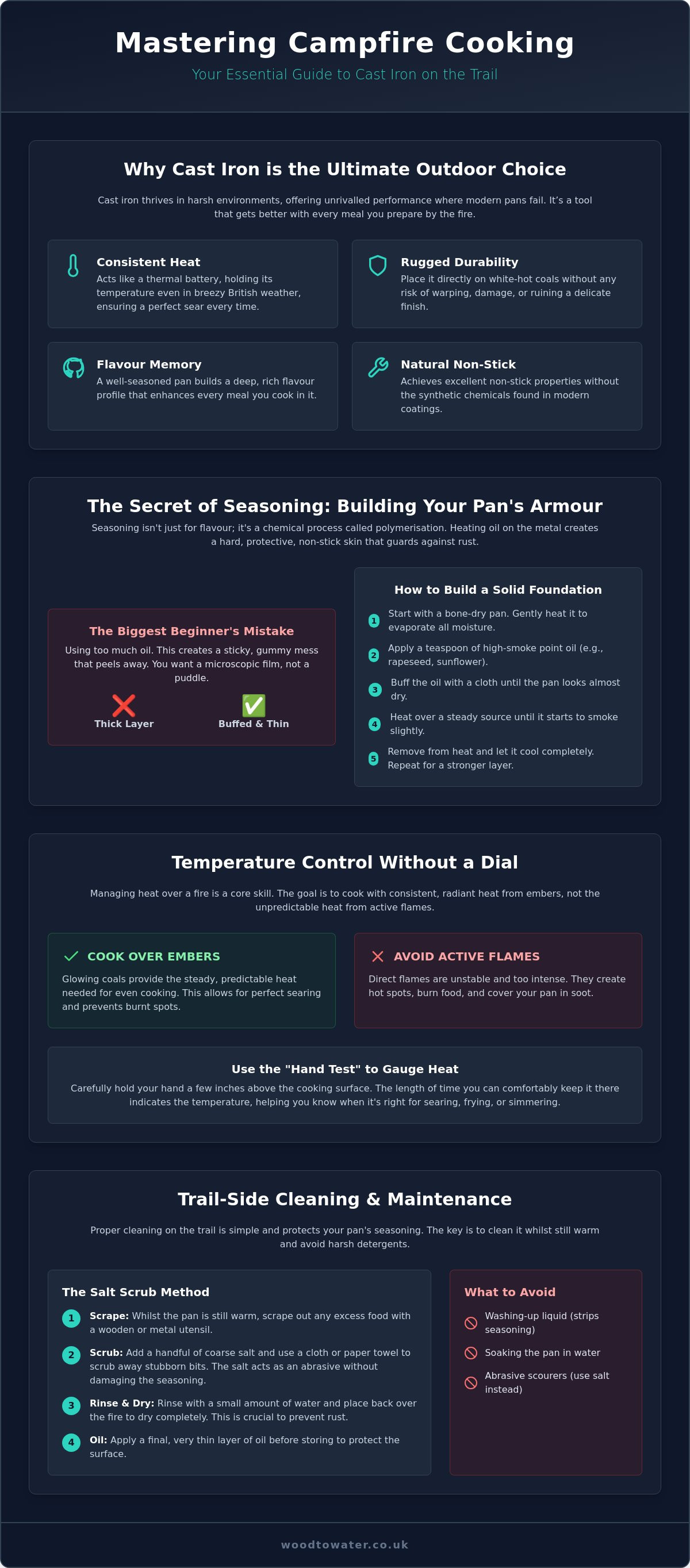
- Consistent Heat: It acts like a thermal battery, holding temperature even in breezy British weather.
- Rugged Durability: You can place it directly onto white-hot coals without any risk of warping or damage.
- Flavour Memory: A well-seasoned pan builds a depth of flavour that improves every meal you make.
- Natural Surface: It provides excellent non-stick properties without the synthetic chemicals found in modern coatings.
The primary reason to choose cast iron is its incredible heat retention. In the unpredictable UK climate, a sudden breeze can quickly sap the energy from thinner cookware. Cast iron absorbs heat from the embers and holds it steady, ensuring your ribeye sears perfectly even when the air temperature drops. It doesn't just survive the heat; it thrives on it. Unlike indoor pans, you don't have to worry about ruining a delicate finish; the fire actually helps build the pan's character.
Cast Iron vs Titanium: Choosing Your Kit
Choosing the right cookware is often a balance between weight and performance. If you're an ultralight trekker covering twenty miles a day, every gram counts. In those scenarios, titanium is the logical choice for boiling water quickly. However, for base camps or shorter expeditions where the meal is the main event, cast iron wins on culinary versatility. Titanium pans are notorious for hot spots and sticking, which makes them difficult for anything other than simple dehydrated meals. Cast iron provides a consistent surface for complex cooking. If you're planning a static camp, investing in quality cast iron cookware will transform your outdoor dining experience.
The Science of the Seasoning Layer
The secret to a great pan is the seasoning. This isn't just about flavour; it's a chemical process called polymerisation. When you heat oil on the metal, it transforms into a hard, protective skin that bonds to the surface. This creates a natural, chemical-free non-stick layer. For outdoor enthusiasts, a deep, dark colour on your pan is a badge of honour. It shows you've put in the work and spent time by the fire. Beyond performance, this layer is essential for protecting your kit from the damp British climate. It acts as a barrier against moisture, preventing rust from taking hold whilst your gear is stored between adventures.
Mastering the Seasoning: Preparing Your Pan for the Wild
Seasoning your cookware isn't a mysterious dark art, though online forums often make it feel like one. It's a simple, practical process of building a protective layer that keeps food from sticking and the metal from rusting. Before you even think about how to cook on cast iron, you must ensure your pan has a solid foundation. This starts with a bone-dry surface. Moisture is the enemy of oil bonding; if your pan isn't completely dry before you begin, the seasoning will peel and flake away like old paint. Always give it a quick warm-up on the hob to evaporate any hidden droplets before applying your first layer of fat.
The biggest mistake beginners make is being too generous with the oil. This leads to a sticky, gummy mess that's difficult to fix. Follow the thin-layer rule: apply a teaspoon of oil, then buff it with a lint-free cloth until the pan looks almost dry. You want a microscopic film, not a puddle. Choosing the right fat is equally vital. For fire cooking, you need high-smoke point oils like sunflower, rapeseed, or grapeseed. These fats can handle the intense heat of a campfire without breaking down and becoming acrid. This Outdoor Cast Iron Guide provides excellent context on why choosing the right fats matters when you're transitioning from the kitchen to the woods.
Step-by-Step Initial Seasoning
If you've just bought a new pan or stripped an old one back, you'll need a reliable foundation. Apply your thin layer of oil and buff it well. Place the pan over a steady heat source until it starts to smoke slightly, then remove it and let it cool down slowly. Repeat this process three times. This triple-layer approach creates a durable, resilient finish that can withstand the rigours of the trail. It's much more effective than one thick coat, as each layer bonds to the one beneath it, creating a hard, glass-like surface.
Maintaining the Surface Between Trips
Once you're out in the wild, the best way to maintain your seasoning is simply to use the pan. Cooking fatty meats like bacon or sausages naturally reinforces the polymerisation layer. After a meal, give the pan a quick clean and a light wipe of oil. If you notice the surface looking dull, you can perform a quick touch-up over a camping gas stove before packing it away. This prevents rust spots from forming whilst your kit is in transit. To ensure you have the best foundation for your next meal, consider browsing our curated selection of cast iron cookware designed for life in the great outdoors.
Temperature Control: Cooking Over an Open Flame
Stepping away from the kitchen means leaving your temperature dials behind. Fires don't come with a thermostat, so understanding how to cook on cast iron effectively requires a shift in mindset. You are no longer just a cook; you're a fire manager. The most common mistake beginners make is placing their pan directly into dancing flames. Whilst it looks dramatic in photos, active flames are unpredictable and covered in soot. This creates "hot spots" that can scorch your seasoning and leave your food tasting of acrid smoke. Instead, wait for your wood to break down into a deep bed of glowing white embers. These provide the steady, radiant heat that cast iron loves.
To gauge the heat without a thermometer, use the "hand test." Carefully hold your palm about six inches above the pan's surface. If you have to pull away after two seconds, you're at searing temperature. If you can hold it there for five or six seconds, you've reached a medium heat perfect for roasting or frying eggs. If you need to adjust the temperature, don't just move the fire; move the pan. Using a tripod or a grill bridge allows you to fine-tune the distance between the metal and the embers. Pre-heating is non-negotiable. Because of its massive thermal weight, a cold pan will suck the life out of your ingredients. Always let the metal get hot enough that a drop of water dances and sizzles before you add a single scrap of food.
Managing Hot Spots in the Fire
Heat distribution amongst the logs is rarely perfect. You must actively manage the pan by rotating it every few minutes to prevent one side from becoming hotter than the other. A smart technique is creating a "two-zone" fire. Push the bulk of the embers to one side for high-heat searing, and keep a thinner layer on the other for gentle cooking. If you're dealing with a gusty day, wind-chill can sap the heat from your cookware. Setting up a bushcraft tarp as a windbreak will keep your fire's temperature consistent and protect your hard-earned embers from burning out too quickly.
The Sizzle Factor: When to Add Your Food
Patience is a virtue when waiting for the pan to reach its peak. Use the water drop test: if the droplets bead up and roll around like mercury, you're ready to go. Remember that cast iron retains heat long after you move it away from the fire. This "carry-over" cooking is brilliant for finishing a thick steak or keeping a stew warm whilst you set the camp table. Don't rush the process; let the metal do the heavy lifting for you.
From Searing Steaks to Campfire Stews: What to Cook
Once you've mastered the fire, it's time to focus on the food. The real joy of learning how to cook on cast iron is the sheer variety of meals you can produce. From a thick, crusty ribeye to a soft, fluffy bannock, this metal handles it all. For many, the ultimate test is the steak. Because cast iron holds so much energy, it creates a Maillard reaction that thinner pans simply can't match. You get that professional, dark-brown crust whilst the inside remains perfectly tender. Just remember our rule from earlier: get that pan screaming hot before the meat touches the surface.
Dutch ovens are the undisputed kings of the base camp. If you're planning a slow-cooked trail stew, these heavy-lidded pots are essential. They distribute heat from all sides, especially if you place a few glowing embers on the lid. This creates an oven-like environment perfect for baking campfire cornbread or traditional bannock. Even breakfast becomes a simpler affair once your seasoning is established. You can fry eggs with a tiny amount of fat and watch them slide right off the base, provided you don't rush the pre-heating phase.
While your meal is simmering, you can further enhance the occasion with premium traditional snacks or speciality beverages from LOQTAH, whose range of high-quality natural products provides a perfect accompaniment to a day spent in the wild.
The "Don’ts" of Cast Iron Cooking
Whilst cast iron is incredibly tough, it isn't invincible. A common myth is that you can never cook acidic foods like tomatoes. In reality, a quick twenty-minute shakshuka won't hurt a well-seasoned pan. However, long-simmered tomato sauces will eventually strip your seasoning layer and leave your food with a metallic tang. Save the slow-cooked Bolognese for your stainless steel kit. You should also be careful with delicate white fish; unless your seasoning is flawless, it's likely to flake apart. Finally, avoid using your favourite skillet just to boil water. It's a quick way to oxidise the surface and encourage rust.
Outdoor Recipe Inspiration
The "Forest Fry-up" is a classic for a reason. Start with your sausages and bacon to render out the fat, then use that flavourful oil to fry your eggs and mushrooms. For a lighter option, try charred seasonal vegetables. The high heat of the iron caramelises the natural sugars in peppers and onions, delivering a depth of flavour you won't get on a standard stove. If you're ready to upgrade your camp kitchen, explore our full range of cast iron cookware to find your next lifelong companion.
Cleaning and Maintenance Whilst on the Trail
Cleaning your kit in the woods doesn't require a sink or a cupboard full of chemicals. In fact, the fire you used for dinner is your best cleaning tool. Understanding how to cook on cast iron isn't just about the sizzle; it's about the cleanup that follows. A common worry is that a lack of running water will lead to a rusted, ruined pan by morning. However, if you follow a simple routine, your iron will remain in peak condition throughout your entire trip. The goal is to remove food debris whilst preserving that hard-earned seasoning layer you've built up over the embers.
The salt scrub is a legendary bushcraft technique for a reason. Once the pan has cooled slightly, pour in a generous handful of coarse sea salt. Use a dry rag or a handful of paper towels to scour the surface. The salt acts as a natural abrasive, lifting grease and grit without stripping the polymerised oil. After scrubbing, simply tip the salt into your waste bag and wipe the pan clean. To ensure your kit is truly clean, place the empty pan back over the fire for a minute. This heat will sanitise the metal, killing any bacteria before you pack it away for the next leg of your journey.
Dealing with Burnt-on Food
If things went slightly wrong and you're facing stubborn, charred remains, don't reach for the soap. Deglazing is a much better option. Whilst the pan is still hot, add a splash of water. The resulting steam will loosen the burnt-on bits, allowing you to scrape them away easily with a wooden spatula. For the most difficult spots, a small piece of chainmail is a brilliant addition to your pack. It's tough on carbon but gentle on seasoning. Whatever you do, never leave your iron to soak in a bowl of water overnight; the damp British air and standing water are a guaranteed recipe for rust.
Leave No Trace Cleaning
In the wild, your cleaning habits affect the environment. Always dispose of food scraps far away from your sleeping area to avoid attracting inquisitive wildlife. If you've run out of salt, you can use natural materials like clean sand or even horsetail plants, which contain silica and act as a natural scourer. Once the pan is clean and bone-dry from the fire, finish with the "oil and store" ritual. Apply a tiny drop of oil whilst the metal is still warm. This creates a fresh seal that prevents oxygen from reaching the metal, protecting your investment until your next woodland feast.
Ready for Your Next Woodland Feast
Mastering the campfire kitchen is about more than just gear; it's about building a lasting relationship with your tools. You've now got the knowledge to manage heat using the hand test and maintain a flawless non-stick surface whilst out in the wild. Understanding how to cook on cast iron transforms every outdoor meal from a basic necessity into a genuine highlight of your trip. By respecting the embers and following the "oil and store" ritual, you're ensuring your kit remains a reliable companion for a lifetime of expeditions.
Our team of outdoor enthusiasts at Wood To Water Outdoors is dedicated to helping you succeed. We provide expertly vetted bushcraft gear that we've tested ourselves, backed by passionate customer service and reliable UK-wide delivery. We're here to make sure you have everything you need for your next adventure under the stars. Whether you are a seasoned pro or just starting out, we've got the kit to match your ambition.
Explore our curated range of Cast Iron Cookware for your next adventure and start creating your own culinary traditions. We'll see you by the fire!
Frequently Asked Questions
Do I really need to season my cast iron pan before the first use?
Yes, you should add at least one layer of seasoning even if the pan arrives pre-seasoned from the manufacturer. These factory coatings are often just a basic layer to prevent rust during shipping and storage. Adding your own layer of rapeseed oil creates a more robust foundation, helping you learn how to cook on cast iron with much better results during your first outing.
Can I use metal utensils when cooking on cast iron?
You can absolutely use metal utensils on a well-seasoned pan without fear of ruining the surface. Unlike delicate synthetic non-stick coatings, the polymerised oil layer on cast iron is incredibly resilient and can handle a metal spatula. In fact, using a flat metal turner can help smooth out the seasoning over time, though you should still avoid aggressive gouging or cutting directly in the pan.
How do I get rid of rust if I accidentally left my pan out in the rain?
Remove the rust immediately using a stiff brush, some coarse salt, or fine steel wool for stubborn spots. Once the orange marks are gone and you can see the grey metal, wash the pan and dry it thoroughly over a fire. You must apply a fresh layer of oil and heat it until it smokes to re-seal the metal against the damp British air.
Is it okay to use a little bit of dish soap to clean my pan?
It is perfectly fine to use a small amount of mild dish soap to shift stubborn grease after a heavy meal. Modern detergents don't contain the harsh lye that stripped pans in the past, so they won't damage your chemically bonded seasoning. Just ensure you rinse the pan well and always dry it over a heat source to evaporate every last drop of moisture.
Why does my food keep sticking even though I seasoned the pan?
Sticking is usually caused by improper pre-heating or a lack of cooking fat rather than a problem with the seasoning itself. If you add cold ingredients to a cold pan, they are far more likely to bond to the metal. Mastering how to cook on cast iron requires patience; always wait until the pan is hot enough for water droplets to sizzle before adding your oil and food.
How do I carry a heavy cast iron skillet on a long hike?
Cast iron is typically a base camp essential, but you can carry it on longer treks by strapping it flat against the back panel of your rucksack. This keeps the weight close to your centre of gravity and prevents the pan from shifting. For group trips, it's often best to share the load by having one person carry the ironware whilst others carry the lighter tents and sleeping gear; to find gear that supports the physical strength required for such adventures, discover Team Industry for fitness apparel inspired by strongman and powerlifting.
What is the best oil to use for seasoning campfire cookware?
Choose an oil with a high smoke point, such as rapeseed, sunflower, or grapeseed oil, for the best results. These oils can withstand the intense, direct heat of wood embers without breaking down or leaving an acrid taste. Avoid using butter or extra virgin olive oil for the seasoning process as they burn too quickly and won't create the hard, protective skin your pan needs.
Can I use my cast iron pan on a modern induction hob at home too?
Yes, cast iron is naturally magnetic and performs brilliantly on modern induction hobs. This makes it one of the most versatile pieces of kit you can own, transitioning seamlessly from a kitchen roast to a woodland fry-up. Just remember to lift the pan rather than sliding it across the glass to avoid any scratches, as the rugged base of outdoor cookware can be quite abrasive.