

Kelly Kettle Stove Guide: Efficient Outdoor Cooking
What if the most reliable fuel for your next wild camp wasn't found in an expensive, clunky canister, but was actually lying scattered at your feet? We've all experienced that sinking feeling when a gas stove splutters in high winds or runs dry just as the sun sets. It's a common frustration amongst outdoor enthusiasts who want to reduce their environmental impact and escape the cycle of disposable fuel cans. The Kelly kettle stove solves these problems by turning the UK’s unpredictable weather into a performance advantage; it uses a clever chimney design to boil water in minutes using only found twigs and dry grass.
You already know that your gear should be as tough as the landscape you're exploring. This guide will show you why this iconic piece of kit remains the gold standard for rapid, fuel-free cooking in the British wilderness. We'll explore how to master the art of efficient outdoor cooking, compare the durability of stainless steel versus aluminium, and look at the essential accessories that transform a simple kettle into a complete, storm-proof kitchen.
Key Takeaways
- Master the "volcano" chimney design to boil water in minutes using nothing more than gathered twigs and dry grass.
- Learn how to cook hot meals and boil water at the same time by using a pot support and the Kelly kettle stove's efficient heat column.
- Compare the rugged durability of 304 stainless steel with the weight-saving benefits of anodised aluminium for your hiking kit.
- Discover why biomass fuel is often more reliable than gas canisters for winter wild camping and adventures in high winds.
- Identify the ideal capacity for your specific adventure, from the compact 0.6L Trekker to the high-capacity 1.6L Base Camp model.
What is a Kelly Kettle Stove and How Does it Work?
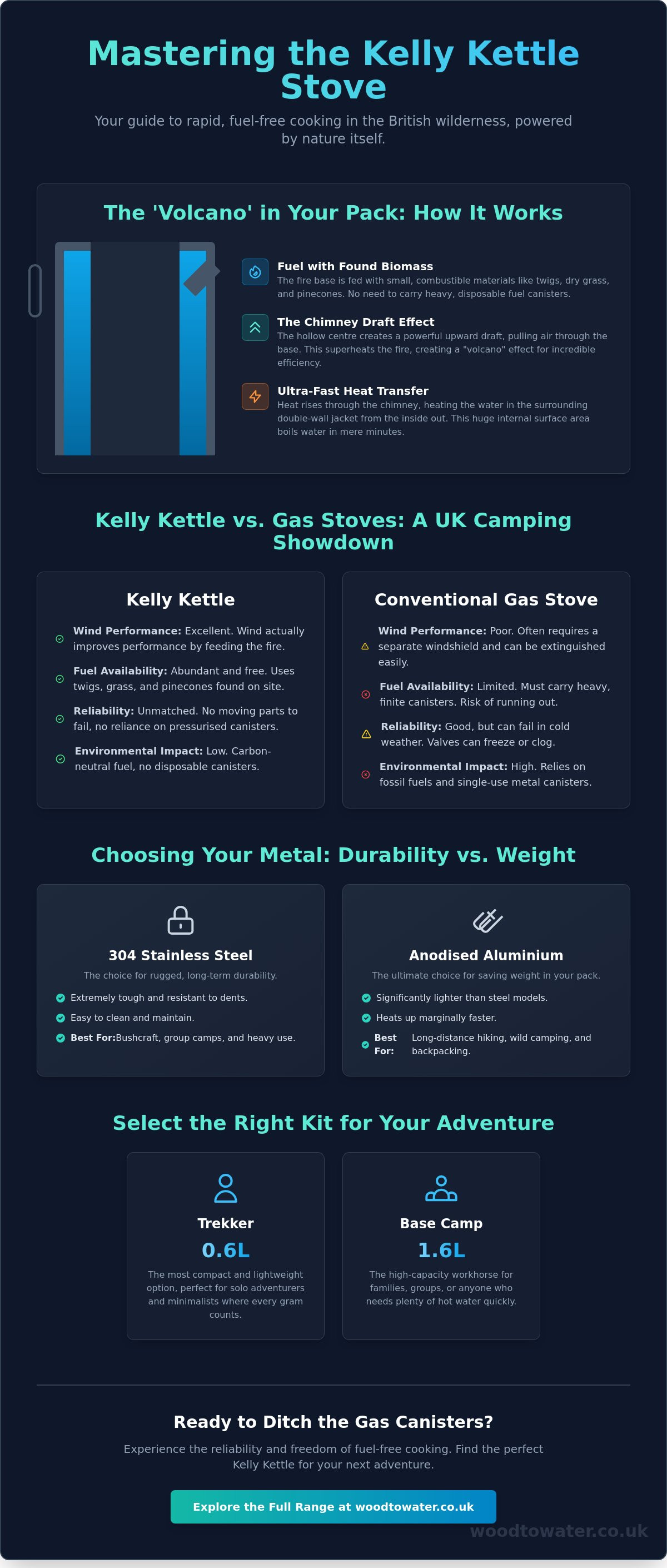
A Kelly kettle stove is a double-walled chimney stove designed to boil water and cook food using biomass fuel. It's a brilliantly simple piece of kit that relies on physics rather than pressurised gas. Instead of carrying heavy canisters, you simply feed the fire base with twigs, dry grass, or pinecones. This makes it a reliable companion for anyone exploring the British backcountry, where finding fuel is as easy as looking at the ground. You'll find the Kelly Kettle to be one of the most dependable tools in your pack.
The "volcano" design creates a powerful upward draft, concentrating heat in the central chimney. As the fire burns in the base, the heat rises through the hollow centre of the kettle. This means the water, which sits in a jacket surrounding the chimney, is heated from the inside out. The chimney draft effect acts as the primary engine, driving the stove's remarkable thermal efficiency; it ensures that every bit of thermal energy is directed exactly where it's needed. This unique setup is what makes it the ultimate "storm kettle" for our unpredictable British climate. Whether you're facing a drizzle in the Peak District or a gale on the Scottish coast, this stove will perform.
The Physics of the Chimney Draft
The hollow centre of the kettle creates a vacuum that pulls air through the base. This constant stream of oxygen feeds the flames, creating a mini-forge effect inside the chimney. Because the internal surface area is so large, the thermal transfer is ultra-fast. You aren't just heating the bottom of a pot; you're heating a massive vertical column of water. One of the most impressive features of this design is its performance in high winds. Whilst other stoves require bulky windshields, the Kelly kettle stove actually benefits from the breeze; the stronger the wind, the hotter the fire burns as more air is forced into the intake.
A Brief History: From Irish Lakes to Modern Bushcraft
The story began amongst Irish anglers in the late 1890s. They needed a way to boil water for tea on the windy shores of Lough Conn without wasting time or fuel. The History of the Kelly Kettle reveals a legacy of practical innovation that has spanned over a century. What began as a simple water boiler has evolved into a complete outdoor cooking system. Modern versions now include accessories that allow you to cook full meals over the chimney whilst your water boils. Today, it's widely regarded as an essential piece of kit for UK survivalists and bushcraft enthusiasts who value reliability above all else.
Cooking with Fire: Using the Kelly Kettle as a Stove
Most campers view this kit as a high-speed water heater, but the Kelly kettle stove is actually a versatile cooking engine. Setting it up is straightforward. First, place the fire base on a flat, stable surface. Clear any dry debris to follow basic campfire safety guidelines and prevent scorched earth. Once you've lit a small nest of tinder in the base, carefully place the water-filled kettle on top. As the flames grow, you simply drop small twigs down the chimney to maintain the heat. It's efficient and clean.
The real magic happens when you add the pot support. This cross-shaped accessory slots into the top of the chimney, allowing you to rest a small pot or pan directly over the escaping heat. You can simmer a stew or heat through some pre-made meals whilst your tea water comes to a boil below. It's the ultimate multitasking tool for hungry hikers. Managing an open flame requires attention, so always keep a small pile of fuel ready and never leave the stove unattended whilst the fire is roaring.
Sourcing the Best Fuel in the UK
Finding dry fuel in a damp British woodland might seem daunting, but this stove is remarkably forgiving. Look for dead-standing twigs; these are branches that have snapped but haven't yet hit the sodden ground. Birch bark is a fantastic natural fire lighter, even when it's drizzling. Pine cones also make excellent high-energy fuel. To keep a steady temperature, use the top-down feeding method. Drop a few pieces of fuel every minute to keep the volcano effect roaring. This constant feed ensures you have enough heat for both boiling and cooking without the fire dying down.
The Hobo Stove Accessory: A Game Changer
If you want to move beyond simple boiling, the Hobo Stove attachment is a game changer. It's a small, perforated ring that sits directly on the fire base without the kettle chimney. This converts your fire base into a stable, standalone wood-burning stove. It provides a flat surface for larger pots and is perfect for pairing with cast iron cookware for a proper fry-up. It's a brilliant way to save weight, as you only need the base and the ring for a quick lunchtime stop. If you're ready to upgrade your camp kitchen, take a look at our full Kelly Kettle range to find the right setup for your next trip.
Choosing Your Metal: Stainless Steel vs Aluminium
Choosing between stainless steel and aluminium is the most common dilemma for anyone investing in a Kelly kettle stove. Both metals have their place in the wild, but your choice should depend on your specific style of adventure. While aluminium is a fantastic conductor of heat, food-grade 304 stainless steel is the undisputed champion of rugged durability. If you're a "buy-it-for-life" enthusiast, the extra weight of steel is a small price to pay for a kit that will likely outlast your hiking boots.
The Case for Stainless Steel
Stainless steel is often described as the "heirloom" choice for serious expeditions. It's incredibly resilient and handles the intense heat of a biomass fire without warping. One major advantage is its resistance to "boil-dry" damage. If you accidentally let the water level drop too low whilst the fire is roaring, stainless steel is far more forgiving than aluminium. It's also much easier to clean. After a weekend of burning resinous pine or damp birch, you can scrub the soot away with a bit of grit and water without worrying about pitting the surface. This makes it the ideal companion for base camps where longevity is more important than a few extra grams in the pack.
The Case for Aluminium
For those who prefer to travel light, anodised aluminium offers a significant weight reduction. If you're trekking across the Highlands or exploring the South Downs, every gram counts. Aluminium is also a superior thermal conductor. In a side-by-side test, an aluminium kettle will usually reach a rolling boil slightly faster than a steel one. It's a great entry point for beginners because it's typically more affordable too. When you look at a camping stove comparison, you'll see that aluminium remains a staple for portable cooking gear. While it doesn't quite reach the ultralight status of TOAKS Titanium Cookware, it strikes a brilliant balance for the occasional camper or weekend hiker.
Maintenance is key for both materials. Soot is an inevitable part of using a Kelly kettle stove, but it doesn't have to be a permanent fixture. Wiping down the chimney after each use prevents thick carbon buildup that can eventually reduce thermal efficiency. For aluminium users, ensure the kettle is completely dry before storage to prevent oxidation. For stainless steel, a quick polish once a year will keep it looking as good as the day you bought it. Both metals are reliable; your decision simply comes down to how much weight you're willing to carry for the sake of indestructible performance.
Kelly Kettle vs Gas Stoves: Which is Best for UK Wild Camping?
The choice between a Kelly kettle stove and a traditional gas system often boils down to your philosophy of travel. If you value self-reliance and the ritual of fire, the kettle is unbeatable. Finding twigs is a satisfying part of the camp setup, whereas carrying camping gas stoves means you're always tethered to a finite fuel supply. If your canister runs dry on a freezing morning in the Highlands, your breakfast plans are over. With a biomass stove, your fuel is literally everywhere.
Performance in the cold is where the Kelly Kettle truly shines. Standard gas canisters often splutter or fail entirely as temperatures drop towards zero because the internal pressure plummets. Biomass thrives in these conditions. As long as you can strike a spark, you can have a roaring fire. There is also the "Leave No Trace" factor to consider. Whilst empty gas canisters create bulky metal waste that you must carry out, the ash from a Kelly Kettle is biodegradable and easily dispersed once cooled.
When to Choose a Kelly Kettle
This system is the perfect fit for groups or fixed base camps where you'll be boiling large volumes of water for tea and meals. It is also the favourite choice for coastal fishing trips; the windier it gets on the shore, the better the chimney draft performs. Beyond the practicalities, there is a psychological benefit to using a real fire. It creates a "hearth" effect that a gas burner simply can't replicate, turning a cold campsite into a welcoming home.
When to Choose a Jetboil System
There are times when speed and stealth are your top priorities. The jetboil camping cooking range is designed for ultra-fast trail stops where you want coffee in under two minutes without any fuss. If you're stealth camping in a sensitive area, the smoke from a wood stove might give away your position. Similarly, on high-altitude moorlands where wood fuel is scarce, a gas system is more practical. If you prefer the convenience of a click-to-ignite system, browse our full range of camping gas stoves to find your perfect match.
Selecting the Right Kelly Kettle Kit for Your Adventure
Choosing the correct size for your Kelly kettle stove is the final step in building a truly resilient off-grid kitchen. The range is split into three distinct capacities: the 0.6L Trekker, the 1.2L Scout, and the 1.6L Base Camp. Whilst you can purchase the kettle as a standalone item, the "Ultimate Kit" is often far better value for money. These bundles include the Hobo Stove, pot support, and a complete cook set. It's a smart way to ensure you have every component needed to maximise the chimney's heat from your very first trip.
To keep your cooking area dry during a classic British downpour, try integrating your setup with high-quality camping tarps. This allows you to maintain a small fire and keep your fuel dry whilst you wait for the kettle to whistle. Just remember to maintain plenty of vertical clearance; the heat from the chimney is intense and needs room to dissipate safely. When you're ready to commit, always buy from a reputable Kelly Kettle stockist to ensure you receive genuine 304-grade steel and a proper warranty.
The Solo Trekker Setup
The 0.6L Trekker is the perfect choice for the lone hiker or a couple who just wants a quick brew for two. It is the most portable model in the range and fits easily into a standard rucksack. You can save a surprising amount of space by using the internal storage of the kettle chimney to house your tinder or a small fire-lighting kit. Pairing this compact stove with lightweight camping plates and collapsible cups keeps your pack weight down whilst ensuring you're never more than five minutes away from a hot drink.
The Family Base Camp Ecosystem
Before you head out, run through a final checklist. Ensure your kit includes the carry bag, as this keeps the soot off the rest of your gear. Check that your fire base is clean and that you have a reliable way to strike a spark. With the right kit and a bit of practice, you'll find that this stove becomes one of the most rewarding pieces of equipment you've ever owned. It's a durable, "buy-it-for-life" companion that turns every outdoor meal into a memorable experience.
Ready to Master Fuel-Free Outdoor Cooking?
Choosing a Kelly kettle stove means more than just buying a water boiler; it's an investment in total self-reliance. You've seen how the volcano design thrives in high winds and how the right metal choice can tailor the kit to your specific hiking style. Whether you're heading out for a solo trek or managing a busy family base camp, you're now equipped to turn found twigs into a high-performance kitchen.
At Wood To Water Outdoors, we only stock expert-vetted bushcraft gear that we've personally tested in the field. Our team consists of passionate outdoor enthusiasts who are always on hand to offer practical advice for your next trip. If you're eager to get started, next-day UK delivery is available to get you out into the wild without delay.
Explore the Full Kelly Kettle Range at Wood To Water Outdoors and discover why this kit remains an essential for the British wilderness. We'll see you on the trail!
Frequently Asked Questions
Is a Kelly Kettle legal to use in the UK?
Yes, it is legal to use, but you must follow local land access laws and fire regulations. In England and Wales, you generally need landowner permission to use any stove whilst wild camping. In Scotland, usage is permitted under the Scottish Outdoor Access Code provided you act responsibly. Always check for local fire bans or smoke control area restrictions before lighting up.
How do I clean the soot off my Kelly Kettle?
The most effective way to clean soot is by using a damp cloth dipped in cold wood ash, which acts as a natural abrasive. If you own the stainless steel version, a heavy-duty scourer with soapy water will easily shift stubborn carbon. Wiping the exterior after each use prevents the buildup from becoming permanent and keeps your kit looking professional.
Can I use a Kelly Kettle on a wooden table?
No, you should never place the fire base directly on a wooden table or any combustible surface. The base becomes incredibly hot during operation and will scorch or ignite wood. Always set your Kelly kettle stove on a flat rock, gravel, or bare earth. If you must use a table, ensure you have a thick, heat-proof paving slab or stand to protect the surface.
What is the difference between a Ghillie Kettle and a Kelly Kettle?
The main difference is the brand heritage and minor design tweaks, though both use the same "volcano" chimney principle to boil water. Kelly Kettle is the original Irish brand and is widely considered the industry standard for durability. Whilst both kettles perform well, the Kelly range is often favoured for its extensive "Ultimate Kit" accessory ecosystem and proven track record in the British wilderness.
Can I use a Kelly Kettle inside a tent?
No, you must never use this stove inside a tent or any enclosed space. It produces carbon monoxide and poses a severe fire risk due to the open flames and escaping sparks. It is designed strictly for outdoor use. If the weather is particularly foul, set up a tarp with plenty of vertical clearance to create a dry, well-ventilated cooking area instead.
What happens if I boil my Kelly Kettle dry?
Boiling the kettle dry can cause the metal to warp or the internal seams to fail. Stainless steel models offer a bit more resilience, but aluminium versions can suffer permanent damage quite quickly. If you realise the kettle is dry, remove it from the fire immediately using heat-proof gloves. Let it cool naturally; never pour cold water into a hot, dry kettle as the thermal shock could split the metal.
How long does it take for a Kelly Kettle to cool down before packing?
It usually takes between 10 and 15 minutes for the kettle to be cool enough to handle and pack away safely. You can accelerate this process by emptying any remaining hot water and separating the chimney from the fire base. Always ensure the embers in the base are completely extinguished with water and the area is cool to the touch before you leave your site.
Can I use charcoal or spirit burners in the fire base?
Yes, the fire base is versatile enough to hold charcoal or a spirit burner if you want a more controlled heat source. Charcoal is a brilliant choice when using the Hobo Stove attachment for slow-cooking meals. A spirit burner is a handy backup for your Kelly kettle stove in rare situations where dry biomass is completely unavailable or when you need a silent, smoke-free flame.