

Guide to the Best Dehydrated Camping Meals for UK Hikers
You've finally reached the ridge after eight hours of relentless Scottish drizzle; your legs are leaden, your waterproofs are soaked, and all you want is a steaming bowl of comfort. Then you take a bite of your dinner only to find a mix of grey mush and stubborn, crunchy bits. It's a classic trail disappointment that can ruin even the most spectacular wild camp. Choosing the right dehydrated camping meals shouldn't be a gamble that ends in a chemical aftertaste and a hungry stomach.
We agree that nobody wants to lug heavy tins across the Highlands or pay a premium for tiny portions that don't satisfy. You need fuel that is lightweight, calorie-dense, and actually tastes like real food. We'll help you discover how to choose the best lightweight nutrition for the trail without sacrificing flavour or carrying unnecessary weight.
This guide explores the most reliable brands for UK hikers, compares the texture of different drying methods, and highlights how to ensure a hot, rewarding meal at the end of every long hill day.
Key Takeaways
- Understand the vital differences between freeze-dried and dehydrated camping meals to ensure you pick the right balance of weight and texture for your next expedition.
- Learn how to master the calorie-to-weight ratio so you can maximise your energy intake whilst keeping your rucksack as light as possible.
- Identify the essential trail kitchen gear, such as Jetboil systems and titanium cookware, required for rapid rehydration and superior heat retention.
- Discover why electrolytes and salt levels are just as critical as calorie counts when you are tackling demanding British terrain.
- Explore how a curated menu of high-quality ingredients can eliminate the mushy texture and chemical aftertaste often found in mass-produced options.
The Evolution of Trail Food: Why Dehydrated Camping Meals are Essential
Gone are the days when a weekend in the Lake District meant lugging heavy tins of beans and sausages in your rucksack. It was a rite of passage that usually ended with sore shoulders and a pack that felt like it was filled with lead. Modern dehydrated camping meals have completely changed the game for UK hikers, offering a sophisticated alternative that doesn't compromise on taste or nutrition.
The food drying preservation method has evolved significantly since its ancient origins; modern techniques now focus on protecting the cellular structure of the ingredients. By carefully removing moisture at specific temperatures, manufacturers can ensure that vegetables stay crisp and meats retain their texture once rehydrated. This isn't just about convenience. It's about maintaining the nutritional integrity of the food, ensuring you get the vitamins and minerals needed to recover after a gruelling ascent.
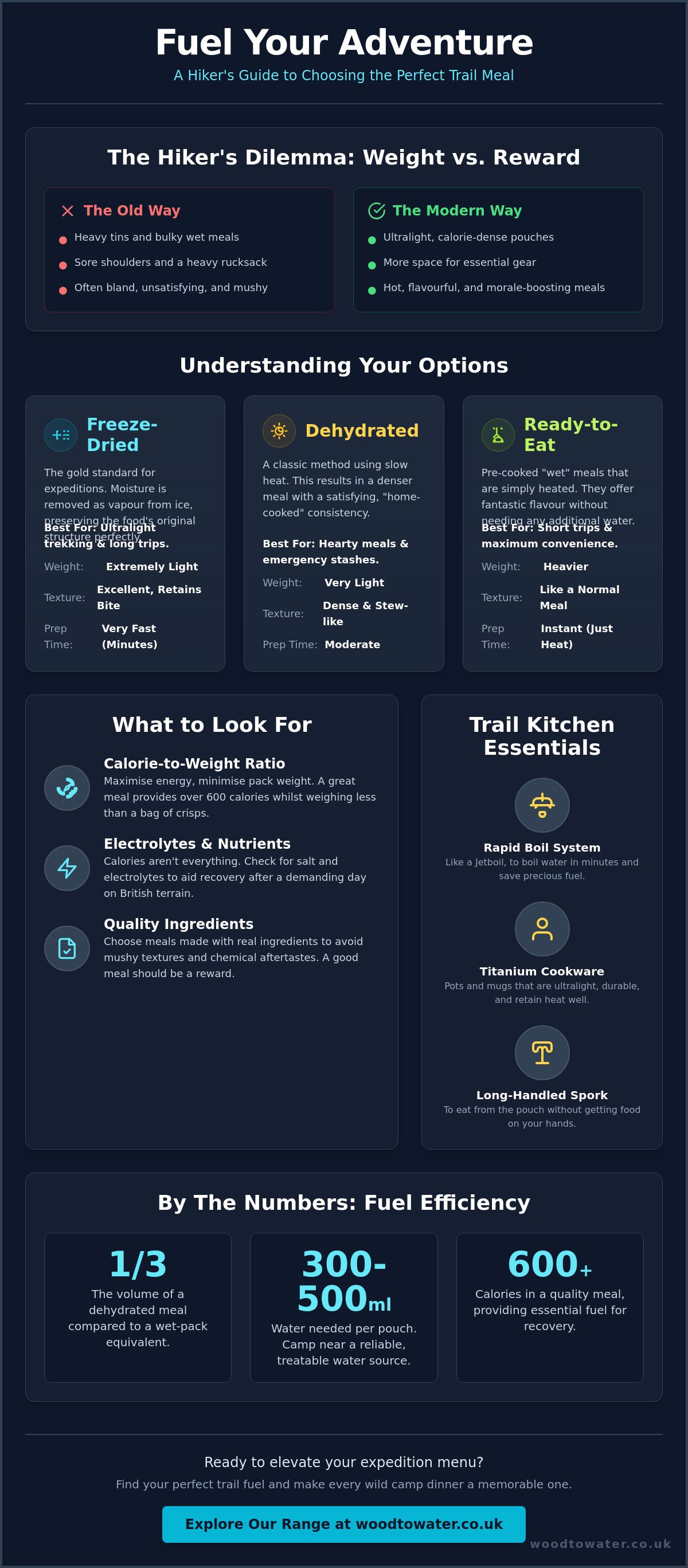
When you're facing a 20-mile day across the Pennines, every gram counts. The "Weight vs. Reward" debate is often won the moment you taste a high-quality meal that weighs less than a bag of crisps but provides 600 calories. There's also a massive psychological win when you're hunkered down in a tent whilst the wind howls outside. A hot, flavourful meal isn't just fuel; it's the reward that keeps your morale high when the British weather turns sour.
The Weight Advantage for Wild Camping
Space is at a premium when you're wild camping. Traditional wet meals or fresh ingredients are bulky and heavy, often forcing you to choose between a decent dinner and essential safety gear. Dehydrated pouches are incredibly packable, often taking up a third of the volume of their "wet" counterparts. By reducing your food's "dry weight", you can carry a more comfortable sleep system or a more robust shelter without increasing your total pack weight.
Fuel Efficiency and Water Management
Cooking from scratch on a mountain side consumes a lot of gas. Because dehydrated camping meals only require you to boil water, you can significantly reduce the amount of fuel you carry. Using efficient Jetboil systems allows you to prep dinner in minutes, which is vital when temperatures drop. Just remember to calculate your water requirements carefully. Whilst the UK isn't short of rain, you'll need around 300ml to 500ml of water per pouch, so plan your camp near a reliable, treatable water source to keep your pack light during the day.
Understanding Your Options: Dehydrated, Freeze-Dried, and Ready Meals
Not every pouch you pull out of your rucksack is made the same way. Whilst many hikers use the term dehydrated camping meals as a generic label, there are actually three distinct technologies at play. Each one has its own set of pros and cons depending on whether you're fast-packing a National Trail or enjoying a relaxed weekend at a local campsite. Choosing the right dehydrated camping meals depends entirely on your specific needs for weight, texture, and preparation time. Ensuring safe food handling on the trail is paramount, and understanding how your food was preserved helps you manage preparation correctly.
Freeze-Dried vs. Dehydrated: A Technical Breakdown
Freeze-drying is often considered the gold standard for long-distance expeditions. It uses a process called sublimation, where moisture is removed by turning ice directly into vapour. This preserves the cellular structure of the food; peas look like peas and beef retains its bite. These meals are incredibly light and rehydrate in minutes. Traditional dehydrated meals use a slow-heat method instead. This often results in a denser, more "home-cooked" consistency that many find more satisfying in a stew or curry. Dehydrated options also tend to have a robust shelf life, making them ideal for your emergency stash at home.
When to Choose Ready-to-Eat Meals
Ready-to-eat, or "wet" meals, are often overlooked by ultralight enthusiasts, but they are a brilliant choice for shorter treks. If you're heading out for a quick overnighter, 5 Minutes to Delhi Ready Meals offer a fantastic flavour profile without the wait. Because these meals aren't dried, they require zero additional water to prepare. This makes them a tactical win in arid environments or frozen conditions where melting snow for water consumes too much fuel. You can simply use a boil-in-the-bag method or heat them directly in your pot. For those who prioritise a gourmet experience over saving every single gram, wet meals are the clear winner. You might want to check our range of camping gas stoves to find the perfect burner for heating these flavour-packed pouches quickly.
Nutritional Strategy: Balancing Calories, Weight, and British Taste Buds
When you are planning a multi-day trek like the West Highland Way, your primary goal is energy density. You need to pack as much fuel as possible into the smallest, lightest footprint. Most high-quality dehydrated camping meals provide between 450kcal and 1000kcal per pouch, yet they typically weigh only 100g to 200g. This creates a massive calorie-to-weight advantage that keeps your rucksack manageable on steep ascents. However, looking at the calorie count is only half the battle. You must also consider your sodium intake. Whilst gym-goers often avoid salt, a hiker sweating under a heavy pack for eight hours needs those electrolytes to prevent cramping and maintain fluid balance in the hills.
Managing "palate fatigue" is another critical factor for long-distance success. Eating the same bland pasta for four nights straight can actually kill your appetite, leading to a calorie deficit that leaves you exhausted. Modern menus have expanded to include a huge variety of vegan and gluten-free options, ensuring everyone can find a meal that satisfies their dietary needs without sacrificing those essential calories.
The Role of Macronutrients in Recovery
Your body requires a specific balance of nutrients to survive the rigours of the trail. Consider these three pillars when choosing your menu:
- Complex Carbohydrates: These are your best friend for a hill start, providing a steady release of glucose to keep your legs moving.
- Protein: Essential for muscle repair; your body needs this after a day of carrying a heavy load to ensure you aren't too stiff the next morning.
- Fats: If you're camping in cold weather, fats are your most efficient energy source for staying warm throughout the night.
Flavour Profiles That Actually Work
Bold flavours often survive the dehydration process much better than subtle ones. Spicy meals like chillis, curries, and dahls tend to taste more "real" once rehydrated because the spices retain their punch. Texture is also vital; you want to avoid a "baby food" consistency that can be off-putting. Look for brands that keep ingredients in larger pieces to provide a satisfying bite. You can also "pimp" your meal for better results. Carrying a small, leak-proof bottle of olive oil adds easy calories and richness, whilst a few sachets of hot sauce can revive even the dullest stew. These small additions make dehydrated camping meals feel like a proper reward at the end of the day.
Mastering the Trail Kitchen: Essential Gear for Rehydrating on the Go
You can carry the most expensive dehydrated camping meals on the market, but they will still taste like cardboard if your trail kitchen isn't up to the task. The secret to a perfect outdoor dinner lies in the efficiency of your boil and the patience of your preparation. We have tested countless setups in the damp British hills, and we've found that a integrated approach between your stove and your food is the only way to ensure a consistent result every time. When temperatures drop and the wind picks up, your kit needs to work fast before your meal loses its vital heat.
Jetboil systems, such as the Jetboil Flash or the JetBoil Trailcook 1.2L, are the industry standard for a reason. They are designed for speed, often bringing water to a rolling boil in under 100 seconds. This efficiency is critical because it saves your precious gas and gets food into your system before you start to chill. For those who prefer a modular setup, TOAKS Titanium Cookware offers the perfect balance of weight saving and durability. Titanium is exceptionally light; however, it also transfers heat rapidly, making it ideal for the quick boils required for rehydration.
The Perfect Boil: Efficiency and Speed
To get the most out of your camping gas stoves, always use a windshield. Even a light breeze can double your boiling time and waste a significant amount of fuel. We find that a 1.2L capacity is the "sweet spot" for most hikers. It provides enough water for a large main meal and a cup of tea without needing a second boil. Keep your stove maintained by checking the O-rings and ensuring the burner head is clear of soot; a reliable stove is your most important companion when the weather turns foul.
The "Cosy" Method: Keeping Food Hot
One of the biggest mistakes hikers make is eating their meal too soon. If the packet says wait eight minutes, wait ten. In the cold UK climate, the air temperature will quickly cool your pouch, leading to those dreaded crunchy bits of rice or pasta. We recommend using an insulated pouch cosy or simply wrapping your meal in a spare fleece whilst it rehydrates. This "cosy" method traps the steam inside, ensuring the food is piping hot and fully cooked through. Eating directly from the pouch is the best way to minimise washing up; just remember to pack out every single empty packet to protect our wild spaces. Don't be tempted to pour "grey water" from your pot into local streams; keep it at least 50 metres away from water sources to maintain the local ecosystem.
Ready to level up your camp kitchen? Shop our full range of high-performance cooking gear and ensure your next mountain meal is a success.
Elevating Your Expedition Menu with Wood To Water Outdoors
At Wood To Water Outdoors, we don't just stock gear; we curate it. Our team consists of active hikers, bushcraft enthusiasts, and wild campers who understand that a bad meal can ruin a brilliant day. We've personally vetted every pouch in our shop to ensure it survives the reality of the British hills. You won't find mass-produced options with a chemical aftertaste here. Instead, we focus on brands that prioritise real ingredients and robust textures, ensuring your dehydrated camping meals are something you actually look forward to eating at the end of a long day.
Our expertise goes beyond the products on our shelves. We believe that trail food should be a tactical advantage, not a compromise. Whether you are prepping for a solo fast-packing trip or a family camp, we provide the tools and the fuel to make it a success. Our selection is designed to meet the high standards of enthusiasts who demand reliability and flavour in equal measure.
The Flavour Champion: 5 Minutes to Delhi
Whilst we love the weight savings of dried food, our community has a particular soft spot for 5 Minutes to Delhi Ready Meals. These are a favourite amongst our bushcraft regulars because they use authentic spices rather than powdered substitutes. The difference in taste is immediate; it feels like a proper curry rather than a lab-created approximation. If you're planning a more relaxed forest overnight, imagine setting up your DD Frontline Hammock and enjoying a gourmet Indian meal whilst the sun sets through the trees. It is the ultimate way to enjoy a high-quality dinner without the stress of complex preparation.
Building Your Complete Outdoor Kitchen
A great meal requires a great setup. We recommend combining our high-calorie pouches with ultralight titanium cookware to keep your pack weight down. Titanium is incredibly durable and won't add any metallic taste to your food. To make your life easier on the trail, organise your food bag by day or by meal type. Use a lightweight dry bag to keep everything together; this prevents you from rummaging through your rucksack in the dark when you are tired and hungry.
If you're planning a specific expedition and aren't sure which food options will best suit your calorie needs, speak to our team. We're always happy to share our personal recommendations and help you dial in your kit. The Wood To Water Outdoors promise is simple: we only sell gear we'd be happy to carry in our own packs. Browse our full range of camping food and cooking gear today and start planning your next rewarding hill day.
Fuel Your Next British Adventure
Mastering your trail nutrition is the quickest way to turn a gruelling slog into an unforgettable expedition. By selecting the right balance of freeze-dried efficiency and flavour-first ready meals, you can keep your pack light without dreading dinner time. Remember that the secret to perfect dehydrated camping meals lies in your kitchen gear; using a high-performance stove and the "cosy" method ensures every bite is hot and fully rehydrated, even in the teeth of a Welsh gale.
At Wood To Water Outdoors, we provide expert-vetted gear specifically chosen for the demanding UK climate. Our team is part of a passionate outdoor community; we've personally tested every pouch and pot we sell to ensure they meet our high standards. With fast national delivery, you can get your supplies organised well before your next weekend in the Lake District. Explore our curated collection of high-performance trail food and cooking gear and discover how easy it is to eat well in the wild. We're here to help you dial in your setup so you can focus on the view. We'll see you out there on the ridge!
Frequently Asked Questions
How long do dehydrated camping meals last?
Most dehydrated camping meals have a shelf life ranging from two to five years. Some specialised freeze-dried options can even last up to 25 years if they are stored in a cool, dry place. Always check the individual pouch for its best-before date before you head out. This long lifespan makes them an excellent choice for stocking up your gear cupboard well before your hiking season begins.
Can I rehydrate camping meals with cold water?
You can rehydrate these meals with cold water, but the process is much slower than using boiling water. Expect to wait 45 to 60 minutes for the food to soften rather than the usual ten. The texture might not be as pleasant, as certain fats and proteins don't soften as well in cold temperatures. It's a useful "cold soaking" tactic if your stove fails, but hot water is always better for flavour.
Are dehydrated meals healthy for long-term use?
These meals are perfectly healthy for use during expeditions but aren't intended to replace a fresh, balanced diet permanently. They are specifically formulated to be high in sodium and calories to replenish what you lose during a physical day on the trail. Many modern brands now use 100% natural ingredients to ensure you get the best possible nutrition without unnecessary preservatives or additives.
How much water do I need for a standard dehydrated meal?
A standard single serving of dehydrated camping meals typically requires between 300ml and 500ml of boiling water. Precision is key here. If you add too much, you'll end up with a watery stew; too little, and you'll be left with crunchy bits of rice or pasta. Use the fill line inside the pouch if one is provided to ensure a perfect consistency every time.
What is the difference between freeze-dried and dehydrated food?
Freeze-drying uses a vacuum process called sublimation to remove moisture, whereas dehydration uses heat to evaporate it. This technical difference means freeze-dried food retains its original shape and rehydrates almost instantly. Dehydrated food is often denser and takes slightly longer to soften; however, it often provides a more robust, "stew-like" texture that many hikers find more filling at the end of the day.
How do I dispose of the food pouches responsibly whilst wild camping?
You must always follow "Leave No Trace" principles by packing out every empty pouch you carry. These packets are often made of multi-layered materials that don't biodegrade and shouldn't be burnt in a campfire. We suggest using a small, dedicated dry bag for your rubbish. This keeps any leftover sauce or smells away from the rest of your clean gear whilst you are on the move.
Are there gluten-free or vegan dehydrated meal options available?
There are now numerous vegan and gluten-free options that don't compromise on energy or taste. Many brands have moved away from meat-heavy menus to accommodate all dietary requirements. These plant-based pouches are often just as calorie-dense as their traditional counterparts, ensuring everyone in your group stays properly fuelled for a long day of climbing.