

Flextail Compression Bags: Maximise Your Backpack Space
You're halfway up a sodden peak in the Lake District, your knees are aching from a top-heavy pack, and you're praying your spare down jacket hasn't soaked through the rucksack cover. It's a familiar struggle for any hiker; standard dry bags always seem to leave just enough air inside to keep your gear bulky and awkward. If your kit feels like it's fighting for every centimetre of space, Flextail compression bags offer a practical solution to a messy problem. These bags don't just protect your gear from the elements; they actively shrink the volume of your soft kit to create a sleeker, more stable load.
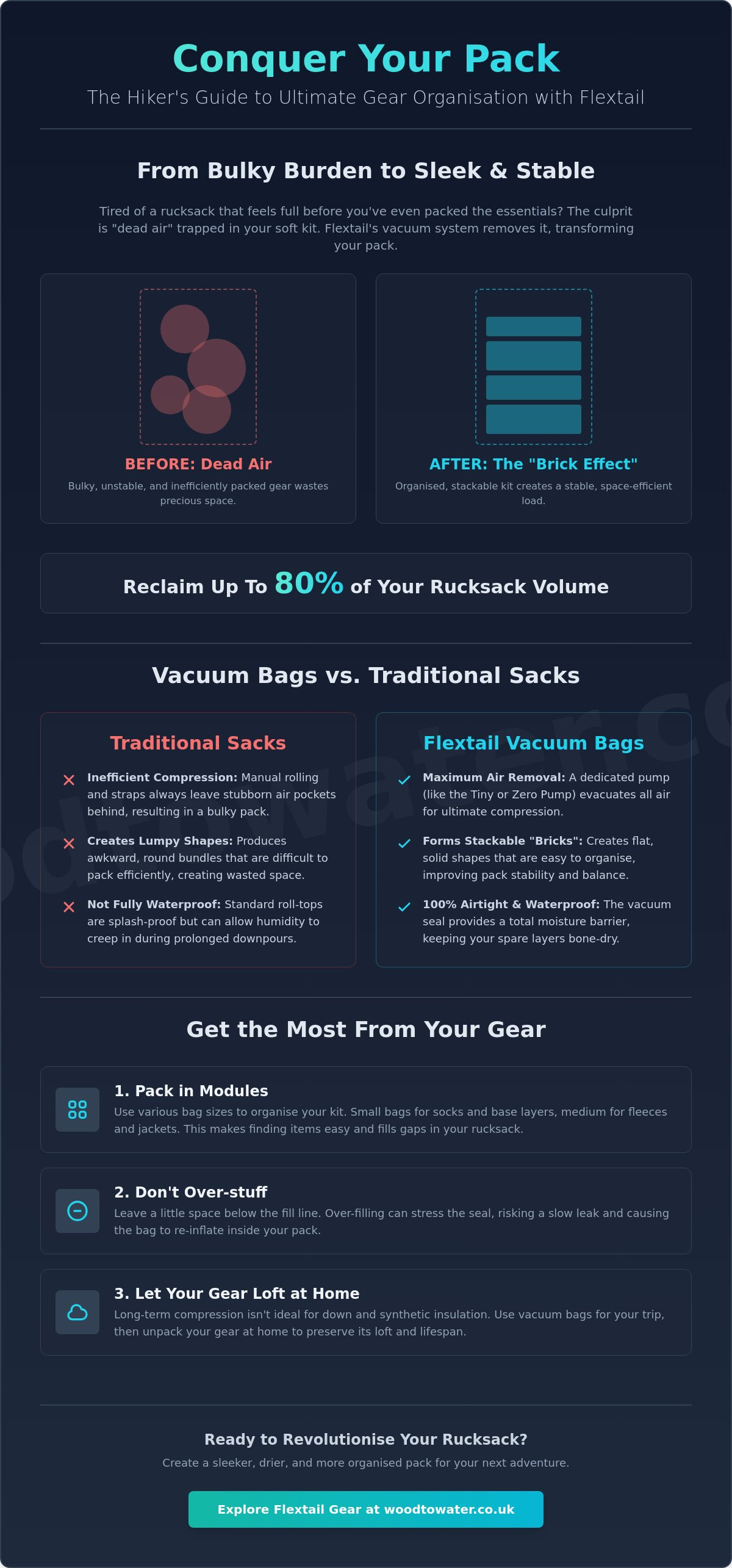
We know how frustrating it is to feel like you're carrying a house on your back when you'd rather be enjoying the trail. This guide shows you how to reclaim up to 80% of your pack space whilst keeping your clothes and sleeping bags bone-dry in the unpredictable British wilderness. We'll explore the latest vacuum technology from the TINY and ZERO PUMP series, compare the various bag sets available, and show you how to achieve a perfectly organised rucksack every time you head out.
Key Takeaways
- Learn how Flextail compression bags can reclaim up to 80% of your rucksack volume by removing the stubborn "dead air" that manual rolling often leaves behind.
- Discover how you'll keep your essential down gear and spare layers bone-dry even in the harshest British rain.
- Understand why using a dedicated pump like the Tiny Pump or Zero Pump series is more efficient and reliable than the traditional "kneel and roll" method.
- Master the best practices for maintaining an airtight seal and knowing when to let your gear loft to ensure your kit lasts for years.
- Find out how to integrate vacuum storage into your bushcraft system whilst keeping your kit organised and creating a more stable pack profile alongside your DD Frontline Hammock.
What are Flextail Compression Bags and Why Do They Beat Standard Dry Bags?
Ever noticed how a rucksack looks full before you've even packed your stove? Most of that volume isn't actually your gear; it's just trapped air. You've likely tried a compression sack before to tame the bulk. They get the job done to an extent, but they're never quite enough for a truly streamlined pack. Flextail compression bags take a different approach by using a dedicated vacuum system to remove the "dead air" that manual rolling always leaves behind. This is a total game-changer for high-loft items like down jackets and sleeping bags, which are essentially just big air traps waiting to be shrunk.
In the damp British climate, managing moisture is just as important as managing space. Standard roll-top bags are great for a quick splash, but they aren't always 100% airtight. Humidity has a sneaky way of creeping into your spare layers during a long, sodden trek through the Highlands. Because these vacuum bags create a total seal, they provide a reliable moisture barrier that keeps your kit bone-dry, no matter how much it tips down outside. You're getting dual-purpose performance: more room in your pack and absolute peace of mind that your "dry zone" stays that way.
The Mechanics of Vacuum Compression
The efficiency of this system centres on a clever one-way valve. It's designed to allow air to be sucked out under high pressure but won't let a single molecule back in once the pump is detached. Flextail bags are a multi-layered PA+PE composite solution for durability. This reinforced material is significantly tougher than standard household vacuum bags; it's built to withstand the friction and pressure of being shoved into a tight rucksack. You won't have to worry about the bag "re-inflating" halfway through your hike because the seal has failed; these are engineered for the rigours of the trail.
Vacuum Bags vs. Traditional Compression Sacks
While traditional sacks rely on straps that can slip or create awkward, lumpy shapes, Flextail gear creates what we call the "Brick Effect." Once the air is gone, your clothes become flat, solid, and stackable. This allows you to build a much more stable internal structure for your pack. A stable pack doesn't shift or wobble as you navigate technical terrain, which saves your energy and protects your back. You might add a few extra grams for the bag and a tiny pump, but the improved pack profile and better weight distribution make the overall load feel much lighter on your shoulders. Standard sacks simply can't match this level of organisation or stability in humid conditions.
Choosing the Right Size: A Comparison for Your Outdoor Kit
Picking the right size of Flextail compression bags is arguably the most important step in streamlining your kit. It's tempting to grab the biggest bag available and shove everything in, but that's a recipe for a lumpy, inefficient pack. Effective rucksack organisation relies on modularity. By using a variety of sizes, you can fill the small gaps between your hard gear, such as your cookset or fuel bottle, ensuring every cubic centimetre of your bag is working for you. Using multiple smaller bags also makes it much easier to find exactly what you need without exploding the entire contents of your rucksack across a damp forest floor.
One vital tip for any hiker: never over-stuff your bags. It might be tempting to squeeze that extra fleece in, but if you stress the zip-lock seal or the valve, you risk a slow leak. A bag that re-inflates inside your rucksack can actually put dangerous pressure on your pack's zips and seams. Keeping the contents slightly below the fill line ensures the material can create that perfect, airtight bond. While these bags are incredible for the trail, remember that long-term compression isn't ideal for all fabrics. Following best practices for vacuum storage means using them for your trip, then letting your gear loft naturally once you're back home to maintain the insulation's integrity.
Size Guide for Common Camping Gear
Choosing the correct variant depends entirely on your specific loadout. Small bags are perfect for those easily lost essentials like spare socks, base layers, and down gilets. They turn a bundle of clothing into a flat, rigid panel that slides easily into the side pockets of a pack. Medium bags are the true "sweet spot" for most hikers; they're the ideal dimensions for a standard 2-season sleeping bag or a couple of bulky fleece mid-layers. If you're heading out in winter, the Large bags are reserved for heavy-duty 4-season synthetic sleeping bags or bulky camping tarps that usually take up half your internal volume. You can find the full range of sizes in our Flextail gear collection to suit your specific setup.
Volume Reduction: What to Expect
The visual difference after using a vacuum pump is staggering. You can expect a consistent 80% reduction in volume for soft items, effectively turning a bulky jumper into a thin "pancake" that takes up negligible space. To put that into perspective, a 10-litre sleeping bag can often be reduced to under 3 litres using a vacuum pump. This massive reduction does more than just free up space; it significantly improves your centre of gravity. By compressing bulky items, you can pull the weight closer to your back, which makes your pack feel more stable and less likely to pull you off balance on steep or technical British trails. A tighter, more compact pack is always a more comfortable pack.
The Flextail Pump System: Powering Your Compression on the Trail
We've all been there; kneeling on a dry bag in the mud, trying to force the air out before the roll-top gives way. It's a clumsy process that rarely results in a truly compact package. A dedicated pump changes the game entirely. By using a motor to extract every last molecule of air, you achieve a level of compression that human weight simply cannot match. This isn't just about saving effort; it's about consistency. Using a pump with your Flextail compression bags ensures that your gear stays flat and rigid, trip after trip, without the struggle of the "kneel and roll" method.
One of the best things about the Flextail gear ecosystem is its multi-tool utility. You aren't just carrying a pump for your storage bags; the same device inflates your sleeping pad and, in some cases, lights up your camp. This consolidation of kit is a core principle of Integrating Flextail into Your Bushcraft Setup. While some hikers worry about battery life, modern units utilise USB-C charging. If you're already carrying a power bank for your phone or GPS, you've already got everything you need to keep your vacuum system running for weeks in the wild.
Compatible Pumps for Vacuum Bags
- Tiny Pump 2X: This is the ultimate all-rounder. It's roughly the size of an egg, yet it packs enough power to compress multiple bags and includes a built-in camping lantern with three brightness settings.
- Zero Pump: The go-to choice for the ultralight community. It's the world's smallest pump for sleeping pads, weighing next to nothing whilst still providing enough vacuum pressure for your storage bags.
- Max Pump 3: Best suited for basecamp setups or family trips. It offers higher airflow for rapid inflation and deflation when speed is your primary concern.
Step-by-Step Field Compression
To get the best results, start by sealing the double-zip track correctly. Use the provided plastic clip to run along the length of the seal; doing this twice ensures there are no tiny gaps for air to sneak back in. When connecting the pump, ensure the nozzle has a flush, airtight fit against the bag's valve. If it's even slightly off-centre, you'll lose suction and the process will take longer. A great pro-tip is to "pre-shape" the bag as the air leaves. Instead of letting it shrink into a random ball, use your hands to guide it into a flat, rectangular shape. This allows the bag to sit flush against your rucksack's back panel, which keeps the weight close to your spine and improves your overall balance on the trail.
Maximising Gear Longevity: Best Practices for Vacuum Storage
You've seen how much space you can save, but you might worry about the long-term health of your expensive sleeping bags or down jackets. There's a common "compression fatigue" myth that suggests vacuum sealing will permanently crush your gear's loft. In reality, it's all about timing. Using Flextail compression bags for a day of trekking or a weekend expedition is perfectly safe. The trouble only starts when you leave gear compressed for months in a cupboard; for the duration of a typical hike, your kit will bounce back just fine.
While these bags are built from durable multi-layered materials, they aren't invincible. You should never use them to store hardware, tools, or anything with sharp edges like tent pegs or your bushbox. The vacuum pressure pulls the plastic incredibly tight against the contents; even a small burr on a piece of metal can cause a puncture that ruins the seal. Keep your vacuum bags for the "softs", such as clothing, towels, and bedding, and leave the hard kit for your traditional rucksack compartments.
After a muddy weekend in the hills, your bags will likely be covered in trail grit and dust. Don't just toss them into your gear bin. A quick wipe with a damp cloth is usually all they need to stay in top condition. Pay special attention to the valve area. Sand or debris inside the valve is the primary cause of "slow leaks." If you find your bag is re-inflating during a trip, it's usually because a tiny grain of dirt is preventing the one-way flap from seating correctly against the housing.
The Down Insulation Debate
Down is incredibly resilient, but it needs to breathe to stay effective. Vacuum compression is your best friend on the trail, but we recommend limiting down compression to under 12 hours to maintain maximum loft. When you reach camp, get your sleeping bag out as soon as your shelter is up. Give it a vigorous shake to encourage air back into the down clusters. This "fluffing" process helps the insulation recover its thermal properties before you turn in for the night.
Maintaining the Seal
To keep your bags performing trip after trip, store them flat or loosely rolled whilst they are not in use. Folding them into sharp, permanent creases can eventually weaken the composite material and lead to micro-fractures. Regularly check the double-zip track for stray hairs, lint, or dust; these are the most common culprits for seal failure. A quick wipe with a soft, damp cloth keeps the one-way valve supple and ensures it remains 100% airtight for your next adventure. Ready to upgrade your storage game? Explore our full range of Flextail gear to find the perfect vacuum setup for your rucksack.
The Perfect Pack: Integrating Flextail into Your Bushcraft Setup
Bushcraft often requires a more diverse kit than standard hillwalking; you're likely carrying tools, tarps, and perhaps a more substantial sleep system. Integrating Flextail compression bags into this setup allows you to manage that extra bulk without needing a massive, unwieldy rucksack. If you're a hammock camper, you'll know that an underquilt and top quilt can easily swallow up your internal pack space. By vacuum sealing these items, they become compact modules that sit neatly at the bottom of your pack, leaving plenty of room for your stove and rations. It's about working with the environment rather than fighting it.
A major advantage for the British woodsman is the ability to maintain a strict "Dry Zone." When you're packing up a sodden camp, your tarp is going to be wet. By keeping your spare layers and sleeping kit in vacuum-sealed bags, you create an impenetrable barrier. You can shove a damp DD Frontline Hammock or tarp into the main compartment without any fear of moisture leaching into your dry thermals. This modular pack philosophy is where the system really shines. We recommend colour-coding your bags or using specific sizes for different categories of gear. This ensures that when you're tired and it's getting dark, you aren't rummaging through a dark rucksack for your spare socks.
Modular Packing for British Weather
Keeping an "Emergency Change" bag is a classic bit of trail wisdom. Seal one Small bag with a full set of dry thermals and spare socks, then bury it at the bottom of your rucksack. It stays airtight and bone-dry until the moment you truly need it. Combining these bags with other bushcraft essentials allows for a much more streamlined kit. You can access your cooking gear or tools in the rain whilst the rest of your clothing remains safely vacuum-sealed and protected from the humidity. This level of organisation is essential for staying comfortable during multi-day trips in the British wild.
Why Order from Wood To Water Outdoors?
At Wood To Water Outdoors, we don't just sell kit; we live it. We've curated this selection because we've seen how much of a difference it makes during a long weekend in the Peaks or the Highlands. When you buy from us, you're getting expert UK-based advice and gear that has been proven to work in our unique climate. We offer fast dispatch and only stock technology that we'd be happy to carry in our own packs. Our team is always on hand to help you choose the right pump or bag size for your specific adventure. Ready to reclaim your rucksack? Explore our full range of Flextail compression bags and pumps here.
Ready to Streamline Your Next Adventure?
Transitioning from a bulky, unbalanced rucksack to a professional, modular setup is a simple shift that pays massive dividends on the trail. By integrating Flextail compression bags into your kit, you're choosing a system that prioritises pack stability and absolute moisture protection. We've seen how removing air creates a more manageable load, allowing you to focus on the terrain rather than the shifting weight on your back. Whether you're heading out for a quick overnight stay or a week-long expedition, this technology ensures your essential layers remain protected and compact.
At Wood To Water Outdoors, we pride ourselves on providing gear that stands up to the rigours of the British wild. Our curated selection of pumps and bags is backed by expert advice from enthusiasts who use this equipment in the field. Don't let a disorganised pack hold you back from your next summit or forest camp. Shop Flextail Compression Bags at Wood To Water Outdoors and build a more efficient kit today. Happy hiking!
Frequently Asked Questions
Can I use Flextail compression bags without a pump?
You can manually expel air by rolling the bag, but you won't achieve the maximum 80% space reduction. The one-way valve is specifically engineered for suction. Whilst manual pressure works in a pinch, using a dedicated pump ensures every pocket of "dead air" is removed. This creates the rigid, flat "brick effect" that makes your rucksack so much easier to pack and balance on the trail.
Will vacuum sealing damage my expensive down sleeping bag?
Vacuum sealing is perfectly safe for down gear during your trek, provided you don't leave it compressed for months at home. Down clusters are incredibly resilient; they are designed to be squashed and lofted repeatedly. The key is to get your gear out as soon as you reach camp. Give your bag a good shake to let the air back in, and it will regain its full thermal efficiency before bedtime.
Are Flextail bags tough enough to be used inside a rucksack?
Yes, these bags are made from a multi-layered PA+PE composite that is significantly more durable than standard household vacuum bags. They are designed to withstand the constant friction of being shoved into a rucksack alongside other kit. As long as you keep sharp hardware like tent pegs or stove parts in separate compartments, your Flextail compression bags will handle the rigours of the trail with ease.
How much weight do the bags add to my pack?
The weight is negligible, with individual bags weighing only a few dozen grams depending on the size. Even when you add an ultralight Zero Pump to your kit, the total system weight is minimal. Most hikers find that the massive reduction in pack volume and the improved centre of gravity far outweigh the few extra grams. It's a small price to pay for a much more stable and organised load.
Can I reuse the bags, or are they single-use?
These bags are fully reusable and built to last for many seasons of adventure. They aren't flimsy, single-use plastic; they are technical pieces of outdoor gear. With basic maintenance, such as keeping the zip-track free of grit and wiping the valve with a damp cloth, you can use them trip after trip. They are a sustainable way to manage your kit volume without constantly buying replacements.
What happens if a bag gets a small puncture in the field?
If a bag gets punctured, it will lose its vacuum seal but will still function as a standard dry bag. You can easily fix small nicks or tears in the field using high-quality gear repair tape. To prevent punctures, always ensure that your clothing is free of sharp pins or badges and that you don't pack hardware directly against the plastic walls of the bag.
Are these bags completely waterproof if my pack falls in a stream?
Yes, the combination of the double-zip track and the one-way valve creates a 100% airtight and watertight seal. Unlike traditional roll-top dry bags, which can sometimes leak if submerged or under pressure, a vacuum-sealed bag is essentially waterproof. It provides the ultimate protection for your "dry zone" kit, ensuring your spare thermals and sleeping bag stay bone-dry even after an accidental dunking in a Highland stream.