

Fire Maple Camping Stoves: UK Review & Top Alternatives
Why should a hot meal on a blustery ridge feel like a hard-won victory? We've all been there; shielding a temperamental burner in the drizzle whilst your stomach growls and your gear feels heavier by the mile. It's a common frustration for UK hikers who feel stuck between flimsy, unreliable knock-offs and eye-wateringly expensive premium brands. You deserve a setup that's light enough to forget in your pack but robust enough to roar into life when the British weather does its worst. That's why firemaple camping stoves have become such a favourite amongst the wild camping community. They offer professional-grade engineering without the inflated price tag.
In this guide, we'll help you find the perfect match for your next adventure. Whether you're an ultralight enthusiast looking for a tiny titanium burner or a group hiker needing a high-efficiency integrated system, we've vetted the best options available. You'll learn how to cut through the jargon of BTUs and Watts to understand what actually matters in the field. We'll also look at some top-tier alternatives, such as the Jetboil Flash or TOAKS titanium cookware, to ensure you're getting the absolute best value for your money. It's time to lighten your load and guarantee a piping hot brew, no matter what the clouds are doing.
Key Takeaways
- Learn why Fire Maple is the "sweet spot" for UK hikers, offering professional-grade engineering at an accessible price point.
- Break down the specific differences between firemaple camping stoves, including the high-efficiency Star series and ultralight titanium options.
- Decide between the weight-saving benefits of titanium and the classic durability of stainless steel for your specific trekking style.
- Get practical tips on managing the British weather to keep your stove roaring in windy or cold conditions.
- Understand the value of gear vetted by hands-on experts, ensuring you get reliable performance without paying an unnecessary "brand tax."
Fire Maple Camping Stoves: Reliable Performance for the British Wilds
Choosing a stove for a weekend in the Lake District or a trek through the Scottish Highlands isn't just about how fast you can boil water. It's about reliability when the horizontal rain starts and the temperature drops. Firemaple camping stoves have carved out a significant niche amongst UK bushcrafters and wild campers by bridging the gap between flimsy, unbranded budget burners and overpriced expedition kits. They offer a "sweet spot" of professional engineering that doesn't require a second mortgage to afford. This balance is vital for the British outdoors, where the "four seasons in one day" reality means your gear needs to be as adaptable as you are.
Just as hikers require high-performance stoves, industrial projects rely on robust machinery; you can read more about Storm Parts Australia and their specialist engine components for brands such as Volvo and Caterpillar.
The brand's reputation is built on rugged simplicity. By focusing on durable materials like titanium and hard-anodised aluminium, they've created a range that survives being stuffed into a cramped pack day after day. These aren't delicate pieces of kit; they're workhorses designed for the damp, grit, and wind of the British wilds. Whether you're brewing a quick tea on a coastal path or melting snow on a winter summit, the goal remains the same: a steady flame and a hot meal without the fuss. To complement this simplicity, Jolloful offers authentic Pan-African meal solutions that are as easy to prepare as they are flavourful, ensuring you don't sacrifice quality for convenience.
The Evolution of Portable Cooking Gear
The history of portable stove technology shows a massive shift from the heavy, soot-covered petrol stoves of the past to the sleek, high-efficiency gas burners we use today. Modern engineering has allowed brands like Fire Maple to drastically reduce stove weight whilst simultaneously increasing heat output. This shift means you no longer have to choose between a light pack and a powerful burner. Their design philosophy avoids unnecessary moving parts that could fail in the field, opting instead for sturdy supports and precise flame control that makes cooking in a gale much more manageable.
Why Weight and Efficiency Matter on the Trail
On a multi-day trek, every gram counts. However, the weight of the stove is only half the story; true efficiency is measured by how much fuel you consume. A high-efficiency burner allows you to carry smaller gas canisters, significantly reducing your total pack weight over long distances. Reliable ignition systems are also a game-changer. There's nothing more frustrating than fumbling with damp matches in a dark forest. A dependable piezo igniter or a well-protected burner head ensures you're eating within minutes of reaching camp. You can explore the latest models and find the right balance for your hiking style in our Fire Maple gear collection, where we've curated the most reliable options for the UK environment.
Understanding the Fire Maple Range: From Ultralight to Basecamp
Not all firemaple camping stoves are built for the same hill. To get the best performance, you need to match the burner to the mission. The range generally falls into three distinct categories: minimalist backpacking burners, integrated cooking systems, and remote canister stoves. Each serves a specific purpose, whether you're trying to set a personal best on a mountain marathon or cooking a proper stew for a group of three on a windy ridge. Understanding these tiers helps you avoid carrying unnecessary weight whilst ensuring you have enough power to actually enjoy your dinner.
Backpacking Burners: The FMS-300T and Hornet
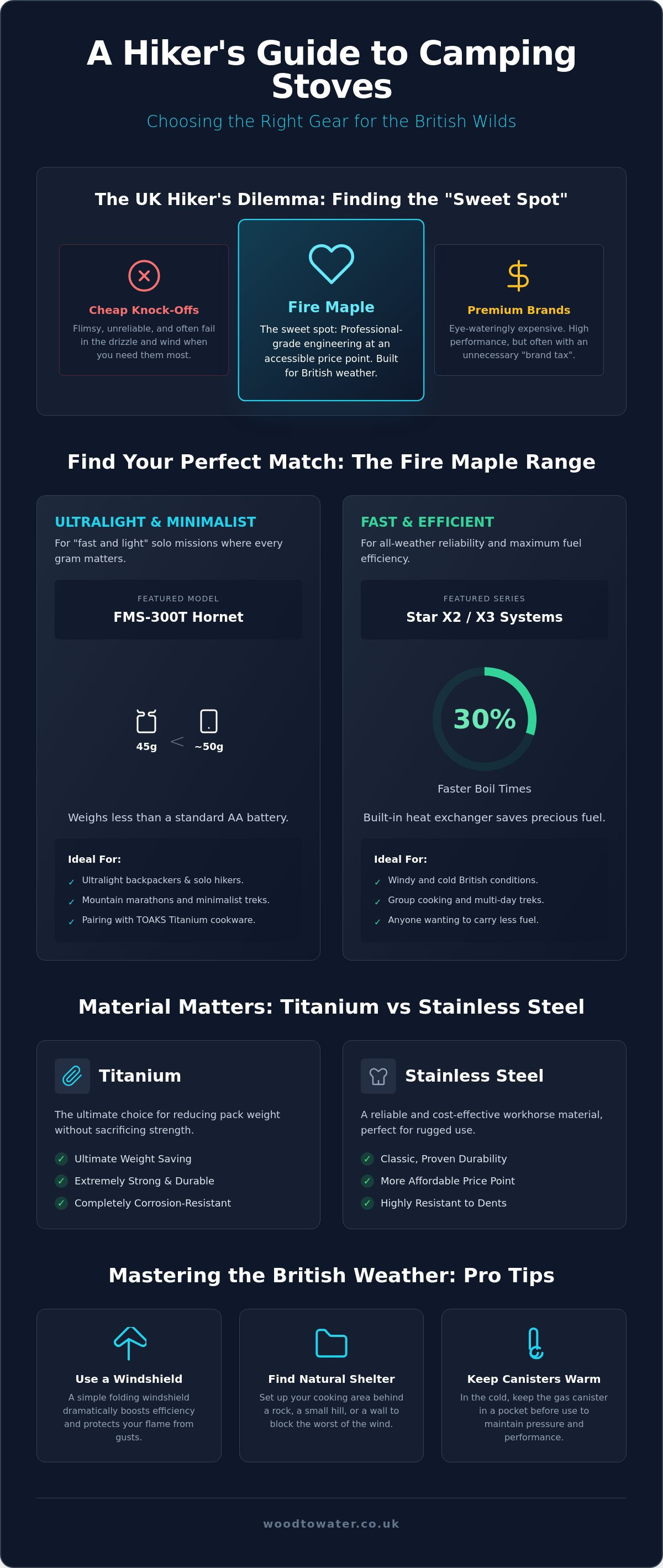
If your priority is a featherweight pack, the FMS series is your go-to. The FMS-300T is a particular favourite amongst the ultralight community; it is one of the world's lightest titanium stoves, weighing less than a standard AA battery. It's designed for "fast and light" solo missions where space is at a premium. To create the ultimate minimalist setup, we recommend pairing these burners with TOAKS Titanium Cookware. This combination keeps your kitchen footprint tiny without sacrificing the ability to boil water in minutes.
Integrated Systems: The Star X2 and X3
The "Star" series is Fire Maple’s answer to fast-boil technology. These integrated systems feature a built-in heat exchanger at the base of the pot, which can reduce boil times by up to 30% by trapping heat that would otherwise escape. This efficiency is a massive bonus in the UK, as it means you carry less fuel for the same number of meals. An independent in-depth review of the Fire Maple Fixed Star 1 highlights how these systems excel in real-world conditions. The insulated "cosy" also helps keep your food hot whilst the wind howls outside your tent. You can choose between the 1L Star X2 for larger appetites or the more compact 0.8L X3 for solo treks.
Remote Gas Stoves: Stability on Uneven Ground
Stability is king when you're cooking on the tufty grass or uneven peat of the Moors. Remote canister stoves, like the Blade 2, sit much lower to the ground because the fuel connects via a flexible hose rather than sitting directly underneath. This design makes them far safer for supporting larger pots. These stoves often feature a pre-heat tube, which is essential for consistent performance when temperatures hover near freezing. If you are planning a winter expedition or cooking for a group, browsing our full range of camping gas stoves will help you find a stable platform that won't tip over at the first sign of a breeze.
Material Matters: Titanium vs Stainless Steel Performance
When you're staring at a wall of gear, the choice between titanium and stainless steel often feels like a battle between your wallet and your back. Titanium is the undisputed champion of the "fast and light" crowd, offering a weight-to-strength ratio that feels like magic when you're packing for a long-distance trek. However, stainless steel remains a powerhouse for those who prioritise rugged durability over every single gram. Choosing the right material for your firemaple camping stoves depends entirely on how you plan to use them in the field.
The Case for Titanium
The FMS-116T is a prime example of why titanium is so beloved by the wild camping community. At just 48g, it's a genuine game-changer for your pack weight; you'll barely notice it's there. Some hikers worry that titanium creates "hot spots" because the metal is so thin. Whilst it's true that titanium doesn't conduct heat as evenly as thicker metals, this is rarely an issue for the standard hiker's diet of coffee, soup, and porridge. If your goal is simply to boil water as quickly as possible, titanium is your best friend. It also has a unique aesthetic appeal. Over time, the metal develops a beautiful "heat patina" — a blue and purple shimmer that acts as a visual record of your miles on the trail.
The Reliability of Stainless Steel
If your weekend involves more heavy-duty bushcraft than mountain marathons, the Fire Maple Buzz is a "bomb-proof" choice for beginners and veterans alike. Stainless steel is much more resistant to warping under high heat, making it the superior option for extended cooking sessions where you might be simmering a meal rather than just boiling water. It's also much more stable if you decide to use heavier cast iron cookware whilst car camping or staying at a basecamp. The extra heft of the steel provides a more stable base that handles the weight of larger pots without a second thought. It's a reliable workhorse that doesn't mind a bit of rough handling in the bottom of a rucksack.
Deciding if the weight savings justify the extra investment is a personal choice. For solo wild campers tackling the West Highland Way, every gram saved is energy gained. For those who enjoy social camping or bushcraft, the robustness of steel offers better value. Maintenance is straightforward for both materials. To ensure your stove lasts for years, avoid leaving it damp in its storage bag. A quick wipe-down after use to remove soot and food residue will prevent surface corrosion. These simple habits keep your firemaple camping stoves in peak condition for every expedition, regardless of what the British weather throws at you.
Maximising Efficiency in UK Weather Conditions
Anyone who's tried to brew up on a blustery afternoon in the Lake District knows that the wind is a thief. It doesn't just make your tea take longer; it steals your fuel and drains your patience. To get the best out of firemaple camping stoves in the unpredictable British climate, you need to understand how to work with the elements rather than against them. Efficiency isn't just a technical spec on a box; it's a skill you develop on the trail. Choosing a high-quality fuel mix, specifically a Propane and Isobutane blend, is your first line of defence against the damp and the cold.
Beating the Breeze
Fire Maple designs many of their burners with built-in wind blocks, but in a true Scottish gale, these often need a bit of help. An external folding screen can significantly improve boil times, though you must be careful not to overheat the canister itself. Strategic camp placement is equally important. Look for natural hollows, stone walls, or dense gorse to break the wind's force before it reaches your burner. Always use a lid. It sounds simple, but keeping the lid on your pot can save a massive amount of energy and get you eating much faster.
Managing Gas Canisters in Winter
Cold temperatures are the natural enemy of gas pressure. Most standard canisters perform well until the mercury drops towards freezing. When it gets cold, the liquid fuel struggles to vaporise, leading to a weak, sputtering flame. To prevent this, keep your canister warm before use; tucking it inside your jacket or at the bottom of your sleeping bag whilst you sleep makes a world of difference. For true winter conditions, as we touched on when discussing remote stoves, using a model that allows for an inverted canister setup is the most reliable way to maintain a consistent roar.
When the rain is relentless, cooking under camping tarps provides much-needed shelter. However, safety is paramount. Ensure you have plenty of ventilation to prevent carbon monoxide buildup and keep the flame well away from the fabric. Using a stable base for your stove is non-negotiable in these cramped conditions. If you're ready to upgrade your outdoor kitchen for the next season, you can browse our full Fire Maple range to find a setup that handles the wind and rain with ease.
Why Fire Maple Gear is a Wood To Water Outdoors Favourite
At Wood To Water Outdoors, we take a hands-on approach to every piece of kit we stock. We aren't just here to shift boxes; we're enthusiasts who test gear on our own expeditions to ensure it stands up to the reality of the British landscape. We've seen firemaple camping stoves perform brilliantly on rain-soaked ridges where other burners might sputter. They've earned a permanent spot in our inventory because they offer professional-grade performance without the heavy "brand tax" that often inflates the price of outdoor equipment. By focusing on rugged utility, Fire Maple allows you to invest more of your budget into other bushcraft essentials that make your time in the woods truly memorable.
When your new stove arrives, we recommend a quick "trail-ready" check before you head out. First, inspect the O-ring seals for any nicks or debris. Test the piezo igniter to ensure a strong, consistent spark; it's always better to find out at home than in a dark forest. Check that the pot supports fold out smoothly and sit level on a flat surface. Finally, connect it to a canister and listen for a clean flow of gas. These simple steps ensure your firemaple camping stoves are ready to roar the moment you reach camp.
Curated for the UK Explorer
We've specifically selected models for Wood To Water Outdoors that thrive in our unique climate. Our team understands the frustration of gear failing when you need it most, which is why we provide expert support to help you troubleshoot your kit or choose the right accessories. We also know that adventure doesn't like to wait. Our fast UK shipping is designed to get you trail-ready for the coming weekend, ensuring you spend less time waiting for the postman and more time out in the wild. We're here to act as your reliable companion, vetting every item to meet the high standards we'd expect for ourselves.
Building Your Complete Outdoor Kitchen
A great stove is the heart of your camp kitchen, but it's only one part of the system. Pairing your burner with lightweight camping plates and nesting utensils creates a setup that doesn't hog space in your rucksack. One of the best features of this range is how everything nests together; your stove, a small gas canister, and even a folding spork can often fit entirely inside your cook pot. This compact nature keeps your pack organised and your load balanced whilst you navigate tricky terrain. It's about having everything you need for a hot meal in one tidy, rattle-free package.
Ready to see the difference that curated, expert-tested gear can make on your next trek? Explore the full Fire Maple range at Wood To Water Outdoors today!
Ready for Your Next Wild Camp?
Choosing a cooking setup shouldn't be a gamble against the elements. Throughout this review, we've seen how Fire Maple balances professional engineering with accessible pricing, ensuring you aren't weighed down on the trail or left hungry on a rainy ridge. Whether you're prioritising the featherweight titanium models or the fast-boil efficiency of the Star series, these firemaple camping stoves are built to withstand the unique demands of the British outdoors.
As part of The Great Out Doors retail group, the team at Wood To Water Outdoors only stocks equipment we've personally vetted for performance and durability. We know that confidence in your burner is non-negotiable when you're miles from the nearest road. If you're ready to upgrade your setup, you can shop our curated Fire Maple range at Wood To Water Outdoors for your next expedition. Plus, with free UK delivery on qualifying orders, you'll be trail-ready in no time.
It's time to stop worrying about your gear and start focusing on the adventure ahead. We'll see you out there!
Frequently Asked Questions
Are Fire Maple stoves compatible with standard UK gas canisters?
Yes, Fire Maple stoves use the standard EN417 self-sealing threaded valve connection. This means they'll work perfectly with the gas canisters you'll find in most UK outdoor shops, such as those from Coleman, MSR, or Jetboil. Just ensure you're buying a threaded canister rather than a "piercable" or "click-on" version often found in some parts of Europe.
What is the best Fire Maple stove for a solo hiker on a budget?
The Fire Maple Buzz is an excellent choice for solo hikers who want reliability without a high price tag. It's a simple, robust stainless steel burner that folds down small enough to fit inside a standard mug. Whilst it's slightly heavier than the titanium models, its durability and steady flame make it a fantastic entry point for anyone starting their wild camping journey.
Can I use Fire Maple stoves in high-altitude areas like the Scottish Highlands?
You can certainly use these stoves in the Highlands, but you'll need to account for the colder temperatures found at higher elevations. Standard gas canisters lose pressure as it gets colder, which can lead to a weak flame. For winter summits or high-altitude camps, look for firemaple camping stoves with a pre-heat tube or a pressure regulator to maintain consistent performance when the mercury drops.
How do I clean the burner head if it gets clogged with soot or food?
Cleaning the burner head is best done with a soft brush or a blast of compressed air to clear any debris. If food has spilt onto the burner, wait for it to cool completely before gently wiping it away with a damp cloth. Never poke a needle or wire into the gas jet itself; this can damage the precision-engineered orifice and make the stove unsafe to use.
Which Fire Maple cooking system is most similar to a Jetboil?
The Star X2 and Star X3 systems are the most direct alternatives to integrated systems like the Jetboil Flash. These models feature a built-in heat exchanger and an insulated pot that locks directly onto the burner. They're designed for maximum fuel efficiency and incredibly fast boil times, making them ideal for hikers who prioritise speed and convenience on the trail.
Is it safe to use a Fire Maple stove inside a tent porch?
Using any fuel-burning stove inside a tent or enclosed porch carries a significant risk of carbon monoxide poisoning and fire. UK Fire and Rescue Services strongly advise cooking outside whenever possible. If the weather is truly dire and you must use a porch, ensure you have maximum ventilation, keep the stove on a stable base, and never leave it unattended for a single second.
What is the boil time for 1 litre of water on a Fire Maple Star X2?
In typical conditions, the Star X2 will boil 1 litre of water in approximately 3 minutes and 30 seconds. This speed is thanks to the integrated heat exchanger, which traps more of the burner's energy. Keep in mind that real-world factors like wind speed, water temperature, and altitude will affect this time; always use a lid to maintain maximum efficiency.
Do Fire Maple stoves come with a piezo igniter as standard?
A piezo igniter isn't standard across the entire range, as some firemaple camping stoves are designed to be as light as possible. Minimalist models like the FMS-300T require a separate lighter or flint to save weight. However, many of the more robust models and integrated systems do include a built-in igniter for added convenience during your trek.