

Essential Outdoor Gear: The Ultimate UK Hiking Checklist
Have you ever stood on a sodden hillside in the Peak District, shivering in a "waterproof" jacket that cost a week's wages, whilst wondering why your pack feels like it's filled with lead? It's a common frustration for many explorers who find that expensive kit often fails to meet the brutal demands of the British climate. Choosing the right essential outdoor gear shouldn't feel like a minefield of technical jargon and over-engineered gadgets that add more weight than value.
We believe your time outdoors should be spent enjoying the landscape, not wrestling with a heavy bag or damp layers. This guide promises to help you master gear selection through a modular systems approach designed specifically for the UK's unique terrain. You'll learn how to build a kit list that's both lightweight and robust; this ensures you have the confidence to explore further whilst understanding the practical utility of every item. We're diving into the core essentials that actually work when the clouds roll in.
Key Takeaways
- Learn how to transition from static checklists to a modular systems approach that effectively manages the unpredictable British weather.
- Discover the practical pros and cons of tents versus hammocks, including how setups like the DD Frontline Hammock provide comfort in rugged terrain.
- Identify the best trail kitchen solutions by balancing kit weight against the high-performance efficiency of modern stove systems.
- Understand the science behind the three-layer system to ensure you stay dry and warm whilst maintaining breathability during tough ascents.
- Master the art of selecting essential outdoor gear by focusing on expert-vetted bushcraft essentials that prioritise reliability over mass-market gimmicks.
The Ten Essentials for British Explorers: A Systems Approach
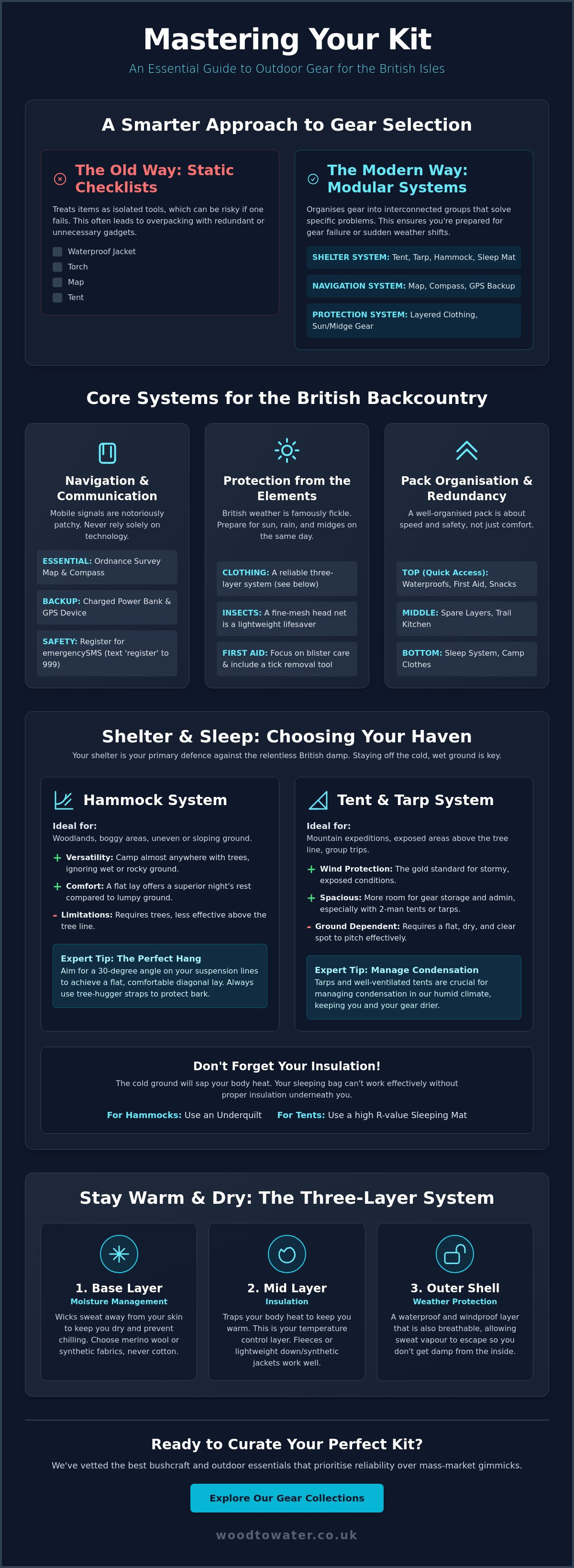
Traditional kit lists often treat items as isolated tools, but we prefer a systems approach. Relying on a single piece of essential outdoor gear is a risk you shouldn't take in the British backcountry. Instead, think of your equipment as interconnected groups that solve specific problems. This modular mindset is the foundation of The Ten Essentials; it ensures you're prepared for gear failure or sudden weather shifts without overpacking your rucksack.
In the UK, redundancy is your best friend. If your primary torch fails on a late descent in the Cairngorms, a secondary headlamp becomes your most valuable asset. Organise your rucksack with this in mind. Keep your waterproofs and first aid at the top; bury your sleep system at the bottom. This keeps you agile and ready for whatever the trail throws your way. A well-organised pack isn't just about comfort. It's about speed and safety when the mist rolls in.
Navigation and Communication in the UK
Tech is brilliant until the battery freezes or the signal vanishes. In National Parks like Snowdonia, mobile coverage is notoriously patchy. An Ordnance Survey map and a reliable compass remain non-negotiable. They don't require a charge and won't fail in a downpour. We recommend using digital backups like satellite communicators for remote areas. Don't forget to register for the emergencySMS service by texting "register" to 999 before you set off. This allows you to text for help when voice signals are too weak to make a call.
Sun, Rain, and Midge Protection
British weather is famously fickle. You might start a hike in blazing sunshine and end it in a horizontal sleet storm. Your essential outdoor gear must include protection for every eventuality. Midges can ruin a Highland expedition, so a fine-mesh head net is a lightweight lifesaver. Your first aid kit needs to be specific too. Focus on blister care for those long miles and include a tick removal tool to manage the risks found in bracken and long grass. These small bushcraft essentials allow you to fix a torn tarp or manage a minor injury on the fly, keeping your adventure on track.
Shelter and Sleep: Hammocks vs Tents in UK Terrain
Finding a flat, dry spot to pitch a tent in the UK can feel like a secondary expedition. Between the sodden moss of the Peaks and the jagged rocks of the Highlands, the ground rarely cooperates. This is where your choice of shelter becomes a defining part of your essential outdoor gear. Whilst traditionalists often default to a tent, many modern explorers are discovering that staying off the ground entirely offers a superior night's rest. Your shelter isn't just a place to sleep; it's your primary defence against the relentless British damp.
Thermal efficiency is a common area where new hikers struggle. It's a mistake to think your sleeping bag does all the work. Without proper insulation beneath you, the cold ground will sap your body heat in minutes. Whether you're using a high-R-value mat in a tent or an underquilt with a hammock, that bottom layer is what keeps you toasty. Even the most comprehensive essential hill walking kit requires a smart approach to moisture and temperature management to be truly effective.
The Rise of the Hammock System
Hammock camping has exploded in popularity across British woodlands for one simple reason: versatility. A DD Frontline Hammock allows you to set up camp amongst trees where a tent simply couldn't go. You can ignore bogs, slopes, and roots entirely. To get the most out of this system, you need to master the "perfect hang" at a thirty-degree angle. This creates a flat diagonal lay that prevents the "banana" shape often associated with cheap hammocks. Don't forget a mosquito net to ward off midges, and always use tree huggers to protect the bark.
Tents and Tarps for Mountain Expeditions
When your journey takes you above the tree line, tents remain the gold standard for wind protection. Choosing between 1-man tents for solo speed or 2-man tents for extra gear space is a personal trade-off. If you're a minimalist, camping tarps offer a lightweight alternative that provides a massive footprint for cooking and gear maintenance. Tarps encourage better airflow, which is crucial for managing condensation in our humid climate. If you're looking for a more flexible setup, why not browse our range of versatile camping tarps to find your perfect match?
The Trail Kitchen: Balancing Weight and Performance
After a relentless day trekking through the Lake District, nothing beats the morale boost of a hot meal. Your trail kitchen is a vital component of your essential outdoor gear; it needs to be reliable enough to strike a flame in a gale whilst remaining light enough to carry up Scafell Pike. Choosing the right setup depends entirely on your pace. Are you looking to boil water in ninety seconds for a quick dehydrated meal, or do you prefer the slow, rhythmic process of a wood-fired bushcraft camp?
Fuel choice is a personal decision that dictates your pack's weight and your efficiency on the trail. Gas canisters are the standard for most UK hikers due to their ease of use. However, multi-day expeditions require careful fuel management to avoid carrying half-empty tins. For those pursuing a more traditional experience, wood-burning stoves like the BE bushbox offer a sustainable alternative; they allow you to forage for fuel as you go, provided you're in a wooded area with dry litter.
Stove Systems: Jetboil vs Traditional Burners
Efficiency in the wind is where many stoves fail, but Jetboil camping cooking systems excel. These integrated units use a heat exchanger to shield the flame, which is a massive advantage in the unpredictable British climate. Models like the Jetboil Flash are designed for speed. They're perfect for the "fast and light" crowd who prioritises a quick coffee over a complex three-course meal. If the rain forces you to cook in your tent's vestibule, exercise extreme caution. Ensure maximum ventilation to prevent carbon monoxide buildup; safety should always outweigh convenience when the weather turns sour.
The Ultralight Advantage of Titanium
For serious backpackers, every gram counts. This is why TOAKS Titanium Cookware has become a staple for long-distance UK trails. Titanium is significantly lighter than stainless steel and far more durable than aluminium. It won't warp under high heat, and it doesn't leach a metallic taste into your food. Space-saving is another benefit. Most titanium pots are designed for nesting; you can often fit your stove, a small gas canister, and a folding spork inside the pot itself. This keeps your rucksack organised and prevents items from rattling whilst you're on the move.
Hydration is the final piece of the kitchen puzzle. Whilst a simple bottle works for short walks, a water filter is a piece of essential outdoor gear for wild camping. It allows you to safely drink from streams, which significantly reduces the weight of the water you need to carry from the start. Pair your filter with a lightweight titanium mug to create a streamlined, high-performance system that won't let you down.
Protection from the Elements: Footwear and Layering
British weather doesn't just change; it evolves by the minute. One moment you're sweating under a pack on the fells, the next you're lashed by cold rain. Mastering your essential outdoor gear means understanding the three-layer system. This isn't just about piling on clothes. It's about creating a personal microclimate that adapts to the environment as quickly as the clouds shift above you.
The system starts with a wicking base layer. Wicking is the most important word in your vocabulary; it's the process of pulling moisture away from your skin to keep you dry. Your mid-layer provides the warmth. In the UK's humid conditions, synthetic insulation often beats traditional down because it retains heat even when damp. Finally, your outer shell needs a high hydrostatic head to block out horizontal rain. Balance is key. A jacket that's perfectly waterproof but lacks breathability will leave you soaked from your own sweat.
Keeping Feet Dry with Origin Outdoors
Your feet take the most punishment on any trek. Choosing the right boots is only half the battle; keeping the wet out is the other. Walking through long, wet grass or heather for hours is a recipe for soggy boots and painful blisters. Origin Outdoors Drytogo Gaiters are an underrated hero for British moorlands. They provide a robust barrier that prevents water and debris from seeping over the top of your footwear. This simple addition is vital for preventing "trench foot" during multi-day expeditions. Maintenance is straightforward. Give them a quick rinse after a muddy walk to ensure the fabric remains breathable and the fastenings stay functional.
Technical Apparel for the British Climate
When selecting your shell, focus on the practical realities of the trail. You need a garment that can withstand a scramble through gritstone whilst being light enough to pack away when the sun breaks through. Synthetic fills are generally the safer bet for our climate. They don't clump like down when the mist turns into a steady drizzle. Always look for a shell with a high hydrostatic head rating to ensure it can handle a proper British downpour. Proper layering ensures you stay comfortable regardless of the "four seasons in one day" forecast.
Ready to upgrade your kit for the next adventure? Browse our full range of bushcraft essentials to find the perfect high-performance layers for your next expedition.
Curating Your Kit with Wood To Water
Walking into a massive warehouse can be overwhelming. You're often met with rows of generic products that look identical but vary wildly in quality. At Wood To Water, we take a different approach. We believe that essential outdoor gear should be handpicked by people who actually spend their weekends on the fells. A curated selection beats a "big box" retailer every time because it removes the guesswork. You don't have to worry if a piece of kit will survive a Scottish gale; we've already made sure it will.
Our focus on quality over quantity means we only stock items we'd trust with our own safety. Whether you're looking for high-end navigation tools or expert-vetted bushcraft essentials, every product in our collection has earned its place. Supporting the UK outdoor community is at the heart of what we do. We're here to help you build a modular kit that grows with your experience; this ensures you're never carrying more than you need whilst always having exactly what you require.
Expert Vetting and Reliability
Reliability in the British backcountry is non-negotiable. We choose our brands based on how they perform in real-world conditions across our National Parks. If a stove flickers out in a Dartmoor breeze or a tarp rips in the Peaks, it doesn't make the cut. This hands-on vetting process gives you the peace of mind to push your boundaries. If you're unsure about a specific setup, just ask. We're fellow enthusiasts who love talking about gear; we'll give you honest, practical advice to help you make the right choice for your next trek.
Final Checklist for Your 2026 Adventure
Before you head out, distinguish your "Must-Haves" from your "Nice-to-Haves." Your core systems, such as navigation, shelter, and first aid, are your absolute priorities. Items like luxury camp pillows or complex gadgets are great, but they shouldn't come at the expense of your safety or pack weight. Once you return, conduct a post-trip gear audit. Did you use that extra fleece? Was your water filter easy to access? Refine your kit based on what actually happened on the trail. It's the best way to ensure your essential outdoor gear remains a streamlined, high-performance system.
The wilderness is calling. Are you properly equipped to answer? Shop the full essential gear collection today and get ready to explore the UK like never before!
Master the British Backcountry with Confidence
You've now seen how a modular systems approach transforms your experience on the trail. By prioritising moisture management and thermal efficiency, you can navigate the UK's unpredictable weather without the burden of an overpacked rucksack. Whether you're upgrading to a titanium trail kitchen or transitioning to a versatile hammock setup, these smart choices ensure your safety and comfort in the wild.
Selecting your essential outdoor gear shouldn't be a gamble. Every item in our collection is personally vetted by outdoor enthusiasts who understand the rugged demands of our National Parks. We provide UK-based expert support to help you refine your kit; additionally, you can take advantage of free delivery on qualifying orders. Our goal is to ensure you have the reliability you need to explore further and stay out longer.
Explore our curated range of Essential Outdoor Gear
The fells are waiting for you. Get your kit sorted, plan your route, and we'll see you on the trail!
Frequently Asked Questions
What is considered the most essential piece of outdoor gear?
High-quality footwear is widely considered the most critical investment for any hiker. Your boots or trail shoes are your primary interface with the terrain; if they fail or cause blisters, your expedition ends early. Ensure they have a reliable waterproof membrane and a deep tread pattern for grip on slippery gritstone. Choosing the right footwear is the foundation of your essential outdoor gear kit because it directly impacts your safety and endurance on the trail.
How do I choose between a tent and a hammock for UK camping?
Base your choice on the specific terrain where you plan to sleep. Tents are better for high-altitude mountain camps above the tree line where wind protection is vital. However, a hammock system like the DD Frontline Hammock excels in wooded or boggy areas where flat ground is scarce. If your route involves forests, a hammock offers a more comfortable, level sleep whilst keeping you away from damp ground and uneven roots.
Is titanium cookware worth the extra cost for beginners?
Titanium is definitely worth the investment if you plan on doing long-distance treks or multi-day wild camps. Whilst more expensive than aluminium, it is far more durable and won't warp or leach metallic flavours into your food. Beginner hikers often find that starting with lightweight TOAKS Titanium Cookware prevents the need to upgrade later as their pack weight becomes a priority. It's a "buy once, cry once" approach that pays off over hundreds of miles.
What are the Ten Essentials for hiking in the UK?
The Ten Essentials for the UK focus on a systems approach to safety and survival. This includes navigation (map and compass), a headlamp, sun and rain protection, a first aid kit, a repair tool, fire-starting equipment, emergency shelter, extra food, hydration, and insulating layers. In our fickle climate, having these systems ready ensures you can handle sudden mist or a sharp drop in temperature without panicking or putting yourself at risk.
How do I keep my gear dry whilst hiking in heavy rain?
Use a combination of a rucksack rain cover and internal dry bags for maximum protection. A rain cover stops the pack fabric from becoming waterlogged; however, dry bags are the only way to ensure your sleeping bag and spare clothes stay bone-dry if water seeps through the seams. This double-layer defence is a vital part of managing your essential outdoor gear in the humid, wet conditions typical of the British Isles.
Do I really need gaiters for summer hiking in Britain?
Gaiters are incredibly useful even in summer for managing wet grass and morning dew. Long grass can soak through waterproof boots in minutes; gaiters like the Origin Outdoors 'Drytogo' models prevent this moisture from running down into your socks. They also provide an extra layer of protection against ticks and grit on sandy paths. Don't dismiss them as winter-only gear if you're walking through moorland or overgrown trails.
What is the best way to cook food whilst wild camping?
An integrated canister stove is the most efficient choice for most wild campers. Systems like the Jetboil Flash are designed to boil water in under two minutes, which is perfect for rehydrating ready meals after a long day. These stoves are stable and wind-resistant, making them much safer to use in the breezy conditions often found at higher elevations or exposed coastal campsites where traditional burners might struggle.
How can I reduce my rucksack weight without sacrificing safety?
Focus on the "Big Three" first: your shelter, sleep system, and rucksack. Switching to a lighter tent or a hammock can save kilos instantly. You can also reduce weight by choosing multi-functional items and nesting your kitchen kit. For example, using a titanium pot that doubles as a mug saves both space and grams. Always audit your pack after a trip to remove items you didn't use, provided they aren't emergency safety equipment.