

Choosing the Best DD Hammocks Tarps for British Weather
The biggest tarp isn't always the best shelter; in fact, choosing an oversized cover for a fast-paced trek through the Lake District can often do more harm than good. Whilst it's tempting to opt for maximum coverage, the reality of the British climate means balancing protection with wind resistance and pack weight. If you've ever found yourself wrestling with a 4x4 sheet in a sudden downpour, you'll know that bigger isn't always better. Finding the right DD Hammocks Tarps for your specific adventure is the difference between a restful night and a soggy, stressful ordeal.
We understand the confusion that comes with choosing between the classic 3x3, the cavernous 4x4, or the specialised SuperLight options. It's easy to feel overwhelmed by the sheer number of attachment points and configurations available. This guide will help you settle the size debate once and for all, ensuring you have the confidence to choose a setup that suits your style, whether that's a minimalist bivvy or a heavy-duty bushcraft basecamp. We'll break down the entire range and share expert tips on creating a storm-proof shelter that stands up to the worst the UK can throw at it.
Key Takeaways
- Discover why DD Hammocks Tarps have become the essential choice for the UK bushcraft community due to their rugged versatility and reliability.
- Learn how to choose the perfect dimensions for your adventure, comparing the nimble 3x3 solo setup against the spacious 4x4 group shelter.
- Master the 19 reinforced attachment points to pitch your shelter in dozens of configurations whilst avoiding the weaknesses of traditional metal eyelets.
- Understand the technical features that keep you dry, including the 3,000mm PU coating and factory-taped seams designed for heavy rainfall.
- Find out how to integrate your tarp with a DD Frontline Hammock or TOAKS Titanium Cookware to create a high-performance, lightweight expedition kit.
An Introduction to DD Hammocks Tarps: Why They Are a UK Bushcraft Staple
DD Hammocks didn't just create a piece of fabric; they built a cult following. Founded in Edinburgh in 2005, the brand set out to make hammock camping accessible without sacrificing the ruggedness needed for British woods. Today, DD Hammocks Tarps are ubiquitous at every bushcraft meet and wild camp across the UK. Their reputation isn't built on flashy marketing but on the sheer reliability of their gear in horizontal rain and biting winds. They've become the gold standard because they understand that a shelter in the UK has to work harder than anywhere else.
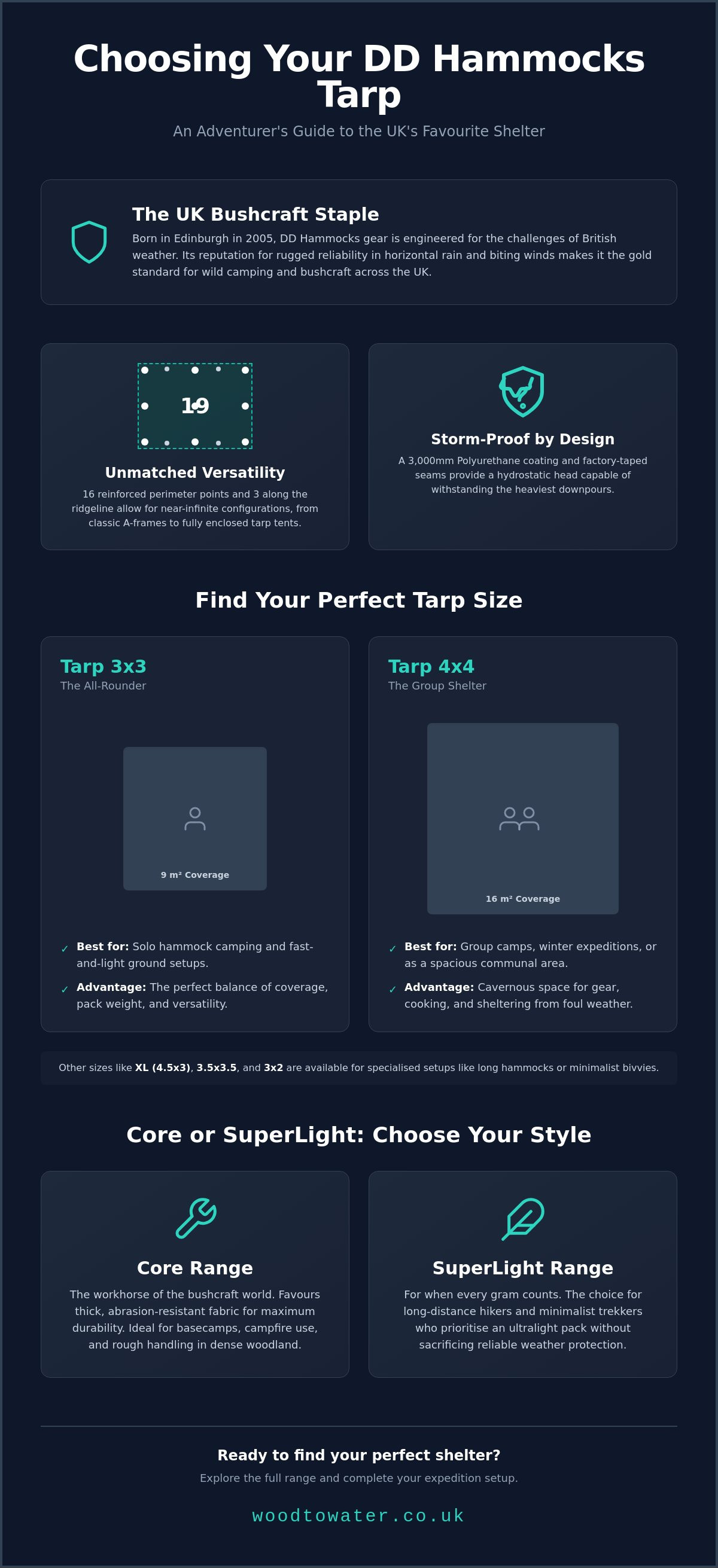
What truly sets these shelters apart is the legendary 19 attachment points. Most standard tarps offer four corner eyelets and perhaps a few along the edges. DD flipped the script by reinforcing 16 points around the perimeter and three along the ridge line. This isn't just for show; it allows for near-infinite configurations. You can pitch an A-frame for a hammock, a lean-to for a communal cooking area, or a fully enclosed "tarp tent" for a ground bivvy. This adaptability is why DD Hammocks Tarps remain the first choice for those who value versatility over everything else.
The Versatility of the DD Design
Modern Tarpaulin materials have come a long way from the heavy, waxed canvas of the past. DD uses a high-grade polyester with a 3,000mm hydrostatic head, ensuring you stay dry even during a Scottish deluge. One single sheet from our collection of camping tarps can transition from a hammock roof to a ground tent in minutes. This flexibility is essential amongst the UK community because our terrain is so varied. One night you might be amongst the trees; the next, you could be on a treeless ridge needing a low-profile ground pitch.
Core vs SuperLight: Identifying Your Camping Style
The DD range splits into two distinct paths: the standard "Core" range and the "SuperLight" series. Core tarps are the workhorses of the bushcraft world. They favour thick, abrasion-resistant fabric that can handle sparks from a campfire or rough handling in dense woodland. Veterans often gravitate towards the SuperLight versions for long-distance treks where every gram counts. Whilst you lose a tiny bit of that "bomb-proof" feel, you gain a setup that disappears into your pack. Beginners usually find the Core range provides the best balance of price and durability before they decide to shave off the weight for faster expeditions.
Comparing the DD Tarp Range: 3x3, 4x4, and Beyond
Choosing the right size for your shelter isn't just about how much ground you can cover; it's about how that fabric interacts with your specific camping style. Within the range of DD Hammocks Tarps, the 3x3 remains the undisputed gold standard for solo hammockers. It's the perfect middle ground. It provides enough coverage for a standard hammock hang whilst remaining small enough to tuck into a pack's side pocket. If you're heading out with a partner or need a communal area for a group, the 4x4 is the better bet. It offers a massive 16 square metres of protection, which is ideal for winter camps where you need extra room to store wet gear or huddle out of the biting wind.
For those who find the standard sizes a bit restrictive, specialist shapes like the XL (4.5m x 3m) or the 3.5x3.5 offer niche solutions for longer hammocks or specific ground pitches. The Small and 3x2 options are fantastic for minimalist bivvy setups where you only need to keep your head and torso out of the rain. If you're still weighing up your options, you can browse our full range of camping tarps to see the detailed specifications side-by-side.
Choosing Your Dimensions Based on Setup
The 3x3 is the favourite for diagonal hammock hangs because its corner-to-corner length perfectly matches most camping hammocks. When the weather turns foul, many campers opt for the 4x4 to provide extra "porch" space, allowing you to cook or organise gear without stepping into the mud. For those moving fast and light on the ground, the 3x2 or Small tarps are excellent for creating low-profile emergency tarp shelter configurations that catch less wind. These smaller dimensions are easier to manage in exposed areas where a larger sheet might act like a sail.
Weight and Pack Size Comparison
Weight is often the deciding factor for long-distance trekkers. The 790g Core 3x3 is a robust beast, but switching to the 460g SuperLight 3x3 cuts your shelter weight by nearly half without losing a single centimetre of coverage. This weight saving also translates to pack volume; a SuperLight tarp compresses down to roughly the size of a large grapefruit, whereas the Core version is more like a small loaf of bread. While the 4x4 offers nearly double the coverage of the 3x3, the weight penalty is approximately 500g, making it a conscious choice for those who value living space over a minimalist pack.
Mastering the 19 Attachment Points: Top Tarp Configurations
The true genius of DD Hammocks Tarps lies in their geometry. While most budget sheets offer four flimsy eyelets, DD provides 19 reinforced webbing loops. This includes 16 around the edges and three along the central ridge line. These loops are significantly stronger than traditional metal eyelets, which tend to tear out under the high tension required for a drum-tight pitch. Webbing distributes the load across the reinforced fabric, allowing you to crank down your guy lines without fear of a catastrophic failure in the middle of a storm.
To make the most of these points, you'll want a dedicated ridge line and a handful of lightweight karabiners. Instead of threading rope through the loops, clipping a karabiner allows for rapid adjustments and easier tensioning. For the ultimate setup, many of us use "snake skins" or mesh sleeves. These allow you to keep the tarp attached to the ridge line but bundled up, ready to deploy in seconds when a sudden shower hits. It's a game-changer for those who want to stay mobile whilst keeping their kit organised.
The Classic A-Frame Pitch
This is the standard configuration for hammock campers. Run your ridge line between two trees and drape the tarp over the top, securing it via the central ridge loops. By pegging the four corners to the ground, you create a steep-sided shelter that sheds rain effortlessly. If it's a warm night, use trekking poles to lift the edges, increasing airflow whilst maintaining a roof over your head.
Ground-Based Shelter Designs
The Lean-to is perfect for quick lunch breaks, providing a simple windbreak and a view of your campfire. For ground sleeping in high winds, the Plough Point is unbeatable. By elevating one corner and pegging the other three, you create an aerodynamic wedge. Alternatively, the Diamond pitch offers a massive footprint using only two trees and two stakes, making it the fastest setup for sudden downpours.
Weatherproofing and Durability in the British Climate
British rain is notoriously persistent. To combat this, DD Hammocks Tarps are equipped with a 3,000mm PU coating. In practical terms, this hydrostatic head rating means the fabric can support a three-metre column of water before a single drop permeates the material. For a wild camp in the Peak District or a sodden weekend in Wales, this level of protection is essential. It ensures that even during a sustained deluge, you stay dry beneath your canopy. Unlike cheaper alternatives, these tarps also feature factory-taped seams. This means they are ready for a storm right out of the box, saving you the hassle of applying messy sealants at home.
Managing condensation is another hurdle in our damp climate. Because the material is entirely waterproof, it isn't breathable. On cold, humid nights, moisture from your breath can collect on the underside of the fabric. To mitigate this, focus on airflow. Pitching your tarp slightly higher or leaving the ends of an A-frame open allows breezes to carry that moisture away. Longevity is also a factor. While the material is UV-resistant, storing your tarp bone-dry is the best way to prevent mildew and ensure the PU coating remains intact for years of service.
Core Range Durability vs SuperLight Fragility
The Core range uses a robust 190T polyester that is the workhorse of the woodland. It's thick enough to resist the occasional stray spark from a campfire and handles the friction of dense branches without issue. If you choose the SuperLight range, you're trading that raw toughness for a significant weight saving. The ripstop nylon is incredibly strong for its weight, but you must treat it with more care. Avoid dragging it over sharp rocks or thorns, as the thinner material is more susceptible to snags. If a puncture does occur, a simple bit of repair tape or a dedicated patch kit will fix it in the field.
Wind Resistance and Stake Selection
Wind is the enemy of a poorly pitched shelter. The 19 attachment points on DD Hammocks Tarps allow you to distribute the wind load across the entire sheet rather than stressing just the corners. In high winds, maintaining a rock-solid ridge line tension is the most critical factor for stability. Because British soil is often soft or peaty, the standard pegs included with many kits can sometimes pull loose. Upgrading to high-quality, Y-profile stakes provides a much better grip in the mud, ensuring your shelter stays put when the gusts pick up.
Ready to secure your next wild camp against the elements? Shop our full collection of DD Hammocks Tarps and find the perfect shield for your next adventure.
Completing Your Expedition Setup with Wood To Water
A high-quality shelter is a brilliant start, but it's only one part of a successful wild camp. To get the most out of your setup, you need to think about how your gear works together as a complete system. Pairing your cover with a DD Frontline Hammock creates a modular stealth system that is incredibly hard to beat for UK woodland adventures. This hammock features a built-in mosquito net and a double-layered base, which works perfectly with the 3x3 tarp to create a bug-free, bone-dry sanctuary. When you integrate these components, you aren't just camping; you're building a reliable home in the woods.
If you've decided to go down the ultralight route with the SuperLight range, it makes sense to keep your pack weight low across the board. Choosing TOAKS Titanium Cookware is the logical next step for the weight-conscious trekker. Titanium offers the same rugged durability as the Core range tarps but at a fraction of the weight of stainless steel. By matching your DD Hammocks Tarps with titanium gear, you can significantly reduce your base weight, allowing you to trek further into the hills without the fatigue of a heavy pack. Don't forget the cordage; upgrading to high-strength, low-stretch ridge lines ensures your pitch stays taut even when the temperature drops overnight.
The Stealth Camping Advantage
In the UK, blending into the environment is often a priority for wild campers. Olive Green and Coyote Brown remain the most popular colours because they vanish amongst the oak and pine of our native forests. A low-profile pitch, such as a ground-based plough point, helps you maintain a small footprint and stay out of sight. There's a real psychological benefit to a well-organised, discreet camp. Knowing your gear is secure and your profile is low allows you to relax and truly enjoy the silence of the wilderness. It's about respecting the landscape whilst staying comfortable within it.
Why Order from Wood To Water?
We don't just sell gear; we live the lifestyle. Our expertly curated selection of camping tarps and accessories is based on years of hands-on experience in the British outdoors. We know exactly which DD Hammocks Tarps will stand up to a Lake District gale and which ones are best for a fast-and-light weekend on the West Highland Way. When you shop with us, you're getting more than just a product. You're getting fast UK delivery, expert advice, and the peace of mind that comes from buying gear that has been vetted by fellow enthusiasts. We're committed to ensuring your next adventure is your best one yet.
Gear Up for Your Next British Adventure
Choosing the right shelter is the foundation of a successful expedition. Whether you've settled on the nimble 3x3 for solo treks or the cavernous 4x4 for group builds, DD Hammocks Tarps provide the versatility needed to handle our unpredictable climate. By mastering those 19 attachment points and pairing your tarp with high-quality suspension, you'll be ready to face everything from a Peak District gale to a Highland downpour with total confidence. It's about having the right tool for the job.
At Wood To Water, we only stock gear that we've personally vetted and trust in the field. As part of The Great Out Doors retail group, we're proud to offer expert advice and UK-based customer support from fellow outdoor enthusiasts who actually use this kit. Don't let the weather dictate your plans. Build a setup that keeps you dry and comfortable no matter the forecast. View our full range of DD Hammocks Tarps and Accessories and start planning your next escape into the wild. See you out on the trail!
Frequently Asked Questions
Which DD Tarp size is best for a beginner?
The 3x3 is the ideal choice for beginners because it offers the perfect balance of coverage and ease of use. It's large enough to cover any standard hammock whilst remaining manageable for those still learning their first knots. Most newcomers find the 3x3 provides plenty of room for error during their first few pitches without the bulk of larger sheets.
Are DD Hammocks tarps fully waterproof for UK winters?
Yes, DD Hammocks Tarps are fully waterproof and designed specifically for the challenging British climate. With a 3,000mm PU coating and fully taped seams, they can withstand heavy, sustained rainfall throughout the winter months. Just ensure you maintain proper ridge line tension to prevent water from pooling on the fabric during a heavy deluge.
What is the difference between the DD Tarp 3x3 and the 3x3 SuperLight?
The primary difference lies in the material and the resulting pack weight. The standard 3x3 uses 190T polyester and weighs 790g, making it incredibly durable for rugged bushcraft use. The SuperLight version uses ripstop nylon and weighs only 460g, which is a massive saving for long-distance hikers who prioritise a light pack over absolute abrasion resistance.
How do I clean and dry my DD Tarp after a wet trip?
You should always air dry your tarp completely before packing it away for long-term storage. If it's dirty, simply wipe it down with a sponge and lukewarm water; never use harsh detergents or put it in a washing machine. Storing a damp tarp is the quickest way to damage the waterproof coating and encourage mildew growth amongst the folds.
Do DD Tarps come with poles or do I need to buy them separately?
No, these tarps do not come with poles as they are primarily designed to be pitched between trees using cordage. If you're camping in a treeless environment, you'll need to use trekking poles or purchase dedicated tarp poles separately. Many bushcrafters simply forage for sturdy fallen branches to prop up their porch when trees aren't available.
Can I use a DD Tarp with a tent instead of a hammock?
Absolutely, you can use a tarp as a porch extension for a tent or even as a standalone ground shelter. It's a great way to create a dry cooking area outside your tent door during a wet trip. The 19 attachment points on DD Hammocks Tarps make it easy to secure the fabric to your tent's poles or nearby ground stakes.
How many pegs do I need for a standard DD Tarp setup?
You'll typically need at least four pegs for a basic A-frame pitch, though we recommend carrying six to eight. Having a few extra stakes allows you to secure the sides during high winds or experiment with more complex, enclosed configurations. It's always better to have a couple of spares in case you lose one in the long grass or soft soil.
What colour DD Tarp is best for wild camping in the UK?
Olive Green and Coyote Brown are the best colours for wild camping in the UK as they blend seamlessly into our natural landscapes. These earthy tones provide excellent stealth, helping you maintain a low profile in woodland or moorland environments. For those who prefer a more technical look, Multicam is also a popular choice for blending into broken cover.