

Cast Iron Cookware Guide: Durable Gear for UK Adventures
Most modern kitchen gadgets end up in a landfill within a decade; however, a solid piece of cast iron is arguably the only bit of kit that actually gets better the more you use it. You've likely stared at a heavy Dutch oven and wondered if the legendary durability is worth the extra weight in your kit bag. Perhaps you're worried that one damp weekend in the Highlands will turn your investment into a rusty relic. It's a common concern for anyone looking to upgrade their outdoor kitchen setup without adding unnecessary stress to their routine. While ThermoKitchen provides precision tools and recipes for streamlining meal preparation in a domestic setting, the unpredictable nature of the wilderness requires a different kind of reliability.
We're here to show you that choosing and maintaining the right cast iron cookware is far simpler than the campfire myths suggest. This guide will help you navigate the choice between pre-seasoned pans and traditional options, focusing on curated gear from trusted names like Lodge and Petromax. You'll discover how to select a multi-generational tool that transitions seamlessly from your home induction hob to a roaring woodland fire. We will also demystify the cleaning process so you can spend more time enjoying your meal and less time scrubbing by the light of a headtorch.
Key Takeaways
- Understand why the high thermal mass of cast iron cookware prevents cold spots and ensures a consistent sear, even in unpredictable outdoor conditions.
- Learn to distinguish between factory pre-seasoned finishes and raw iron to choose the best starting point for your kitchen or campsite.
- Discover the specific advantages of versatile skillets for frying versus robust Dutch ovens for slow-cooked bushcraft stews and campfire baking.
- Master the simple maintenance routine of using hot water and a stiff brush to protect your pan’s natural non-stick patina for decades.
- Get expert insights into top-tier brands like Lodge and Petromax to find the perfect balance of heritage design and innovative outdoor functionality.
Why Cast Iron is the Ultimate Choice for Outdoor Cooking
Cast iron isn't just a heavy pan; it's a high-carbon iron alloy designed to survive a lifetime of rugged use. Many campers start their journey with thin, non-stick pans only to find them warped or flaking after a single season of campfire cooking. We firmly believe in the "buy once, cry once" philosophy. Investing in quality cast iron cookware from our curated range means you're buying a tool that will likely outlive you. This gear transitions seamlessly from your home induction hob to a tripod hanging over a wild fire; it's the ultimate bridge between domestic comfort and serious bushcraft expertise.
Superior Heat Retention and Distribution
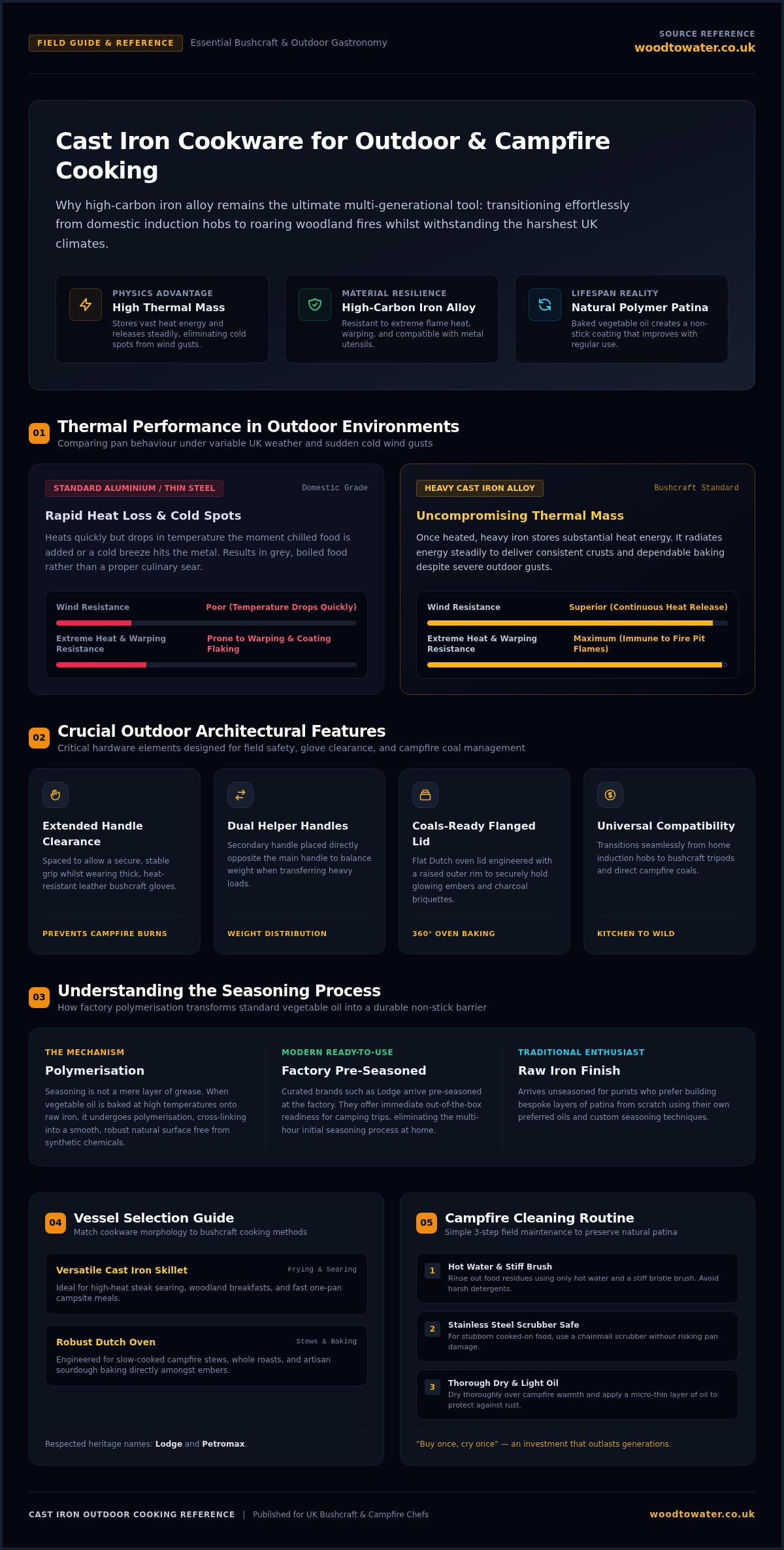
Standard stainless steel or aluminium cookware heats up quickly but loses that energy the moment you add food or a cold breeze hits the pan. In the unpredictable UK climate, a sudden gust of wind can easily drop your cooking temperature, leading to grey, boiled meat rather than a perfect sear. Cast iron excels here because of its incredible heat retention. Once the metal is hot, it stays hot. This ensures consistent results whether you're searing a thick steak or baking sourdough bread amongst the embers. In the context of outdoor temperature fluctuations, thermal mass is the physical property that allows a heavy vessel to store a vast amount of heat energy and release it steadily to your food. For a deeper look at the technical characteristics of these vessels, you can explore the history of cast-iron cookware and its evolution in outdoor kitchens.
Built for the Toughest Environments
When you're miles from the nearest shop, you need gear that doesn't require delicate handling. Cast iron thrives in the high-intensity flames of a fire pit that would easily melt the synthetic coatings off domestic pans. You can use metal spatulas, heavy-duty tongs, or even a stainless steel chainmail scrubber without a second thought. It's incredibly resistant to warping, even when exposed to extreme temperature changes that would buckle thinner metals. Because of this uncompromising reliability, a solid skillet or Dutch oven should be an essential part of any camping checklist for serious adventurers. While it's certainly heavier than titanium, that weight represents a level of durability and cooking performance that lighter alternatives simply cannot match. It isn't just another piece of kit; it's a legacy tool that handles the harshest environments with ease.
Essential Features to Compare When Buying Cast Iron
Choosing the right piece of kit isn't just about picking the heaviest pan on the shelf. For outdoor enthusiasts, the physical design of cast iron cookware determines whether you'll have a successful meal or a safety hazard. When you're wearing thick, heat-resistant leather gloves, you need a handle with enough clearance to offer a secure grip. Skillet handles should be substantial; however, for larger pans, a 'helper handle' on the opposite side is essential for safety. It allows you to distribute the weight evenly when moving a hot, heavy pan from the fire to your prep area.
Lid design is another critical factor for Dutch ovens. A 'coals-ready' lid is typically flat with a raised outer rim. This lip holds glowing embers or charcoal briquettes in place, allowing you to apply heat from the top for baking bread or roasting. Without this feature, ash and coals simply slide off, making it impossible to achieve the oven-like environment needed for campfire gastronomy. If you want to see these features in action, you can browse our curated cast iron collection to find a piece that fits your specific cooking style.
Seasoning: Pre-seasoned vs Raw
Most modern brands like Lodge arrive pre-seasoned, meaning they've already undergone a factory process where vegetable oil is baked onto the surface. This creates a natural, non-stick patina that is ready for immediate use. Seasoning isn't just a layer of grease; it's a process of polymerisation where oil transforms into a hard, protective surface. While some traditionalists prefer raw iron to build their own patina from scratch, the convenience of pre-seasoned gear is a massive win for most campers. Research into the benefits of using cast iron highlights how this natural surface is free from synthetic chemicals often found in domestic non-stick pans.
Weight and Portability Considerations
Weight is the primary trade-off for durability. A standard 26 cm skillet weighs approximately 2.45 kg, which is manageable for car camping or basecamps but a burden for long-distance trekking. If you're planning a multi-day hike across the Peaks where every gram counts, you might prefer ultralight titanium gear instead. However, for canoe trips or campervan adventures, the cooking performance of iron is unmatched. It's about matching the tool to the journey; don't carry a Dutch oven if you're wild camping on a ridge, but don't settle for thin metal if you have the luxury of a vehicle.
Selecting the Right Piece for Your Adventure
Picking the right gear depends entirely on whether you're car camping with the family or setting up a long-term bushcraft basecamp. While the durability of cast iron cookware is a given, the specific shape and size of your vessel will dictate what's on the menu. A solo hiker might find a large Dutch oven overkill; however, for a group of four, it's the only way to ensure everyone eats a hot, hearty meal at the same time. Our curated collection of cast iron cookware at Wood To Water Outdoors includes everything from compact pans to high-capacity pots designed for serious outdoor use.
The Classic Skillet: An All-Rounder
The 10-inch (26 cm) or 12-inch (30 cm) skillet is the industry standard for a reason. It's the most versatile tool in any outdoor kitchen, capable of frying breakfast eggs, searing venison steaks, or even baking a giant cookie over the embers. A 10-inch Lodge skillet weighs approximately 2.45 kg, making it a manageable addition to a car boot or a canoe barrel. Look for models with integrated pouring spouts; these are essential for safely managing hot fats and oils whilst cooking over an uneven fire. If you're tight on space, a skillet can often double as a lid for other pots in a nesting setup. Whilst many items come pre-seasoned, understanding the fundamentals of seasoning and caring for cast iron ensures your skillet remains naturally non-stick for decades of use.
Dutch Ovens for Slow Cooking
For the true bushcraft enthusiast, a Dutch oven is the gold standard. There's a vital distinction between a 'kitchen' model and an 'outdoor' camp oven. Outdoor versions, like the Petromax ft6, feature three integrated legs that allow the pot to stand directly over glowing charcoal or embers without smothering the heat. This 5.5-litre pot is ideal for feeding groups of 4 to 8 people. A clever design feature of high-end Dutch ovens is the flanged lid; it's designed to hold hot coals on top for even baking, but it can also be inverted and used as a secondary frying surface or griddle. This two-in-one functionality is a massive space-saver in your kit bag.
If you're looking for a bit of luxury at the campsite, don't overlook specialised gear like cast iron sandwich toasters or waffle irons. These tools make it easy to create gourmet toasties over a fire pit, adding a touch of home comfort to your wild adventures. For those who prioritise those perfect sear marks on a steak, a dedicated grill pan with raised ridges is the best way to achieve professional results on the trail. Whatever you choose, remember that these tools are built to handle the heat and the hard knocks of the British outdoors. To expand your outdoor culinary repertoire even further, you can explore Kamado BBQ's and discover the benefits of ceramic grilling for your next adventure.
Many people shy away from cast iron cookware because they fear the maintenance is too complex. It isn't. Once you understand the basics, caring for your gear becomes a simple, rewarding habit. The absolute golden rule is to never, under any circumstances, put your iron in a dishwasher. The harsh chemicals and intense heat will strip away the seasoning you've worked hard to build; this leaves the metal vulnerable to the damp British air and certain rust. When storing your gear, avoid stacking wet pans or using airtight plastic bags. A simple paper towel placed inside the pan will help absorb any residual humidity and prevent rust spots from forming whilst the kit is in your cupboard or car boot.
For daily use, hot water and a stiff brush are usually all you need to get the job done. There's a persistent myth that soap will ruin a pan; however, a drop of mild dishwashing liquid is perfectly safe for modern seasoning. Modern detergents don't contain the harsh lye that plagued our grandparents' soaps. Just ensure you rinse the pan thoroughly and dry it immediately over a low flame to ensure no moisture remains.
How to Re-Season Your Cookware
If your pan looks dull or food starts sticking, it's time to re-season. Follow these steps for a perfect finish:
- Scrub the pan with warm water and dry it completely on a warm hob.
- Apply a micro-thin layer of flaxseed oil, rapeseed oil, or lard to the entire surface.
- Wipe away any excess oil with a clean cloth until the pan looks dry.
- Bake it upside down in an oven at 230°C for at least one hour.
Choosing an oil with a high smoke point ensures the fat polymerises into a hard, plastic-like coating rather than just becoming a sticky mess. This process creates the natural non-stick surface that makes cast iron so famous.
Dealing with Rust and Stuck-on Food
For stubborn, charred residue, use coarse sea salt as a natural abrasive. It scours the surface effectively without damaging the underlying seasoning. If you find rust spots after a particularly wet weekend in the Lake District, don't panic. Use a stainless steel scrubber to remove the rust until you see bare metal, then follow the re-seasoning steps above to restore the finish. The importance of drying the pan thoroughly on a warm hob after washing cannot be overstated; it's the best way to prevent oxidation in our humid climate. Explore our range of professional-grade cast iron to find gear built for a lifetime of adventure.
Best Cast Iron Cookware for 2026: Standout Picks
Finding the right cast iron cookware involves moving beyond generic kitchenware to gear designed specifically for the rigours of the field. At Wood To Water Outdoors, we've vetted a curated selection of 81 professional-grade products to ensure they meet our standards for durability and performance. Whether you're after American heritage or German precision, our range includes flexible payment options like Klarna and Clearpay to help you build the ultimate basecamp setup. We focus on quality over quantity, ensuring every piece we stock is capable of handling the transition from a domestic hob to a roaring woodland fire.
Lodge and Petromax: The Industry Leaders
Lodge remains the undisputed king of the classic skillet, offering a level of reliability that has made them a staple in camp kitchens for over a century. Their factory pre-seasoning is remarkably consistent, making them the perfect entry point for those new to iron. For adventurers who need more technical features, Petromax is the standout choice. Their FT series Dutch ovens are packed with thoughtful details, such as the notched handle for secure hanging over a tripod and a flanged lid designed to hold hot coals securely. You can browse the full Cast Iron Cookware collection at Wood To Water Outdoors to compare these industry leaders side-by-side and find the exact capacity needed for your group size.
Essential Accessories for Your Kit
While the pan is the heart of your setup, the right accessories are what turn a basic meal into a professional outdoor kitchen experience. GSI Outdoors offers some excellent lighter-weight cast iron cookware options for those who want the thermal benefits of iron without the full weight of traditional castings. This makes them a brilliant choice for canoe touring or car camping where space and weight are at a premium. To keep your kit in top condition, we recommend essential tools like silicon handle holders for safety and chainmail scrubbers that remove charred grit without stripping your hard-earned seasoning.
Protecting your vehicle and other gear is just as important; using a dedicated storage bag prevents soot and grease from transferring to your upholstery or backpack whilst in transit. Finally, for those times when a ground fire isn't an option or is restricted by local regulations, pairing your pan with a high-performance gas stove provides the steady, adjustable heat needed for more complex campfire recipes. These curated additions ensure your gear remains a pleasure to use for years to come; they are the small details that make a significant difference in the field.
Ready for Your Next Campfire Feast?
Making the switch to heavy-duty iron is a turning point for any outdoor cook. You've seen how these tools handle everything from searing heat to slow-cooked stews whilst becoming more non-stick with every use. It's no longer about worrying if your pan will survive a single weekend; it's about knowing you've got a piece of kit that will serve you for decades. By choosing quality cast iron cookware, you're investing in a more sustainable, reliable way to enjoy meals under the stars without the worry of flaking coatings or warped metal.
At Wood To Water Outdoors, we take pride in vetting every item to ensure it stands up to the rigours of the British environment. With over 80 professional-grade products from trusted names and the convenience of free UK delivery on qualifying orders, getting started is simple. You can even spread the cost with Klarna or Clearpay to build your dream kit today. Shop the full cast iron cookware collection at Wood To Water Outdoors and start your journey towards better campfire gastronomy. We're excited to see the incredible feasts you'll create on your next wild outing.
Frequently Asked Questions
Is cast iron cookware better than non-stick for camping?
Cast iron is undoubtedly superior for open-fire cooking because synthetic non-stick coatings often degrade or release fumes at high temperatures. Whilst non-stick pans are lighter, they warp easily under the intense, uneven heat of a campfire. A solid piece of cast iron cookware handles metal utensils and roaring flames without a second thought. It's a lifetime investment that actually improves with use, whereas non-stick pans usually end up in a landfill after a few seasons.
Do I really need to season my cast iron if it comes pre-seasoned?
You don't need to season it immediately if it arrives with a factory finish from brands like Lodge or Petromax. These items are ready for your first cookout straight from the box. However, we recommend giving your new pan a quick wash and a light coat of oil before its first use. This helps reinforce the existing patina and ensures a smoother transition into your regular cooking and maintenance routine at home or in the wild.
Can I use cast iron on a glass induction hob at home?
Yes, cast iron is naturally magnetic and works brilliantly on induction hobs. It's the perfect bridge between your domestic kitchen and the great outdoors. The main thing to remember is to avoid sliding the heavy pan across the glass surface to prevent scratches. Always lift the pan to move it. Because iron retains heat so well, you'll likely find you need a lower heat setting than you would with thinner stainless steel pans.
What is the best oil to use for seasoning cast iron in the UK?
Rapeseed oil is widely available in the UK and serves as an excellent, affordable choice for seasoning due to its high smoke point. For the most durable, hard-wearing finish, many enthusiasts prefer organic flaxseed oil. It polymerises into a tough, glass-like surface that resists sticking. Whichever you choose, apply it in incredibly thin layers. A thick coat will just become sticky and won't bond properly to the metal during the baking process.
How do I stop my cast iron pan from rusting?
Moisture is the primary enemy of iron, so the best way to prevent rust is to dry your pan immediately after washing. Never let it air dry in a rack. Instead, place the clean pan on a warm hob for a few minutes to ensure every trace of water has evaporated. Once it's bone dry, rub a tiny amount of oil into the surface whilst it's still warm to create a protective barrier against the humid British air.
Why is cast iron so heavy and is there a lighter alternative?
The weight comes from the density required for superior heat retention and durability. If you find standard iron too heavy for your trip, we recommend exploring TOAKS Titanium Cookware for ultralight backpacking. Another middle-ground option is spun iron or thinner cast iron lines from GSI Outdoors. These provide similar cooking characteristics to traditional heavy iron but are much easier to carry when you're trekking further from your vehicle or basecamp setup.
Can I use metal spatulas and spoons with cast iron?
You absolutely can use metal utensils without worrying about damaging the surface. Unlike delicate non-stick coatings, the seasoned patina on cast iron is incredibly resilient. In fact, using a flat-edged metal spatula can actually help smooth out the surface of your pan over time by scraping away tiny imperfections. It's one of the few types of cookware where you don't have to be precious about the tools you use whilst flipping burgers or stirring stews.
What should I do if food keeps sticking to my cast iron skillet?
Sticking usually happens if the pan isn't hot enough when you add food or if the seasoning layer is too thin. Ensure you pre-heat the skillet for several minutes before adding oil and ingredients. If sticking persists, your pan likely needs a deep clean with a chainmail scrubber followed by a fresh round of seasoning. Building a thick, non-stick patina takes time and regular use, so don't be discouraged if your new pan needs a little extra care initially.