

Camping Tableware: How to Choose the Right Kit for Your Trip
Does your camp kitchen need a complete set, or would a few well-chosen pieces do the job? It depends on what you’re cooking, how many people you’re feeding and how much room you have to pack. Camping tableware can take up valuable space, so choose pieces you’ll use rather than packing a kit by default. If you’re unsure which materials suit your style of trip, start by comparing the care instructions and intended use for each item.
This guide will help you build a practical dining kit around your meals, group size and packing needs. We’ll compare common formats, look at packability and useful features, and weigh up individual utensils against broader sets. You’ll also see examples, from the Kupilka Eco Cutlery Set and Fire Maple Antarcti Utensils Set to the GSI Outdoors Destination Kitchen Set 24. Whether you’re planning a simple overnight stay or a more equipped camp kitchen, you’ll have a clearer idea of what belongs in your kit.
Key Takeaways
- Choose camping tableware around the meals you plan to make, the people you’re feeding and how you’ll travel.
- Compare individual utensils, coordinated cutlery sets and larger kitchen kits to balance useful pieces with packing space.
- Look beyond the number of items. Consider materials, care and whether each piece has a clear purpose on your trip.
- Pack utensils together, protect sharp tools and keep clean tableware separate from used items.
- Plan meals before packing to avoid duplicate pieces and accessories you’re unlikely to use.
Camping tableware: what do you actually need outdoors?
Camping tableware is the reusable equipment you take to eat, serve and prepare meals outdoors. It can include plates, bowls and cutlery, along with selected preparation, seasoning and washing-up accessories. The right kit isn’t necessarily the biggest one. Start with your planned meals, then add only the pieces that help you prepare and enjoy them.
Separate eating essentials from camp kitchen extras. A fork, spoon, mug or plate may be needed for the meal itself. A chopping tool or serving utensil is useful if your menu involves preparing ingredients or sharing food. Seasoning containers and washing-up accessories can make camp life more organised, but they’re additions rather than requirements for every trip.
Your cooking style shapes the list. A simple meal eaten straight from its container calls for fewer pieces than one prepared and served in several stages. Explore different outdoor cooking methods and equipment to see how the way you cook can influence what you need at the table.
Which tableware pieces are essential for a camping trip?
Begin with a list of planned meals. Note what each person needs to eat them, then decide whether you’ll serve food from shared dishes or prepare ingredients at camp. This helps avoid packing extras “just in case”. If plates are part of your plan, browse camping plates as one part of a focused kit.
- Eating: Choose the plates, bowls and utensils your meals require.
- Preparation and serving: Add tools only for tasks such as chopping or sharing dishes.
- Seasoning and washing-up: Pack these if they suit your menu and routine, not by default.
How does your camping style affect your tableware?
For backpacking, storage space is limited, so prioritise a compact selection that covers your meals. A vehicle-based camp kitchen can accommodate more pieces, which may help if you’re preparing varied meals or serving a group. Neither approach calls for a complete set automatically. The aim is to carry what you’ll use.
Group size affects quantities too. A solo camper may need only personal eating pieces, while a larger group may benefit from matching utensils and shared serving items. Consider group size alongside trip duration, storage space and meal complexity. A longer trip may call for more planning, but it doesn’t mean every kitchen accessory belongs in your bag.
How to choose camping tableware: five features worth comparing
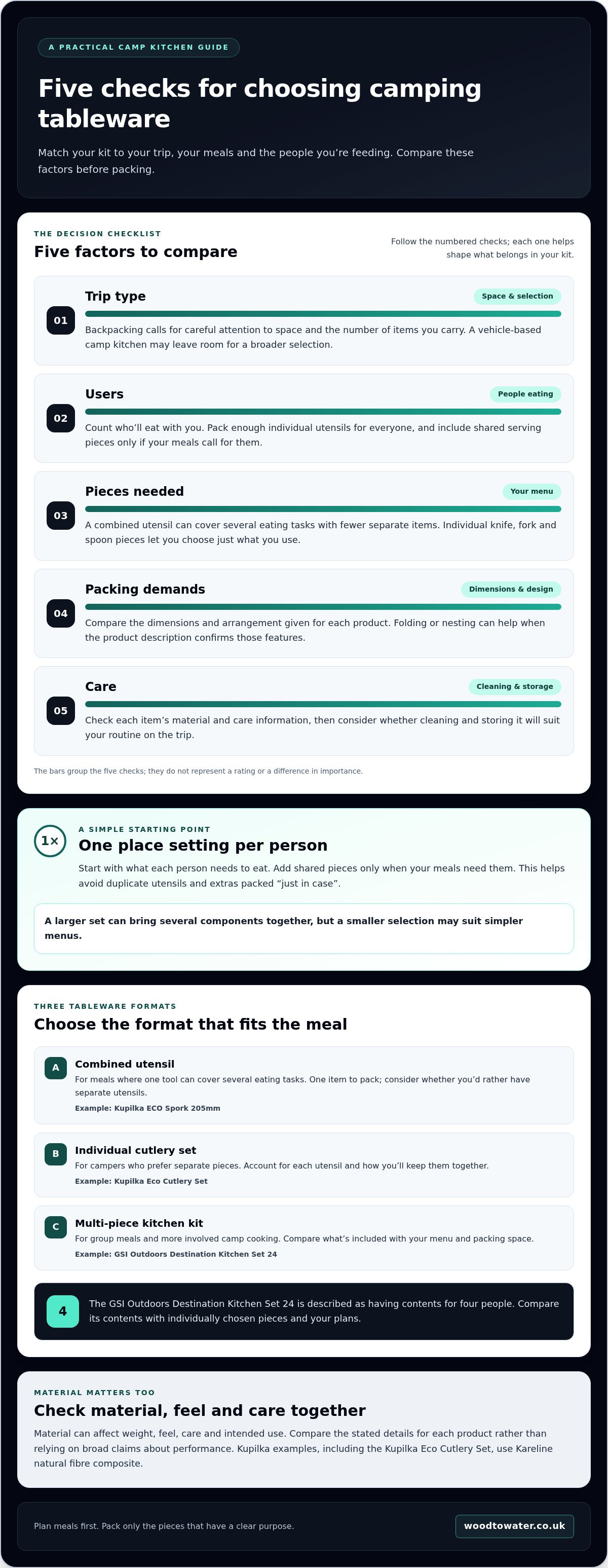
A useful kit starts with your trip, not a preset bundle. Compare these five points before choosing camping tableware to decide what to pack and what to leave behind.
- Trip type: For backpacking, think carefully about space and the number of items you’ll carry. A vehicle-based camp kitchen may leave room for a broader selection.
- Users: Count the people who’ll eat with you. Choose enough individual utensils for everyone, and consider shared serving pieces only if your meals call for them.
- Pieces needed: Match the kit to your menu. A compact utensil that combines functions can reduce the number of separate items. Individual knife, fork and spoon pieces let you choose only what you use.
- Packing demands: Compare the dimensions and arrangement given for each product. Folding or nesting can be useful where the product description confirms those features, but don’t assume every set packs down in the same way.
- Care: Consider how you’ll clean and store each item on your trip. Check its material and care information to make sure it fits your routine.
Which material and design details should you compare?
Material affects weight, feel, care and intended use. Consider it alongside how you’ll carry and clean each item rather than relying on broad claims about performance. Kupilka examples, including the Kupilka Eco Cutlery Set, use Kareline natural fibre composite. For other choices, compare the material and any folding or combined design details stated in the individual product description.
How many pieces should your camping tableware kit include?
Start with one place setting per person, then add shared pieces only if your meals need them. That keeps a solo kit focused and helps prevent a group from carrying duplicate utensils. A complete kitchen kit can bring several components together, but a smaller selection may suit simpler menus.
The GSI Outdoors Destination Kitchen Set 24 is described as having contents for four people. It’s an example groups can compare with individually chosen pieces. Before deciding on a format, consider who’ll use the kit, how you’ll cook and serve, and whether the contents match your plans.
Once you’ve narrowed down the pieces and features that suit your trip, browse the camping tableware range to compare individual items and broader kits.
Camping tableware compared: compact utensils, cutlery sets and kitchen kits
Three formats cover different camp routines: one combined utensil, a set of individual cutlery or a larger kit with tools for preparing and serving food. Compare what each includes with your menu and packing space. A bigger set isn’t automatically a better fit.
| Format | Best-fit use | Packing considerations | Example |
|---|---|---|---|
| Combined utensil | Meals where one tool can cover several eating tasks | One item to pack; consider whether you’d rather have separate utensils | Kupilka ECO Spork 205mm |
| Individual cutlery set | Campers who prefer separate pieces | Account for each utensil and how you’ll keep them together | Kupilka Eco Cutlery Set |
| Multi-piece kitchen kit | Group meals and more involved camp cooking | Review the full contents against the space you have and what you’ll use | GSI Outdoors Destination Kitchen Set 24 |
When is a combined spork or compact utensil a good fit?
The Kupilka ECO Spork 205mm combines a spoon, fork and knife in one utensil. It can suit a straightforward meal when you’d rather carry one piece than separate cutlery. The trade-off is having fewer separate tools available. The GSI Glacier Folding Spork has a confirmed fold-away construction, which may suit your packing setup.
Choose by how you eat, not just by the number of items. Separate cutlery gives you distinct pieces; a combined utensil keeps the choice simple. Either format can work if it matches your meals.
When does a larger camp kitchen set make more sense?
The GSI Outdoors Destination Kitchen Set 24 is a 24-piece kit for four. Its stated contents include cutlery sets, folding tools, a cutting board and spice shakers. That combination brings eating and preparation items together for a group, though it may include pieces you don’t need for a simple menu.
For a more involved shared meal, the cutting board and spice shakers may have a clear role. For simpler cooking, select only the essentials you’ll use. Seasoning and preparation accessories can be handy additions, but they don’t need to be part of every camper’s kit.
Pack and care for camping tableware without carrying unnecessary kit
A tidy kit is easier to use at mealtimes and simpler to pack away. Organise items by task, protect anything sharp and separate clean pieces from used ones. Before you leave, compare the kit with your meal plan. If an item doesn’t have a clear job, it may be extra weight or clutter.
How can you keep tableware organised in your pack or camp kitchen?
Give each type of item a place. Group everyday cutlery together, keep food-preparation tools in a separate section, and store cleaning items where they’re easy to reach after a meal. In a vehicle-based camp kitchen, use the same grouping in a dedicated storage area so utensils don’t get mixed up with used dishes.
Use this simple packing sequence:
- Group: Keep cutlery, preparation tools and washing-up items together by task.
- Protect: Cover sharp edges before packing them alongside other equipment.
- Separate: Keep clean pieces apart from used ones after meals.
- Review: Remove duplicates and tools that don’t match your planned meals.
Compact or folding designs can help organise a small pack when the product description confirms that construction. For example, the GSI Folding Cutting Board is a folding option for food preparation. Plan where it will go alongside the rest of your kit rather than assuming every compact item will fit neatly together.
Meal planning makes the final check straightforward. If you’ll prepare ingredients, include the tools for those tasks; if your meals need little preparation, leave those tools behind. For a broader look at trip planning, see the camping checklist guide.
What should you consider when cleaning camping tableware?
Remove food residue after eating, then follow the care guidance supplied with each item. Keeping used pieces separate until you can clean them helps prevent them being packed with ready-to-use utensils. The GSI Camp Dish Cloth is described as a two-sided, quick-drying microfibre cloth, making it one cleaning accessory to consider for your routine.
Choose cleaning tools for the equipment you use. The Petromax Scraper is intended for Petromax cast-iron products, so it’s relevant to that cookware rather than a universal tableware cleaner. A focused camping tableware kit, paired with a clear pack-and-clean routine, is easier to manage than a bag of rarely used extras.
Explore the camping tableware and camp kitchen accessories to compare options for your next trip.
Find camping tableware for your next outdoor meal
Your best kit may be a few personal utensils or a fuller selection for shared meals. Choose from three routes: a compact combined utensil, a coordinated cutlery set or a more complete kitchen kit. Let your menu, group and packing space guide the choice. You don’t need to carry extra pieces simply because they come in a set.
Which camping tableware suits a lightweight personal kit?
For a pared-back option, the Kupilka ECO Spork 205mm combines eating functions in one utensil. If you prefer separate pieces, the Kupilka Eco Cutlery Set weighs 56g and contains four pieces. The Fire Maple Antarcti Utensils Set and Petromax Camping Cutlery are other cutlery examples to compare. Prioritise the utensils your meals require, then decide whether a combined or separate format suits you.
A coordinated set can help keep individual cutlery together, while a complete kitchen kit brings more pieces into one selection. The GSI Outdoors Destination Kitchen Set 24 is a 24-piece kit for four, including cutlery sets, folding tools, a cutting board and spice shakers. It’s a broader option for group cooking. For simpler meals or a smaller personal setup, choosing separate essentials lets you focus on the pieces you’ll use.
Which extras help create a more complete outdoor dining setup?
Extras are useful when they match your routine. GSI seasoning holders offer a way to carry separate spice options, while the Kupilka Kaarna Small Service Tray can be used to serve bread and cheese. These additions may suit meals that involve seasoning or sharing food, but they aren’t essential for every trip. For another eating essential, browse the camping plates collection.
Keep your shortlist practical: choose a combined utensil for a compact personal setup, coordinated cutlery if you want distinct pieces together, or a more complete kit for a broader camp kitchen. Add preparation and serving items only if your planned meals call for them. Browse the camping tableware collection to compare options for your next outdoor meal.
Build a kit that fits your next trip
The best camping tableware setup is the one that suits your meals, group and way of travelling. Start with the pieces you’ll use to eat, then add preparation, seasoning or cleaning accessories only when they have a clear job. A compact personal utensil, a coordinated cutlery set and a larger kitchen kit each offer a different way to organise camp dining.
Pack thoughtfully, too. Group items by task, protect sharp tools and keep used pieces separate from clean ones. Planning meals before you leave makes it easier to avoid duplicates and extras that won’t earn their place.
The collection includes 51 products, with examples ranging from cutlery and complete kitchen sets to preparation boards, seasoning holders and cleaning accessories. Browse Wood To Water Outdoors’ camping tableware collection to compare options and find pieces that work for your outdoor routine. A well-chosen kit keeps mealtimes practical, so you can spend more time enjoying the trip.
Frequently Asked Questions
What is the best tableware for camping?
The best choice depends on your group size, meal style and packing space. A combined utensil such as the Kupilka ECO Spork 205mm brings several eating functions into one piece, while the Kupilka Eco Cutlery Set offers separate utensils. For a broader camp kitchen, the GSI Outdoors Destination Kitchen Set 24 is a multi-piece option. Match the format and its contents to the meals you plan to prepare.
Is metal or reusable composite camping cutlery better?
Neither material is a universal winner; the practical differences matter more than a blanket ranking. Kupilka cutlery uses Kareline natural fibre composite, while the GSI Glacier Folding Spork is specified as stainless steel. Compare how each material feels to use, the care guidance supplied for it and its intended use. That way, you can choose camping cutlery to suit your preferences and routine rather than relying on unsupported performance claims.
Can you use normal cutlery for camping?
Yes, familiar cutlery can work outdoors if its weight, storage needs and cleaning routine suit your trip. Specialist utensils are an option, not a requirement. A combined spork brings several eating functions into one piece, while the GSI Glacier Folding Spork has a fold-away design. Consider whether either format helps with packing, or simply take the cutlery you already use and find comfortable.
How many pieces of camping cutlery do I need?
Start with the number of people eating and the meals you’ve planned, then decide whether each person needs a separate knife, fork and spoon. An individual set suits campers who prefer distinct utensils. The GSI Outdoors Destination Kitchen Set 24 is described as a 24-piece set for four, but that doesn’t mean every component is essential for your trip. Compare its contents with your group and menu before choosing.
What should I pack for washing up at a campsite?
Pack a suitable cloth and keep used tableware separate from clean items until you can wash and dry it. The GSI Camp Dish Cloth is described as a two-sided, quick-drying microfibre cloth. After eating, remove food residue and follow the care guidance supplied with each item. Choose cleaning accessories that fit your routine, and group them apart from cutlery and other pieces you use for meals.
Are camping tableware sets worth buying?
A set can suit you if you want coordinated pieces together, while choosing items individually can help avoid carrying things you won’t use. The GSI Outdoors Destination Kitchen Set 24 is a 24-piece option for four, with contents that include cutlery sets, folding tools, a cutting board and spice shakers. Compare those contents with your group size, menu and packing needs before deciding whether a set makes sense.