

Best Vegan Dehydrated Camping Meals for UK Backpackers
What if your trail dinner felt less like a compromise and more like a reward after a long day on the West Highland Way? For too long, plant-based hikers have settled for bland, repetitive flavours or heavy "wet" pouches that make every ascent feel twice as steep. It’s a common frustration to reach camp and find your vegan dehydrated camping meals lack the protein and calorie density needed for a demanding British expedition. With 14% of the UK population now following a meat-free diet, the demand for better trail food has never been higher!
You don't have to choose between a lightweight pack and a satisfying meal. We’ll show you how to master the "weight-to-wattage" ratio by selecting high-calorie options that taste like real food. We’ll preview the best options for 2026, from Firepot’s natural recipes to high-energy picks from Expedition Foods. You'll also learn how a Jetboil Flash or TOAKS Titanium pot makes cleanup effortless; this leaves you more time to soak in the mountain views. It’s time to upgrade your pack with fuel that actually works as hard as you do.
Key Takeaways
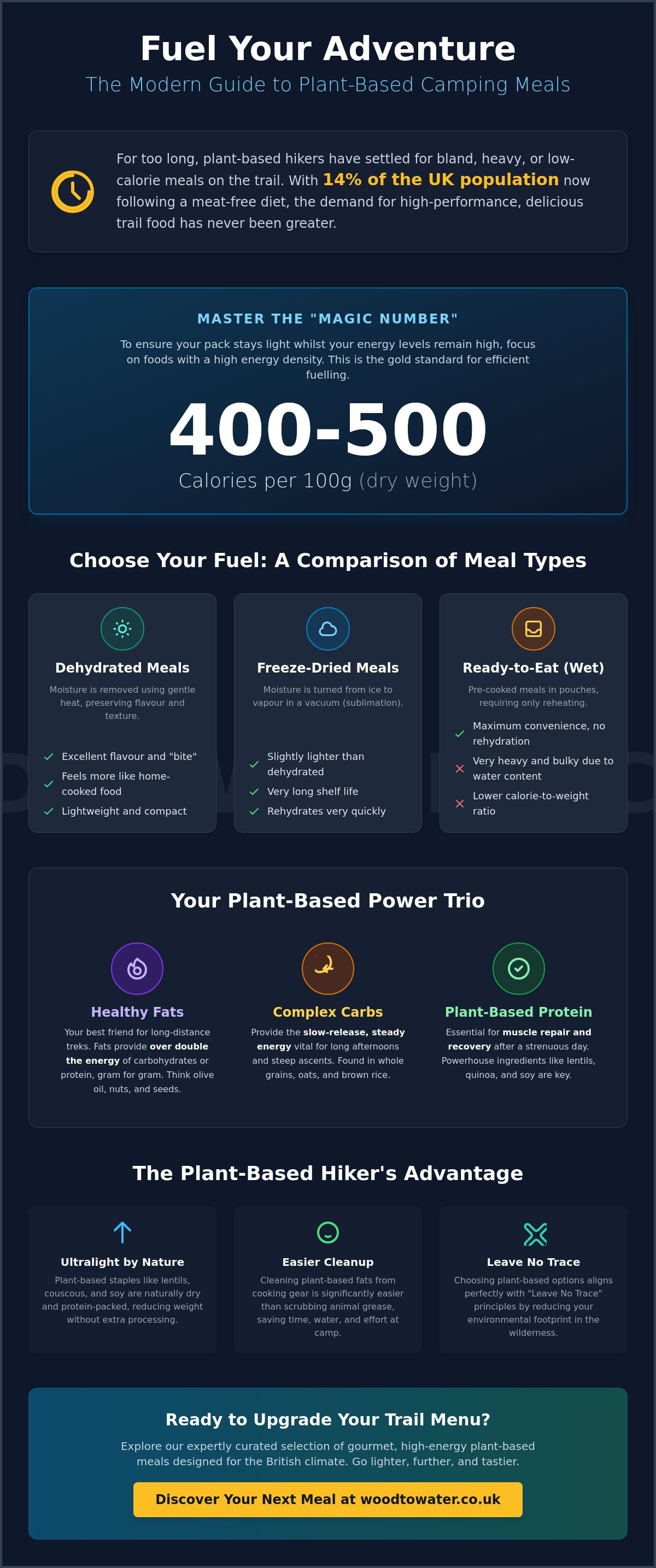
- Master the "Magic Number" of 400-500 calories per 100g of dry weight to ensure your pack stays light whilst your energy levels remain high.
- Understand the practical differences between freeze-dried, ready-to-eat, and vegan dyhydrated camping meals to pick the right fuel for your specific route and water access.
- Learn why healthy fats are your best friend for long-distance trekking and how they contribute to a more satisfying, nutrient-dense trail experience.
- Discover essential cooking techniques, including the use of pot cosies and efficient stove systems like the Jetboil Flash, to save fuel and keep your dinner piping hot.
- Transition from bland survival rations to gourmet plant-based trail cuisine with a curated selection of authentic dahls and hearty stews designed for the British climate.
The Evolution of Vegan Dehydrated Camping Meals in the UK
Gone are the days when choosing a meat-free diet meant packing extra bags of plain nuts and hoping for the best. Modern camping food has undergone a radical transformation. What used to be bland, beige survival rations have been replaced by vibrant, gourmet recipes that actually taste like real food. For the modern explorer, vegan dyhydrated camping meals represent the ultimate balance of weight and nutrition; they provide the fuel needed for a day in the Peaks without the bulk of traditional tinned goods.
UK wild camping demands gear that is both reliable and compact. Dehydrated options are the gold standard here because they strip away the heaviest ingredient: water. By removing up to 95% of moisture, these meals become incredibly lightweight. This allows you to carry a week's worth of food in a space no larger than a sleeping bag. Plus, the sheer variety available now is staggering. From spicy Thai curries to Moroccan tagines, having a diverse menu is essential to avoid "trail fatigue" on long-distance expeditions like the Pennine Way.
Dehydrated vs. Freeze-Dried: What is the Difference?
It's easy to confuse the two, but the processes are quite different. Dehydration uses gentle heat to evaporate moisture. This often results in a denser texture that feels more like home-cooked food once rehydrated. Freeze-drying involves sublimation; moisture is turned directly from ice to vapour in a vacuum. Whilst freeze-dried meals are slightly lighter and have a longer shelf life, dehydration is often superior for preserving the rich flavours and "bite" of vegetables and grains. Both methods ensure that your vegan dyhydrated camping meals remain nutrient-dense for years.
Why Plant-Based Eaters are Leading the Ultralight Movement
Vegan backpackers often have a secret advantage in the ultralight community. Plant-based staples like lentils, couscous, and soy are naturally dry and packed with protein. They don't require the heavy preservatives or complex packaging often found in meat-based alternatives. Choosing plant-based options also aligns perfectly with "Leave No Trace" principles; it reduces your environmental footprint whilst you enjoy the British wilderness.
There is a practical perk at the end of the day, too. Cleaning plant-based fats from your Jetboil camping cooking gear is significantly easier than scrubbing congealed animal grease. A quick rinse is often all it takes to keep your kit pristine. This saves water and time, letting you get back to what really matters: enjoying the sunset from your tent porch.
Nutrition on the Trail: Fuelling Your Trek with Plant-Based Calories
When you're hauling a pack up Scafell Pike, every gram counts. The secret to a lightweight pack isn't just titanium gear; it's the energy density of your food. We call it the "Magic Number": aim for 400-500 calories per 100g of dry weight. High-quality vegan dyhydrated camping meals often hit this target by balancing hearty grains with calorie-dense plant fats. Unlike processed snacks that lead to a sugar crash, these meals provide a slow release of energy. This is vital when you're facing a long afternoon of bog-hopping or ridge-walking in the British hills.
Fats are your best friend on the trail. Gram for gram, fat provides over double the energy of carbohydrates or protein. Whilst many people worry about getting enough protein, modern plant-based options use ingenious combinations of legumes, seeds, and grains to hit recovery targets. If you're planning for specialized diets while camping, you'll find that lentils and quinoa aren't just fillers; they're powerhouse ingredients that help repair muscle tissue after a strenuous day. Complex carbohydrates from brown rice or oats then provide the steady glycogen supply needed for those steep, final ascents.
The "Weight-to-Wattage" Ratio for Vegan Hikers
To keep your pack weight under control, you should calculate your energy density before you set off. Divide the total calories by the weight in grams. If the result is below 4, you're carrying too much water or "dead weight." You can easily boost this ratio by adding "hidden" calories. A small sachet of extra virgin olive oil or a spoonful of almond butter can turn a 600-calorie meal into an 800-calorie feast without adding significant bulk. When checking labels, look for high fat content and minimal added sugars. To make sure you're getting the most out of your trail nutrition, the team at Wood To Water Outdoors recommends investing in a reliable stove system that rehydrates these ingredients perfectly. You can browse our curated range of Jetboil camping cooking gear to find the perfect setup for your next trip.
Micronutrients and Electrolytes in Dehydrated Food
It isn't just about the big numbers; the small ones matter too. Salt and magnesium are critical for preventing cramp, especially in the unpredictable British weather where you might be sweating one minute and shivering the next. Many vegan dyhydrated camping meals include sea salt and mineral-rich vegetables like spinach or kale. These ingredients support gut health and provide key vitamins like B12 and Iron, which are essential for maintaining oxygen flow to your muscles. Choosing meals with a high percentage of whole vegetables ensures you don't miss out on the micronutrients that aid recovery.
Choosing Your Fuel: Freeze-Dried vs. Dehydrated vs. Ready Meals
Picking the right fuel for your trek isn't just about what tastes good in the shop. It's a logistical decision that affects your pack weight and your evening routine. If you're planning a multi-day expedition across the Highlands, vegan dyhydrated camping meals are usually the winner. They are incredibly light, and because the moisture has been removed, they won't leak in your pack. However, the best choice depends on your environment, specifically your access to water and how much time you want to spend over a stove.
Freeze-dried meals are the lightest option available, but they often come with a higher price tag and a more processed texture. Dehydrated food, which we've already noted for its "real food" feel, offers a middle ground; it's light enough for ultralight trekking but retains the bite of whole vegetables. Both require roughly 300ml to 500ml of water to rehydrate. On the other hand, ready-to-eat "wet" meals are pre-cooked and heavy. They contain all their original moisture, making them a poor choice for long distances but a brilliant one for short trips where water is hard to find.
The Case for Ready-to-Eat Vegan Pouches
Sometimes, flavour and convenience take priority over every other factor. 5 Minutes to Delhi Ready Meals are a fantastic example of a flavour-first approach. These pouches offer authentic, punchy spices that are often hard to replicate in a dried format. Because they use a "boil-in-the-bag" method, you simply drop the pouch into boiling water. This saves your precious drinking water from contamination and means there is zero washing up to do. It's an ideal strategy for winter wild camps when you want to eat quickly and get back into your warm sleeping bag.
Optimising for Water-Scarce Environments
The British hills can be deceptive. You might be walking through mist and rain whilst being miles away from a clean, running stream. If you're camping on a dry ridge, you'll have to carry every drop of water needed to rehydrate your vegan dyhydrated camping meals. This "hidden weight" can sometimes negate the lightness of the food itself. Always check your route for reliable water sources before committing to a purely dehydrated menu. If you're looking to save on stove fuel, you can try "cold-soaking" your meals. By adding water to a leak-proof container a few hours before you stop, the food rehydrates whilst you walk. It isn't as comforting as a hot stew, but it's a highly efficient tactic for the minimalist hiker.
Cooking Mastery: Gear and Water Management for Vegan Trail Food
Rehydrating your dinner whilst a gale howls across a Lakeland ridge is a true test of both patience and kit. The efficiency of your stove system directly impacts how well your vegan dyhydrated camping meals turn out. If your water isn't boiling or your pot loses heat too quickly, you'll end up with crunchy lentils and lukewarm sauce. Mastering the art of the trail kitchen means balancing speed with fuel economy. This ensures you have enough gas to last the entire weekend without carrying unnecessary weight.
One of the most effective tools in a backpacker's arsenal is the "pot cosy." This is a simple insulated sleeve that fits around your cooking vessel. Once you've added boiling water to your meal, you place the pot inside the cosy and let it sit. This keeps the food piping hot for 15 to 20 minutes without needing the stove to stay lit. It’s a game-changer for thick stews or dahls that require a longer soak time. By using this method, you can significantly reduce your fuel consumption; a standard 100g gas canister can easily last a solo hiker three days if used efficiently.
Integrated Systems vs. Traditional Stoves
For those who value speed above all else, integrated systems like the Jetboil are unbeatable. They feature built-in heat exchangers that shield the flame from the wind and boil water in under two minutes. However, if you prefer a more "hands-on" cooking style, TOAKS Titanium Cookware is the choice for the ultralight purist. Titanium is featherlight and incredibly durable, though it can develop "hot spots" due to its thinness. To prevent your thick vegan stews from burning, keep the flame low and stir frequently once the ingredients are added.
Cleanup and Leave No Trace (LNT)
Cleaning up after a plant-based feast is a breath of fresh air compared to traditional camping food. You won't find any congealed animal fats or greasy residues to scrub off in a cold stream. Most vegan dyhydrated camping meals require only a quick wipe with a bit of water and a cloth. Using high-quality camping plates and bowls with smooth surfaces makes this even easier. Always remember the golden rule of the British wilderness: pack it in, pack it out. Even if a meal pouch claims to be compostable, the UK's climate often isn't warm enough to break it down quickly. Always take your empty packaging home to dispose of it responsibly.
Equip yourself for your next expedition by exploring our full range of reliable camping gas stoves today.
The Wood To Water Outdoors Selection: Expertly Curated Vegan Meals for 2026
At Wood To Water Outdoors, we take our role as gear curators seriously. We aren't just a shop; we're a team of enthusiasts who spend our weekends in the same unpredictable British weather as you. This is why we only stock vegan dyhydrated camping meals that have earned their place in our packs through rigorous field testing. If a recipe doesn't offer the right balance of texture and punchy flavour after a long day on the fells, it doesn't make our list. Our 2026 selection focuses on brands that avoid ultra-processed fillers, favouring authentic spices and whole vegetables that keep your palate engaged throughout a long expedition.
We believe that trail food should be a highlight of your journey, not a chore. Beyond the main pouches, we've sourced a variety of vegan-friendly snacks and treats to help you maintain a steady energy flow between camps. By choosing brands that prioritise field performance, we ensure your pack remains light whilst your morale stays high. Every item in the Wood To Water Outdoors inventory is there because it works; we value reliability and utility above all else. This curated approach means you can trust that your fuel is as dependable as your boots.
Top Picks for High-Intensity Treks
When you're pushing for a summit or covering high mileage, your body demands rapid recovery. We recommend vegan dyhydrated camping meals that feature high protein-to-weight ratios, such as those packed with red lentils, chickpeas, or textured soy. These options provide the essential nutrients your muscles need without the bulk of traditional "wet" meals. We also prioritise quick-cook varieties for these high-intensity days. When you finally stop, you want a meal that rehydrates in under 10 minutes, allowing you to refuel and rest as quickly as possible.
The Best "Comfort" Vegan Meals for the Campfire
For those slower trips where the destination is the campsite itself, comfort takes centre stage. We've selected plant-based stews and curries that offer a genuine "home-cooked" feel, perfect for social camping around a fire. These meals are designed to be savoured. If you're setting up a base camp and weight is less of a concern, these recipes pair perfectly with our cast iron cookware for a truly robust dining experience. There's nothing quite like sharing a hearty, slow-simmered vegan feast under a clear night sky.
Explore our full range of vegan camping food and gear today.
Ready to Fuel Your Next British Expedition?
Choosing the right trail food is about more than just avoiding meat; it’s about mastering your pack weight and ensuring your body has the energy to tackle the next ridge. You now know how to look for high calorie density and why matching your stove to your meal type is essential for a stress-free camp. Whether you're planning a minimalist trek or a social weekend under the stars, Vegan dyhydrated camping meals offer the perfect blend of nutrition and convenience.
At Wood To Water Outdoors, we’re specialists in ultralight and bushcraft gear. Every meal in our shop has been expertly vetted by UK outdoor enthusiasts who know exactly what it’s like to crave a hearty dinner after a long day in the hills. We focus on quality and flavour so you don't have to. With next-day UK delivery available, you can get your kit sorted quickly. This lets you spend less time worrying about logistics and more time planning your route!
Browse Our Curated Vegan Camping Meal Collection
We're excited to see where your next journey takes you. Happy trails!
Frequently Asked Questions
Are vegan dehydrated meals as filling as meat-based ones?
Yes, they are just as filling if you choose options with high calorie density and complex carbohydrates. Look for meals containing lentils, nuts, and seeds to ensure long-lasting satiety on the trail. Many modern recipes are specifically designed to provide 600 to 800 calories per portion; this is more than enough to satisfy your hunger after a strenuous day in the hills.
How long do vegan dehydrated camping meals last?
Most vegan dyhydrated camping meals have a shelf life ranging from two to five years depending on the packaging and preservation method. Dehydrated meals generally stay at their best for around two years, whilst freeze-dried versions can remain edible for much longer. Always check the individual pouch for the "best before" date to ensure you're getting the maximum nutrient retention and flavour.
Can I rehydrate vegan meals with cold water?
You can rehydrate these meals with cold water, which is a process often called "cold-soaking," but it takes significantly longer. Most meals will require two to three hours to soften in cold water compared to just 10 minutes with boiling water. This is a popular tactic for ultralight hikers looking to save on fuel weight whilst trekking in milder British conditions.
What is the best way to carry dehydrated food to prevent the bags from splitting?
The most reliable method is to pack your meal pouches vertically in the centre of your rucksack, sandwiched between soft items like your sleeping bag or spare clothing. Avoid placing them near sharp gear like tent pegs or stove components. If you're worried about accidental punctures, you can store multiple pouches together in a lightweight dry bag for an extra layer of protection.
Do vegan camping meals contain a lot of preservatives?
No, most premium vegan options rely on the dehydration process itself to preserve the ingredients rather than artificial chemicals. Brands like Firepot focus on whole, natural ingredients and use the removal of moisture to prevent spoilage. This results in a cleaner label that is much easier on your digestive system during long-distance expeditions where gut health is a priority.
How much water do I need to carry for a day of dehydrated vegan meals?
You should budget approximately 350ml to 500ml of water per main meal specifically for rehydration. For a full day including breakfast and dinner, you'll need at least one litre of water purely for your food. This is in addition to your standard drinking water, so it's vital to plan your route around reliable UK water sources for filtering as you go.
Which vegan camping meals have the most protein?
Meals based on legumes, such as dahl or chilli non carne, typically offer the highest protein content for plant-based hikers. Look for ingredients like red lentils, chickpeas, or soy-based proteins to aid muscle recovery after a heavy climb. Some vegan dyhydrated camping meals provide over 20g of protein per serving, making them excellent choices for high-intensity trekking days in the Highlands.
Can I cook dehydrated meals in a Jetboil?
You can rehydrate your food directly in a Jetboil, but it's usually better to pour the boiling water into the meal pouch itself. This keeps your Jetboil Flash clean and ready for your next brew without the risk of burning thick stews on the heating element. If you do decide to cook inside the pot, use a very low flame and stir constantly to prevent sticking.