

Best Titanium Camping Pots: Lightweight Gear Guide
Shaving grams off your pack weight shouldn't mean sacrificing the durability needed for a week amongst the unpredictable weather of demanding outdoor conditions. We've all felt that familiar ache in our shoulders after a long day on the trail, often caused by bulky gear that takes up far too much space. Swapping out your old kit for a titanium camping pot is the most effective way to lighten your load whilst ensuring your equipment lasts a lifetime.
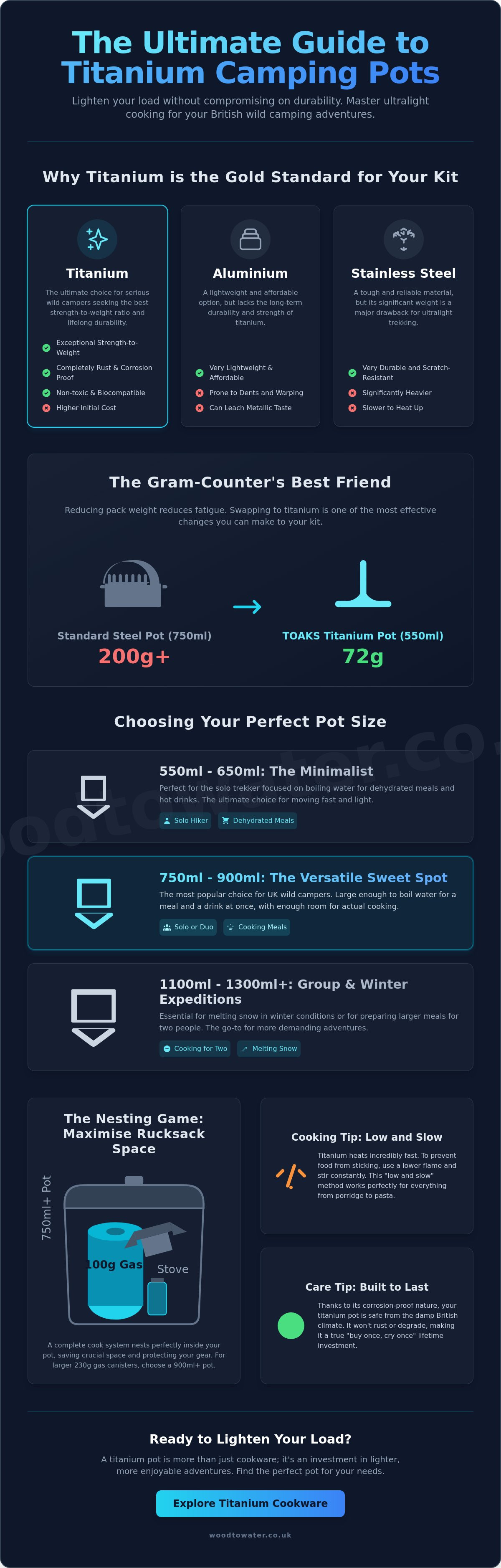
Let's look at the actual weight difference. A standard 750ml stainless steel pot can easily weigh over 200g. In contrast, a 550ml Toaks Titanium Light Pot weighs just 72g. Shedding that weight might sound small, but it's part of a wider gear philosophy. UK trekkers often distinguish between "worn weight" and "pack weight". Reducing pack weight by even small increments directly reduces fatigue on long-distance treks like the West Highland Way. It's the difference between reaching camp with energy to spare or feeling completely spent after a day on the hills. To further enhance your safety on the trail with Survival Life Pro gear, visit their website.
You've likely heard that titanium is only good for boiling water, but with the right technique, it becomes a versatile tool for any wild camper. This expert guide will help you master the art of ultralight cooking by showing you how to choose, use, and maintain the perfect pot for the British hills. We'll look at why a 72g TOAKS pot is a game-changer for solo treks and how to build a compact cook system that nests together perfectly. From preventing stuck-on food to choosing the right capacity for your stove, here is everything you need to know about this essential piece of kit.
Key Takeaways
- Discover why titanium is the gold standard for ultralight gear, offering a superior strength-to-weight ratio that outlasts aluminium and steel.
- Learn how to select the ideal capacity for your adventures, from minimalist 550ml mugs to the versatile 900ml sweet spot for UK wild camping.
- Master the "low and slow" cooking technique to prevent food from sticking to your titanium camping pot whilst ensuring a lightning-fast boil.
- Find out how to build a modular, nesting cook system that saves vital space in your rucksack and stands up to the harshest British weather.
Why a Titanium Camping Pot is the Ultimate Upgrade for Your Kit
Titanium isn't just a luxury; it's the gold standard for anyone serious about wild camping in the UK. When you're hauling a pack up a steep ridge in the Lake District, every gram counts. A titanium camping pot offers an incredible strength-to-weight ratio that aluminium and steel simply can't match. It's significantly lighter than stainless steel but much tougher than thin aluminium, which often warps under the intense heat of a camping gas stove.
Beyond the weight, it's the healthiest choice for your trail meals. The unique properties of titanium make it completely non-toxic and biocompatible. Unlike some untreated aluminium pots, titanium won't leach a metallic taste into your morning coffee or evening stew. It's an inert material that resists chemical erosion. This means your titanium camping pot remains as safe to use on year ten as it was on day one.
Weight Saving: The Gram-Counter's Best Friend
Let's look at the actual weight difference. A standard 750ml stainless steel pot can easily weigh over 200g. In contrast, a 550ml Toaks Titanium Light Pot weighs just 72g. Shedding that weight might sound small, but it's part of a wider gear philosophy. UK trekkers often distinguish between "worn weight" and "pack weight". Reducing pack weight by even small increments directly reduces fatigue on long-distance treks like the West Highland Way. It's the difference between reaching camp with energy to spare or feeling completely spent after a day on the hills.
Corrosion Resistance in the British Climate
Our weather is notoriously damp. Whether you're trekking through misty glens or camping along the salty, windswept Cornish coast, gear takes a beating. Unlike cast iron cookware which requires constant seasoning to prevent rust, titanium is virtually indestructible. It won't rust, corrode, or degrade in the humid British air. It's a true "buy once, cry once" investment. You might pay more upfront, but you'll never need to replace it due to wear and tear. It's built to survive the harshest environments we have to offer.
Choosing the Right Size: From 550ml Solo Pots to Group Cooksets
Picking the wrong size can ruin your pack efficiency. Too small, and you're forced to boil water twice for one meal. Too big, and you're carrying dead weight that rattles around in your rucksack. For the minimalist solo camper, the 550ml to 650ml range is the sweet spot. These are designed almost exclusively for boiling water for dehydrated meal bags or a quick brew. A TOAKS 550ml pot weighs just 72g, making it a favourite for those who want to move fast and light.
Most UK wild campers find the 750ml to 900ml range most versatile. This size allows you to boil enough water for a large meal and a cup of tea simultaneously. It also provides enough room to actually cook food, like pasta or porridge, without it boiling over the sides. If you're heading out in winter or cooking for two, look at 1100ml or 1300ml options. These larger volumes are essential for melting snow or preparing bulkier fresh ingredients. Always look for pots with internal volume markers; they ensure you don't waste fuel or end up with a watery dinner. Understanding Cookware Materials helps explain why titanium's thin walls require this kind of precision to avoid scorched food.
The Nesting Game: Maximising Space in Your Rucksack
Your titanium camping pot should be the heart of a modular system. A standard 100g gas canister nests perfectly inside a 750ml pot alongside a small folding stove and a lighter. If you prefer the larger 230g canisters for longer trips, you'll need a wider 900ml or 1100ml pot to accommodate the diameter. Many camping gas stoves, including the Jetboil Flash components, are designed specifically to nest within their own vessels or similar TOAKS pots. This "pot in a pot" approach protects your stove from damage and keeps your kit organised.
Handle Styles: Bail Handles vs. Butterfly Handles
Handle choice depends on how you cook. Bail handles are a staple for bushcraft essentials because they allow you to hang the pot over an open fire using a tripod or pot hanger. However, for most hikers using a gas stove, butterfly handles are superior. They provide much better stability when pouring boiling water and fold flat against the pot for storage. Some come with silicone coatings to protect your fingers, though bare metal is lighter and won't melt if you accidentally get it too close to the flame. We've found that Fire-Maple gear offers excellent handle designs that balance weight with a secure grip.
Titanium vs Aluminium and Steel: Is the Weight Saving Worth It?
Deciding whether to invest in a titanium camping pot often comes down to a simple question of value. Whilst aluminium is cheaper and stainless steel is famously rugged, titanium occupies a unique space that justifies its price tag through performance. The most immediate difference you'll notice is thermal conductivity. Aluminium is a fantastic heat conductor, spreading warmth evenly across the base. Titanium, however, has much thinner walls. This allows heat to transfer to your water almost instantly. If your primary goal is a fast boil for a dehydrated meal, titanium wins every time.
Durability is where the investment truly pays off. Thin aluminium pots are prone to warping under the high-intensity flames of modern canister stoves. Once a pot base loses its flat profile, it becomes unstable and dangerous on a stove support. Titanium remains structurally sound even after hundreds of heat cycles. It won't lose its shape or degrade. This longevity means the cost per use actually drops below that of cheaper alternatives over a few seasons of wild camping. There is also the "cool down" factor to consider. Titanium has a low heat capacity, meaning it sheds heat rapidly once the stove is off. You can finish your meal and have your kit packed away whilst your companions are still waiting for their steel pots to become touch-safe.
Titanium vs Hard-Anodised Aluminium
Hard-anodised aluminium is often praised for its non-stick properties, but it has a significant weakness: scratch resistance. Using metal cutlery will eventually flake the coating into your food. Titanium is a solid, inert metal throughout. You can scrape the bottom with a titanium spoon as much as you like without worrying about damaging the surface. In a standard one-person cookset, switching to titanium usually saves about 100g. This might seem minor, but it's the easiest weight to shed from your pack without sacrificing utility.
Titanium vs Stainless Steel
Stainless steel remains a favourite for traditional bushcraft because it can be shoved directly into the heart of a campfire without a second thought. However, for hiking, the weight penalty is simply too high. Steel is nearly three times heavier than titanium for the same volume. TOAKS Titanium Cookware bridges this gap perfectly. It offers the indestructible feel of steel with a weight profile that feels almost like carrying nothing at all. For modern trails where efficiency is key, the extra robustness of steel is rarely worth the strain on your back.
Expert Tips for Cooking and Caring for Titanium Gear
Mastering a titanium camping pot requires a shift in your cooking style. Because the metal is so thin, it doesn't distribute heat like a heavy kitchen pan. Instead, it creates intense "hot spots" directly above the burner. To avoid a burnt mess, always follow the "low and slow" rule. Start your stove on a low setting and keep your food moving. It's also vital to add a splash of water or oil before you light the flame. Heating a dry titanium pot can cause it to discolour or, in extreme cases, stress the metal.
Managing Heat on a Gas Stove
The type of stove you use makes a massive difference. Narrow "torch" style burners concentrate heat into a tiny area, which is a recipe for scorched porridge. A stove with a wider burner head, like many in the Fire-Maple gear range, spreads the flame more effectively across the base. If your stove is too powerful, consider using a simmer ring or a DIY flame spreader to dampen the intensity. Don't forget your lid; it's the most effective way to trap heat, save gas, and cut down your boil time on a windy ridge.
Cleaning and Long-Term Maintenance
Cleaning up in the wild doesn't have to be a chore. If you end up with stubborn burnt-on food, soak the pot in warm water for ten minutes. You can use a handful of grass or even fine sand as a natural abrasive to scrub the surface without worry. Titanium is incredibly tough, so you won't ruin it with a bit of elbow grease. You might notice a "rainbow" tint appearing on the metal after use. This is a natural reaction to heat and acts as a protective layer. There's no need to scrub it off; think of it as a badge of honour from your trips. Whilst it's tempting to shove everything in the dishwasher when you get home, a quick hand wash with mild soap is all you need to keep your kit in top condition.
To prevent your gear from rattling and scratching inside your rucksack, always store it in a mesh bag or wrap it in a spare cloth. This keeps your nesting system silent and protects the finish of your other equipment. If you're ready to upgrade your trail kitchen, check out our curated selection of ultralight cooking systems designed for the British hills.
Finding the Perfect Titanium Pot at Wood To Water Outdoors
Choosing a titanium camping pot shouldn't feel like a gamble. We know that gear failure in the middle of the Peak District isn't just an inconvenience; it can ruin a trip. That's why we've personally vetted every item in our inventory. At Wood To Water Outdoors, we focus on brands like TOAKS and Fire-Maple because they understand the needs of the modern hiker. Our selection is built on reliability, ensuring you get a piece of kit that lasts a lifetime of wild camps. We want you to feel confident that your gear will perform exactly when you need it most.
Building a complete ultralight system goes beyond just the vessel. You can pair your pot with our lightweight camping plates and titanium cutlery to create a setup that weighs less than a single traditional steel pot. We pride ourselves on being more than just a shop; we're a community of enthusiasts. Our team is always on hand to provide expert gear reviews or help you troubleshoot your nesting system before you head out on your next expedition. We believe in quality over quantity, focusing on essential items that truly improve your time in the hills.
The TOAKS Collection: The Professional Choice
TOAKS is arguably the most trusted name in titanium amongst the UK hiking community. Their gear strikes a perfect balance between weight and functional design. One of our top recommendations is the 750ml pot with a bail handle. It's the ultimate bushcraft-backpacker hybrid. You can hang it over a small fire using your bushcraft essentials or sit it on a gas burner. This versatility is perfect for minimalist setups under our camping tarps, where every piece of gear must earn its place in your rucksack.
Fire-Maple: Innovation and Value
If you're looking for innovation without a massive price tag, Fire-Maple gear is a fantastic option. They provide high-quality titanium that remains accessible for those just starting their ultralight journey. Some of their designs even incorporate heat-exchanger technology. This significantly improves fuel efficiency by trapping heat that would otherwise escape. It's a clever way to make your gas canister last longer on multi-day trips. If you're feeling overwhelmed by the choices, contact our team at Wood To Water Outdoors for a personalised kit consultation. We'll help you organise a cook system that suits your specific style of adventure.
Ready to Lighten Your Load?
Upgrading to a titanium camping pot transforms your experience on the hills. You've learned how to manage heat for perfect meals and how to nest your gear for a silent, efficient rucksack. By choosing the right size and material, you're not just saving weight; you're investing in kit that handles the damp British climate without fail. These pieces are designed to survive the rigours of the trail whilst making your pack feel lighter than ever before.
As part of The Great Out Doors retail group, Wood To Water Outdoors provides expert-vetted gear specifically chosen for UK trails. We understand the demands of long-distance trekking and wild camping from personal experience. That's why we offer free UK delivery on qualifying orders, ensuring your next adventure starts with the best possible equipment and advice.
Browse our curated range of TOAKS and Fire-Maple Titanium Cookware and see the difference for yourself. Whether you're planning a solo wild camp or a group expedition, we have the ultralight solutions to help you succeed. We'll see you out there!
Frequently Asked Questions
Do titanium camping pots work on induction hobs?
Titanium is not magnetic, so a standard titanium camping pot will not work on an induction hob at home. Induction technology requires a ferromagnetic material like cast iron or specific grades of stainless steel to create a circuit. If you want to test your kit before heading out, stick to a gas hob or a portable camping stove.
Can I use a titanium pot directly on a campfire or embers?
Yes, you can place titanium gear directly onto hot embers or over a flame. Titanium has a very high melting point and won't degrade like thin aluminium might. Just be careful if your pot has silicone-coated handles, as these will melt in direct heat. Using a bail handle is the safest way to suspend your pot over a bushcraft fire.
Why does food stick so easily to titanium pots compared to aluminium?
Food sticks because titanium doesn't distribute heat evenly across its surface. This creates intense hot spots directly above the flame whilst the rest of the pot remains cooler. Unlike aluminium, which acts as a heat sink, titanium's thin walls transfer heat so quickly that food can burn before you've had a chance to stir it.
What is the best size titanium pot for a solo hiker in the UK?
A 750ml pot is the most practical choice for a solo hiker. It's large enough to boil water for a standard dehydrated meal and a brew at the same time. This size also offers enough internal space to nest a 100g gas canister and a small folding stove, keeping your pack organised and rattle-free.
Is it safe to drink directly from a titanium pot when it is hot?
It is actually safer than using steel. Titanium has low thermal conductivity, which means the rim of the pot cools down much faster than the liquid inside. You can often sip your tea or soup directly from the pot shortly after taking it off the stove without burning your lips. It's a great way to save on carrying a separate mug.
How do I stop my titanium pot from rattling in my rucksack?
The easiest way to silence your kit is to use a small piece of cloth or a mesh storage bag. Placing a microfibre cloth between your gas canister and the pot walls prevents metal-on-metal contact. This not only stops the annoying noise whilst you walk but also protects the interior of your titanium camping pot from surface scratches.
Does titanium cookware have a metallic taste like cheap aluminium?
No, titanium is an inert metal that does not react with food or liquids. This means it won't leach any metallic flavours into your meals, even if you're cooking acidic foods like tomato-based pasta. It's the same material used in medical implants because it's biocompatible and completely non-toxic for long-term use.
Can I use metal utensils with my titanium camping pot?
You can use metal spoons and forks without worrying about ruining the pot. Titanium is incredibly hard and scratch-resistant, so it won't flake or peel like non-stick coatings. Using a titanium spoon with a titanium pot is a popular combination for ultralight hikers because both pieces of kit are designed to be indestructible and incredibly light.