

Best Gas Camping Stoves: Reliable Picks for UK Camping
A stove that boils water in three minutes on a kitchen counter is useless if it flickers out the moment a Lake District breeze hits it. We've all been there, huddled over a failing flame whilst the wind howls and the morning coffee stays cold. You want gear that works without the fuss, especially when you're miles from the nearest shelter. Finding the best gas camping stoves for the UK isn't just about raw power; it's about reliability when the weather turns. You need a setup that won't weigh down your pack or waste precious fuel when you want to optimise your efficiency.
We agree that your kit should be the least of your worries when you're exploring the wild. This guide promises to cut through the confusion of canister compatibility and the updated EN 30-2-1:2024 standards. We'll show you exactly which stoves offer the fastest boil times and the most stable operation. We'll preview top-tier options like the Jetboil Flash and the Jetboil Trailcook 1.2L, ensuring you find a reliable way to cook in the wild whilst keeping your pack size light and your morning coffee hot.
Key Takeaways
- Understand why gas remains the superior choice for navigating the British wild compared to alternative fuel sources.
- Learn why simmer control and real-world efficiency are more vital than raw boil times when selecting the best gas camping stoves.
- Discover how to significantly reduce fuel consumption and costs by mastering lid design and heat management.
- Identify the ideal cookware materials, from lightweight TOAKS titanium to durable cast iron, for your specific camping style.
- Gain confidence with essential safety protocols to ensure your outdoor cooking is as secure as it is efficient.
Why Gas Stoves Remain the Favourite for UK Outdoor Enthusiasts
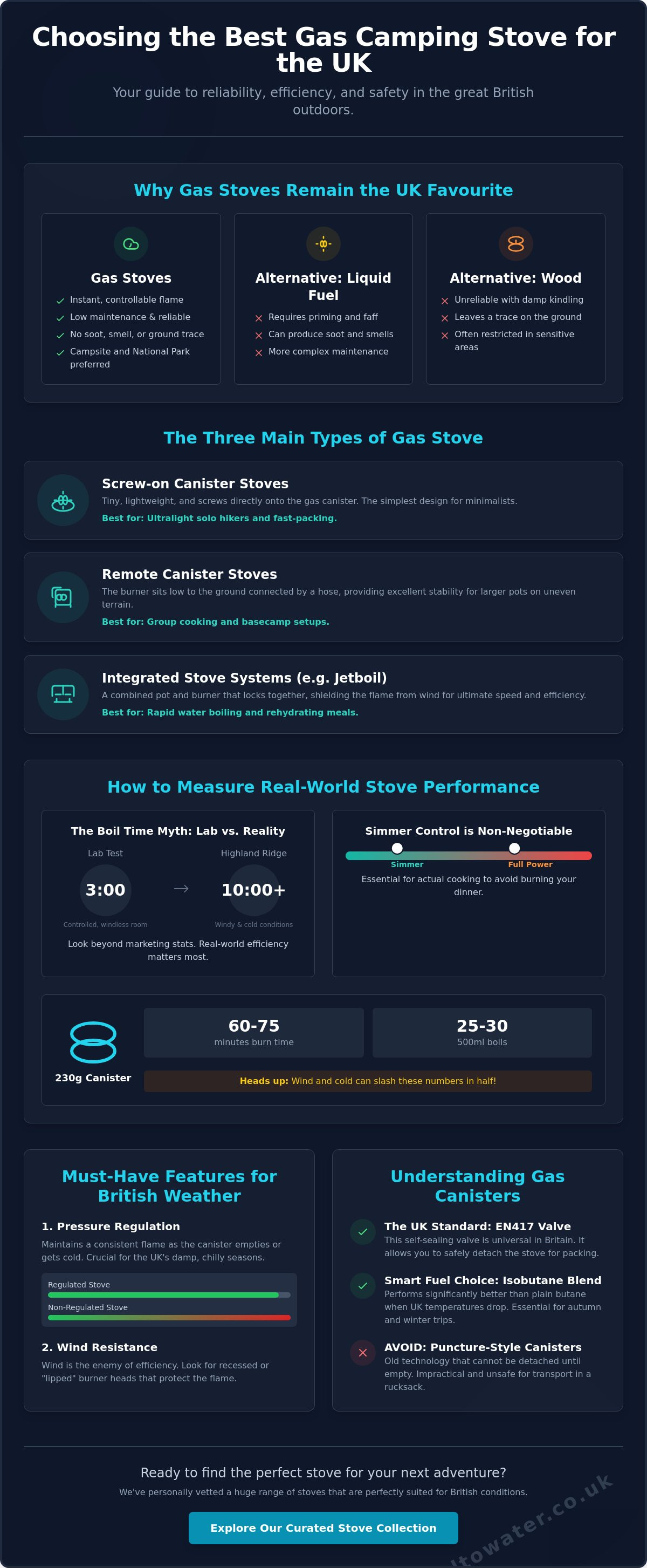
When you're pitched up in the Peak District and the drizzle starts, you don't want to be faffing with liquid priming or damp kindling. This is why gas remains the top choice for the best gas camping stoves in the UK. It's about instant results. You turn a valve, click a piezo, and you have a functional flame. Unlike liquid fuel, there's no soot or smell to deal with inside a tent porch. Whilst wood burners have their place for bushcraft, many UK campsites and National Parks prefer gas because it leaves no trace on the ground. Looking at the history and types of portable stoves, gas has evolved to be the safest and most efficient method for the modern hiker.
Gas systems are incredibly low maintenance. You don't need to clean jets or carry complex repair kits for a short weekend away. This reliability is vital when you're tired after a long day on the fells. At Wood To Water Outdoors, we've personally vetted a huge range of these camping gas stoves to ensure they fit every type of adventure, from solo wild camps to family trips. Modern burners are also getting smarter. The latest EN 30-2-1:2024 standards focus on reducing standby losses and improving control; this ensures you get the most out of every gram of fuel. Always check the latest HSE guidelines for specific safety updates regarding gas appliance usage in the UK.
The Three Main Types of Gas Camping Stoves
Screw-on canister stoves are the favourite for ultralight solo hikers. They are tiny; they weigh next to nothing and sit directly on the gas bottle. Remote canister stoves offer better stability on uneven terrain because the burner sits lower to the ground and connects via a hose. Integrated stove systems, such as the Jetboil Flash, are the ultimate in speed. They lock the pot directly to the burner, which blocks the wind and boils water in record time. Each style has its merits depending on whether you're fast-packing or setting up a more permanent camp.
Understanding Gas Canister Standards in the UK
The EN417 self-sealing valve is the national standard you'll find in every outdoor shop across Britain. It allows you to unscrew the stove from the canister for easy packing without leaking fuel. For the British climate, look for isobutane blends. These perform much better than plain butane when the temperature drops in autumn. Avoid puncture-style canisters at all costs. They are old technology; you can't detach the stove until the gas is empty, which makes them a nightmare for safe transport in a rucksack. Finding the best gas camping stoves for your specific needs starts with understanding these simple fuel and hardware basics.
Technical Deep Dive: How to Measure Stove Performance
Lab-tested boil times are often a fantasy. When you're searching for the best gas camping stoves, you need to look beyond the marketing stats. A stove that boils a litre of water in three minutes in a controlled room might take ten minutes on a windy ridge in the Highlands. Real-world efficiency is what keeps your pack light and your fuel costs down. If you plan on cooking actual food rather than just rehydrating bags, simmer control is vital. Many basic stoves offer only a "flamethrower" setting; you want a valve that allows you to turn the heat down to a whisper to avoid burning your dinner to the bottom of the pot.
Fuel efficiency is the true metric of a quality burner. You can calculate your needs by knowing that a standard 230g canister typically provides about 60 to 75 minutes of burn time at full power. If you're just boiling 500ml for a coffee, that's roughly 25 to 30 boils per canister. However, wind and cold can slash these numbers in half. Finding the sweet spot between a featherweight build and rugged durability is the goal. If a stove is too flimsy, it won't support a heavy pot; if it's too heavy, it becomes a burden on long treks. You can find a curated range of high-performance camping gas stoves that balance these trade-offs perfectly for British conditions.
Pressure Regulation and Cold Weather Performance
Cold weather kills gas pressure. As you use a canister, it cools down; this is why you often see frost forming on the outside. Regulated stoves maintain a consistent flow of gas even as the canister empties or the temperature drops. This is an essential feature for anyone camping in the damp, chilly UK shoulder seasons. Without a regulator, your flame will slowly wither away just as your water starts to simmer.
Wind Resistance and Burner Head Design
Wind is the enemy of efficiency. Stoves with recessed burner heads or "lip" designs protect the flame from being blown sideways. This keeps the heat directed at your pot rather than the surrounding air. Whilst you're at it, consider the ignition. A piezo igniter is a fantastic luxury, but it can fail in high humidity. Always carry a backup lighter and follow expert stove safety tips from the BMC to ensure you stay safe whilst cooking in your tent porch or vestibule.
Our Top Picks for the Best Gas Camping Stoves in 2026
Choosing the right gear can feel like a minefield when you're staring at a wall of shiny metal. We've personally vetted our inventory at Wood To Water Outdoors to ensure every model meets a high standard for the unpredictable British climate. Whether you need a lightning-fast boil on a Munro or a featherweight setup for the West Highland Way, these are the best gas camping stoves we recommend for your next outing. We focus on versatile systems that bridge the gap between weekend leisure and serious expeditions.
Our selection prioritises reliability above all else. A stove is only as good as its performance in the field, so we look for features like robust pot supports and efficient burner heads that we discussed in our technical deep dive. By choosing one of these curated picks, you're investing in gear that has been tested in real-world conditions. From integrated systems that defy the wind to minimalist burners that disappear in your rucksack, there is an option here for every discipline and budget.
The Best All-Rounder: Jetboil Flash and Trailcook
The Jetboil Flash remains the undisputed gold standard for pure speed. It uses a specialised flux ring to transfer heat directly into the pot, which blocks the wind whilst cutting boil times significantly. If you're cooking for two or simply want more capacity for a larger brew, the Jetboil Trailcook 1.2L offers that extra volume without sacrificing the efficiency the brand is known for. These systems are perfect for solo hikers, DofE participants, and morning coffee enthusiasts who want their caffeine fix without the wait.
The Best Value for Money: Fire-Maple Gear
Not every adventure requires a premium price tag to be successful. Fire-Maple gear has carved out a massive reputation amongst UK campers for delivering high-end features at a mid-range price point. Their Fixed Star series is a fantastic alternative to more expensive integrated systems; it's durable, easy to operate, and handles the damp UK shoulder seasons with ease. For those who prefer a traditional setup, their ultralight folding burners provide a stable platform for various pot sizes whilst taking up minimal space in your kit bag.
The Best Ultralight Setup: Minimalist Burners
For the minimalist hiker, every single gram counts on a long trek. We love pairing a tiny folding burner with TOAKS titanium cookware to create the ultimate lightweight kitchen. Titanium is the favourite choice for thru-hikers because it's incredibly light and won't rust in a damp pack. This setup won't weigh you down on long-distance UK trails like the Pennine Way. It allows you to move faster and further whilst still enjoying a hot meal at the end of the day. Using these best gas camping stoves in tandem with titanium gear ensures your pack weight remains manageable over hundreds of miles.
Maximising Efficiency and Safety in the British Wild
Even the best gas camping stoves will underperform if you don't treat them right. Efficiency in the British wild is about more than just boil times; it's about making your fuel last through a long weekend in the Highlands. Start with a simple maintenance check before every trip. Debris in the burner jet or a perished O-ring can lead to poor performance or dangerous leaks. We recommend giving your stove a quick clean after every few outings to ensure the flame remains blue and steady. A yellow, flickering flame is often a sign of a partial blockage that wastes fuel and increases carbon monoxide risks.
Safety protocols are non-negotiable when you're miles from help. Whilst it's tempting to cook inside your tent during a downpour, always ensure maximum ventilation. Beyond the air you breathe, you must protect the ground. Using a stable base prevents spills that could ruin your gear or cause a fire. To keep your kit in top shape, explore our selection of camping gas stoves and find a model that fits your specific safety needs.
Beating the Wind: Shields and Placement
Wind is the primary cause of wasted fuel. However, you should never fully enclose a canister-top stove with a metal windshield. This can cause the gas bottle to overheat and potentially explode. Instead, use the "half-shield" technique by placing a screen only on the windward side. Better yet, use the terrain to your advantage. Tucking your stove behind a rock, a rucksack, or a dry stone wall can cut your boil time in half without any added risk. This simple shift in placement helps you optimise every gram of isobutane.
Cold Weather Hacks for Gas Stoves
Gas canisters struggle when the mercury drops. As the liquid turns to gas, it cools the canister, which can lead to a weak, spluttering flame in the chilly UK shoulder seasons. To combat this, keep your canister warm before use. Sticking it in your pocket or at the bottom of your sleeping bag for twenty minutes makes a massive difference to initial pressure. For those camping in deep winter, look for stoves with a "liquid feed" mode. This allows you to invert the canister, ensuring a steady flow of fuel even when it's freezing outside. Using a simple heat reflector on the ground can also bounce energy back towards your pot, further reducing your wait for that morning brew.
Completing Your Outdoor Kitchen: Essential Accessories
Even the best gas camping stoves will feel incomplete without a curated set of accessories to back them up. Your choice of pot material can make or break your fuel efficiency. Titanium is the favourite for those counting every gram whilst aluminium offers better heat distribution for actual cooking. If you're rehydrating meals, a thin-walled pot is fine; if you're frying, you'll want something thicker to avoid hot spots. Don't forget the importance of a well-fitting lid. Using a lid can reduce your boil time by up to 20 per cent, which saves a significant amount of gas over a long weekend. We recommend nesting your stove inside your pot with a small cloth to prevent rattles and protect the internal surface during transit.
Your utensils matter too. High-performance cookware often features delicate coatings that can be scratched by metal spoons. Opt for long-handled silicone or polished titanium utensils that reach the bottom of deep pots without getting your hands messy. Organising your kit this way ensures you aren't faffing about in your rucksack when the hunger hits after a long day on the trail.
Cookware Synergy: Pot Size and Burner Width
A common mistake is pairing a tiny, narrow burner with a wide, family-sized pot. This leads to massive heat loss around the sides and an unstable cooking platform. You should match your burner diameter to your pots and camping plates to ensure the heat goes exactly where it's needed. For basecamp setups where weight isn't an issue, cast iron cookware is unbeatable for heat retention and durability. If speed is your priority, look for flux-ring pots; these can offer up to 30 per cent faster boils by trapping heat that would otherwise escape into the wind.
Beyond the Burner: Tarps and Lighting
The British weather rarely plays fair. Cooking under a camping tarp is a game-changer when the rain sets in. It provides a dry, ventilated space to manage your stove safely without the condensation issues of a tent porch. Lighting is the final piece of the puzzle. A reliable headlamp is essential for evening meal prep; it keeps your hands free to stir the pot and check your fuel levels. Before you head out, run through a final checklist: stove, fuel, lighter, pot, lid, and a way to stay dry. With this setup, you'll have a reliable outdoor kitchen that handles anything the British wild throws at it.
Ready for Your Next British Adventure?
Finding the best gas camping stoves for your kit bag is the final piece of the puzzle for a successful expedition. You now understand the vital balance between raw power and real-world efficiency, from the benefits of pressure regulation in the cold to the synergy between burners and titanium pots. We've moved beyond simple boil times to look at how simmer control and wind management keep your fuel lasting longer on the trail. Reliability isn't just a feature; it's the foundation of every hot meal and morning brew when you're out in the elements.
At Wood To Water Outdoors, we are more than just a retailer; we are passionate curators who personally vet every item in our inventory to ensure it meets our high standards. We are proud stockists of industry leaders like Jetboil, Fire-Maple, and TOAKS, offering UK-wide national delivery to help you get geared up quickly. Explore our full range of high-performance gas camping stoves and start your next adventure today. We're excited to help you find the perfect setup for your next wild outing!
Frequently Asked Questions
Can I use my gas camping stove inside a tent?
Never use a gas stove inside the main body of a tent. Carbon monoxide is a silent killer; it builds up rapidly in enclosed spaces and can be fatal. If the weather is truly foul, you can cook in a well-ventilated porch or vestibule, but you must keep the burner away from the flysheet. Always ensure there is a clear exit and plenty of airflow to stay safe whilst preparing your meal.
How long does a 230g gas canister typically last?
You can expect roughly 60 to 75 minutes of total burn time from a standard 230g canister. This typically translates to 25 or 30 individual boils of half a litre of water. These figures depend heavily on how high you turn the valve and the external conditions. Using a windshield and a lid will significantly extend the life of your gas bottle during a trip.
Are Jetboil stoves worth the extra money for casual camping?
Jetboil systems are a worthwhile investment if you value speed and fuel efficiency above all else. Models like the Jetboil Flash are designed to boil water in under three minutes, which is a game-changer on cold, windy mornings. Whilst they are more expensive than basic burners, the integrated flux ring technology saves you money on gas in the long run. They are perfect for anyone who wants a fuss-free, reliable setup.
What is the best gas mix for camping in UK winters?
An isobutane and propane blend is the best choice for UK winter camping. Pure butane stops vapourising at around freezing, which leaves you with a useless canister when the temperature drops. Propane has a much lower boiling point, whilst isobutane provides better pressure in the cold. This specific mix ensures your stove remains functional even when there is frost on the ground.
Can I take gas canisters on a plane for a hiking trip?
You cannot take gas canisters on a plane, either in checked luggage or carry-on bags. Aviation security regulations strictly prohibit all pressurised gas containers because they pose a significant fire and explosion risk. It is much safer to research local outdoor shops at your destination and buy your fuel once you land. Most UK airports have outdoor retailers nearby that stock the standard EN417 canisters.
How do I know when my gas canister is nearly empty?
The most reliable way to check your gas level is the float test. Place your canister in a bowl of water; it will float vertically if it is nearly empty and sit lower if it is full. You can also use a set of digital scales to compare the current weight against the "gross weight" printed on the side. If the flame starts to flicker and lose power despite the valve being fully open, it is time to swap.
Do all gas stoves fit all gas canisters in the UK?
Most best gas camping stoves in the UK use the EN417 threaded valve, but compatibility isn't universal. Some brands, like Campingaz, use a "Easy-Click" or "CV" connection that does not have a thread. Always check that your burner matches the canister type before you head out. Carrying an adapter can solve some issues, but it is always safer to stick to the standard self-sealing threaded bottles.
What should I do if my piezo igniter stops working in the wild?
If your piezo igniter fails, simply use a backup lighter or a ferrocerium rod to spark the burner. Piezo systems are notoriously temperamental in high humidity or at high altitudes; they should never be your only way to start a fire. We always recommend keeping a waterproof lighter tucked inside your cook pot. This ensures you can still enjoy a hot meal even if the built-in ignition gives up the ghost.