

Best Camping Cookware: Durable Gear for UK Expeditions
What if the lightest pot in your pack is actually the reason you're wasting fuel and burning your dinner? Many trekkers focus so much on shaving grams that they end up with thin metal that warps under high heat or leaves food stuck to the bottom. We agree that there's nothing more frustrating than a rattling backpack or a stove that guzzles gas because your pots can't hold the heat. Choosing the right camping cookware is about more than just finding the smallest set; it's about matching your gear to your specific cooking style and the unpredictable British environment.
In this guide, you'll discover how to choose the perfect balance of weight, durability, and thermal efficiency for your next outdoor adventure. Whether you're planning a multi-day trek across the Highlands or a weekend bushcraft session, we've got you covered. We'll preview the best materials for the job, from ultralight TOAKS titanium to high-performance Jetboil systems, so you can build a rattle-free setup that saves fuel and lasts for years of rugged use. Let's get your kit sorted so you can focus on the trail ahead.
Key Takeaways
- Learn why purpose-built gear outperforms domestic pots whilst improving your physical performance on long treks.
- Master the differences between titanium, aluminium, and stainless steel so you'll choose the best camping cookware for your stove.
- Calculate the exact volume you'll need based on your group size and favourite trail meals.
- Discover professional maintenance tips to ensure your gear doesn't let you down during years of rugged use.
- Explore expert-vetted recommendations from specialist brands like TOAKS and Jetboil that are built for the British climate.
Why Quality Camping Cookware is Essential for Every Expedition
Don't be tempted to grab a pan from your kitchen cupboard before heading out. Domestic pans are designed for controlled environments; specialised camping cookware is built for the wind, rain, and uneven heat of the trail. Since the early history of outdoor cooking, explorers have realised that specialised gear is the only way to ensure a hot meal in the wild. Purpose-built pots use materials like hard-anodised aluminium or titanium to withstand the direct flame of a gas stove or a wood-fired bushbox without warping. These materials are chosen specifically to survive the damp, salty air of the British coast or the freezing nights on a moorland expedition. Choosing gear that survives the British climate is the difference between a successful summit and a cold, miserable night.
Poor heat distribution is a silent trip-ruiner. Thin, cheap metal often creates hot spots that burn your food whilst the rest stays cold. Investing in high-quality gear ensures even thermal efficiency, which saves fuel and prevents you from scrubbing charred remains off your pot with limited water. When you're miles from the nearest tap, a non-stick surface isn't just a luxury; it's a necessity. At Wood To Water, we curate camping cookware that survives these specific pressures, ensuring you have reliable equipment for every trek. For bushcraft enthusiasts, durability is about long-term cost-effectiveness. Gear that survives being dropped on granite or shoved into the bottom of a heavy pack pays for itself over years of rugged use.
The Problem with Heavy and Bulky Gear
Every gram matters on a long ascent. Carrying excess weight increases fatigue and the risk of injury, especially when navigating technical terrain. Lightweight gear allows you to push further and enjoy the journey. Bulk is just as troublesome as weight. High-quality sets are designed for efficiency. Nesting is the ability for smaller items to fit inside larger pots to maximise space. This allows you to fit a full kitchen setup into a 40L pack without sacrificing room for your sleeping bag or waterproof layers.
Safety and Reliability in the Wild
Safety often comes down to the details. Flimsy handles or loose lids can lead to nasty burns in a remote location. Secure, heat-resistant grips are essential when you're pouring boiling water for a meal. Beyond safety, there is the psychological benefit of a quiet pack. Well-designed gear stays silent in your bag; it won't rattle with every step you take. This level of preparation is a core part of your Essential wild camping equipment checklist. Quality gear doesn't just cook your food; it protects your peace of mind.
Decoding Materials: Titanium vs Aluminium vs Stainless Steel
Choosing the right material for your camping cookware is a balancing act between physical weight and thermal performance. If you've ever wondered why your gas canister feels empty after just two days, the answer likely lies in your pot's thermal conductivity. Materials that transfer heat quickly boil water faster and save precious fuel; however, they often struggle with even heat distribution. Understanding the weight-to-strength ratio of your gear helps you decide whether you're carrying a pack that supports your goals or one that holds you back. Your choice also dictates your stove efficiency, as thin-walled metals react differently to concentrated gas flames compared to the broad, licking heat of a wood fire.
The Ultralight Appeal of Titanium
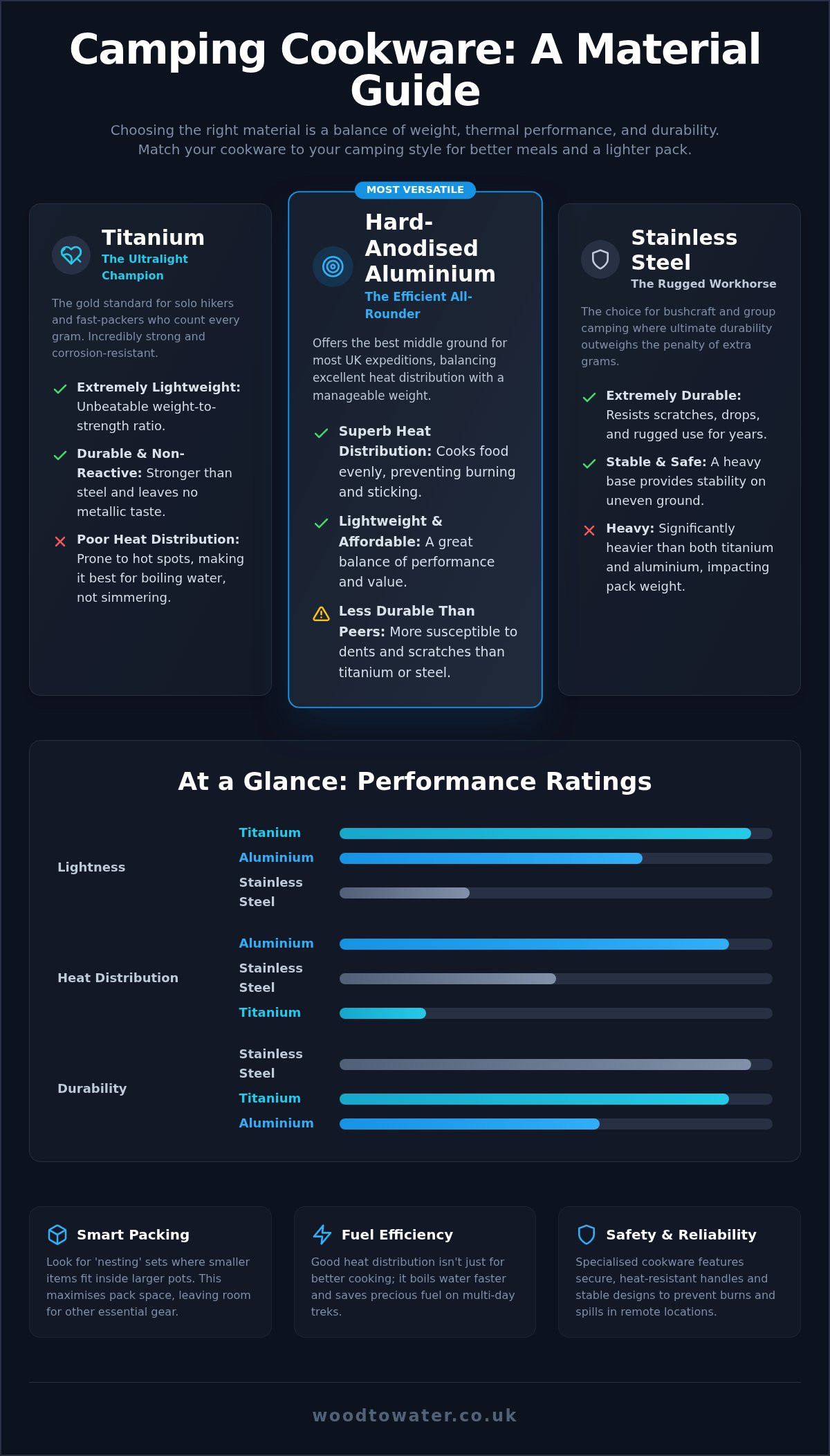
Titanium is the undisputed gold standard for solo hikers and fast-packers who count every gram. It's incredibly light and stronger than steel, meaning manufacturers can make pot walls remarkably thin. This material is corrosion-resistant and leaves no metallic taste in your coffee, which is a massive plus for long-distance treks. The trade-off is poor heat distribution. Because it creates intense hot spots, it's the perfect choice for boiling water for dehydrated meals but can be a nightmare for simmering a delicate sauce. If you want to dive deeper into why this metal dominates the trail, read our guide on TOAKS Titanium Cookware.
Hard-Anodised Aluminium for Thermal Efficiency
Hard-anodised aluminium offers the best middle ground for most UK expeditions. It boasts excellent heat distribution, which prevents food from sticking and burning, at a weight that won't ruin your knees. The "hard-anodised" process creates a durable, non-reactive surface that is far superior to standard aluminium, which can warp or leach into food. This is the ideal material if you enjoy actual cooking, such as frying up a breakfast or slow-cooking a stew, rather than just rehydrating packets. It works brilliantly with most camping gas stoves because it spreads the heat across the entire base of the pan.
The Durability of Stainless Steel and Cast Iron
When weight isn't the primary concern, stainless steel and cast iron come into their own. Stainless steel is the workhorse of group cooking and heavy-duty bushcraft; it's nearly indestructible and handles high-intensity heat without flinching. For those setting up a permanent basecamp, our cast iron cookware collection provides the ultimate experience. It offers unmatched heat retention and is the only sensible choice for cooking over an open fire where temperatures are unpredictable. If you're unsure which material fits your next trip, the expert team at Wood To Water is always ready to help you find the perfect kit for your expedition.
The relationship between your stove and your pot is vital. A concentrated gas flame can easily scorch thin titanium, whereas a roaring wood fire might destroy the delicate coatings on lightweight aluminium. Always match your metal to your heat source to ensure your gear lasts for years of adventure.
Selecting the Right Set for Your Camping Style
Your choice of camping cookware should be dictated by your mission. A solo trekker through the Lake District has vastly different needs than a family setting up a basecamp for a week. The secret to a successful expedition lies in calculating your required volume before you even step foot in a shop. For most rehydrated trail meals, you'll need approximately 500ml of boiling water. If you're cooking from scratch, that volume needs to double. Beyond capacity, you must decide between integrated systems, where the stove and pot are a single unit, and modular kits that offer more flexibility for different recipes.
Organisation is often the most overlooked part of gear selection. Many campers buy individual items that don't fit together, leading to wasted space and irritating rattles. A well-curated kit relies on nesting to keep your pack tight and efficient. By choosing components that sit perfectly inside one another, you can fit your stove, fuel, and pot into a space no larger than a standard water bottle. This level of pack discipline is what separates a seasoned hiker from a beginner struggling with a bulging 60L bag. It's about creating a system that works with you, not against you.
Solo Backpacking and Wild Camping Essentials
For those moving fast and light, the 500ml to 750ml range is the absolute sweet spot. A single pot with a tight-fitting lid is often all you need to handle your morning coffee and evening meal. This minimalist approach saves significant weight and simplifies your camp routine. When space is at a premium, pairing a titanium pot with compact camping gas stoves ensures you have a reliable heat source that weighs less than your smartphone. It's a simple, effective setup that lets you focus on the landscape rather than your luggage. You don't need a full kitchen to enjoy a high-quality meal under the stars.
Group Cooking and Family Basecamp Solutions
When you're feeding a group, the priorities shift from weight to efficiency. Pots with a 2L+ capacity become essential to avoid cooking in multiple shifts. This is where multi-piece sets prove their worth; they allow you to boil water for tea whilst simultaneously simmering a main meal. If fuel efficiency is your goal, look for "heat exchanger" pots. These feature a specialised ring on the base that traps heat, boiling water significantly faster and reducing your gas consumption. Our range of Fire-Maple gear for efficient group cooking is a perfect example of this technology in action, providing professional performance for shared adventures.
Your stove choice also dictates your requirements. If you're using a broad-flame burner, you'll need a wider pot to capture the heat effectively. Conversely, a narrow, intense flame works best with tall, slim pots. Matching these components correctly ensures you aren't wasting energy and your meals cook evenly every time. It's these small details that make the difference between a burnt dinner and a perfect trail feast.
Maintenance and Efficiency: Getting the Most from Your Gear
Even the most rugged camping cookware requires a proactive maintenance routine to ensure it survives years of expeditions. High-output stoves can be unforgiving; applying too much heat too quickly often leads to warped bases or scorched food that is a nightmare to clean in the field. By mastering a few simple trail-side habits, you can protect your investment and ensure your kit remains as efficient as the day you bought it. It's about more than just hygiene; it's about maintaining the thermal conductivity that saves you fuel and weight in the long run. If you want gear that lasts, you need to treat it with the same respect you'd give your boots or your tent.
Cleaning and Preservation Whilst on the Trail
UK wilderness areas are fragile ecosystems. You should always avoid using harsh, synthetic detergents that can contaminate local water sources; instead, opt for biodegradable soaps or simply hot water and a bit of elbow grease. Always wash up at least 75 metres away from water sources to follow "Leave No Trace" principles. If you've been using a wood-burning stove, you'll likely have a thick layer of soot on your pot base. A simple paste of wood ash and water can act as a natural abrasive for stainless steel. This method is incredibly effective for restoring the shine to your gear without carrying extra chemical cleaners. For titanium, a gentle wipe is usually enough, as the material is naturally resistant to sticking if you manage your heat correctly.
Fuel Efficiency and Heat Management Techniques
Fuel efficiency is the key to keeping your pack weight down. If your camping cookware boils water faster, you carry less gas. Always use a windscreen to prevent the British breeze from stealing your heat; this simple addition can reduce boil times by up to 30% in gusty conditions. The "lid-on" rule is equally vital. Keeping the lid firmly in place traps steam and pressure, significantly reducing the energy required to reach a boil. Finally, always match your flame diameter to the base of your pot. A flame that licks up the sides of the pan is wasted energy and can even damage heat-resistant handles or silicone grips. This simple adjustment ensures every bit of heat is directed exactly where it's needed.
Proper storage prevents the "trail grime" build-up that can ruin the taste of your next meal. Use mesh storage bags or soft cloths to separate nesting items; this stops metal-on-metal friction from scratching non-stick coatings or creating micro-abrasions where bacteria can hide. Before your next trip, take a moment to browse our full collection of professional cookware to ensure your setup is ready for the challenge. Taking care of your kit means your kit will take care of you when the weather turns and a hot meal becomes your top priority.
Discover Expert-Vetted Cookware at Wood To Water Outdoors
At Wood To Water, we don't just sell gear; we live the lifestyle. Our commitment to sourcing camping cookware that withstands the rigours of the UK outdoors is personal. Every piece of kit in our inventory has been vetted by our team to ensure it meets the high standards required for a wet weekend in the Peaks or a winter expedition in the Highlands. We understand that reliability isn't just a feature; it's the foundation of your safety and comfort in the wild. We've curated a selection that covers every need, from the ultralight TOAKS range for the dedicated fast-packer to the convenience of integrated systems like Jetboil. These systems are designed for speed and efficiency, providing a hot meal in minutes even when the British weather is doing its worst.
Our team acts as a knowledgeable curator, personally testing the items we stock. We look for gear that offers the perfect balance of weight, durability, and thermal efficiency. By focusing on quality over quantity, we ensure that every pot and pan we offer is an essential addition to your kit. Whether you need the ruggedness of stainless steel for a bushcraft session or the featherlight performance of titanium for a solo trek, we've already done the hard work of vetting the best options on the market.
Curated Brands for Professional Results
Our inventory includes specialised brands like Fire-Maple, known for their thermal efficiency and rugged build quality. We help you build a rattle-free, organised cooking system by selecting components that nest perfectly together. This attention to detail ensures your pack remains silent and stable, even on technical terrain. For a holistic approach to your trip planning, don't forget to check out The Ultimate UK Camping Checklist. It's the same professional guide we use to organise our own expeditions, ensuring nothing is left behind.
Expert Advice for Your Next Adventure
Choosing the right camping cookware can be daunting with so many materials and sizes available. Our expert-led customer service team is always on hand to provide personalised gear recommendations based on your specific goals. Whether you're a seasoned bushcraft enthusiast or a first-time wild camper, we're here to help you get it right the first time. We offer reliable delivery across the United Kingdom, ensuring your gear arrives in time for your next departure. Investing in quality gear is an investment in your outdoor experience. When your equipment works flawlessly, you can stop worrying about your kit and start focusing on the horizon.
Equip Your Kit for the Great British Outdoors
Choosing the right camping cookware is the difference between a frustrating evening and a perfect trail meal. We've explored how matching your material to your stove type saves fuel and prevents burnt dinners; whether you choose ultralight titanium for solo fast-packing or hard-anodised aluminium for its superior thermal efficiency. Remember that a rattle-free, organised pack relies on nesting your components to maximise every centimetre of space. By following simple maintenance habits like the "lid-on" rule and using natural abrasives, your gear will withstand the harshest UK conditions for years to come.
At Wood To Water, we pride ourselves on being specialists in ultralight and bushcraft equipment. Our team personally vets every product to ensure it survives the unpredictable British climate. If you're unsure which set fits your next mission, our UK-based customer support team is ready to help with expert-led advice. Explore our full range of professional camping cookware today and build a system you can rely on. There is a whole world out there waiting to be discovered; make sure you have the kit to enjoy every moment of it. Happy hiking!
Frequently Asked Questions
Can I use my normal kitchen pots for camping?
You can use them, but it is rarely a good idea for hiking. Domestic pots are far too heavy and bulky for a rucksack; they lack the nesting features essential for an organised pack. Their handles are often not designed for the concentrated, high-intensity flames of a camp stove and can melt or become unstable. While high-quality kitchenware from Oalamea.ro is perfect for a home setting, purpose-built camping cookware is designed to handle rugged outdoor use whilst remaining lightweight and packable.
Titanium is a specialist material designed for ultralight hikers who want to shave every possible gram from their pack. For a casual camper or someone who enjoys cooking actual meals, hard-anodised aluminium is often a better choice. It offers superior heat distribution at a lower price point. If you only boil water for tea or rehydrated meals, titanium is a fantastic long-term investment, but it is not essential for local weekend outings.
How do I stop food from sticking to my titanium camping pot?
Titanium is notorious for creating hot spots, which makes food stick and burn easily. To prevent this, you should keep your stove flame as low as possible and stir your food constantly whilst heating. Adding a small amount of oil or water before you start can also create a helpful barrier. Since titanium doesn't distribute heat evenly, it's best to use these pots for liquids or rehydrating meals rather than complex recipes.
What is the best way to clean camping cookware whilst wild camping?
Always follow "Leave No Trace" principles by washing your gear at least 75 metres away from any water sources. Use a small amount of biodegradable soap and a soft sponge to avoid damaging the surface of your camping cookware. For stubborn soot from a wood fire, a paste made from wood ash and water works as a brilliant natural abrasive. This method keeps your kit clean without introducing harmful chemicals into the wilderness.
Does hard-anodised aluminium scratch easily?
Hard-anodised aluminium is significantly more durable than standard aluminium, but it is not completely scratch-proof. The anodising process creates a hardened surface that resists abrasion and corrosion during regular use. However, using metal utensils or metal scouring pads will eventually wear down this protective layer. We recommend using silicone or plastic spoons to extend the life of your pots and storing them in a soft bag whilst they are nested in your pack.
What size pot do I need for two people on a hiking trip?
A pot capacity between 1.2 litres and 1.5 litres is the ideal size for two hikers. This volume provides enough space to boil water for two rehydrated meals and a couple of hot drinks in a single go. If you plan on cooking more complex meals from scratch, you might want to look at a 2-litre set. It is always better to have slightly more room than you need to prevent messy boil-overs.
Can I use titanium pots over an open wood fire?
Yes, you can use titanium over a wood fire, but be prepared for some permanent discolouration of the metal. Titanium handles high heat exceptionally well and will not warp like thin aluminium can. The main challenge is the intense heat created by flames, which can burn food quickly if you aren't careful. If you're using a bushbox or a small fire, titanium is a reliable choice, provided you keep any silicone handles away from the flame.
What is a heat exchanger pot and do I really need one?
A heat exchanger pot features a specialised metal ring on the base that traps heat and prevents it from escaping. This technology can reduce boil times by up to 30%, which significantly cuts down your fuel consumption. You don't strictly need one for short trips, but they are incredibly useful for group cooking or expeditions in windy conditions. If you want to carry less gas on a multi-day trek, a heat exchanger is a smart addition.