

Wild Camping Laws UK: Stay Safe and Legal Outdoors
Imagine waking up to a torch beam hitting your tent at 2 am because you have unknowingly pitched on private land. It's the ultimate outdoor nightmare for any adventurer seeking solitude! Many hikers find themselves asking: is it illegal to wild camp in the UK? The answer is rarely a simple yes or no; instead, it's a patchwork of regional permissions where responsible behaviour is your best legal currency. You want the freedom of the fells without the fear of a legal headache or a confrontation with a landowner.
We understand that confusion. Whether you're tracking the 2026 Dartmoor rulings or navigating Scotland’s Access Code, the rules can feel like a maze. This guide helps you discover the latest legal realities of wild camping across the UK and how to stay on the right side of the law whilst exploring. You'll learn the crucial differences between civil trespass and criminal acts; we also provide practical tips for securing landowner permission so your next sunrise is met with a quiet brew, not a move-along order.
Key Takeaways
- Learn the vital distinction between civil trespass and criminal acts to ensure you stay on the right side of the law whilst exploring.
- Discover why Scotland remains the gold standard for outdoor access and how this contrasts with the restrictive systems in England and Wales.
- Many adventurers wonder, is it illegal to wild camp in the UK? We clarify the legal realities and the specific areas where you can pitch up legally.
- Master the art of low-impact camping by choosing gear that leaves no trace; this helps maintain a positive relationship with landowners and rangers.
- Get practical advice on how to secure permission and choose discreet locations to avoid being moved on in the middle of the night.
Understanding the Legal Landscape of Wild Camping in the UK
Wild camping is the art of pitching your tent or hanging your hammock far from the hum of commercial campsites. It's about waking up to a mountain view rather than a gravel car park. But for many adventurers, one question hangs over every trip: is it illegal to wild camp in the UK? The answer depends entirely on where you plant your walking poles. Whilst the term "illegal" sounds scary, the reality is usually a matter of civil law rather than a criminal offence.
Many hikers confuse the "Right to Roam" with a "Right to Camp". The Countryside and Rights of Way Act 2000 (CRoW) allows you to walk across specific open access land in England and Wales, but it doesn't automatically grant an overnight stay. Wild camping on Wikipedia provides a great breakdown of how these rights vary across the globe, especially contrasting the UK's unique regional divides. To stay safe, you must understand that the ground beneath your feet almost always belongs to someone else.
Trespass vs Criminality: What the Law Actually Says
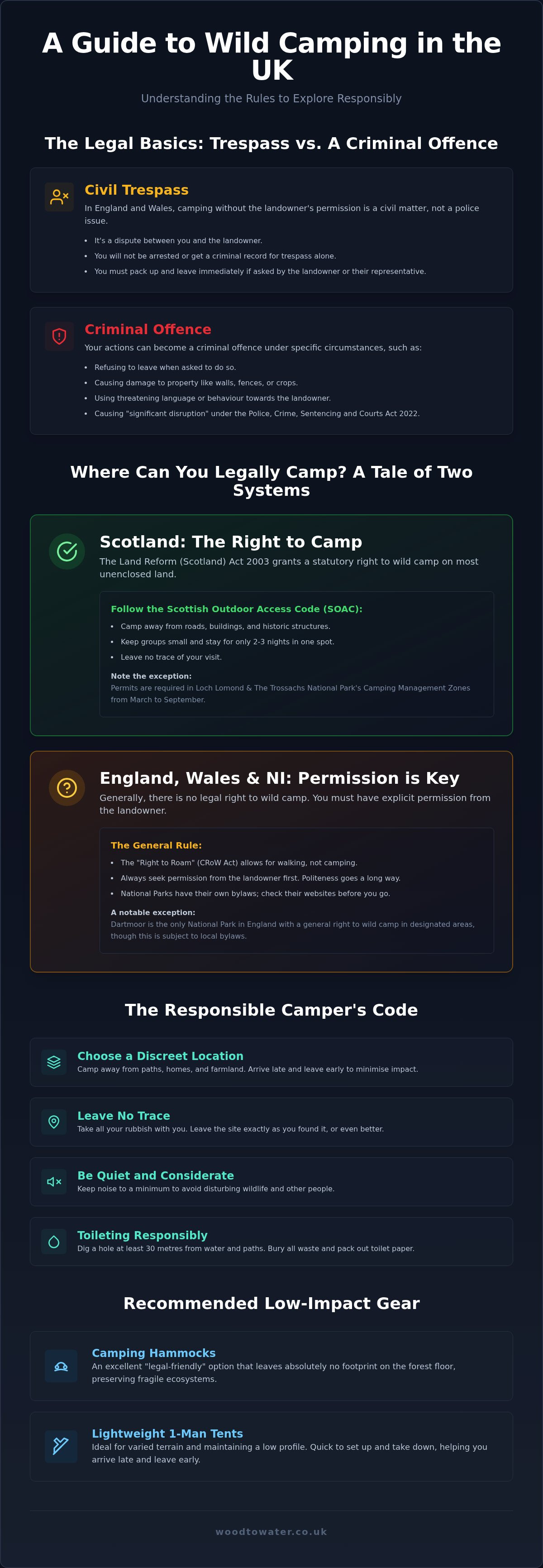
In England and Wales, wild camping without the landowner's permission is technically a civil trespass. This means it’s a matter between you and the person who owns the land, not you and the police. You won't be arrested for simply pitching a tent; however, you must leave immediately if the owner asks you to. It only crosses into criminal territory if you cause damage to property, refuse to move on when told, or cause "significant disruption" as defined by the Police, Crime, Sentencing and Courts Act 2022. Keeping your group small and your noise levels low is the best way to avoid a 2 am wake-up call.
The Role of National Parks and Local Bylaws
Don't assume National Parks are a free-for-all. Areas like the Lake District or the Peak District have their own specific policies that rangers work hard to enforce. Whilst some authorities might tolerate a high-altitude pitch that follows "Leave No Trace" principles, local bylaws can sometimes override general trespass rules in specific zones. This is especially true in popular areas where overcrowding has caused issues. Always check the specific park authority's website before you set off to ensure you aren't camping in a restricted "no-go" zone. Using low-impact gear like camping hammocks can often be a more "legal-friendly" option because they leave no footprint on the forest floor, making it much easier to prove you are a responsible visitor.
Scotland vs England: Where Can You Legally Pitch a Tent?
Scotland is the undisputed gold standard for outdoor enthusiasts in the British Isles. Unlike the rest of the country, the Land Reform (Scotland) Act 2003 provides a statutory right to camp on most unenclosed land. This makes the answer to "is it illegal to wild camp in the UK?" a resounding "no" when you're north of the border, provided you act responsibly. In contrast, England, Wales, and Northern Ireland operate on a "permission-based" system. Here, you generally have no legal right to camp without the landowner's express consent. This creates a confusing landscape for hikers who might be used to the freedom of the Highlands but find themselves facing different rules in the Lake District or the Mourne Mountains.
The Scottish Outdoor Access Code (SOAC)
Access rights are strictly contingent on your behaviour. You must camp away from roads, buildings, and farmyards to stay within the law. Crucially, don't forget the seasonal restrictions in Loch Lomond & The Trossachs National Park. Between March and September, you'll need a permit to stay in specific Camping Management Zones. In 2026, these permits cost £4.50 per night. To keep your footprint small and your setup fast, consider one of our 1-man tents, which are ideal for the varied Scottish terrain. Following the Scottish Outdoor Access Code ensures these rights remain protected for everyone.
Crossing back into England or Wales requires a shift in mindset. Outside of very specific areas, pitching your tent without asking first is technically a civil trespass. This doesn't mean you'll be arrested on sight, but it does mean a landowner can legally ask you to move on at any time. Northern Ireland follows a similar pattern, where most of the popular hiking spots are privately owned. Always try to find the landowner or a local farm to ask for a "one-night stay" permission; most are happy to help if you're polite and prepared.
The Dartmoor Exception and Recent Rulings
Dartmoor remains a unique exception in England. Following high-profile legal battles, the status of wild camping has been clarified for 2026. As of August 2026, backpack camping is legally permitted in designated areas of the park. You must consult the "Byelaw 16" maps to identify these zones accurately. These maps are the ultimate authority on where you can legally rest your head without fear of being moved on. The Dartmoor case is a vital reminder that our access to the wild is a privilege that requires absolute respect for the environment.
Is it illegal to wild camp in the UK if you are outside these specific zones? Technically, yes, but the reality is often about how you conduct yourself. To stay on the right side of the law on the moors, stay for a maximum of two nights, keep your group small, and pitch well out of sight of roads. This responsible approach helps ensure that these rare permissions are preserved for future generations of adventurers.
Trespass, Landowners, and the Realities of "Illegal" Camping
Every wild camp is a social contract between the adventurer and the person who manages the land. Most landowners aren't inherently against hikers; they are against the consequences of irresponsible visitors. Litter, noise, and fire damage cost farmers time and money. When people ask, is it illegal to wild camp in the UK? they often overlook that the "illegality" is frequently a reaction to bad behaviour. If you respect the land, the land usually respects you back. Understanding this relationship is the first step to a successful night under the stars.
If you see a farmhouse or a shepherd, the best policy is to simply ask. A polite request often secures a safe, legal spot. Try a script like this: "Hi, I’m [Name]. I’m trekking through and was wondering if I could pitch my small tent in the corner of that top field for just one night? I'll be away by sunrise and won't leave a trace." Most people appreciate the honesty and are happy to help a responsible hiker. If you can't find anyone to ask, the "Stealth" approach is your best bet. This means pitching at dusk and being packed away by dawn. Choose a spot naturally screened by trees or terrain, well away from livestock and gates. Staying hidden isn't about being "shady"; it's about minimising your visual impact on the landscape.
How to Handle Being "Moved On"
If you are discovered and asked to leave at 2 am, stay calm and polite. You have a legal obligation to move on once the request is made. Don't argue or quote rights that don't exist for campers in England or Wales. Apologise, pack up your gear efficiently, and head to a pre-planned backup spot. Having a headtorch with a red-light mode is essential for finding an alternative pitch safely in the dark without drawing further attention to yourself. It's a rare occurrence, but being prepared for it takes the stress out of the situation.
Common Legal Pitfalls: Fires and Foraging
Fires are the biggest red flag for landowners and rangers. Lighting a fire is the quickest way to turn a civil trespass into a criminal matter. Scorched earth or cutting live branches for fuel can be classed as "Criminal Damage" under UK law. Stick to a reliable, low-impact cooking system like the Jetboil Flash to prepare your meals. This keeps your presence discreet and protects the delicate topsoil. Foraging for a few wild berries for your breakfast is generally fine, but never uproot plants or take more than you need for a single meal, as some species are protected by law.
How to Wild Camp Responsibly: The Unwritten Rules of the Trail
Responsible camping is about blending into the background. Whilst we've already explored the question, is it illegal to wild camp in the UK?, the practical reality is that responsible campers rarely face trouble. Your first step is choosing a discreet location. Avoid ridgelines where your silhouette stands out against the sky, and stay well away from public footpaths or residential windows. Your goal is to be a ghost in the landscape. If nobody knows you were there, you've done it right.
Next, consider your gear. Heavy tents with massive pegs can tear up delicate turf. Using high-quality camping hammocks is a brilliant way to stay off the ground entirely, protecting the forest floor from compaction. Waste management is equally vital. If you need to go, find a spot at least 50 metres from water and bury waste 15cm deep. Take every scrap of litter home, including organic items like banana skins or nut shells which take years to decompose in cold climates. Open fires are a major no-go. They scar the earth and pose a massive wildfire risk. Instead, rely on compact camping gas stoves for a fast, clean, and discreet brew.
Leave No Trace: More Than Just a Slogan
The seven principles of Leave No Trace are the foundation of every successful expedition. In a UK context, this means planning ahead to avoid overcrowded hotspots and respecting the wildlife that calls these fells home. Taking your rubbish home is the bare minimum requirement. We encourage you to leave the trail better than you found it by picking up any litter left by less-informed visitors. This proactive approach helps protect our access rights and keeps the wilderness beautiful for everyone. It’s about being a curator of the outdoors, not just a consumer.
Water Sources and Sanitation
Protecting our waterways is a priority. Always pitch your camp at least 30 metres away from lakes, tarns, or streams to prevent contamination. When it's time to wash up, never use soap directly in the water, even if it's biodegradable. These products require soil bacteria to break down properly. Instead, carry water away from the source, wash your camping plates there, and scatter the greywater over a wide area. This simple habit keeps our mountain streams pristine and safe for the ecosystems they support.
Ready to upgrade your kit for a low-impact adventure? Explore our curated selection of bushcraft essentials to find gear that helps you stay invisible and responsible on the trail.
Essential Gear for a Successful (and Respectful) Wild Camp
Your choice of gear says everything about your intentions as an explorer. If you arrive with a massive, brightly coloured tent and a heavy pack, you're likely to draw unwanted attention. Rangers and landowners are far more likely to leave you in peace if they see a professional, low-impact setup. Many people ask, "is it illegal to wild camp in the UK?" whilst forgetting that the optics of your camp matter just as much as your location. A discreet, well-chosen kit suggests you're a seasoned enthusiast who knows the rules, not a casual visitor who might leave a mess behind.
Visual impact is your biggest giveaway. Stick to "stealth" colours like forest green, olive drab, or coyote brown for your shelter and pack. These shades help you blend into the treeline or the moorland, reducing visual pollution for other hikers and keeping you hidden from distant roads. The goal is to be invisible. When your gear matches the environment, you're much less likely to be disturbed or moved on by a concerned landowner.
Hammocks vs Tents: The Legal Footprint
Hammocks are a game-changer for those seeking a more legal-friendly way to sleep outdoors. The DD Frontline Hammock is a fantastic choice because it keeps you off the ground entirely. This means zero crushed vegetation and no need to clear a flat spot, which can technically be classed as land damage. When you pair your hammock with low-profile camping tarps, your silhouette is much harder to spot from a distance. In many wooded areas where pitching a tent is impossible or prohibited, a hammock is often more acceptable to rangers because it leaves no trace on the forest floor once you've packed away.
Cooking and Nutrition on the Wild Trail
Speed and safety are paramount when you're out in the wild. We always recommend Jetboil camping cooking systems for their efficiency. They are incredibly fast and, more importantly, the flame is entirely contained. As we've discussed, wood fires are a massive red flag for authorities; they leave scorched earth and carry a high risk of spreading. Using a compact gas stove keeps you on the right side of the law and prevents accidental damage to the landscape. For those watching their pack weight, TOAKS Titanium Cookware is the ultimate ultralight choice. It is durable, feather-light, and fits perfectly into a minimal setup, ensuring your presence remains as discreet as possible. Is it illegal to wild camp in the UK? It’s much less likely to be an issue if you’re using professional, flameless gear that respects the environment.
Ready for Your Next British Adventure?
Navigating the fells and forests of the United Kingdom requires more than just a map; it requires a deep respect for the land and its owners. We have covered the vital regional differences between Scotland’s statutory rights and the permission-based systems of England and Wales. Understanding is it illegal to wild camp in the UK? is only the first step toward a stress-free trip. The real secret to success lies in your behaviour and your gear. By choosing discreet locations and following the unwritten rules of the trail, you can experience the wild without leaving a trace behind.
While wild camping is the perfect way to escape the daily grind, most adventurers eventually have to return to the city. For those based in London, you can discover Totem Hair to help you get back into professional mode with their convenient onsite barbering services for corporate offices.
Success starts with the right kit. Equip yourself for a responsible wild camp with Wood To Water Outdoors for expert advice on UK-legal camping setups. As UK-based specialists in bushcraft and hiking, we only stock high-quality gear like the DD Frontline Hammock and Jetboil systems that are vetted for durability and low impact. Our team is passionate about helping you explore the outdoors safely and legally. The hills are calling; grab your pack and head out with confidence!
Frequently Asked Questions
Is wild camping legal in the Lake District?
Wild camping isn't strictly legal in the Lake District National Park without the landowner’s express permission. Most of the land is privately owned or managed by the National Trust. Whilst high-fell camping is often tolerated by rangers if you pitch late, leave early, and stay above the intake wall, it remains a civil trespass. Always avoid camping on the valley floor or near water to stay within the park’s guidelines.
Can I be arrested for wild camping in England?
You cannot be arrested for simple wild camping in England as it is usually a civil trespass. However, the Police, Crime, Sentencing and Courts Act 2022 means it becomes a criminal offence if you cause "significant damage, disruption, or distress" or refuse to leave when asked. If you are polite and move on immediately upon request, the police won't be involved. It is the best way to stay safe.
Where is wild camping legal in the UK without permission?
Scotland and designated areas of Dartmoor National Park are the only places in the UK where wild camping is legally permitted without seeking individual landowner permission. In Scotland, the Land Reform Act 2003 grants access to most unenclosed land. On Dartmoor, you must follow the "Byelaw 16" maps to find legal zones. For the rest of the UK, the answer to "is it illegal to wild camp in the UK?" is technically yes without consent.
Do I need a permit to wild camp in Scotland?
You only need a permit for wild camping in Scotland if you are staying within the Camping Management Zones of Loch Lomond & The Trossachs National Park. These restrictions apply from 1st March to 30th September each year. In 2026, these permits cost £4.50 per night. Outside of these specific zones and dates, you don't need a permit, provided you follow the Scottish Outdoor Access Code and leave no trace.
Is it legal to wild camp in a van in the UK?
Wild camping in a van is not legal on public roads or private land without permission anywhere in the UK. The statutory right to camp in Scotland specifically excludes motorised vehicles. Parking in laybys or on verges for the night is often restricted by local council bylaws or "no overnight parking" signs. To stay legal, use designated aires or ask a landowner for permission to park in their field or yard.
Can I light a campfire whilst wild camping?
You should avoid lighting campfires whilst wild camping as they aren't permitted by landowners or National Park authorities. Fires cause permanent damage to the ground and pose a severe wildfire risk, especially on peat moors. On Dartmoor, they are strictly banned. Instead, use a contained gas stove for cooking. This approach keeps your camp discreet and ensures you aren't accused of criminal damage to the environment.
What happens if a landowner finds me wild camping?
If a landowner finds you, they have the legal right to ask you to leave their property immediately. You must comply with this request to avoid the situation becoming a criminal matter. Stay calm, be polite, and pack up your gear quickly. Most owners will be reasonable if you haven't caused damage or left litter. Having a backup plan for a secondary location is essential for a safe night.
Is wild camping allowed in Snowdonia (Eryri)?
Wild camping is not legally allowed in Snowdonia (Eryri) without the landowner’s consent. Like other National Parks in England and Wales, the land is largely private. Whilst some high-altitude bivvying is tolerated if you are well away from the roads and summits, the park authority officially encourages using local campsites. Is it illegal to wild camp in the UK? In Snowdonia, the answer is yes without permission, so always pitch late.