

Ultralight Outdoor Gear: How to Carry Less Without Losing Comfort
What if a lighter pack came from changing how your kit works together, rather than buying the lightest version of every item? A heavy load can make even a favourite walk feel like hard work, but advice about ultralight outdoor gear can sound costly, technical and full of comfort-compromising rules.
You don’t need to replace everything or chase a particular base-weight target. The best choices depend on your route, the conditions and what helps you feel comfortable outdoors. A little weight saved in one place can matter less than a thoughtful change to the larger items you carry.
This guide will help you spot where your pack weight comes from and decide which reductions are worth making. We’ll look at how your shelter, sleep system and backpack fit together, then explore practical ways to lighten an existing kit gradually, without sacrificing usefulness or comfort. The aim isn’t to carry as little as possible; it’s to carry what you need, and enjoy the miles more.
Key Takeaways
- Understand base weight and separate your kit from consumables such as food and water, so you can compare pack weight more clearly.
- Review shelter, sleep, clothing, cooking and carried essentials as one system; small choices across your ultralight outdoor gear can add up.
- Weigh potential weight savings against comfort, reliability and the demands of your trip before choosing lighter alternatives.
- Audit your existing kit by listing, weighing and questioning each item, then trial one change at a time and record how it works.
- Build a setup around your own comfort, experience and intended use, keeping what’s useful rather than chasing the lowest possible weight.
What does ultralight outdoor gear mean, and who is it for?
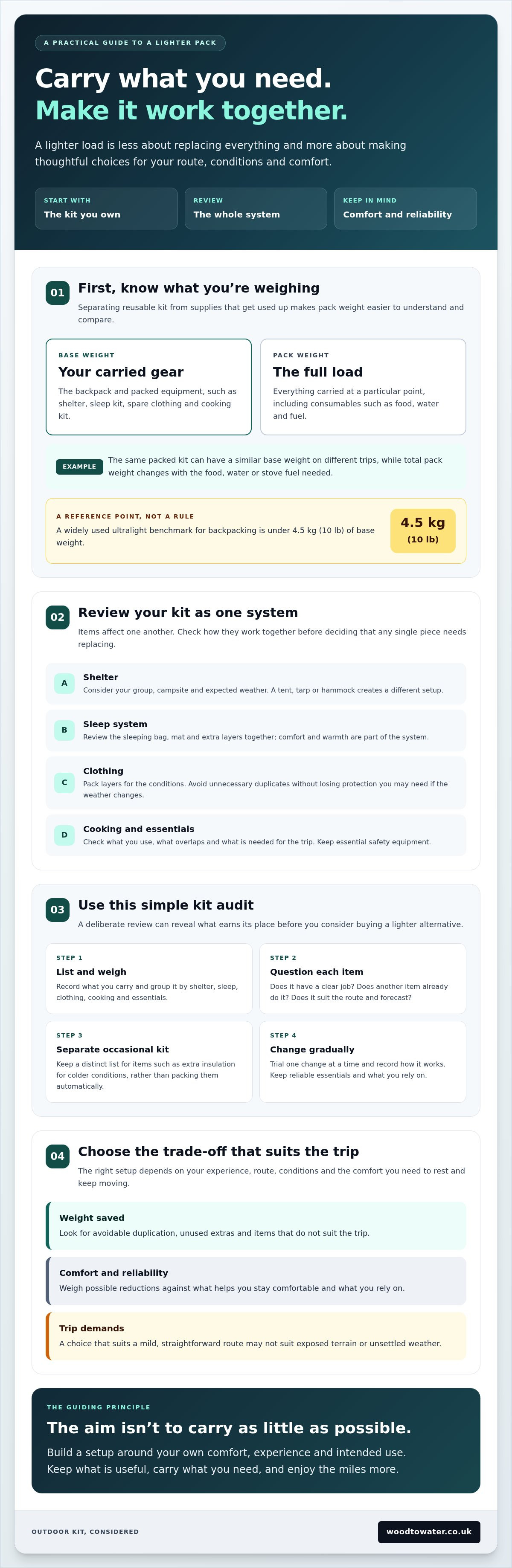
Ultralight gear is equipment chosen with weight in mind, while still meeting the needs of the person, trip and conditions. It isn’t a rule that every item must be the lightest available, or that one pack weight suits everyone. In backpacking, under 4.5 kg (10 lb) of base weight is a widely used ultralight benchmark, but it’s a reference point, not a requirement. The Ultralight backpacking overview offers more background on the term and its principles.
This approach can help day walkers who want a more comfortable load, campers who are carrying kit to a pitch, and backpackers travelling for several days. The useful question isn’t “Am I ultralight?” It’s “What can I carry more thoughtfully without losing something I rely on?”
Base weight, pack weight and consumables: what is the difference?
Base weight is the weight of your carried gear, excluding consumables: items used up during the trip, such as food, water and fuel. It normally includes the backpack and packed equipment such as shelter, sleep kit, spare clothing and cooking kit. Pack weight is the full load you carry at a particular point, including those consumables.
For example, imagine weighing the same packed kit before two trips. The base weight stays broadly the same, but the total pack weight changes if one trip needs more food, water or stove fuel. This distinction helps you identify whether the weight comes from reusable equipment or supplies that vary with your plans.
Does ultralight kit suit every outdoor trip?
Not in the same way. A short walk may call for a small day bag and the essentials for its route and weather. An overnight camp adds shelter and sleep equipment. A multi-day journey means carrying more supplies, so pack comfort and how well your kit works together become especially relevant.
Conditions matter, too. A lighter choice that feels fine on a mild, straightforward route may not be right for exposed terrain or unsettled weather. Consider your experience, the forecast, the route and the comfort you need to rest and keep moving. If you’re reviewing cooking equipment, the Fire Maple gear collection is one category to explore alongside your existing kit.
You can make changes gradually. Keep reliable essentials, weigh what you already own, and question whether each item earns its place for a particular trip. For instance, Wood To Water Outdoors offers TOAKS Titanium Cookware and versatile sleeping systems as examples of camping equipment; check current product information to see whether either suits your plans. Lighter isn’t automatically better. The aim is a load that feels manageable and still serves you well outdoors.
How to reduce pack weight across your outdoor gear system
A lighter pack usually comes from reviewing the whole system, not swapping every item for its lightest alternative. Start by weighing or recording what you already carry. Group it by shelter, sleep, clothing, cooking and essentials, then note what goes on every trip and what you pack for particular conditions. This makes repeated or bulky items easier to assess before you spend money on replacements.
Assess each item by its weight, purpose and the consequences of leaving it behind. Keep essential safety equipment. Instead, look for avoidable duplication, unused extras or items that don’t suit the trip. Small choices across several categories can add up, but there’s no need to assume a particular saving: your kit and requirements are unique.
Which parts of a pack are worth reviewing first?
Begin with the items you carry regularly, then look at the larger pieces that shape the rest of your setup. Check whether each item has a clear job, whether another item already does it, and whether it’s suitable for the route and forecast. Keep a separate list of occasional kit, such as extra insulation for colder conditions, so you can make deliberate choices rather than packing it automatically.
Where do shelter, sleep and cooking choices fit?
Shelter needs to suit your group, campsite and expected weather. A tent, tarp or hammock offers a different setup, so consider where you’ll sleep as well as how the shelter packs. If you’re comparing tent options for solo trips, explore one-person tents as one place to start, then check the details against your plans.
Your sleep system is more than a sleeping bag: the mat and any extra layers affect comfort and warmth, too. Review these together rather than choosing an item by weight alone. Clothing deserves the same joined-up check. Pack layers for the conditions and avoid carrying duplicates just because they’re familiar, but don’t leave out protection you may need if the weather changes.
For cooking, weigh the complete setup you’ll actually carry, including cookware and the stove or other cooking method. Choose a setup that suits your meals, group and trip length. Multifunctional gear can reduce duplication, but only if it works for its intended tasks and you’re comfortable using it. TOAKS Titanium Cookware is one example of a cookware option; compare its role and suitability with the rest of your cooking kit. For another perspective on pack choices, New York Magazine’s guide to best ultralight backpacks shows how equipment decisions vary.
There’s no need to replace a working kit all at once. Make one considered change, try it on a suitable trip, and note what improved or what you missed. That’s a practical way to make ultralight outdoor gear choices while protecting comfort, reliability and the essentials you depend on.
Ultralight outdoor gear trade-offs: weight, comfort and reliability
Choosing ultralight outdoor gear means weighing more than the number on a set of scales. A lighter option may be less comfortable for you, unfamiliar to use or unsuitable for the conditions you expect. Before changing anything, ask what the item does, how often you’ll use it and what you’d need to manage if it weren’t there.
Comfort and appropriate safety kit are part of a sound weight decision, not extras to discard for a lighter pack. Use this table to guide your checks. The potential benefit depends on your current kit, so compare actual items rather than assuming a particular saving.
| Kit to review | Potential weight benefit | Trade-off | Questions to ask |
|---|---|---|---|
| Shelter | Choosing a setup that suits the group and trip may avoid carrying unused capacity or extras. | A different shelter may change space, setup preferences or comfort. | Does it suit the route, campsite and expected weather? |
| Sleep system | Reviewing the sleep kit as a whole may reveal items that duplicate a purpose. | Removing a layer or changing equipment could affect rest and warmth. | Will I sleep comfortably in the conditions I expect? |
| Clothing | Editing duplicate or rarely used garments may reduce what you carry. | Fewer options may leave less flexibility if conditions change. | Does each layer have a clear role for this journey? |
| Cooking kit | A setup matched to your meals may avoid carrying unnecessary pieces. | A simpler arrangement may not suit your cooking needs or preferences. | Can I prepare the food I plan to bring with this setup? |
| Safety essentials | Look for appropriate lighter versions, rather than removing needed items. | Leaving essential equipment behind can leave you less prepared. | What might I need if the journey takes longer or conditions change? |
When is lighter gear worth the compromise?
Consider trip length, expected conditions and how often you’ll use the item. Check whether you know how to use and maintain an alternative, and whether it can be repaired if needed. If a trusted item works well and suits the journey, keeping it may be a better choice than replacing it simply to reduce weight. Try unfamiliar changes on an appropriate outing before relying on them for a demanding trip.
How can you avoid cutting useful or essential kit?
Separate optional comforts from equipment needed for your planned route and conditions. Don’t copy someone else’s kit list without checking the context: their experience, needs and journey may differ from yours. The National Park Service’s Ten Essentials offers a general safety-planning reference; adapt any checklist to your own trip rather than treating it as a universal UK packing list. For shelter ideas, you can also browse camping hammock options and consider whether that style fits your plans.
How to audit your current kit and make lighter choices gradually
You don’t need a new gear list to begin. A useful audit starts with what you already own, then tests whether each item earns its place on the trips you actually take. Make one change at a time, so you can tell whether it made your pack more manageable without creating a new problem.
A simple six-step kit audit
- List: Write down what you normally carry, including smaller items that are easy to overlook.
- Weigh: Record each item’s measured weight using the same scales, and note whether that figure includes its storage bag or accessories.
- Classify: Group items by purpose, such as shelter, sleep, clothing, cooking and safety. Mark how often you use each one and which trips need it.
- Question: Flag duplicate functions and items with no clear reason for being on that particular trip. Don’t remove something essential simply because it’s heavy.
- Compare: If considering an alternative, check its usefulness, fit for your needs and verified specifications. The lowest stated weight won’t tell you on its own whether it’s the right choice.
- Trial and review: Test unfamiliar equipment on a suitable, lower-consequence outing before relying on it for a demanding journey. Afterwards, record what worked, what you missed and whether you’d choose it again.
This is a learning process, not a substitute for planning your route and conditions. If an item is important to your safety or comfort, make sure any change still meets that need. Keep the parts of your kit that work; adjust gradually rather than replacing everything at once.
How should UK weather and trip plans affect your choices?
Rain, temperature, exposure and forecast uncertainty all influence what makes sense to carry. Match clothing layers and shelter to the journey, including where you’ll be and how exposed the route may feel. A setup that suits a sheltered overnight stop may not meet your needs on a longer, more exposed walk. Check the forecast as part of planning, but consider what you’d do if conditions differ from expectations.
For instance, compare the shelter options you already have against the place, group and conditions you’re preparing for, rather than choosing by weight alone. Explore camping tarps as one shelter category to consider, then assess whether that type of option suits your plans.
Keep a simple trip note alongside your ultralight outdoor gear audit: what you carried, what you used and what you’d change next time. That record helps you make informed decisions based on your own experience, not guesswork or someone else’s packing list.
Build an ultralight outdoor gear setup that works for you
A well-balanced setup isn’t defined by a single pack-weight target. It’s the kit that carries less unnecessary weight while still doing the jobs your trip requires. Your route, conditions, experience and personal comfort all matter. What feels manageable for a familiar overnight camp may not suit a longer journey or changeable weather.
Think in categories rather than copying a fixed packing list: shelter, sleep equipment, clothing, cooking kit and the essentials you need for the journey. Then consider how each choice fits with the others. A shelter may affect what you need for sleeping; your planned meals shape the cooking kit you’ll bring. A multifunctional item can be useful if it genuinely does the jobs you need, but it isn’t automatically the right choice just because it replaces something else.
What might a balanced lightweight setup include?
For shelter, you might consider a tent, tarp or hammock, depending on the trip and whether you have a suitable setup. The DD Frontline Hammock is one example of a hammock available from Wood To Water Outdoors; check its current product details and consider whether this option fits your plans. Pair your shelter choice with sleep equipment that suits the conditions, and clothing that gives you practical options for the expected weather.
For cooking, choose equipment around the meals you intend to make and how you prefer to prepare them. TOAKS Titanium Cookware is another example in the retailer’s range, but the right cookware depends on your own requirements. Check product information before comparing alternatives, and don’t assume a category or material alone tells you how well a particular item will fit your setup.
What is a sensible next step after reading?
Pick one system to review first, such as shelter or cooking, and look at the items you already own before deciding whether anything needs to change. Compare verified product details with your trip plans, comfort needs and experience. If you do try something different, choose an appropriate outing to see whether it works for you before relying on it for a more demanding journey.
The aim of ultralight outdoor gear is not to strip your pack of everything useful. It’s to make thoughtful choices that keep your load manageable without losing the comfort and function you value. If you’re ready to compare options, explore outdoor gear at Wood To Water Outdoors at your own pace.
Make your next pack lighter, one thoughtful choice at a time
A more comfortable load doesn’t require a complete kit overhaul or a strict weight target. The useful starting point is to understand what you carry, then focus on changes that suit your route, conditions and personal needs. Consider each item’s purpose alongside its weight, and keep the comfort and safety essentials your trip calls for.
That’s the practical heart of choosing ultralight outdoor gear: reduce what’s unnecessary, not what makes your setup work. Review one part of your kit, try a considered change on a suitable trip, and let your own experience guide what comes next.
Wood To Water Outdoors’ range includes the DD Frontline Hammock and TOAKS Titanium Cookware, examples to consider as part of a well-matched setup. Take a look at the wider range when you’re ready: explore practical outdoor gear at Wood To Water.
Start with what you already own. Small, informed choices can make the miles ahead more enjoyable.
Frequently Asked Questions
What is ultralight outdoor gear?
Ultralight outdoor gear is equipment selected with weight in mind, not a fixed category defined by one universal pack-weight limit. The aim is to carry useful, suitable kit while reducing items or features you don’t need for your journey. What feels ultralight depends on the trip, expected conditions and your own needs. Comfort, familiarity and appropriate preparation still matter; the lightest option isn’t automatically the best one.
How do I make my backpack lighter without buying new gear?
List your current kit and weigh each item, then look for duplicates or things you rarely use. Ask what each item contributes to the planned journey and whether it’s needed for the route or expected conditions. Try removing only items that aren’t useful for that trip, then review how the change felt afterwards. Don’t leave out equipment you need for safety or comfort simply to lower the load.
Is ultralight camping gear less durable?
Not necessarily; durability depends on the individual item, including its materials, construction, care and how you use it. Avoid assuming that all lightweight equipment is fragile, or that it will perform just like a heavier alternative. Check current product specifications and consider whether repairs are practical. Choose kit for your intended trips and experience, and test unfamiliar equipment appropriately before depending on it outdoors.
What is the difference between base weight and pack weight?
Base weight generally means your carried equipment before trip-dependent consumables are added. Pack weight usually refers to the complete load, including items such as food and water. Counting methods can vary, so state what you’ve included when comparing figures. Someone else’s published weight may not be directly comparable if their pack, clothing, equipment or consumables were counted differently. Compare like with like where possible.
Can beginners use ultralight outdoor gear?
Yes. Beginners can choose weight-conscious equipment without adopting a complete ultralight setup straight away. Learn what each item is for, then select kit that suits the planned journey and conditions. Try unfamiliar equipment on a suitable outing before relying on it for a more demanding trip. Comfort, appropriate preparation and sound decisions matter more than matching an experienced backpacker’s list or aiming for a particular pack weight.
How do I choose ultralight gear for wet UK conditions?
Start with your route, forecast, exposure and what could happen if equipment fails or becomes uncomfortable. Choose clothing and shelter for the conditions you expect, rather than weight alone, and retain suitable protection if the forecast changes. Check current product specifications before comparing options. Conditions vary between journeys, so don’t assume the same setup will suit every part of the country or every outing.
Is a hammock lighter than a tent for camping?
Not always. The comparison depends on the complete setup, including the shelter, suspension, insulation and any other components needed for the trip. Conditions and your own comfort matter too. A hammock may suit one outing but not another, so compare all the equipment you’d need with a tent setup. Check that your chosen option fits the planned journey before deciding based on shelter weight alone.
Should I replace all my outdoor gear to go ultralight?
No. Start by auditing the kit you already own and identify a clear reason before replacing anything. Familiar equipment may remain the right choice for some journeys, especially if it meets your needs and you know how to use it. If you consider an alternative, check its current specifications and suitability, then test it appropriately before relying on it outdoors. Gradual changes help you judge what genuinely works for you.