

UK Wild Camping and Hiking Tent Guide 2026
What if your heaviest burden on the trail wasn't the steep incline of a ridgeline, but the very shelter meant to protect you? We've all been there; huddled in a damp sleeping bag while the British rain tests every seam of a budget setup. It's frustrating when technical jargon like Hydrostatic Head makes choosing reliable tents feel like a chore instead of an exciting upgrade. You deserve a packable shelter that doesn't leave you fatigued before you've even reached your campsite.
We agree that a dry, comfortable night's sleep is the non-negotiable foundation of any successful wild camping trip. This guide will show you how to select the perfect lightweight shelter that balances portability with the rugged durability needed for our unpredictable climate. We'll explore the essential technical specs for 2026, compare the best 1-person and 2-person models, and help you gain total confidence in your gear's longevity. It's time to streamline your rucksack and find your new favourite spot amongst the peaks with a setup you can actually trust!
Key Takeaways
- Learn how to decode Hydrostatic Head and fabric Denier to find the sweet spot between weatherproofing and rucksack weight.
- Discover how to select lightweight tents that don't compromise on durability or packability for your next long-distance trail.
- Understand which shelter shapes, from streamlined tunnels to stable geodesic designs, best suit your specific camping environment.
- Master the art of pitching for the British weather by prioritising ventilation and correct wind orientation to avoid damp condensation.
- Explore our curated 2026 selection from expert brands like Highlander and DD Hammocks to ensure your gear lasts for years of adventure.
Understanding Tents: Why Your Shelter is Your Most Important Kit Choice
Your shelter is undoubtedly the most critical item in your pack. It serves as your primary defence against the elements and acts as the core of your mountain safety system. Throughout the history of tents, these structures have evolved from heavy, cumbersome canvas to the technical, lightweight systems we rely on today. In the British hills, a high-quality shelter is far more than just a place to sleep; it's a vital safety cell that protects you from hypothermia, exhaustion, and the relentless humidity of our climate.
Your choice of shelter directly dictates how you organise your entire rucksack. A bulky, poorly designed setup forces you to carry a much larger pack, which adds unnecessary weight and saps your energy during long, steep climbs. Modern lightweight designs allow for a far more streamlined load, leaving plenty of room for your cooking kit, food supplies, and essential warm layers. When your gear is compact and well-distributed, your movement feels more natural and your favourite trails become significantly more enjoyable.
The idea of a "one size fits all" shelter is a total myth. A model designed for a sheltered valley floor will likely struggle when faced with the buffeting winds of a high ridge or an exposed moorland plateau. Beyond the physical protection, there's a massive psychological benefit to having a secure, dry shelter whilst wild camping. There's nothing quite like the immense relief of zipped-up security when the clouds roll in and the visibility drops. It allows you to actually enjoy the wild environment rather than simply surviving the night.
Tents vs Hammocks and Tarps
Sometimes, a traditional tent isn't the best fit for your specific route or environment. If you're exploring dense forests with plenty of sturdy trees, camping hammocks are a fantastic alternative that keep you off the damp, uneven ground. For ultralight enthusiasts who prefer maximum airflow, camping tarps offer unmatched versatility and weight savings. While traditional tents provide a fully enclosed environment for peace of mind, these alternatives offer a much closer connection to the outdoors on specific terrain.
Determining Your Camping Style
Finding the right gear always starts with identifying your primary activity. If you're backpacking long distances over several days, you must prioritise weight and pack size above all else. Every extra gram feels twice as heavy after ten miles of trekking! Wild campers usually require stealthy colours to remain discreet and a design that's exceptionally quick to pitch in fading light. However, for a standard campsite holiday, you can ignore the scales and focus on internal head-height, porch space, and general comfort instead.
Key Technical Features: Hydrostatic Head, Weight, and Durability Explained
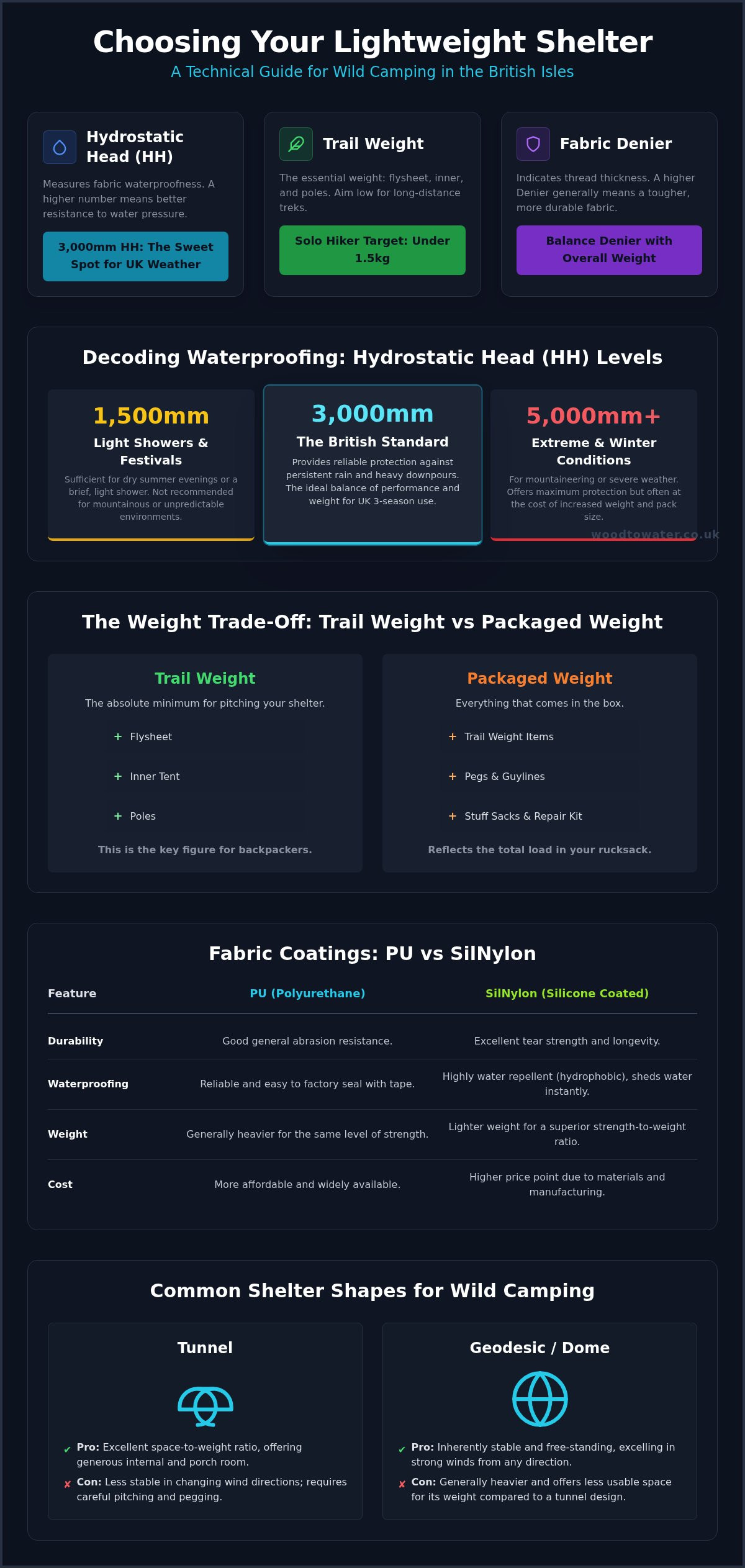
Understanding the technical specs of modern tents is essential for anyone heading into the British wild. It's not just about the price tag; it's about how the materials perform when a sudden storm rolls in. You'll often see the term Hydrostatic Head (HH) followed by a number. This rating tells you exactly how much water pressure the fabric can withstand before it begins to leak. While a 1,500mm rating might suffice for a summer festival, the unpredictable UK weather demands something much more robust.
Waterproofing and Weather Protection
A 3,000mm HH is widely considered the "sweet spot" for British rain. It provides a sturdy barrier against heavy downpours without adding unnecessary weight to your rucksack. However, the fabric is only half the story. You should always look for taped seams and reinforced pegging points, as these are the areas most likely to fail under stress. You'll also encounter different coatings like PU (Polyurethane) and SilNylon. PU is generally more affordable and easier to tape; whilst SilNylon offers superior strength and sheds water more effectively, it often comes with a higher price point.
Weight vs Liveability
When you're comparing different models, you must distinguish between "trail weight" and "packaged weight". Packaged weight includes every single peg, stuff sack, and repair kit. Trail weight is just the absolute essentials: the flysheet, inner, and poles. For a multi-day trek, most solo hikers aim for a trail weight under 1.5kg. If you're looking for the best balance of weight and performance, our range of 1-person models offers several technical options that won't weigh you down.
Don't fall into the trap of choosing the lightest option at the expense of all comfort. A tiny bit of extra internal height or a larger porch for your wet boots can transform your experience after a long day on the trail. Good campsite selection helps, but a cramped shelter makes for a very long night. We always recommend aluminium poles over fibreglass; they're lighter, stronger, and far more reliable in high winds. The trade-off for ultra-lightweight materials is often a thinner fabric, measured in Denier (D). A 15D fabric is incredibly light but requires much more care than a rugged 40D alternative. Finding the right balance ensures your gear lasts for seasons to come. If you're heading out with a partner, exploring our 2-man tents can provide that extra bit of "liveability" without doubling your load.
Comparing Tent Shapes and Sizes: From Solo Bivvies to Family Basecamps
Choosing the right architecture is just as important as the technical materials we discussed earlier. Tunnel tents are the go-to for long-distance hikers because they offer the best space-to-weight ratio. They provide a long, usable internal area, though they require a bit more care during pitching to ensure they're aligned with the wind. In contrast, dome and geodesic designs use crossing poles to create a self-supporting structure. These are the gold standard for camping safety in high-wind mountain environments; their multiple crossover points make them incredibly rigid against buffeting gusts.
Many experienced hikers now follow the "plus one" rule. Whilst a solo shelter is lighter, a 2-man tent provides the extra room needed to bring your rucksack and boots inside. This prevents your gear from getting damp in the porch and gives you space to move around without feeling cramped. Semi-geodesic designs offer a versatile middle ground for the UK hills, providing more stability than a tunnel but less weight than a full geodesic setup. They're a brilliant choice if you want one shelter that can handle everything from valley floors to higher moorland.
1-Man Tents: The Solo Adventurer’s Choice
Our 1-man tents collection focuses on those who value a tiny pack size above all else. Managing kit storage in a small footprint requires discipline, but modern designs often include clever internal pockets to keep your essentials organised. We've also noticed that "coffin-style" bivvy tents are making a comeback amongst minimalist campers. These low-profile structures are incredibly discreet and warm, making them perfect for fast-and-light missions where you only need a reliable place to crash after a long day.
Multi-Person and Family Lightweight Tents
When you're hiking in a pair or a small group, you can work smarter by splitting the load. One person carries the poles and pegs, whilst the other takes the flysheet and inner. This makes high-quality tents feel almost weightless on the trail! Look for models with dual entrances; having your own door means you won't have to climb over your partner for a midnight toilet break. Adequate headroom is also essential. Having enough space to sit up comfortably makes waiting out a British rainstorm a much more pleasant social experience.
Practical Considerations for the British Trail: Wind, Rain, and Condensation
Many hikers obsess over waterproof ratings but forget that moisture often comes from the inside. In the UK, ventilation is just as essential as the fabric's waterproof rating. If you block your vents to stay warm, you'll likely wake up in a damp sleeping bag regardless of how dry it is outside. Proper airflow is the only way to move moisture out of the shelter before it settles on your gear. Don't let a fear of the breeze trick you into sealing yourself in; a well-ventilated setup is always more comfortable.
Pitching for success starts with wind orientation. Always align your shelter so the narrowest or lowest profile faces the oncoming gusts. For tunnel tents, this usually means the rear of the structure. Over-tensioning the flysheet is a classic error that puts unnecessary strain on the seams and can actually pull the fabric away from the poles. This creates flat spots where water pools instead of shedding away. A sturdy groundsheet is also your first line of defence. It protects your sleeping gear from rising ground damp and provides a clean surface to organise your pack.
Managing Condensation in Wet Weather
Every time you breathe, you release moisture into the air. In a small, enclosed space, this warm vapour hits the cold flysheet and turns into liquid droplets. Double-wall tents use a breathable mesh or fabric inner to create a vital thermal gap; this allows air to circulate whilst keeping the damp flysheet away from your sleeping bag. To keep the porch area dry, try to store wet rucksacks and gaiters away from the inner door. This simple habit prevents moisture from transferring into your dry sleeping area during the night.
Pitching on Uneven UK Terrain
UK hills are rarely flat or forgiving. When choosing a site, avoid obvious bogs and dips where water naturally collects during a downpour. High ridges might offer spectacular views, but they leave you exposed to the full force of the wind. Invest in high-quality pegs for your kit; standard pins often bend or fail in rocky soil. We recommend carrying a mix of Y-stakes for soft ground and titanium pins for hard-packed earth. Most importantly, always practise pitching your new gear in the garden before your first trip. It's much easier to learn the quirks of your setup at home than in a gale at 2:00 AM! Ready to find your next shelter? Explore our full range of technical 1-man tents and prepare for your next adventure today.
The Wood To Water Selection: Top Lightweight Tents for 2026
At Wood To Water, we don't just look at lab-only specs. We curate our range based on how gear behaves in a soaked glen or on a windswept ridge. Our selection of technical tents prioritises real-world durability over fragile, record-breaking lightness. We know that a slightly reinforced floor is often better than a paper-thin version that tears on the first sharp stone. Every model in our inventory is there because it's earned its place through reliability and practical design.
Highlander provides fantastic entry-level performance for those starting their wild camping journey. Their designs are intuitive and stand up remarkably well to the British climate. For the bushcraft community, DD Hammocks remains the clear favourite. Their gear is built for stealth and forest environments, often featuring olive green tones that blend perfectly into the woodland canopy. To complete your setup, you'll want to pair your new shelter with one of our reliable camping gas stoves. Having a warm meal ready minutes after pitching makes a massive difference to your morale when the temperature drops.
Best for Solo Wild Camping
If you're heading out alone, you need a low-profile setup that stays out of sight. Our collection of lightweight camping tents focuses on discreet colours and fast-pitch designs. When you arrive at your chosen spot late and the light is fading, you want a shelter that goes up in minutes. This allows you to get out of the wind and into your sleeping bag without any fuss. These compact models offer the perfect balance of protection and portability for the solo minimalist.
Best for Multi-Day Hiking
For those tackling long-distance trails, every gram counts. We specialise in sub-2kg models that won't weigh down your rucksack over miles of technical terrain. Pack size is just as vital as weight; our curated tents are designed to fit comfortably inside 45L to 65L rucksacks. This leaves plenty of room for your food, water, and extra layers. Whether you're a seasoned pro or a first-time hiker, we've personally vetted every model to ensure it meets our high standards for comfort. Explore our full range of tents to find the perfect partner for your next big trek!
Gear Up for Your 2026 British Adventures
Choosing the right shelter is the difference between a restless night in the rain and waking up refreshed for the climb ahead. You now know that a 3,000mm Hydrostatic Head is the sweet spot for our climate; prioritising ventilation is just as vital as waterproofing. Whether you've settled on a stable geodesic design for the peaks or a discreet tunnel for woodland missions, the right tents should feel like a reliable extension of your kit rather than a burden in your rucksack.
At Wood To Water, we take the guesswork out of gear selection. Our experts have personally vetted over 90 technical tents to ensure they stand up to the unique demands of the British landscape. We've curated a range that balances real-world durability with the lightweight portability every hiker needs. With fast national delivery on all orders, your next upgrade is closer than you think. Shop our curated collection of lightweight camping tents today. We'll see you on the trail!
Frequently Asked Questions
What is the best tent colour for wild camping in the UK?
Olive green or dark earth tones are the best choices for wild camping in the UK. These colours allow your shelter to blend into the natural landscape, which is essential for low-profile pitching in moorland or forest environments. Whilst bright colours are better for emergency visibility in high mountaineering, most wild campers prefer to remain discreet. Our collection features several stealthy options from brands like DD Hammocks that are designed specifically for this purpose.
How do I stop my tent from leaking during a heavy British downpour?
Correct pitching is the most effective way to prevent leaks during heavy rain. You must ensure the flysheet is taut and not touching the inner tent, as this contact allows moisture to seep through. Regularly check that your taped seams are intact and consider applying a seam sealer if you notice any wear. Positioning your shelter away from natural dips where water pools will also protect the groundsheet from being overwhelmed by rising ground moisture.
Is a 1-man tent too small for someone with a large rucksack?
It depends on the specific design and the size of the porch area. Many modern 1-man tents include a dedicated vestibule where you can store a large rucksack and muddy boots outside the main sleeping compartment. If you prefer keeping all your gear inside for security, you might find a 1-man setup slightly cramped. In those cases, we often recommend the "plus one" rule, suggesting a lightweight 2-man model for the extra internal storage space.
What is a good Hydrostatic Head rating for a hiking tent?
A Hydrostatic Head (HH) rating of 3,000mm is the ideal standard for the British climate. This level of waterproofing provides a reliable barrier against sustained heavy rain without making the fabric excessively heavy for your pack. Whilst some ultra-lightweight models use 1,500mm or 2,000mm, these require much more careful site selection to avoid leaking under pressure. For total confidence during a multi-day trek, look for a rating that balances weight with robust weather protection.
Can I use a camping stove inside my tent porch?
You should never use a camping stove inside a fully enclosed porch due to the risk of carbon monoxide poisoning and fire. It's much safer to cook just outside the entrance or under a separate tarp. If you must use a stove like a Jetboil Flash in the porch during an emergency, ensure the door is fully open for maximum ventilation. Always keep the flame away from the fabric and never leave a lit stove unattended.
How do I clean and store my tent to make it last longer?
Always ensure your gear is completely dry before long-term storage to prevent mould and fabric degradation. Use a soft sponge and plain water to wipe away mud or salt spray; harsh detergents can damage the waterproof coatings. Instead of keeping it tightly compressed in a stuff sack, try storing it loosely in a large mesh bag or pillowcase. This allows the fibres to breathe and prevents permanent creases from forming in the technical fabrics.
What is the difference between a 3-season and 4-season tent?
A 3-season model is designed for use from spring through to autumn, prioritising ventilation and weight. These are perfect for most UK hiking trips where rain is more likely than heavy snow. A 4-season shelter is built with much stronger poles and heavier fabrics to withstand high winds and the weight of snow accumulation. These are essential for winter mountaineering but are often too heavy and poorly ventilated for casual summer wild camping adventures.
Do I really need a footprint for my lightweight tent?
Whilst not strictly essential, using a footprint is a smart way to extend the life of your gear. It provides an extra layer of protection against sharp stones, thorns, and general abrasion that can puncture thin, lightweight groundsheets. Footprints also help keep the bottom of your inner tents clean and dry, making the pack-up process much easier in the morning. For many hikers, the slight weight penalty is worth the added durability and moisture protection.
