

Top 2 Person Tents: Expert Advice for Comfortable Camping
Most "2-man" tents on the market are actually 1.5-man tents in disguise. It's a frustrating reality for many campers who find themselves cramped and damp after trustingly buying a 2 person tent that looked spacious in the showroom. You want gear that stands up to strong winds without weighing down your rucksack or leaving your expensive kit exposed to the elements. Here at Wood To Water Outdoors, we understand that confusion; we've spent years vetting equipment to ensure it survives unpredictable weather conditions.
In this guide, we'll help you cut through the technical jargon like Hydrostatic Head to find a shelter that perfectly balances weight, weather protection, and actual liveability. You deserve a dry, comfortable night's sleep and the confidence that your investment will last for many seasons to come. We're going to break down the essential features that turn a basic shelter into a reliable home away from home, ensuring your next outdoor adventure is defined by comfort rather than compromise. Whether you're wild camping or heading to a local site, we have the expert advice you need to choose wisely.
Key Takeaways
- Understand why a 2 person tent is the most versatile choice for UK adventures and how to navigate the "berth vs reality" gap to ensure you have enough room for your kit.
- Learn how to decode technical specifications like Hydrostatic Head to ensure your flysheet meets the 3,000mm baseline for reliable protection in the British climate.
- Discover how to categorise tents by activity, from lightweight trekking on the West Highland Way to robust basecamp setups, ensuring you balance pack weight with liveability.
- Master essential pitching techniques, including the "Outer-First" method, to keep your interior bone-dry whilst setting up during a typical UK downpour.
- Gain the confidence to choose high-quality, expert-vetted gear that offers better durability and long-term value than generic high-street alternatives.
Why the 2 Person Tent is the UK Camping Gold Standard
The 2 person tent is widely regarded as the "Goldilocks" of the camping world. It offers enough space for a duo to huddle together whilst remaining light enough for a solo hiker to carry across the moors. In the UK, where the weather can turn from sunshine to a sideways downpour in minutes, having that extra bit of internal room isn't just a luxury; it's a necessity for your sanity. Liveability is a term we use often at Wood To Water Outdoors. It describes how comfortable you feel when you're trapped inside for four hours waiting for a storm to pass. A good 2-man tent allows you to sit up properly, change your clothes without hitting the walls, and boil a kettle in the porch without feeling like the ceiling is closing in.
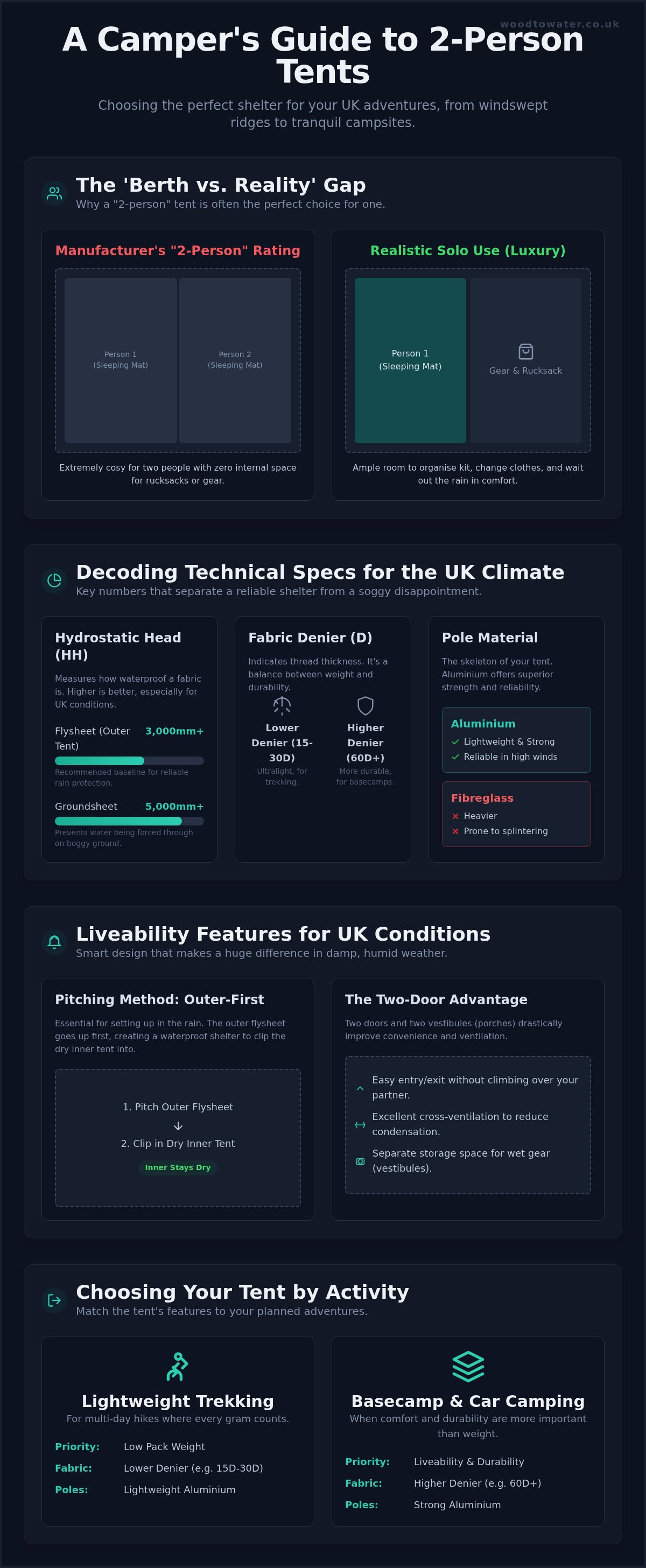
Many beginners fall into the "berth vs reality" trap. They assume a two-man tent will comfortably house two adults and their rucksacks. In reality, these ratings usually refer to how many standard sleeping mats can fit side-by-side with millimetres to spare. If you are sharing, it's a cosy test of friendship; if you are solo, it's absolute bliss. This versatility makes it the most popular choice for everything from weekend festivals to multi-day treks on the South Downs Way. It bridges the gap between the ultralight minimalist and the comfort-seeking car camper perfectly.
Solo Luxury vs. Shared Efficiency
Choosing a 2 person tent for solo use is a game-changer for gear-heavy activities like bushcraft or photography. You have ample room to spread out your sleeping bag, organise your rucksack, and even keep your boots under cover without feeling claustrophobic. For those sharing the space, efficiency becomes the priority. You'll need to be disciplined with your kit and realise that shoulder room is a precious commodity. We often suggest that if you're planning a long-term stay at a single campsite, you might prefer a larger berth; however, for those moving every day, the weight-to-space ratio of a 2-man model is unbeatable. It fits easily into most 60-litre rucksacks without leaving you too exhausted to enjoy the view at the end of the day.
The Two-Door Advantage
When you're sharing a small space, the layout of modern tent styles matters just as much as the floor area. Having two doors is a massive advantage for pairs. It means no more climbing over your partner for a midnight toilet break or a sunrise brew. Beyond convenience, dual doors significantly improve ventilation. The UK's high humidity often leads to condensation on the inner walls; opening both doors creates a cross-breeze that helps keep your sleeping bag dry. Each door usually leads to a vestibule. A vestibule is the covered area outside the main sleeping compartment where you can store wet gaiters and muddy boots. Keeping this damp kit out of the inner tent is the secret to a comfortable night in the British hills.
Decoding Technical Specs for the British Climate
Technical specifications can feel like a different language. However, understanding these numbers is the only way to ensure your 2 person tent doesn't turn into a bathtub during a Lake District downpour. Manufacturers often use impressive-sounding jargon to mask average performance. We've vetted hundreds of models to identify the features that actually matter when you're pitched on a windswept ridge. Beyond the fabric, look for aluminium poles. Whilst fibreglass is common in budget options, it's prone to splintering in high winds. Aluminium is lighter, stronger, and far more reliable for long-term use. You should also check for taped seams; these are heat-sealed strips that prevent water from seeping through the needle holes where the fabric was stitched together.
Understanding Hydrostatic Head and Waterproofing
Hydrostatic Head (HH) is a measurement of how waterproof a fabric is. A rating of 3,000mm means a 3-metre column of water could sit on the fabric before it starts to leak. For a UK flysheet, 3,000mm is our recommended baseline for peace of mind. Groundsheets require even higher ratings, typically 5,000mm or more. This is because your body weight creates pressure when you sit or kneel, which can force moisture through lower-rated fabrics on boggy UK moorlands. Don't confuse waterproof coatings with DWR (Durable Water Repellent) treatments. DWR is a chemical layer that makes water bead off the surface; it's essential for breathability but needs occasional refreshing to stay effective.
Denier and Fabric Weight
Denier (D) refers to the thickness of the individual threads used in the fabric. A lower denier, like 15D, results in an ultralight tent that's perfect for long-distance trekking where every gram counts. However, these thinner fabrics require more care to avoid punctures. If you prioritise durability over weight, a 70D "bombproof" polyester or nylon is a better shout. Most of our favourite models use Ripstop fabric. This is a weaving technique where a stronger thread is sewn in a grid pattern; it ensures that if you do get a small snag, the tear won't spread across the entire panel. If you're looking for gear that balances these technical specs perfectly, take a look at our 3FULGear collection for some of the best weight-to-performance ratios we've tested.
A "bathtub" groundsheet is another non-negotiable for the British climate. This design means the waterproof floor material wraps several inches up the sides of the tent before meeting the flysheet. It prevents splash-back and standing water from entering the inner compartment during heavy rain. It's these small construction details that separate a true mountain shelter from a fair-weather garden tent.
Choosing Your Tent by Activity
Not every 2 person tent is built for the same purpose. A model designed for a summer music festival will quickly succumb to the pressure of a multi-day trek in the Highlands. To find your perfect match, you need to be honest about your primary activity. Are you counting every gram to save your knees on a long-distance trail, or are you setting up a semi-permanent base amongst the trees for some serious bushcraft? Your choice of shelter determines not just your comfort, but your safety and success in the field. We've vetted our range to ensure that whether you are on a windswept ridge or in a sheltered forest, your gear won't let you down.
Backpacking and Ultralight Trekking
For those tackling trails like the West Highland Way, pack weight is the ultimate decider. Finding a 2 person tent that weighs under 2kg is the goal for most long-distance hikers. Modern materials have made this possible without sacrificing too much interior room. When you're on high, exposed ground, the shape of your tent is vital. Tunnel designs are fantastic for shedding weight and offer a great space-to-weight ratio; however, they require a solid pitch to handle side winds. If you expect more turbulent conditions, a semi-geodesic structure provides extra stability by using crossing poles to create a rigid frame. Many of our customers find that 3FULGear offers an exceptional balance of these features, providing professional-grade ultralight performance without the premium price tag often seen on the high street.
Bushcraft and Basecamping
If your adventures involve more stationary time in woodland environments, durability and "stealth" take priority over absolute weight. Wild campers and bushcrafters often prefer "forest green" or "coyote brown" colours. These shades allow you to blend into the landscape, maintaining a low profile and respecting the visual peace of the outdoors. In these scenarios, the synergy between a 2-man tent and camping tarps is a game-changer. By pitching a tarp over the entrance, you effectively double your living space. This creates a dry, communal "porch" where you can cook, manage your kit, or sit with a companion whilst the rain hammers down on the flysheet. This setup allows you to enjoy the "liveability" we mentioned earlier without being confined to your sleeping bag. It's about creating a functional camp that survives real-world use in the British elements.
Pitching and Maintenance: Surviving the UK Elements
Pitching a 2 person tent in a British gale is a skill every camper needs to master. It isn't just about speed; it's about protecting your gear from structural failure. Condensation is the silent enemy on damp nights. Even the best ventilated tents struggle when the air is still and saturated. To combat this, always leave your vents open, even if it's cold. You need that airflow to carry away the moisture from your breath. Without it, you'll wake up to a "rain" of droplets inside your sleeping compartment. The "Inner-First" vs "Outer-First" debate is also a major factor in the UK. We generally recommend outer-first or "all-in-one" pitching for our climate. It keeps your sanctuary bone-dry whilst you wrestle with the pegs in a downpour.
Pitching for Wind and Rain
Orientation is everything. If you're using a tunnel-style 2 person tent, you must point the "tail" or the lowest end of the tent into the wind to minimise the surface area the gusts can hit. Never skip the guy lines. Even on a calm evening, a sudden 2 a.m. squall can snap a pole if the fabric isn't properly tensioned. Whilst natural windbreaks like stone walls or dense hedges are tempting, always ensure you're respecting "Leave No Trace" principles. Don't disturb local ecosystems or move historic stones just for a slightly better night's sleep. Use the landscape's natural dips and hollows instead.
The Golden Rule of Drying
Your trip doesn't end when you get home. It ends when your tent is bone-dry. Storing a damp tent for more than 24 hours is a recipe for disaster; mould and mildew will eat through the waterproof coatings and leave a permanent stench. Hang it over a banister or pitch it in the garden as soon as you return. Use a soft sponge and plain water to clean mud off the groundsheet and zips. Grit in a zip is the most common cause of failure, so keep them clear. If you notice water has stopped beading on the flysheet, it's time to apply a new DWR treatment to restore that factory-fresh performance.
Taking care of your kit ensures it will take care of you when the weather turns. Ready to put these tips into practice? Explore our curated range of 2 person tents and find a shelter built for the reality of British camping.
The Wood To Water Selection: Performance Meets Value
Finding the right balance between cost and capability is the biggest challenge when buying outdoor gear. We've all seen the generic tents sold in high-street shops that look fantastic in a glossy brochure but fail at the first sign of a Pennine gale. At Wood To Water, we take a different approach. We are fellow enthusiasts who spend our weekends in the same hills and woodlands as you. This means we only stock gear that we've personally vetted and would be happy to use ourselves. Every 2 person tent in our inventory has been chosen because it offers a genuine advantage in the field, whether that's through innovative design or superior material choice. We don't just sell kit; we curate a selection that we know survives real-world use.
Our philosophy is built on the idea that professional-grade performance shouldn't be reserved for those with unlimited budgets. We look for brands that prioritise functional reliability over expensive marketing campaigns. This "hands-on" vetting process ensures that you aren't paying for a logo, but for the quality of the stitching, the strength of the poles, and the reliability of the waterproofing. By focusing on specialist manufacturers, we can offer equipment that often outperforms mass-market alternatives in weight-to-space ratios and long-term durability. It's about giving you the confidence to head out into the British elements knowing your sanctuary is up to the task.
While we focus on portable shelters for your adventures, if you are looking to create a more permanent sanctuary in your own garden, you can check out Simply Saunas for expert advice on bespoke wellness installations.
Innovation with 3FULGear and Onewind
We've seen a significant shift towards innovative, specialist brands that are redefining what campers can expect for their money. 3FULGear has quickly become a cult favourite amongst UK ultralight trekkers for exactly this reason. They specialise in using premium materials like sil-nylon; this silicone-coated nylon is lighter and stronger than traditional polyester. It offers incredible water-shedding capabilities whilst remaining remarkably packable for those counting every gram. Similarly, Onewind Outdoors provides fantastic versatility for those who prefer modular camping setups. These brands prove that high-end technical specifications, once only found in the most expensive elite gear, are now accessible to everyone. They bridge the gap between minimalist trekking and robust bushcraft perfectly.
Ready for Your Next Adventure?
Choosing the right 2 person tent is a long-term investment in your comfort and happiness outdoors. There's no substitute for the peace of mind that comes from knowing your shelter will keep you dry through a stormy night. Whether you're planning a solo mission to the peaks or a shared trip to the coast, our 2-man tents collection is fully stocked for the 2026 season with models we trust. If you're still unsure which technical specs fit your specific hobby, our UK-based team is always on hand to provide personalised gear advice. We're here to help you prepare for your next British adventure with confidence and the right equipment for the job. If your plans include time in the water, Ocean Motion Wear offers performance swimwear inspired by the very environments you're exploring.
Gear Up for Your Next British Escape
Choosing the right 2 person tent is about more than just finding a place to sleep; it's about investing in your comfort and safety across the unpredictable British landscape. We've explored how technical specs like a 3,000mm Hydrostatic Head and durable aluminium poles provide the essential baseline for security in a storm. You now know how to balance ultralight pack weight for long-distance treks with the stealth and liveability required for a successful bushcraft camp. By prioritising expert-vetted gear and dedicated post-trip maintenance, you'll ensure your shelter remains a reliable companion for many seasons of exploration.
At Wood To Water, we take pride in being fellow enthusiasts who only stock gear that survives real-world use. Our passionate UK-based customer support team is always ready to help you find the perfect setup for your specific needs. Plus, you can enjoy free UK delivery on orders over £80. Explore our curated range of 2-man tents for your next expedition and prepare to see the wild in total comfort. The hills are waiting; make sure you have the right roof over your head.
Frequently Asked Questions
Is a 2-man tent actually big enough for two people?
Technically yes, but it is often a snug fit for two adults. Most manufacturers calculate berth based on standard sleeping mats placed side-by-side with very little room for rucksacks inside. If you are sharing, you'll likely need to store your kit in the vestibules. Many pairs who value extra liveability during a wet weekend actually prefer a 3-man model for the added shoulder room.
What is the best tent colour for wild camping in the UK?
Forest green, olive, and coyote brown are the best choices for blending into the UK landscape. These earthy tones are essential for wild camping as they minimise your visual impact on the environment and keep your camp discreet. Whilst bright colours like orange or yellow are better for visibility in emergency mountain situations, they tend to stand out too much in the dales and woodlands of Britain.
How much should a 2-person backpacking tent weigh?
For long-distance trekking, you should look for a 2 person tent that weighs between 1.5kg and 2kg. Whilst ultralight models can weigh as little as 1kg, they often sacrifice durability or interior space. If you are split-carrying the weight with a partner, a slightly heavier 2.2kg model offers much better durability and internal height for those long evenings waiting out the rain.
Can I use a 2-person tent in the winter?
You can use a 2-person model in winter if it is specifically designed for the task. Most standard tents are 3-season, meaning they lack the structural rigidity to handle heavy snow loads or the freezing gales found on high ground. For true winter expeditions, you'll need a 4-season tent with a more robust pole structure and a flysheet that sits flush to the ground to block wind-blown snow.
What does "3-season" vs "4-season" tent mean?
The difference lies in the environmental extremes the tent can survive. A 3-season tent is designed for spring through to autumn, focusing on breathability and weight reduction. A 4-season tent is a specialist tool for winter. It features thicker fabrics, more crossing poles for stability, and fewer mesh panels to trap as much warmth as possible inside during sub-zero temperatures.
How do I stop condensation in my 2-man tent?
Maximising airflow is the only way to effectively reduce condensation. You should keep all vents fully open, even if it feels chilly outside. Condensation occurs when your warm breath hits the cold inner surface of the flysheet, so creating a cross-breeze is vital. Try to pitch your tent away from water sources or hollows where damp, heavy air tends to settle overnight.
What is a good Hydrostatic Head rating for UK rain?
A minimum rating of 3,000mm for the flysheet is the standard for peace of mind in the UK. This level of waterproofing handles heavy downpours and the pressure of wind-driven rain effectively. For the groundsheet, aim for 5,000mm or higher. This prevents wicking, where moisture is forced through the fabric by the pressure of your body weight when you are sitting or kneeling on damp ground.
Should I buy a footprint for my 2-person tent?
Investing in a footprint is a wise move to protect your groundsheet. It acts as an essential barrier between your expensive groundsheet and the abrasive reality of British campsites. By protecting the fabric from sharp stones, thorns, and mud, you significantly extend the lifespan of your 2 person tent. It also makes packing up much easier, as the footprint takes the brunt of the dirt instead of your tent floor.