

Snugpak Ionosphere vs Alpkit Hunka: Which Shelter Suits Your Trip?
Snugpak Ionosphere vs Alpkit Hunka: Which Shelter Suits Your Trip?
The lighter shelter isn’t automatically the better choice. In the snugpak ionosphere vs alpkit hunka bivy tent comparison, you’re weighing a hooped shelter against a bivvy bag, not two versions of the same thing. That difference affects how much space you have, how the shelter is set up and how comfortable you feel overnight.
If similar search results have left you unsure which suits your trip, start by thinking about the sleeping setup you prefer. The Hunka prioritises a low carry weight, while the Ionosphere’s tent-style structure gives you more room around your sleeping bag. Neither is a universal winner. Your conditions, comfort preferences and the rest of your sleep system should guide the choice.
This guide compares shelter types, specifications, protection and sleeping setups, then considers practical trade-offs such as pack weight and pitching in wet weather. You’ll see where the Hunka’s 330g standard weight may suit a minimal setup, and what the Ionosphere’s 1.2kg trail weight brings in return. Use the checks below to decide which format better fits your trip.
Key Takeaways
- Check the exact product version before comparing specifications, so dimensions, packed size and included components match the shelter you’re considering.
- The snugpak ionosphere vs alpkit hunka bivy tent comparison is most useful when you assess how each shelter fits your preferred sleeping setup, not just its waterproof rating.
- Consider how you’ll manage pitching in wet weather, ventilation and condensation before choosing a shelter for exposed or unsettled conditions.
- Use your trip conditions, comfort preferences and existing sleep system to decide whether a bivvy-style setup is practical for you.
- For an enclosed tent-style option, compare suitable one-person tents by their verified specifications and intended use.
Snugpak Ionosphere vs Alpkit Hunka: Why These Shelters Are Not Like-for-Like
The Snugpak Ionosphere and Alpkit Hunka suit different shelter systems. The Ionosphere is a one-person, hooped tent with a mesh inner, waterproof flysheet and groundsheet. The Hunka is a bivvy bag that covers your sleeping bag rather than creating a tent-like space around you. That’s the key distinction in any snugpak ionosphere vs alpkit hunka bivy tent comparison.
A bivvy bag is part of a sleep system, not a direct substitute for every feature of a tent. Your comfort depends on how it works with your sleeping bag, mat and chosen pitch site. If you’re comfortable with a close-fitting setup, a bivvy can suit a minimalist approach. If you want a separate inner space around you, the Ionosphere’s structure is the more relevant option.
What kind of shelter is the Snugpak Ionosphere?
Snugpak describes the current Ionosphere IX as a one-person tent. Its internal sleeping area measures 240cm long by 90cm wide, with a two-pole structure supporting the inner and fly. This creates space between the sleeper and the outer fabric, unlike a simple bivvy bag. Check the current manufacturer listing for the precise version and included components, as dimensions and specifications can change.
What kind of shelter is the Alpkit Hunka?
Alpkit describes the Hunka as a bivvy bag. The standard version measures 215cm long, with a shoulder width of 80cm tapering to 50cm at the feet. An XL version is also listed, so check which size you’re comparing. A bivvy bag goes over your sleeping bag, with your mat completing the sleep setup. For a general explanation of the category, see this overview of the bivouac shelter.
Don’t assume a bivvy bag includes tent poles, a separate inner or a groundsheet. Check the precise product listing to see what comes with it and whether your planned setup needs additional items. Apply the same version check to the Ionosphere. For tent-style alternatives, browse the retailer’s one-person tents category. Availability of either comparison product isn’t confirmed.
Choose by the sleeping experience you want, not by comparing headline weights as though the shelters do the same job. The Ionosphere provides a supported tent structure; the Hunka keeps the setup closer to the ground and to your sleeping bag. Your conditions, sleep kit and comfort with that arrangement all matter.
Compare Ionosphere and Hunka Specifications Without Guesswork
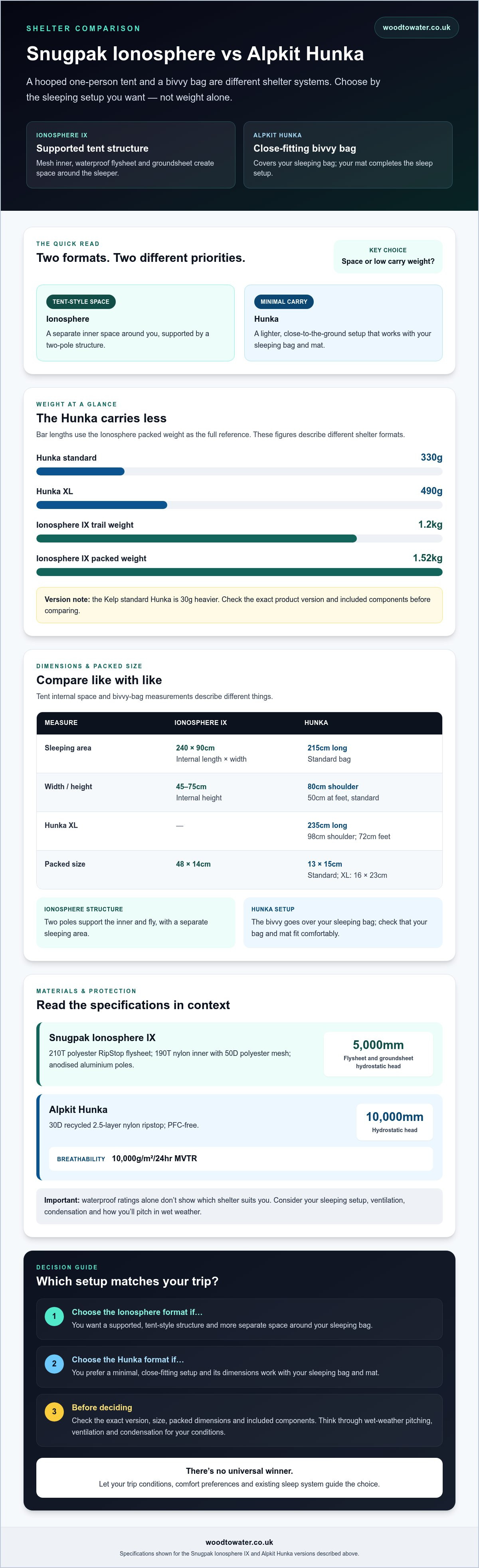
This snugpak ionosphere vs alpkit hunka bivy tent comparison uses the current Snugpak Ionosphere IX and Alpkit Hunka specifications for the standard and XL sizes. Figures are manufacturer-stated. Where measurements describe different things, they’re labelled rather than treated as directly equivalent.
| Specification | Snugpak Ionosphere IX | Alpkit Hunka |
|---|---|---|
| Shelter type | Hooped one-person tent | Bivvy bag |
| Weight | Trail weight: 1.2kg; packed weight: 1.52kg | Standard: 330g; XL: 490g. Kelp standard version is 30g heavier. |
| Packed size | 48 × 14cm | Standard: 13 × 15cm; XL: 16 × 23cm |
| Sleeping dimensions | Internal: 240cm long × 90cm wide; height 45-75cm | Standard: 215cm long, 80cm shoulder width, 50cm foot width. XL: 235cm long, 98cm shoulder width, 72cm foot width. |
| Materials | 210T polyester RipStop flysheet; 190T nylon inner with 50D polyester mesh; anodised aluminium poles | 30D recycled 2.5-layer nylon ripstop, PFC-free |
| Waterproof information | Flysheet and groundsheet: 5,000mm hydrostatic head | 10,000mm hydrostatic head; breathability: 10,000g/m²/24hr MVTR |
Which verified specifications matter most?
Start with the sleeping area, but note that these are not equivalent measurements. The Ionosphere figures describe its internal tent space, while the Hunka measurements describe the bag’s length and widths at the shoulders and feet. Check that your sleeping bag and mat fit comfortably, particularly if you’re considering the standard Hunka rather than XL.
Weight needs context, too. The Ionosphere’s 1.2kg trail weight includes its fly, poles and inner, while its packed weight is 1.52kg. Compare like with like, and check that the Hunka figure matches the size and colour you intend to use. A lower weight alone can’t tell you which setup is right for your trip.
How to read the comparison table fairly
Hydrostatic-head and breathability figures are stated product specifications, not a guarantee of comfort in every condition. For additional real-world context, read this Alpkit Hunka bivy bag review. The clearest distinction remains structural: the Ionosphere is a tent with a separate inner and poles; the Hunka is a bivvy bag. Check current manufacturer details before buying, as versions and included components may change. If you’re weighing up other enclosed options, browse the retailer’s one-person tents.
Does the Hunka Replace a Tent? Compare Comfort, Exposure and Trade-offs
Not on a like-for-like basis. The Hunka can form part of a minimalist sleeping setup, but it doesn’t create the separate, supported space of a tent. In this snugpak ionosphere vs alpkit hunka bivy tent comparison, the practical choice is between an enclosed sleeping area and a closer, bivvy-style arrangement, not simply between two weights.
The Ionosphere’s poles hold its inner and fly away from the sleeper, while the Hunka is a bivvy bag used over a sleeping bag. That affects how enclosed each setup feels and how much room there is around your sleep kit. Neither design guarantees a particular level of comfort. Your sleeping bag, mat, fit and pitch site all play a part.
When might an enclosed tent suit the trip better?
If you prefer a defined space around you, the Ionosphere’s inner tent and supported structure may better match your expectations than a bivvy bag. Its inner-first pitch is worth considering in changeable weather: the mesh inner is erected before the fly goes over it, so the inner can get wet if you’re pitching in rain. Think about likely conditions when you arrive as well as how long you’ll be out.
Check the internal dimensions against your height, sleeping bag and mat before relying on the tent for a comfortable night. A stated floor width doesn’t tell you how much room you’ll feel you have once your kit is inside. If you tend to feel confined, try the layout before committing to a longer trip.
When might a bivvy-bag setup make sense?
A bivvy bag may suit someone who values a compact, minimal shelter and is comfortable sleeping close to their kit. The Hunka doesn’t offer the Ionosphere’s pole-supported separation from the sleeper, however. A bivvy setup can feel more exposed, and moisture management matters. Follow the manufacturer’s guidance on ventilation and use rather than assuming a waterproof rating alone tells you how it will feel overnight.
Before heading out, try the complete setup in a safe, familiar place. Check that the bag fits over your sleeping bag, your mat works beneath it, and you can manage the opening and ventilation as intended. Consider the forecast and pitch site, too. Weather suitability depends on conditions, product limits and where you camp, so don’t treat either shelter as universally warmer, safer or more comfortable.
Choose Between the Snugpak Ionosphere and Alpkit Hunka by Trip Scenario
Choose the sleeping setup you want, then check whether it suits the trip. The snugpak ionosphere vs alpkit hunka bivy tent comparison comes down to a practical choice: do you want a supported, enclosed sleeping space, or are you happy with a more minimal bivvy-style arrangement? Let expected conditions, your experience and your full sleep system shape the answer.
Questions to ask before choosing your shelter
- How enclosed do you want to feel? If you prefer a separate inner around your sleeping area, the Ionosphere’s tent structure is the closer fit. If you’re comfortable sleeping in a bivvy bag without that tent-style space, consider the Hunka.
- Does the product suit the conditions you expect? Check the latest manufacturer guidance for the precise version against your planned weather and campsite. Don’t treat a waterproof rating as a promise of comfort in every situation.
- Can you set it up confidently? Consider the pitch process, how familiar you are with it and whether you can manage it at the end of a long day. Practise before relying on either shelter overnight.
- Will it work with your whole pack? Account for the shelter alongside your sleeping bag, mat and other essentials, rather than judging the choice on shelter weight alone.
As a simple guide, lean towards the Ionosphere if an enclosed, supported sleeping area matters most. Consider the Hunka if you prefer a minimal bivvy setup and have checked that its fit and use match your sleep kit and comfort level. Neither is an automatic choice for poor weather. Base that decision on current product guidance, the forecast and your site.
How the rest of your camping kit affects the choice
Your sleeping bag and mat are part of the shelter decision. Check how they fit together, whether the bag fits inside or under the shelter as intended, and whether the mat suits the surface and conditions you expect. Lay out the full arrangement at home first. A setup that feels cramped or awkward there is unlikely to feel easier when you’re tired outdoors.
Use a camping checklist as a packing prompt, and remember that a tarp is a separate shelter-system consideration, not an assumed Hunka component. If you’re leaning towards a tent-style setup, explore the retailer’s one-person tents to compare relevant alternatives. Check current specifications and availability before choosing a particular model.
Final Verdict: Make the Ionosphere vs Hunka Choice With Confidence
There’s no universal winner in the snugpak ionosphere vs alpkit hunka bivy tent comparison. Choose the Ionosphere if you want a tent-style shelter with a supported inner space. Choose the Hunka if you’re comfortable with a more minimal bivvy-bag setup and its closer fit around your sleep system. The right choice is the one that matches your preferred level of enclosure, planned conditions and experience using that shelter type.
Before deciding, check the latest manufacturer information for the exact product version you’re considering. Details such as size, weight, materials and included components can vary between versions or change over time. Confirm them directly with Snugpak or Alpkit, and follow the manufacturer’s guidance when using the shelter.
A quick decision checklist before you buy
- Verify the model: Make sure you’re comparing the Ionosphere IX with the correct Hunka size, standard or XL, and check current specifications.
- Match the shelter to your preference: Decide whether you want a supported, enclosed sleeping area or are happy with a bivvy bag around your sleep kit.
- Check the fit: Compare the stated dimensions with your height, sleeping bag and mat. Think about the space you’ll need to settle in comfortably.
- Review the conditions: Check manufacturer guidance against your planned weather and campsite. A specification alone can’t account for every site or situation.
- Practise your setup: Try pitching or arranging the complete sleep system somewhere familiar before relying on it overnight.
Where to explore suitable shelter options
If you’ve decided a tent-style shelter suits you better, take a look at the retailer’s one-person tents for relevant alternatives. You can also use a camping checklist when planning the rest of your kit, including the sleep system and any separate shelter items you intend to carry.
Wood To Water Outdoors offers camping, hiking and bushcraft equipment, but availability of the Ionosphere and Hunka isn’t confirmed here. Browse the relevant shelter category and check current product details before making your choice.
Choose the Shelter That Fits Your Next Trip
The key takeaway from this snugpak ionosphere vs alpkit hunka bivy tent comparison is that these shelters suit different preferences. The Ionosphere is a supported, tent-style option for sleepers who want an enclosed space; the Hunka is a bivvy bag for a more minimal setup. Neither is the automatic winner. Check the exact version, current specifications and manufacturer guidance, then consider your planned conditions, sleep system and comfort with the setup.
If you’d like to compare tent-style alternatives, Wood To Water Outdoors is a UK retailer specialising in camping, hiking and bushcraft equipment. Explore relevant shelter options, and use the retailer’s customer service team and expert gear reviews to inform your wider gear research. Availability of the Ionosphere and Hunka isn’t confirmed, so check product details before making plans.
Explore camping shelter options at Wood To Water Outdoors, then choose a setup that feels right for your trip. A little preparation can help you feel more confident about your next night outdoors.
Frequently Asked Questions
Is the Snugpak Ionosphere better than the Alpkit Hunka?
Neither is universally better; they’re different shelter types. The Ionosphere IX is a hooped tent with a supported inner space, while the Hunka is a bivvy bag. Your preference for enclosure, expected conditions and complete sleep system should guide the choice. For a fair snugpak ionosphere vs alpkit hunka bivy tent comparison, match the exact versions and compare their verified specifications. Check current guidance from Snugpak and Alpkit before deciding.
Can the Alpkit Hunka replace a tent?
Not for every camper or trip. A bivvy bag can be part of a minimal sleep setup, but it doesn’t provide the same tent-style structure or space. Whether the Hunka works for you depends on your comfort with a close-fitting shelter, ventilation, conditions and how it works with your sleeping bag and mat. Confirm the Hunka’s intended role and current use guidance directly with Alpkit before relying on it overnight.
What is the difference between a bivvy bag and a tent?
A bivvy bag is a covering used around a sleeper and their sleep system; a tent is a shelter structure that creates an enclosed space. Designs vary, so check each product’s description rather than assuming all bivvies or tents work alike. Compare usable dimensions, materials and stated weather protection for the precise models. Your preference for enclosure, comfort and the conditions you expect will help determine which format suits your trip.
Which is lighter, the Snugpak Ionosphere or Alpkit Hunka?
Check the exact versions and weight definitions before comparing them. A tent’s trail weight may include its fly, poles and inner, while another listed figure may describe a different configuration. Include any components needed to use each shelter as intended. Even a reliable weight comparison won’t decide the choice on its own: consider usable dimensions, shelter function, packed size and how the product fits with your full sleep system.
Is the Alpkit Hunka suitable for wet weather?
Check Alpkit’s current Hunka specification and guidance rather than relying on the product name or a waterproof rating alone. The listed current specification gives a 10,000mm hydrostatic head, but that figure doesn’t guarantee comfort in every situation. Follow the manufacturer’s advice on ventilation and limitations, and consider the forecast, pitch site and rest of your sleep system. Test your complete setup safely before depending on it for an overnight trip.
How do I choose between a one-person tent and a bivvy bag?
Start with the sleeping experience you want: a more enclosed, supported space or a minimal setup close around your sleep system. Then compare verified weight, packed size, dimensions, setup requirements and manufacturer weather guidance for the specific products. Think about your conditions, experience, sleeping bag and mat together. This snugpak ionosphere vs alpkit hunka bivy tent comparison is best decided by your trip needs, not by assuming one shelter category is always superior.
What should I check before buying the Snugpak Ionosphere or Alpkit Hunka?
Confirm the exact model or size, then check current manufacturer specifications for dimensions, packed weight, materials, included components and stated weather guidance. Make sure you understand what each measurement includes, as figures may use different methods or configurations. Check that the shelter suits your sleeping bag, mat and planned conditions. Don’t rely on an old listing or assumption; if a detail is unclear, ask the manufacturer before buying or using the shelter.