

Sleeping Mats and Pillows: How to Choose the Right Camping Sleep Setup
The lightest sleep setup isn’t always the best one for a good night outdoors. Sleeping mats and pillows affect more than comfort: the right combination can help you stay warm and rested, whilst the wrong choice may leave you cold, cramped or wishing you’d packed a pillow. Choosing between inflatable, foam and other mat styles can feel confusing, especially when every extra item has to earn its place in your pack.
Before deciding what to bring, weigh up comfort, insulation, packed size and weight. This guide shows you how to compare those practical features and choose a setup to suit your trip, sleeping position and expected conditions. You’ll learn why mat insulation matters alongside your sleeping bag, when a separate camping pillow may be worth packing, and how to avoid common comfort and packing mistakes.
Key Takeaways
- Match your sleep setup to the ground, your usual sleeping position and the kind of trip you’re planning.
- Compare sleeping mats and pillows by comfort, insulation and packed size, rather than choosing on weight or compactness alone.
- For car camping, backpacking and comfort-focused trips, the right balance of space and packability can look different.
- Decide whether a separate pillow suits your sleep style, or whether an integrated option better fits your setup.
- Use a pre-purchase checklist to spot overlooked needs before choosing a mat and pillow combination.
Sleeping mats and pillows: build a comfortable camping sleep system
A camping sleep system is the mat and pillow you use to rest outdoors. Each has a different job: the mat cushions your body and creates a layer between you and the ground, whilst the pillow supports your head and neck. Chosen together, sleeping mats and pillows can make a night outside more comfortable and help manage heat loss to the ground.
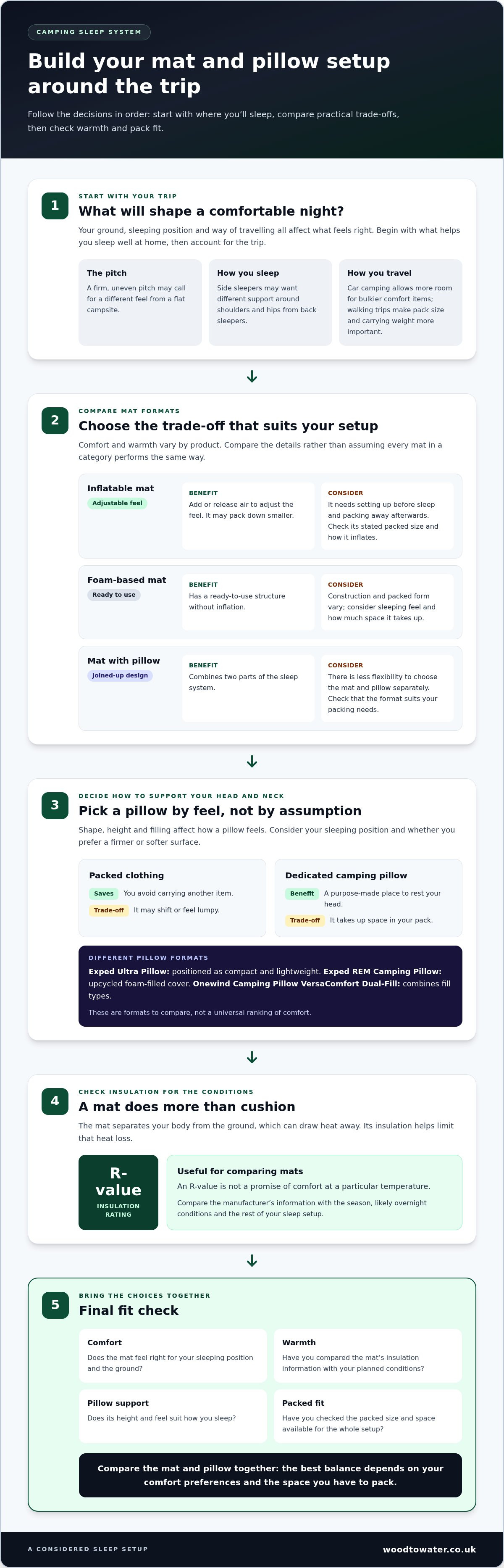
Your ideal setup depends on where you sleep and how you travel. A firm, uneven pitch may call for a different feel from a flat campsite, and side sleepers may want different support around their shoulders and hips from back sleepers. Car camping gives you more room for bulkier comfort items; on a walking trip, packed size and carrying weight may matter more. Start with what helps you sleep well at home, then consider how the trip changes those needs.
What does a sleeping mat do beyond cushioning?
A mat isn’t just a softer surface. It separates your body from the ground, which can draw heat away, and its insulation helps limit that heat loss. An insulation rating, often called an R-value, is useful for comparing mats, but it isn’t a promise of comfort at a particular temperature. For a basic overview of what a sleeping pad is and the main types, see Wikipedia’s guide.
Compare the manufacturer’s information with the trips you have planned. Consider the season, likely overnight conditions and the rest of your sleep setup. A mat that feels comfortable in mild weather may not provide the insulation you need on a colder outing.
Does a camping pillow make a difference?
It can. A pillow’s shape and height affect how your head and neck rest, whilst its filling influences the feel. Consider whether you sleep on your side or back and whether you prefer a firmer or softer surface. Aim for support that feels familiar, rather than simply adding extra height.
Packed clothing can work as an improvised pillow and saves carrying another item, but it may shift or feel lumpy. A dedicated camping pillow gives you a purpose-made place to rest your head, though it takes up space. The Exped REM Camping Pillow, for example, has an upcycled foam-filled cover. Choose according to your comfort preferences and how much room you have to pack.
Compare sleeping mat and pillow types by comfort, warmth and packed size
Different designs solve different problems. An inflatable mat can be adjusted by adding or releasing air, while a foam-based mat has a ready-to-use structure. Combined designs bring the mat and pillow together, which may simplify packing but won’t suit every sleeper. Comfort and warmth depend on the individual product, so compare its details rather than assuming every product in a category performs the same way. REI’s guide to how to choose a sleeping pad also explains key factors to weigh, including insulation, comfort and packed size.
Inflatable or foam sleeping mat: which suits your trip?
Inflatable designs need to be set up before sleep and packed away afterwards. They may pack down smaller, but check the product’s stated packed size and how it inflates. Foam-based designs vary in construction and packed form, so consider both their sleeping feel and how much space they take up. The Naturehike Lightweight Polyester Foam Mattress with pillow is one example of a combined mat-and-pillow approach. Its integrated pillow may suit someone who prefers a joined-up setup, but compare its format with your own packing needs.
| Type | Key benefit | Practical trade-off | Best-fit use |
|---|---|---|---|
| Inflatable mat | Can be adjusted by inflation | Needs inflating and packing away | Campers who want to tailor the feel |
| Foam-based mat | Ready to use without inflation | Its packed form may take up more room | Trips where carrying space allows |
| Mat with integrated pillow | Combines two sleep-system elements | Less flexibility to choose the mat and pillow separately | Campers who like a joined-up design |
Inflatable, foam-filled or dual-fill camping pillow?
Pillow designs balance feel and packability in different ways. The Exped Ultra Pillow is positioned as a compact, lightweight option, while the Exped REM Camping Pillow has a foam-filled cover. The Onewind Camping Pillow VersaComfort Dual-Fill offers another approach, combining fill types. These examples give you different formats to compare, but a product description alone can’t tell you which will feel best under your head.
Think about your usual sleeping position and the pillow height and feel you find comfortable. A side sleeper and a back sleeper may prefer different support, so treat shape and filling as personal choices, not universal performance rankings. Compare the mat and pillow together, then browse sleeping mats and pillows to explore options for your setup.
Choose sleeping mats and pillows for your camping style
Start with the journey, not a favourite product type. A setup for a car-based weekend can prioritise room to stretch out, whilst a backpacking sleep system needs to fit your carrying limits. The right balance also depends on how you sleep: side sleepers may want a different width or feel from back sleepers, and restless sleepers often value enough space to turn comfortably. If you share a tent, decide whether you want a shared surface or separate mats.
For another perspective on matching a mat to your trip, choose sleeping mats for your camping style with the help of Therm-a-Rest’s guide. Use the comparison below as a starting point, then weigh each priority against your comfort preferences.
| Camping style | Prioritise | Compare | Think about |
|---|---|---|---|
| Car camping | Sleeping space and a comfortable surface | Mat size, packed volume and pillow feel | Will it fit your tent or vehicle sleeping area? |
| Backpacking | Manageable carried weight and packed size | Current manufacturer specifications for mat and pillow | Does the space saved suit your usual sleeping position? |
| Comfort-led trips | Room to move and familiar support | Surface dimensions, pillow shape and overall packed volume | Would a wider or shared sleeping surface suit your camp? |
What should backpackers prioritise in a sleep setup?
Every item goes in your pack, so compare the packed size and weight of the mat and pillow together. Check current manufacturer specifications rather than relying on generalisations about a product type. The Exped Ultra Pillow is positioned for compactness and lightweight adventures, making it one example to consider. Pairing a compact pillow with a mat that fits your carrying needs can help avoid packing two bulky comfort items. Don’t cut space at the expense of a setup you can sleep on comfortably.
What makes a more comfortable setup for camping trips?
If carrying capacity is less restrictive, give the sleeping surface and pillow feel more weight in your decision. The Exped Trailhead Camping Pillow is described as an option for added comfort. For couples or campers who prefer more shared space, the Naturehike TPU Double Waterproof Inflatable Mattress offers a double sleeping surface. Compare its dimensions with your tent or vehicle area, and consider whether you and your partner prefer one shared mat or separate surfaces. Your sleeping habits and available space should guide the choice.
Avoid common sleeping mat and pillow buying mistakes
A compact pack is useful, but it won’t help if your mat feels uncomfortable or lacks the insulation your trip calls for. Before choosing sleeping mats and pillows, compare the complete setup with your sleeping habits, shelter and expected conditions. A few checks can prevent an uncomfortable night outdoors.
How can you avoid choosing a mat that does not suit the conditions?
Match the mat’s stated insulation information to the trips you expect to take. Don’t assume a mat is suitable for a particular season or temperature unless its manufacturer’s guidance supports that. The mat is only part of your sleep system: the ground, sleeping bag and clothing all contribute to how warm you feel. If you sleep in a hammock, the surface beneath you is different, so consider how a mat or other insulation will work in that suspended setup. Wood To Water Outdoors sells the DD Frontline Hammock. Explore the camping hammock collection as you weigh up that alternative.
Which details should you check before packing?
Product names and broad categories don’t tell the whole story. Check the product information and manufacturer guidance for details that affect fit, setup and comfort. Shelter space matters too: compare the mat’s dimensions with the area available in your tent, including room for a pillow and space to move.
- Match insulation to your plans. Review the mat’s stated insulation information alongside the conditions you expect and the rest of your sleep system.
- Check fit and packed form. Compare the mat’s dimensions with your sleeping space, then consider packed volume alongside comfort rather than choosing by compactness alone.
- Understand the setup. Check the inflation method and what components are included, so you know what you’ll need to use the mat.
- Consider your pillow. Make sure its shape and feel suit your sleeping position, and that it works comfortably with the mat.
- Practise at home. Set up the full sleep system, lie on it in your usual position, then practise packing it away. You’ll find out whether the fit and routine work before relying on them outdoors.
Testing the full setup at home is especially useful when you’re combining separate pieces. A mat and pillow can each seem suitable on their own but feel awkward together or take up more shelter space than expected. A short trial gives you time to adjust your choices before the trip.
Ready to compare options against your checklist? Browse sleeping mats and pillows and focus on the features that suit your plans.
Standout sleeping mats and pillows to consider from the collection
There’s no single best setup for every camper. Use these examples as a shortlist of different designs, then compare their product details with your sleeping habits, trip and available packing space. Prioritise the features that matter to you, whether that’s a particular pillow shape, a shared sleeping surface or a more integrated setup.
Pillow examples for different comfort and packing priorities
- Flextail ZERO PILLOW-B Shape Inflatable Camping Air Pillow: An ergonomically shaped inflatable option to consider if pillow shape is high on your comfort checklist.
- Onewind Camping Pillow VersaComfort Dual-Fill: A dual-fill design, offering a different construction to compare with single-fill styles.
- Exped Ultra Pillow: Positioned as a compact, lightweight option for trips where packing space and carried weight matter.
- Exped REM Camping Pillow: Its upcycled foam-filled cover may appeal if you’re considering a pillow with a foam feel.
These descriptions help narrow down what to explore, but personal comfort still counts. Think about how you sleep and the pillow shape and feel you prefer. If possible, try your shortlisted pillow alongside your mat at home; a comfortable pairing matters more than choosing each item in isolation.
Mat and mattress examples for different sleep setups
Sleeping arrangements can change which format makes sense. The Naturehike TPU Double Waterproof Inflatable Mattress is a double-surface option to compare if you sleep with a partner or want a broader shared area. Check its dimensions and packed form, and consider how it will fit your tent or vehicle sleeping space.
For a more integrated design, the Naturehike Lightweight Polyester Foam Mattress with pillow combines a foam mattress and pillow. That may suit campers who like the idea of an attached pillow, while separate pieces let you choose a mat and pillow independently. Neither format is automatically more comfortable: let your preferred sleeping position, need for room to move and tolerance for packed volume guide your decision.
Before settling on a shortlist, check product details for dimensions, construction, packed size and included components. For wider trip-planning context, use the camping checklist guide to think through the rest of your kit. Then explore the sleeping mats and pillows collection and compare options with the sleep setup you want to build.
Build a sleep setup that suits your next trip
The best setup is the one that fits your sleeping habits and the demands of your trip. Compare sleeping mats and pillows as a pair, weighing comfort and insulation against packed size, carrying needs and available sleeping space. A compact option may suit backpacking, whilst a roomier surface could make sense when you have more space to pack.
Compare the inflatable and foam-filled pillow designs and camping mattresses described in this guide. Shortlist gear by feel, packability and intended use, rather than assuming one style works for everyone. Check product details against your plans, and consider how the mat and pillow feel together before heading outdoors.
Ready to find a setup that feels right for your next night under canvas? Browse sleeping mats and pillows for your next trip and compare options for your plans.
Frequently Asked Questions
How do I choose a sleeping mat for camping?
Choose a mat by matching its comfort, insulation and packed size to your trip. Consider the ground you’ll sleep on, your usual sleeping position, the conditions you expect and how much space you have to carry gear. Check the manufacturer’s insulation guidance rather than assuming a mat suits a particular season. Compare the mat with your sleeping bag and other layers, then check its dimensions against your tent or sleeping area.
Are inflatable sleeping mats comfortable for camping?
Inflatable sleeping mats can be comfortable, but the feel depends on the individual design and your preferences. Some campers like being able to adjust the firmness by changing the amount of air, whilst others prefer a foam surface. Check the mat’s dimensions and setup method, and consider whether it gives you enough room to sleep in your usual position. Trying your full setup at home can help you judge comfort before a trip.
What is the difference between an inflatable mat and a foam sleeping mat?
An inflatable mat uses air to create its sleeping surface and needs inflating before use. A foam sleeping mat has a foam-based structure and is ready to use without inflation. Comfort, insulation, packed form and setup vary by product, so don’t rely on category assumptions alone. Compare the manufacturer’s information, including dimensions and packed volume, with your carrying needs and the conditions you plan to camp in.
Do I need a camping pillow as well as a sleeping mat?
No, a dedicated camping pillow isn’t essential for everyone, but it may make your setup feel more familiar and supportive. Some campers improvise with clothing, whilst others prefer a purpose-made pillow with a particular shape or filling. The Exped REM Camping Pillow, for example, has an upcycled foam-filled cover. Consider how you sleep, how much room you have to pack and whether an integrated pillow or separate design suits you better.
How do I choose a camping pillow for my sleeping position?
Choose a camping pillow by considering how you sleep and what height and feel support you comfortably. Side and back sleepers may prefer different shapes or levels of support, so there’s no single best option for everyone. Compare the pillow’s design and filling with your usual preferences, and try it with your mat at home if you can. A pillow that feels comfortable on its own should also work as part of your sleep setup.
Can I use a double inflatable mattress for camping?
Yes, a double inflatable mattress can work for camping if it fits your shelter or vehicle sleeping area and suits how you sleep. It may provide a shared surface for two people, but consider whether you both prefer that arrangement or separate mats. Check the manufacturer’s dimensions, packed volume, inflation method and insulation information, then compare these details with your available space and trip conditions before choosing.
What should I check before buying sleeping mats and pillows?
Check product dimensions, packed volume, construction, inflation method and included components. Compare the mat’s stated insulation information with your planned conditions, and make sure its size suits your shelter and sleeping position. Consider pillow shape and feel alongside the mat, rather than selecting each item separately. If possible, practise setting up and packing away the full sleep system at home before relying on it outdoors.