

SilNylon vs SilPoly: Which Is Best for Your Tent?
You wake up at 3 am to the sound of steady rain and the cold, damp cling of tent fabric pressing against your face. Your once-drum-tight pitch has transformed into a sagging mess; every gust of wind sends a fine mist through the inner mesh. At Wood To Water Outdoors, we know this is a classic gear frustration that leads every enthusiast to wonder: What's the best for tents SilNylon or SilPoly? Choosing the right material is the difference between a restful night and a soggy struggle against the elements.
We've all been there. Selecting between these two technical materials often feels like a minefield, especially when you're investing in a high-end shelter for diverse outdoor conditions. You want kit that stands up to unpredictable weather without adding unnecessary weight to your rucksack or degrading after a single sunny season.
This guide breaks down the definitive differences between SilNylon and SilPoly to ensure your tent stays taut and durable. You'll learn exactly how to avoid that dreaded wet-weather sag and which fabric offers the best UV protection for long-term use. We will compare real-world tear strength, water absorption rates, and pack weights so you can pick the perfect shelter for your next wild camping trip.
Key Takeaways
- Learn how the base fibres of SilNylon and SilPoly fundamentally change how your shelter handles moisture and tension during a wild camp.
- Discover why SilPoly remains drum-tight in a downpour whilst SilNylon sags, helping you answer: Whats the best for tents SilNylon or SilPoly?
- Compare the raw tear strength of nylon against the superior UV resistance of polyester to ensure your gear survives both gales and sun exposure.
- Identify the ideal fabric for your specific adventure, from the high-stretch needs of winter blizzards to the low-maintenance stability of ultralight trekking.
- Get expert insights on choosing a curated shelter that balances weight and reliability for the unpredictable British climate.
Understanding the Basics: What Are SilNylon and SilPoly?
Choosing between high-performance fabrics is the first step in mastering your outdoor setup. Both SilNylon and SilPoly start with a synthetic base fabric that is "impregnated" with liquid silicone on both sides. This isn't just a surface spray; the silicone is pressed into the fibres to create a permanent, waterproof barrier. When you're browsing 1-man tents or technical camping tarps at Wood To Water Outdoors, you'll see these terms everywhere. But the performance of your shelter depends entirely on which base fibre is hidden beneath that silicone layer.
Silnylon uses high-tenacity nylon, a material prized for decades for its incredible strength-to-weight ratio. SilPoly is the newer challenger, utilising a polyester base. The "Sil" component is vital because it significantly increases the tear strength of these thin materials whilst ensuring they remain flexible. It's a premium treatment that avoids the peeling and cracking often seen in cheaper, polyurethane-coated gear. When asking yourself, "Whats the best for tents SilNylon or SilPoly?" the answer begins with how these fibres react to moisture.
The Chemistry of Nylon vs Polyester
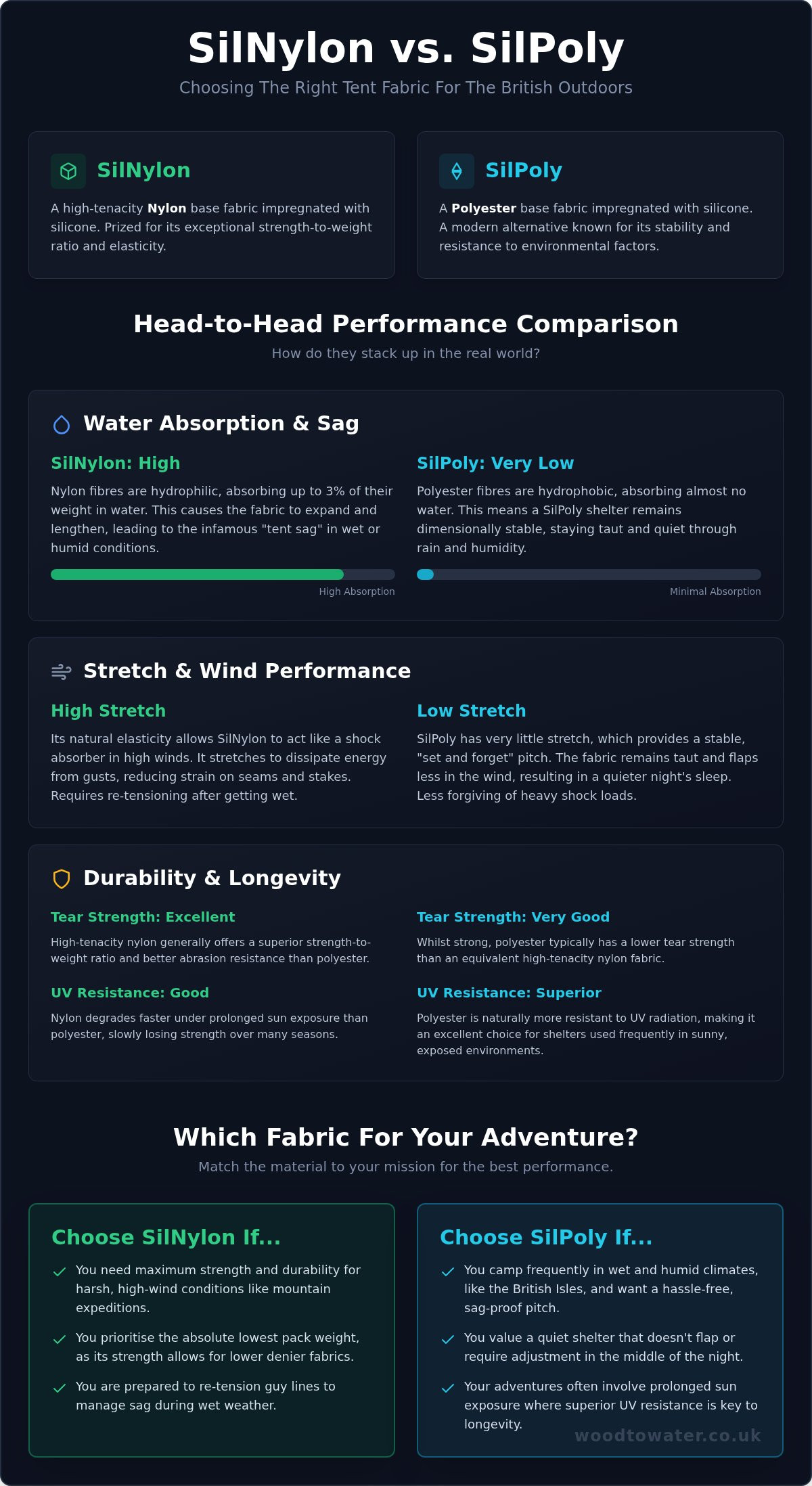
The fundamental difference lies in how these materials handle water. Nylon is hydrophilic, meaning it naturally absorbs moisture. When those fibres get wet, they physically expand and lengthen. This expansion is the scientific reason behind the "midnight sag" mentioned earlier. You might pitch your tent perfectly taut at dusk, but a bit of drizzle or even high humidity causes the fabric to grow. Polyester is hydrophobic. It repels water at a molecular level and absorbs almost nothing, meaning polyester fibres remain stable regardless of the humidity or rainfall. We also consider Denier (D), which measures the weight and thickness of the threads. A 20D fabric is lighter than a 40D fabric, though lower denier materials require more care during a rugged pitch.
Why Silicone Coating is the Gold Standard
Pure silicone coatings (often called Sil/Sil) are superior to hybrid coatings like Sil/PU. Pure silicone allows the fabric to remain incredibly flexible even in freezing temperatures, which is essential for winter expeditions in the Highlands. It also makes the fabric much more "slippery," allowing snow to slide off rather than piling up. Hydrostatic head is the standard measure of waterproofness, representing the height of a water column the fabric can support before leaking. Whilst both materials offer excellent protection, the permanent nature of silicone ensures your tent stays waterproof for years of service.
Performance Comparison: Sag, Stretch, and Tension
When you're out in the British wild, the way your fabric holds tension defines your comfort. SilPoly is the champion of stability. Because polyester fibres don't expand when they get wet, once you've pitched your shelter, it stays drum-tight from dusk till dawn. You won't find yourself crawling out of your sleeping bag at 2 am to tighten guy lines just because a drizzle started. If you value a "set and forget" approach, SilPoly is hard to beat.
SilNylon behaves differently. As previously mentioned, it absorbs significantly more water than SilPoly, which leads to the "sag factor." Within the first hour of rain, a SilNylon flysheet will physically grow, losing its tension and potentially touching your inner mesh. However, this elasticity isn't all bad. In gale-force conditions, SilNylon acts as a shock absorber; it stretches to dissipate the energy of high winds rather than snapping or pulling stakes out of the ground. When asking "Whats the best for tents SilNylon or SilPoly?" you must weigh the convenience of a stable pitch against the raw resilience needed for high-alpine wind-loading.
Many hikers worry about "misting," the myth that water is being pushed through the fabric during heavy rain. In reality, this is almost always splash-back from condensation already on the inside of the fly. Both fabrics, when treated with high-quality silicone, offer superb waterproof performance that stands up to extreme environments, a topic often explored in studies regarding the UV resistance of synthetic fabrics and their molecular stability.
Pitching for the British Weather
If you choose a SilNylon shelter for its strength, consider using bungee tensioners on your guy lines. These small loops of shock cord automatically take up the slack as the fabric expands in the rain. For those trekking in the Lake District or the Highlands where rain is a guarantee, SilPoly offers a superior experience. It maintains internal living space perfectly, ensuring the flysheet never sags into your gear. This stability makes it the ideal choice for multi-day trips where you want to minimise maintenance.
Weight and Packability
Dry weight is only half the story. After a heavy night of rain, a SilNylon tent can gain significant weight as the fibres soak up water. SilPoly stays light because the water sits on the surface rather than inside the threads. It dries faster too; a quick shake usually removes most of the moisture before you pack it away. For solo hikers prioritising a low base weight, our curated range of 1-man tents features both materials to suit your specific trekking style. If you're unsure which material fits your next route, feel free to browse our full equipment range at Wood To Water Outdoors for expert-vetted gear that handles the UK climate with ease.
| Feature | SilNylon | SilPoly |
|---|---|---|
| Wet Sag | High (Requires re-tensioning) | Negligible (Stays tight) |
| Wind Handling | Excellent (Elastic shock absorption) | Good (More rigid/static) |
| Water Absorption | Approx. 5% | Approx. 0.5% |
| Drying Time | Slower (Fibres hold water) | Fast (Surface moisture only) |
Durability and Longevity: UV Resistance and Tear Strength
Longevity isn't just about how well a tent handles a storm today; it's about how it performs after three years of use. This is where the choice between materials gets interesting. Nylon is famous for its raw power, but it has a hidden weakness: the sun. Polyester, whilst slightly less robust in a laboratory pull-test, handles long-term exposure far better. If you're asking "Whats the best for tents SilNylon or SilPoly?" you need to consider how long you plan to leave your shelter pitched in the daylight.
UV rays cause photo-oxidation in synthetic fibres, effectively "rotting" the material from the inside out. In accelerated ageing tests, SilNylon has been shown to lose up to 32% of its original tear strength after the equivalent of 500 hours of direct sunlight. SilPoly is far more resilient, losing only 18% in the same conditions. This technical textile performance is well-documented. Silicone coatings provide a sacrificial layer that absorbs some of this radiation, extending the life of both fabrics, but polyester remains the clear winner for longevity in sunny environments.
On the flip side, SilNylon is the king of raw power. Some SilNylon variants used in technical shelters boast a tear resistance of 45 N, whilst the SilPoly equivalent might sit around 18 N. Because it's more elastic, nylon can stretch and distribute a load across more fibres before they snap. You only truly need this extreme resilience if you're expecting the kind of brutal, sustained winds found in high-altitude mountaineering or extreme winter expeditions. For most UK wild camping, the strength of polyester is more than sufficient.
The Impact of UV in the UK
Don't let the grey skies of Britain fool you. UV damage happens even on overcast days. If you're setting up a basecamp for a week-long project or leaving your tent up whilst you bag peaks during the day, SilPoly is the sensible choice. It resists the thinning and weakening that eventually ruins expensive gear. Basecamp shelters often see hundreds of hours of exposure that would significantly age a SilNylon flysheet before its time.
Tear Strength vs. Practical Use
Most modern manufacturers, such as 3FULgear, strike a brilliant balance by using high-quality coatings to boost the physical properties of their fabrics. In 95% of UK scenarios, the choice comes down to maintenance rather than the risk of the fabric failing. You can expect a well-cared-for SilPoly tent to last through many more seasons of sun exposure than its nylon equivalent, making it a fantastic investment for the frequent hiker.
Practical Application: Which Fabric for Which Adventure?
Choosing your shelter isn't just about technical specs; it's about where you intend to wake up. For most explorers, the question of Whats the best for tents SilNylon or SilPoly? depends on the intensity of the environment and your tolerance for maintenance. If you're a long-distance hiker on the West Highland Way, your priorities differ wildly from a winter mountaineer hunkered down in the Cairngorms.
Ultralight backpackers are increasingly switching to SilPoly for long trails. Because it doesn't absorb moisture, it avoids the "wet pack-up" penalty. A SilNylon tent packed away in the rain can carry hundreds of grams of extra water weight until your next camp. SilPoly shakes off surface moisture almost instantly, keeping your base weight consistent. For those who prefer a traditional bushcraft setup, camping tarps made from SilPoly are a revelation. They stay tight over your hammock or bedroll all night without needing a single adjustment to the guy lines.
Wild Camping in the UK
The persistent dampness of the British climate makes SilPoly a genuine game-changer. Whether you're tackling the Pennine Way or a weekend in the Peaks, the humidity alone can cause SilNylon to sag. SilPoly’s hydrophobic nature ensures your pitch remains stable, preventing the flysheet from touching your inner tent and causing condensation transfer. It's the ultimate "set and forget" material for the UK’s unpredictable drizzle.
High-Altitude and Extreme Exposure
When the forecast predicts gale-force gusts on a summit, SilNylon remains the non-negotiable specialist choice. Its natural elasticity provides vital "give" that prevents seams from ripping under extreme tension. This shock-absorbing quality is why many high-end expedition tents still favour nylon despite the sag. Brands like Onewind Outdoors offer gear designed to handle these varied environments, balancing weight and resilience. If your adventures lean towards high-alpine winter blizzards, the raw strength of SilNylon is worth the extra maintenance.
Ultimately, SilPoly offers the best value for the majority of UK hikers, providing a low-maintenance, UV-resistant shelter that won't let you down in the rain. When deciding whats the best for tents SilNylon or SilPoly? for your own kit cupboard, think about your most frequent camping conditions. Ready to upgrade? Explore our curated selection of 1-man tents to find the perfect material for your next wild camp.
Final Verdict: Choosing Your Ideal Shelter at Wood To Water Outdoors
The great debate over technical fabrics usually ends with a simple truth: there is no "perfect" material, only the right one for your specific adventure. We've established how SilNylon offers unmatched resilience in a gale, whilst SilPoly provides the stability needed for a stress-free night in the rain. When you're standing at the crossroads of a purchase and asking "Whats the best for tents SilNylon or SilPoly?", the answer lies in your own camping habits. We curate both materials at Wood To Water Outdoors because we know that a Scottish winter requires a different tool than a summer trek through the New Forest.
If you're unsure which fabric is currently in your kit cupboard, a simple touch test often reveals the answer. SilNylon typically feels slightly more "rubbery" and has a noticeable bounce when pulled taut. SilPoly feels crisper, almost like a high-end umbrella, and resists stretching even when you apply significant pressure. Identifying your gear helps you understand its limits before you head into the hills. Our final recommendation is straightforward: buy SilPoly for rain and multi-day treks; buy SilNylon for extreme wind and winter summits.
Expert Advice for Your Next Purchase
Before you click "buy" on a new shelter, take a moment to look at your most frequent camping environments. If you're often heading out with a partner or just enjoy the extra room for your rucksack, our selection of 2-man tents offers options in both materials to suit your needs. Balancing your pack weight is an art form. If you choose a slightly heavier, high-denier SilNylon tent for its strength, you can offset that weight elsewhere. Switching to TOAKS Titanium Cookware is the perfect weight-saving companion to ensure your total base weight remains manageable on long ascents.
Care and Maintenance for Both
Regardless of which fabric you choose, proper maintenance is the key to longevity. Never store a tent whilst it's still damp. Even though SilPoly doesn't absorb water into the fibres, surface moisture can still lead to mildew if trapped in a stuff sack. When your gear gets muddy, use a soft sponge and lukewarm water to clean the flysheet. Avoid harsh detergents at all costs; they can strip the silicone coating and ruin the fabric's hydrostatic head. A little bit of care ensures your investment stays waterproof for years of wild camping. Ready to find your next home away from home? Explore our full range of tents and tarps at Wood To Water Outdoors and gear up with confidence for the British wild.
Ready Your Kit for the British Wild
Choosing the right fabric is about matching your gear to the environment you love most. If you prioritise a stable pitch during a rainy night in the Highlands, SilPoly is your best bet. If you're heading into high-altitude winds where raw strength is vital, SilNylon remains the specialist's choice. Ultimately, asking Whats the best for tents SilNylon or SilPoly? comes down to whether you value "set and forget" convenience or maximum structural resilience.
At Wood To Water Outdoors, we take the guesswork out of your selection. Our team has personally vetted every shelter in our collection to ensure it stands up to the unique challenges of the British climate. We offer next-day delivery options so you can get your new kit in time for the weekend; this is all backed by our UK-based expert customer service. We only stock carefully vetted bushcraft and hiking gear that we'd trust on our own adventures.
Find your perfect lightweight shelter at Wood To Water Outdoors. See you on the trail!
Frequently Asked Questions
Is SilPoly more waterproof than SilNylon?
Not necessarily; both materials can achieve high hydrostatic head ratings depending on the quality of the silicone coating. The difference is in how they handle moisture. SilPoly is hydrophobic, meaning water stays on the surface rather than soaking into the fibres. This prevents the fabric from becoming heavy and eliminates the "mist" effect often mistaken for a leak during heavy British downpours.
Can I seam seal a SilNylon tent with regular sealant?
No, you must use a silicone-specific sealant like Seam Grip +SIL. Regular polyurethane-based sealants won't bond to the silicone-impregnated surface of either fabric. If you use the wrong product, it will simply peel off once dry, leaving your seams vulnerable to the rain. Always check that your sealant is specifically formulated for "sil" fabrics before starting your maintenance.
Why does my SilNylon tent feel heavy when I pack it up wet?
SilNylon is hydrophilic and can absorb up to 5% of its weight in water. This moisture gets trapped inside the nylon fibres themselves. When you're deciding whats the best for tents SilNylon or SilPoly? for a multi-day trek, remember that SilPoly only holds water on the surface. This makes it much lighter and faster to dry when you're moving camp every morning in damp conditions.
Does SilPoly tear more easily than SilNylon?
Technically, yes. Nylon has a higher strength-to-weight ratio and greater elasticity, allowing it to stretch under load. While a SilNylon tent often has a higher laboratory tear strength than the SilPoly equivalent, polyester is still incredibly robust. For almost all UK wild camping, the strength of a high-quality SilPoly flysheet is more than adequate to handle typical gales and rough handling.
Which fabric is better for a camping tarp?
SilPoly is generally the better choice for tarps. Because tarps rely on high tension for a clean, aerodynamic pitch, SilNylon's tendency to sag when wet is a major drawback. SilPoly stays drum-tight all night, ensuring water runs off efficiently. This means you won't have to crawl out of your hammock to adjust guy lines during a midnight rain shower.
How can I tell if my tent is SilNylon or SilPoly?
Check the manufacturer's specifications first, but you can also perform a simple stretch test. Wet a small patch of the flysheet; if it becomes floppy and expands, it is almost certainly SilNylon. SilPoly remains rigid and the water will bead off the surface without changing the fabric's tension. When asking whats the best for tents SilNylon or SilPoly?, knowing your current gear's behaviour is the best starting point.
Is SilPoly better for long-term camping in the sun?
Yes, polyester is naturally more resistant to UV degradation than nylon. Nylon fibres suffer from photo-oxidation, which causes the material to become brittle and lose strength over time. If you plan on leaving your shelter pitched for days at a time, SilPoly will significantly outlast its nylon counterpart. It's the superior choice for basecamps or summer festivals where the tent sits in direct sunlight.
Do I need to re-tension my SilPoly tent during a storm?
Rarely. Unlike SilNylon, which physically grows as it absorbs moisture, SilPoly is hydrophobic and dimensionally stable. This means your initial pitch remains tight even when the humidity rises or a storm rolls in. You will likely only need to check your pegs if the ground becomes saturated and soft, as the fabric itself won't slacken or require re-tensioning.