

Petromax Dutch Oven: The Ultimate Outdoor Cooking Guide
A cheap, thin-walled pan is the quickest way to ruin a perfectly good meal over an open flame. We've all been there; you spend hours prepping a hearty stew only to find the bottom scorched and stuck fast whilst the top is barely lukewarm. Managing heat over a wild fire is an art form, and your equipment shouldn't make the job harder. You want a piece of kit that feels like a reliable companion, not a liability in your camp kitchen.
If you're tired of guesswork and burnt dinners, the petromax dutch oven is the definitive choice for campfire cooking. This guide will help you discover why this German-engineered cast iron is a staple for British outdoor adventures. We'll demystify the "ft" numbering system so you can choose the perfect size for your group. You will also learn the secrets to successful baking and roasting over embers; along with the simple maintenance cycle that ensures your pot lasts for generations. From the compact ft1 for sauces to the massive ft12 for the whole family, we've got you covered.
Key Takeaways
- Identify the ideal capacity for your needs by decoding the Feuertopf numbering system, focusing on why the ft4.5 and ft6 models are the preferred choice for UK families.
- Maximise your gear's versatility by using the inverted lid as a secondary pan, allowing you to fry breakfast whilst your main pot rests.
- Gain confidence in fire-based cooking by understanding the specific ratio of briquettes required for successful roasting and baking.
- Ensure your petromax dutch oven lasts a lifetime by following a simple, chemical-free cleaning routine that preserves its natural non-stick surface.
- See why pairing your pot with essential accessories like lid lifters and transport bags creates a truly professional and safe outdoor cooking experience.
What is a Petromax Dutch Oven and Why Does it Matter?
At its core, a petromax dutch oven is a heavy-duty cast iron pot designed to thrive where thinner cookware fails. To understand what a Dutch oven is, you have to look at its thick walls and tight-fitting lid; these features transform it into a portable oven. Petromax, a German brand with over a century of heritage, has become the gold standard for UK bushcraft enthusiasts. They call it the 'Feuertopf', which translates to 'fire pot'. This isn't just marketing; it's a nod to the pot's ability to handle the intense heat of open flames and glowing embers without warping. The brand's reputation for precision engineering matches the needs of the British outdoor community perfectly. We value gear that works in damp, unpredictable conditions, and these pots are practically indestructible.
Its versatility is legendary amongst outdoor cooks. You can use it to roast a whole chicken, braise tough cuts of meat until they're fork-tender, or even fry a full English breakfast. It excels at baking bread because the thick iron mimics a traditional stone oven, trapping steam and heat to create a perfect crust. It is essentially a complete kitchen in a single pot. Whether you're at a fixed basecamp or cooking in your back garden, it provides a level of culinary control that most camping gear can't touch.
The Science of Cast Iron Heat Retention
Why does it work so well? The secret lies in the mass of the high-grade cast iron. Thick walls ensure even heat distribution; this eliminates the 'hot spots' that cause food to burn in cheaper pans. As you use your pot, it undergoes a natural seasoning process where oils bake into the pores of the metal. This creates a durable, non-stick surface that only gets better with age. Best of all, Petromax pots come with a pre-seasoned finish. You don't need to spend hours preparing the metal at home; you can take it straight to the woods for your first cookout.
Petromax vs. Standard Camping Pots
You might wonder if the extra weight is worth it. Carrying several kilos of iron into the woods is a commitment. However, it's a fair trade for the quality of the meals you'll produce. Thin aluminium or steel pots are fine for boiling water, but they struggle with complex cooking. A petromax dutch oven is a 'buy once, cry once' investment. It's built to last a lifetime, often becoming a family heirloom passed down to the next generation of campers. If you're planning a long-distance trek where every gram counts, you might prefer to check out Why TOAKS Titanium Cookware is the Choice for Ultralight Hikers. But for basecamp cooking and bushcraft, nothing beats the thermal mass of cast iron.
Key Features: What Makes Petromax Cast Iron Unique?
A petromax dutch oven stands out because every design choice is rooted in the practical realities of cooking over a living fire. It isn't just a heavy pot; it is a carefully engineered system meant to solve the common frustrations of outdoor chefs. The first thing you'll notice is the lid's raised outer rim. This isn't just for show. It allows you to pile glowing coals or embers directly onto the top of the pot without them sliding off. This creates a true 360-degree heating environment, which is essential for baking bread or roasting meat evenly. As highlighted in this Petromax Dutch Oven review, the design is rugged enough for the most demanding environments whilst maintaining high culinary standards.
Another subtle but vital feature is the integrated thermometer notch. This small groove allows you to insert a probe thermometer to check internal food temperatures without lifting the lid. Lifting the lid releases precious steam and drops the internal temperature significantly, so this notch is a game-changer for precision cooking. The pot also features a sturdy wire handle with a central notch. This ensures that when you hang it over a tripod or fire pit, the pot remains perfectly balanced and secure. If you're ready to upgrade your camp kitchen, you can browse our curated selection of Petromax gear to find your perfect match.
The Ingenious Lid Design
The lid is a multi-purpose tool in its own right. Because it has its own small feet, you can flip it over and place it directly into the embers to use as a standalone skillet or serving plate. This is incredibly useful for frying eggs or searing steaks whilst your main dish rests in the pot. It saves you from carrying extra pans and keeps your kit list manageable. Always remember to use a dedicated lid lifter when handling the cast iron; the weight and heat make it far too dangerous to move with standard oven gloves or sticks.
Built for the Elements
Petromax offers models with and without feet on the base. The 't' models (with feet) are designed to sit directly in the fire, allowing space for coals underneath. The footless versions are better suited for use on a grate or a gas stove. The interior surface is remarkably smooth for cast iron, which helps prevent food from sticking even during your first few uses. To get the best results from your oven, you'll need a reliable heat source. We recommend pairing your pot with high-quality fire-starting tools from Bushcraft Essentials to ensure you get a clean, consistent burn every time you cook.
Choosing Your Size: The Petromax 'ft' Range Explained
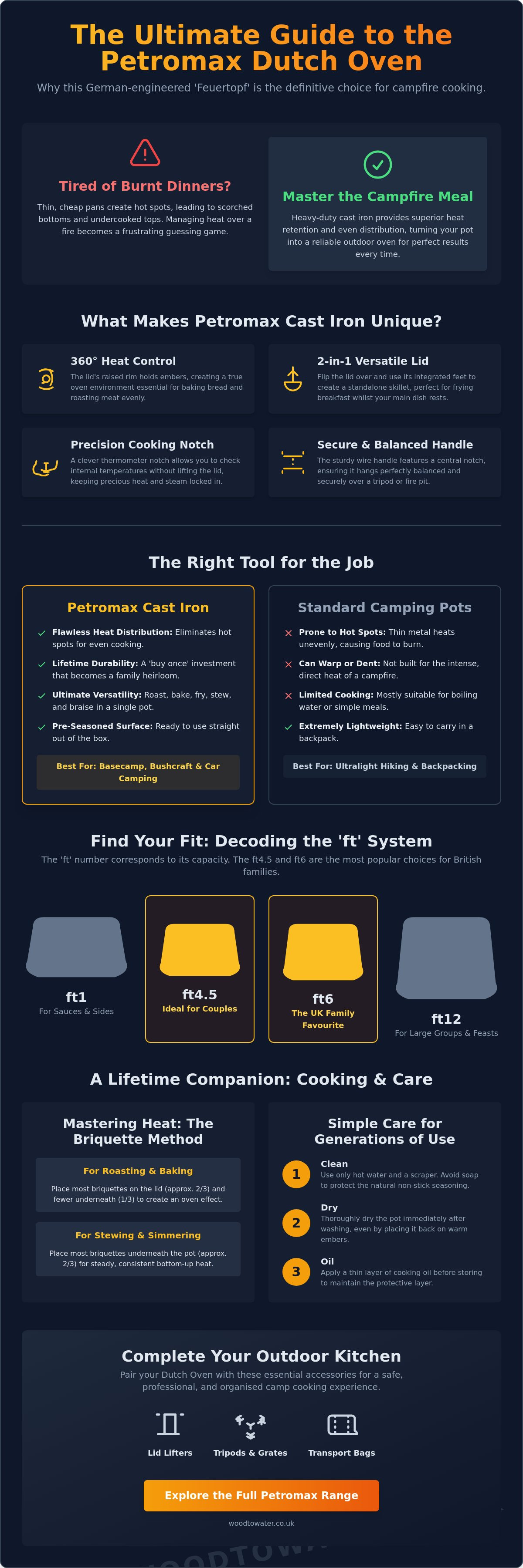
Selecting the right petromax dutch oven size can feel a bit like a maths exam if you don't know the lingo. The 'ft' in the name stands for 'Feuertopf', the German word for fire pot. The numbers range from the tiny ft0.5 up to the massive ft18. Whilst it's tempting to buy the biggest one available, you need to balance the pot's volume with the weight you're willing to lug around. Cast iron is heavy; choosing a pot that's too large means you'll struggle with heat management and weight. Conversely, a pot that's too small will leave your camp mates hungry. Finding that balance is key to a successful outdoor adventure.
Petromax Size Comparison Table
| Model | Pot Capacity | Lid Capacity | Typical Servings |
|---|---|---|---|
| ft1 | 0.93 Litres | 0.25 Litres | 1 (or sauces/desserts) |
| ft3 | 1.6 Litres | 0.4 Litres | 1-3 People |
| ft4.5 | 3.5 Litres | 1.0 Litre | 2-5 People |
| ft6 | 5.5 Litres | 1.5 Litres | 4-8 People |
| ft9 | 7.5 Litres | 1.5 Litres | 8-14 People |
The ft6 is the versatile all-rounder for 4-8 people, making it the most popular choice for standard UK camping trips. If you're looking at the ft9 or larger, keep in mind that these require a sturdy vehicle or a permanent basecamp; they aren't designed for a casual stroll to a remote pitch.
Which Size is Right for You?
For those who prefer solo expeditions or want to whip up a quick sauce alongside a main meal, the ft1 is perfect. It's also a favourite for baking individual desserts like crumbles or small cakes. If you're a couple or a small family heading out for a weekend trip, the ft4.5 is usually the ideal choice. It offers enough room for a decent stew without becoming a burden to carry from the car.
When you're catering for the masses, you'll need the heavy hitters. The ft12 and ft18 are designed for scout groups, large gatherings, or commercial outdoor kitchens. The ft12 alone has a massive 10.8-litre capacity in the pot with an additional 2 litres in the lid. These models can easily feed 14 to 20 people in one go. Just make sure you've got a pair of strong arms to help you move them once they're full of food.
Mastering the Fire: Cooking and Care Tips
Cooking with a petromax dutch oven is a rewarding skill that requires a bit of fire-side intuition. One of the most effective methods for slow-cooked stews is the 'Ring of Fire' technique. Instead of placing your pot directly on a massive heap of glowing logs, you arrange a circle of embers around the base. This provides a gentle, consistent heat that prevents the bottom from scorching whilst allowing the flavours to develop slowly. It is a simple adjustment that makes a massive difference to the final result of your meal. You want to hear a gentle simmer, not a violent boil.
Living in the UK presents a unique challenge for cast iron owners: humidity. Our damp climate is the perfect breeding ground for rust if you aren't careful. Never leave your pot outside overnight, and avoid storing it in a damp garage or shed without protection. If you want to better organise your workshop or storage space to protect your tools from the elements, you can visit New Local Tools for professional storage solutions. The best storage secret for the pot itself is to place a folded piece of kitchen roll or a small twig between the pot and the lid. This allows air to circulate and prevents moisture from being trapped inside. If you treat your gear with respect, it will reward you with a lifetime of service in the British woods.
How to Clean Your Dutch Oven
Cleaning your cast iron is straightforward, but you must follow one golden rule: washing-up liquid is the enemy. Standard detergents strip away the protective seasoning you've worked so hard to build. Follow these four steps to keep your pot in top condition:
- Step 1: Scrape out any food residue whilst the pot is still slightly warm. This is much easier than waiting for it to cool and harden completely.
- Step 2: Use hot water and a chainmail scrubber for stubborn bits. Avoid abrasive steel wool which can damage the smooth surface finish.
- Step 3: Dry the pot thoroughly over the fire or a stove. This ensures no microscopic moisture remains in the pores of the metal to cause rust.
- Step 4: Apply a thin layer of Petromax Care Conditioner or food-grade oil to seal the surface whilst the iron is still warm.
Managing Heat and Coal Placement
Precision cooking depends on the 2/3 rule. For baking bread or cakes, you want two-thirds of your coals on the lid and one-third underneath. This creates an oven-like environment that browns the top perfectly. For stews or soups, reverse the ratio to focus heat on the bottom. Whilst wood embers provide a fantastic, authentic flavour, charcoal briquettes offer more predictable temperature control for long cooks. If you want the best of both worlds, you can use the Petromax Charcoal Maker to create your own high-quality fuel right at your campsite. This allows you to turn local wood into consistent embers for perfect heat management.
Ready to start your cast iron journey? Explore our full range of Petromax cooking gear at Wood To Water Outdoors and find the perfect tools for your next wild adventure.
Completing Your Outdoor Kitchen with Wood To Water Outdoors
Investing in a petromax dutch oven is a genuine milestone for any bushcraft enthusiast, but the pot alone is only half the story. To truly master the art of campfire cooking, you need a supporting cast of accessories that handle the heavy lifting and high temperatures safely. These items bridge the gap between a simple cooking pot and a fully functional outdoor kitchen. At Wood To Water Outdoors, we focus on the practical details that make your trip smoother; from keeping your car soot-free to ensuring your hands stay well away from glowing embers. It is about creating a setup that is as efficient as it is durable.
Integrating your cast iron into a wider bushcraft setup means thinking about the logistics of a permanent camp or a mobile expedition. We understand that this equipment is a serious investment; it is kit that will eventually become a family heirloom passed down to the next generation of outdoor lovers. By choosing the right support tools now, you ensure that every meal you prepare is a success rather than a struggle with the elements. Our goal is to provide the gear that lets you focus on the recipe whilst the equipment handles the heat.
Must-Have Accessories
Safety and convenience are the pillars of a professional camp kitchen. We recommend focusing on these three essentials to complete your kit:
- The Lid Lifter: This is a non-negotiable tool for any cast iron chef. It provides the leverage and stability needed to lift a hot, coal-laden lid without dropping ash into your dinner or risking a nasty burn.
- Transport Bags: Cast iron is inherently messy after a few cooks. Our reinforced bags protect your car interior and other gear from the oily soot and grease that naturally accumulates on the pot's exterior.
- Cast Iron Trivets: These are vital for precision heat management inside the pot. By raising your food off the bottom, you prevent delicate bakes like bread or sponges from scorching when your fire is running particularly hot.
The Wood To Water Outdoors Promise
We don't just sell equipment; we're active participants in the outdoor community. Every petromax dutch oven and accessory in our shop has been vetted by our team to ensure it survives the realities of the British environment. As an official UK stockist, Wood To Water Outdoors provides the expert support you need to choose the right gear for your specific style of camping. We take pride in our curated selection, stocking only the items that meet our rigorous standards for utility and reliability. Our fast UK delivery means your kitchen will be ready for your next weekend adventure without delay. Explore our full Petromax Cast Iron collection and see why we are the trusted choice for reliable bushcraft gear.
Ready for Your Next Campfire Feast?
Mastering the fire is a journey that transforms every wild camping trip into a proper culinary event. You now have the knowledge to select the right size for your group and the skills to maintain your cast iron in the damp British climate. A petromax dutch oven is more than just another cooking pot; it's a commitment to quality that will serve you and your family for generations. Whether you're baking a fresh loaf of bread in the morning or slow-roasting a joint of beef over evening embers, the results speak for themselves. It is about the confidence that comes from using gear that won't let you down.
At Wood To Water Outdoors, we pride ourselves on being an official UK stockist of Petromax gear. Our inventory is personally vetted by seasoned bushcraft enthusiasts to ensure it stands up to the rigours of the trail. We don't believe in selling anything we wouldn't use ourselves; our expert UK-based customer support is always available to help you refine your setup. You can buy with confidence, knowing you're backed by fellow enthusiasts who understand the practical realities of the environment.
Shop the Petromax Dutch Oven Range at Wood To Water Outdoors and elevate your outdoor kitchen today. We'll see you in the woods!
Frequently Asked Questions
Do I need to season my Petromax Dutch Oven before the first use?
You do not need to season your new pot because every petromax dutch oven comes with a pre-seasoned finish from the factory. This protective layer is applied at the foundry, meaning you can take it straight from the box to the campfire. Simply rinse the iron with warm water to remove any transit dust before your first cook. As you use it, the natural non-stick surface will continue to develop and improve.
Can I use my Petromax Dutch Oven on a home kitchen hob?
You can use the footless models on most home hobs, including gas and induction. The flat base ensures maximum contact with the heat source for even cooking. However, the models with feet are strictly for use over coals or embers; they won't sit flat on a hob and could damage your cooker. Always lift the pot rather than sliding it to avoid scratching your kitchen surfaces or glass tops.
How do I stop my cast iron from rusting in the UK?
Preventing rust in the humid British climate requires keeping the iron bone-dry and lightly oiled. After cleaning, always place the pot back on the heat for a few minutes to evaporate all microscopic moisture from the pores. Once dry, apply a thin layer of food-grade oil or Petromax Care Conditioner. Store it in a dry place with the lid slightly ajar to allow air to circulate freely inside.
What is the difference between the 'ft' models with and without feet?
The primary difference is how the pot sits on your chosen heat source. Models with feet are designed to sit directly in the embers, providing space for coals to be tucked underneath for bottom heat. Footless models have a smooth, flat base, making them ideal for use on a cooking grate, a gas ring, or your kitchen stove. Both versions offer the same high-quality cast iron performance and lid-skillet functionality.
Can I use metal utensils with my Petromax Dutch Oven?
You can safely use metal utensils with your petromax dutch oven without worrying about damaging the surface. Unlike delicate non-stick coatings, high-grade cast iron is incredibly durable and can withstand metal spatulas or spoons. In fact, using metal tools can help keep the surface smooth over time. If you do happen to scrape the seasoning, simply keep cooking or apply a little extra oil to restore the protective layer naturally.
How many people does a Petromax ft6 actually feed?
A Petromax ft6 typically feeds between 4 and 8 people depending on the dish you are preparing. With a 5.5-litre pot capacity, it is the perfect size for a standard family meal or a small group of friends. If you're making a dense stew, it will comfortably serve eight; however, for bulkier items like a whole roast chicken with vegetables, you might find it closer to the four-person mark.
What should I do if my Dutch Oven starts to rust?
Don't panic if you spot rust; it is easily fixed by scrubbing the affected area with a wire brush or steel wool. Once the orange spots are gone, wash the pot with warm water and dry it thoroughly over heat. Apply a generous layer of seasoning oil and bake the pot in an oven or over a fire to rebuild the protective coating. Regular maintenance will prevent the rust from returning in the future.
Is it safe to use a Dutch Oven on a glass-top stove?
Using cast iron on a glass-top stove is possible but requires extreme caution. The sheer weight of a full Dutch oven can crack glass if it is dropped or set down too heavily. Additionally, the rough texture of the iron can scratch the surface if the pot is slid across the hob. If you must use it indoors, choose a footless model and always lift it carefully when moving it between rings.