

Naturehike Tents Guide: Lightweight Performance for UK Hikers
Is it really possible to survive a week in the Lake District with a tent that costs less than a pair of high-end boots? Many hikers assume that ultralight is just another word for expensive, leading to the belief that you must choose between a heavy pack or a massive credit card bill. It's a frustrating dilemma, especially when you're trying to figure out if a more affordable shelter can actually handle the unpredictable British wind and rain without collapsing or leaking.
We've spent years vetting gear to find the best balance of value and reliability, and naturehike tents have consistently proven they can punch well above their weight. This guide will help you discover the perfect lightweight setup that keeps you dry without draining your savings. We'll break down the specific differences between popular models like the Cloud Up and Mongar; we'll also explain the vital technical distinctions between 20D and 210T fabrics. By the end, you'll know exactly which sub-2kg shelter is right for your next trek across the fells whilst keeping your kit list lean and efficient.
Key Takeaways
- Learn the technical differences between 20D and 210T fabrics to choose a shelter that balances weight with durability for the fells.
- Discover which naturehike tents best suit your hiking style by comparing the unique architectural strengths of the Cloud Up, Mongar, and Vik models.
- Master the art of pitching in wet weather to ensure your inner tent stays bone dry during a typical British downpour.
- Identify the specific hydrostatic head (HH) ratings required to keep you protected from heavy rain whilst out on the trail.
- Understand how to maximise the lifespan of your gear with expert maintenance tips for cleaning and simple field repairs.
Why Naturehike Tents are Revolutionising British Backpacking
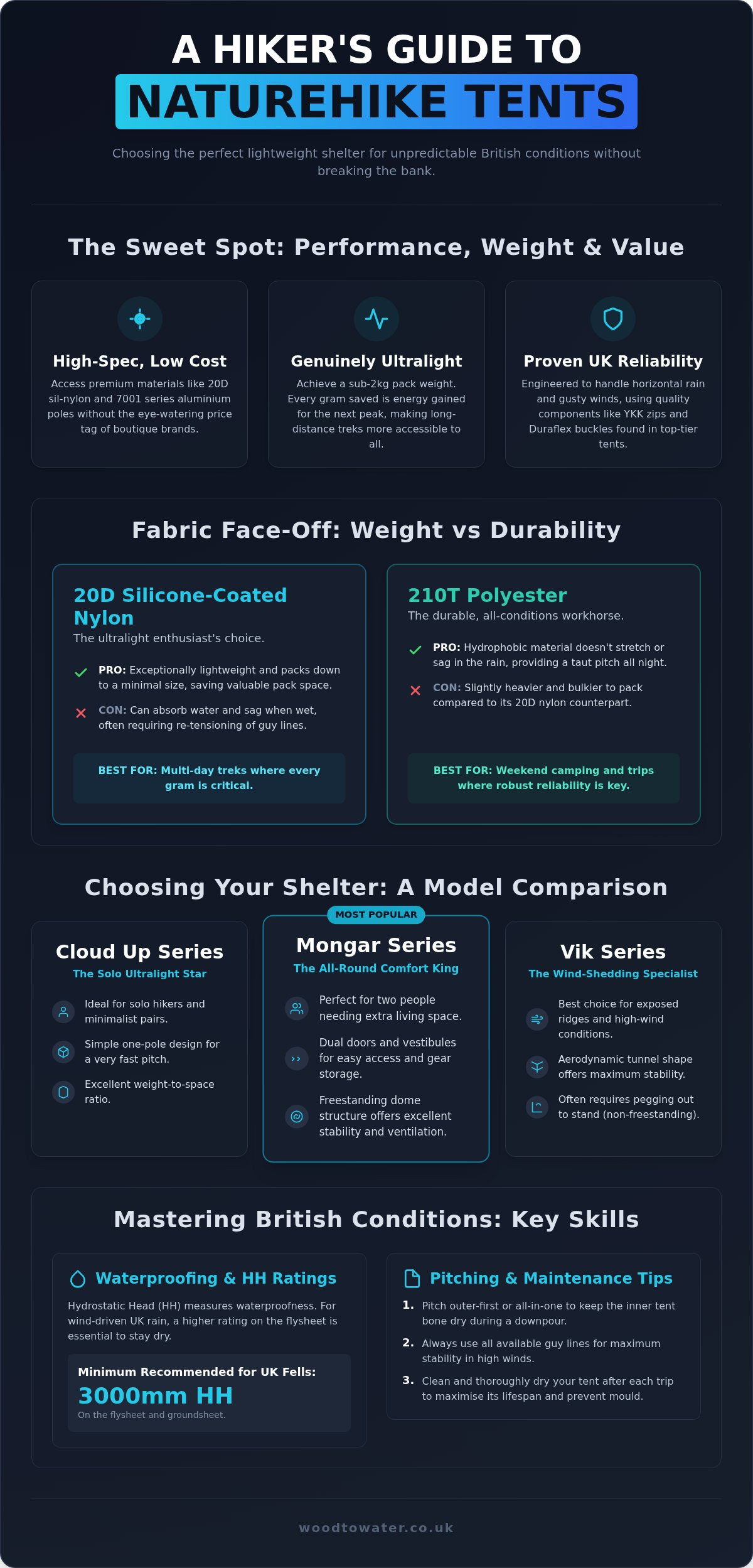
For years, British hikers faced a frustrating choice. You either spent a fortune on a high-end American brand or lugged a heavy, bulky tent from a high-street retailer. naturehike tents changed that dynamic. They occupy the vital sweet spot between entry-level camping and elite ultralight gear; providing high-spec materials like 20D sil-nylon without the eye-watering cost of boutique labels. This direct-to-consumer approach means you aren't paying for massive marketing budgets or multiple layers of distribution. Instead, the investment goes directly into the fabric, poles, and waterproofing.
By 2026, the outdoor industry has shifted. Accessible performance is no longer a niche request; it's the standard. We've seen a massive surge in popularity amongst wild campers in the Highlands and thru-hikers on the Pennine Way. People have realised that you don't need to spend a month's wages to keep your pack weight under 2kg. Naturehike has earned a cult following because they've proven that reliable kit shouldn't be a luxury exclusive to those with the deepest pockets.
The Ultralight (UL) Movement on a Budget
Weight is everything when you're tackling the steep ascents of the Lake District. Every gram saved is energy kept for the next peak. Traditionally, sub-2kg tents were locked behind a significant price barrier, but Naturehike has dismantled that wall. By using lightweight aluminium alloys and thin yet resilient fabrics, they've made ultralight backpacking inclusive for everyone. If you're looking to trim your pack, exploring a curated selection of 1-man tents or 2-man tents is the best place to start. Choosing a trusted UK retailer like Wood To Water Outdoors ensures you have local support and expert advice if you're unsure which model fits your specific trail needs.
Reliability: Can You Trust a Naturehike in the UK?
There used to be a stigma attached to more affordable gear, but technical evidence has silenced the critics. Since their inception in 2010, the brand has evolved significantly through constant field testing. By 2026, they've refined their designs to handle the horizontal rain and gusty winds common in the UK. They use high-quality components like YKK zips and Duraflex buckles; these are the same parts found in tents that cost three times as much.
The brand's growth is built on a foundation of practical success in the field. They don't just look the part; they perform when the weather turns foul on a remote moorland. Naturehike provides the high-performance specifications required for rugged British trails at a price point that makes the great outdoors accessible to every explorer.
Decoding the Specs: Materials, Weights, and Waterproofing
Understanding the technical jargon is the first step to choosing the right gear. Many hikers get lost in the numbers, but for naturehike tents, the specs tell a very specific story about how the shelter will behave on a windy ridge or during a midnight downpour. The backbone of these tents is the 7001 series aluminium alloy poles. These provide the necessary rigidity to withstand gusts whilst keeping the total weight low enough for long-distance carries. Finding the sweet spot between weight and durability depends entirely on your hiking style.
20D Nylon vs 210T Polyester: Which is Best for the UK?
Choosing between these two fabrics is a balance of weight and behaviour. 20D Silicone-coated Nylon is the darling of the ultralight world. It's incredibly strong for its weight and packs down to a tiny size. However, nylon is naturally hygroscopic; it absorbs a small amount of water and stretches, leading to the "sag" you might see on a rainy morning. You'll often need to re-tension your guy lines before turning in for the night.
In contrast, 210T Polyester is slightly heavier but doesn't stretch when wet. It also offers superior UV resistance, making it a solid choice if you plan on leaving the tent pitched for several days in the sun. At Wood To Water Outdoors, we often suggest the 20D version for those prioritising weight on multi-day treks, whilst the 210T is a fantastic, durable entry point for weekend warriors. If you're looking for a reliable 2-man tent that won't break your back or your budget, the fabric choice is your most important decision.
Understanding Hydrostatic Head and Seam Taping
In the UK, we don't just get rain; we get horizontal, wind-driven soakings. This is where the Hydrostatic Head (HH) rating becomes vital. Most naturehike tents feature a rating between 3000mm and 4000mm. This number represents the height of a water column the fabric can withstand before leaking. For the British climate, anything above 2000mm is considered waterproof, so Naturehike's specs offer a comfortable margin of safety for the fells.
- 3000mm: Standard for 20D models, excellent for most UK backpacking conditions.
- 4000mm: Often found on the 210T models, providing extra peace of mind during heavy deluges.
- Factory-Taped Seams: Crucial for preventing water ingress through needle holes in the flysheet and groundsheet.
Reliability isn't just about the fabric; it's about the construction. Naturehike uses heat-sealed tape on every seam to ensure the "bucket" floor and flysheet remain watertight. Before you head into the wild, it's always a good idea to do a garden pitch and check these seals. A quick inspection ensures your first night on the trail is a dry one.
Cloud Up, Mongar, or Vik? Choosing Your Perfect Naturehike Model
Choosing between the various naturehike tents can feel like a puzzle. On the surface, they all offer impressive weights and waterproof ratings, but their physical architecture determines how comfortable you'll be when the weather turns. The "Big Three" models dominate the UK market for a reason; they each solve a different problem for the British hiker. Whether you prioritise a tiny pack size or enough head height to sit up and brew a coffee, there's a specific geometry that fits your needs. Understanding the difference between a semi-freestanding and a fully freestanding frame is the key to a good night's sleep.
Naturehike Cloud Up: The Lightweight All-Rounder
The Cloud Up is the definitive gateway into ultralight backpacking. It uses a semi-freestanding "Y-frame" pole structure. This means the head end is rigid, but you'll need to peg out the corners at the foot end to achieve full volume. It's a favourite for long-distance paths like the West Highland Way or the Pennine Way because it strikes a perfect balance between weight and protection. The front-entry design is aerodynamic in high winds, though it requires a bit more shimmying to get inside compared to side-entry models. If you're a solo hiker looking to keep your base weight low, you can browse our range of 1-man tents to see the Cloud Up in action.
Naturehike Mongar: Best for Space and Ventilation
If you find the tapered walls of the Cloud Up a bit claustrophobic, the Mongar is your solution. It features a fully freestanding hub-pole system that creates nearly vertical side walls. This architecture significantly increases interior liveability; you can actually sit up without your head brushing the mesh. With dual doors and two generous vestibules, it's the gold standard for pairs who don't want to climb over each other for a midnight toilet break. The cross-ventilation is also superior, which is vital for managing condensation on those damp, muggy nights in the valleys. Take a look at our 2-man tents to compare the Mongar against other hub-pole designs.
Naturehike Vik & Star River: Specialised Choices
For hikers with specific mission profiles, the Vik and Star River offer niche advantages. The Vik is a single-skin shelter designed for fast-packers who count every single gram. It's incredibly light but requires careful site selection and venting to manage moisture. On the other end of the spectrum, the Star River is a beefed-up version of the hub-pole design, often considered a sturdier 3-season plus contender. It handles colder expeditions and late-autumn winds better than its lighter siblings. Choosing between them comes down to a simple trade-off: do you want the absolute minimum weight of the Vik, or the rugged, all-weather confidence of the Star River?
Mastering the Elements: Pitching Naturehike Tents in UK Conditions
Many hikers worry about pitching "inner-first" tents in a British downpour. It's a valid concern; nobody wants a puddle on their groundsheet before they've even unrolled their sleeping bag. Whilst many naturehike tents are designed this way, you can master a "dry pitch" with a bit of practice. By draping the flysheet over the inner tent whilst you work, you can shield the mesh from the worst of the rain. It takes a few extra minutes, but it's a skill that pays off when you're wild camping in the Scottish Highlands.
Stability is the next hurdle. UK winds can be relentless on exposed ridges. To ensure your shelter stays put, always peg out every single guy line. Don't just pull them tight; ensure they are angled correctly to distribute the load across the pole structure. This isn't just about safety; a well-tensioned tent is much quieter in a gale, meaning you might actually get some sleep.
Managing Condensation in High-Humidity Environments
Our climate is notoriously damp, and high humidity often leads to moisture build-up inside the flysheet. This isn't a failure of the fabric; it's simply physics. Because naturehike tents utilise a double-wall construction, this moisture stays on the outer fly rather than dripping onto you. To keep the air moving on a misty night in the Peak District, always prop your vents fully open and consider leaving the top of your vestibule zip slightly cracked to create a vital chimney effect.
Upgrading Your Setup for the British Wild
The stock pegs included with most tents are fine for firm ground, but they often struggle in soft peat or mossy turf. We recommend swapping them for high-surface-area "Y-beam" pegs to give you a much more secure anchor point. If you're planning a basecamp setup, you can significantly improve your liveability by integrating camping tarps to create a dry porch area for cooking or boot storage.
For those looking to further customise their ultralight kit, you should check out our range from 3fulgear for compatible accessories that complement your Naturehike setup. Carrying the included footprint is usually worth the small weight penalty; it protects the delicate 20D floor from sharp stones and adds an extra layer of moisture protection from the sodden ground.
Ready to upgrade your trail home? Explore our full range of 2-man tents and find a shelter that's built for the British elements.
Long-Term Value: Maintenance and Why Wood To Water Outdoors is Your Partner
Investing in naturehike tents is a smart move for any hiker, but like all high-performance gear, they require proper care to ensure they last for years of adventures. The lightweight 20D fabrics are surprisingly resilient, yet they can be sensitive to neglect. Most tent failures aren't caused by the trail; they happen in the garage. Storing a damp tent is the quickest way to invite mould and delamination, which can permanently ruin the waterproof coating. We've seen many great shelters meet an early end because they weren't given the chance to breathe after a rainy weekend in the fells.
Small mishaps on the trail don't have to mean the end of your trip. If you snag your mesh inner on a stray branch, a small patch of tenacious tape usually solves the problem instantly. For pole splints caused by extreme gusts, always carry the emergency repair sleeve included with your tent. Sliding this over a fractured section and securing it with tape can save your night. Being a specialist UK bushcraft store, we don't just sell you a box; we provide the expertise to help you maintain your kit for the long haul.
Caring for Your Ultralight Investment
When you return from a wet trip, the first thing you should do is pitch your tent indoors or in a dry garage. Give it a thorough shake to remove grit and pine needles, then wipe down the floor with a damp cloth. Avoid using harsh detergents, as these can strip the DWR (Durable Water Repellent) coating. If you notice water has stopped beading on the flysheet after a few seasons, it's time to apply a specialised re-proofing spray. To keep your pack weight down whilst you're out there, you can pair your ultralight tent with TOAKS Titanium Cookware for the ultimate lightweight pack.
Complete Your Kit at Wood To Water Outdoors
We take pride in being more than just a retailer. We are active participants in the outdoor community who personally vet every item in our inventory. This allows us to offer expert advice on matching naturehike tents with the right accessories, such as efficient camping gas stoves that fit perfectly in your vestibule. We curate this brand amongst other top-tier names like Fire Maple because we believe everyone should have access to high-spec gear without the premium price tag.
Your success and comfort on the trail are our top priorities. Whether you are prepping for a solo expedition or a casual weekend outing, we are here to help you choose the right tools for the job. Explore the full Naturehike range at Wood To Water Outdoors and start planning your next 2026 adventure with confidence.
Ready for Your Next Summit Camp?
Finding a shelter that balances weight, cost, and reliability is the ultimate goal for any backpacker. A reliable shelter provides the security you need during a stormy night on the fells; ensuring you wake up refreshed and ready for the next peak. We've seen that naturehike tents provide a genuine solution for those tackling the UK's rugged terrain by offering high-spec materials without the boutique price tag. By understanding the nuances of fabric choice and mastering the art of the damp-weather pitch, you can head into the hills with total confidence.
We pride ourselves on being more than just a shop. Our team offers expert UK-based support and gear advice to help you avoid the "wrong" model for your specific needs. Every item in our carefully curated selection is vetted for British conditions; and with fast national shipping on all ultralight gear, your next adventure is closer than you think.
Find your perfect Naturehike tent at Wood To Water Outdoors
The hills are calling, and with the right kit in your pack, you're ready to answer. Happy hiking!
Frequently Asked Questions
Are Naturehike tents actually waterproof for UK weather?
Yes, Naturehike models are fully waterproof and well-suited for the British climate. Most feature a hydrostatic head rating between 3000mm and 4000mm, which is significantly higher than the industry standard for waterproof fabric. These shelters utilise factory-taped seams and silicone-coated fabrics to ensure water beads off the flysheet during persistent rain. They have been successfully tested by wild campers across the Lake District and the Highlands in typical autumnal conditions.
Which is better: Naturehike Cloud Up 1 or Cloud Up 2?
For most solo hikers, the Cloud Up 2 is the superior choice over the Cloud Up 1. Whilst the 1-man version is lighter, the 2-man model offers a much larger vestibule and enough interior width to keep your pack inside. This extra space is vital during a wet UK trip when you need room to organise damp gear. The weight penalty for the larger model is minimal; making it a worthwhile trade-off for significantly better liveability.
What is the difference between the 20D and 210T versions?
The primary difference lies in the weight and how the fabric reacts to moisture. 20D Nylon is the ultralight option; it's stronger for its weight but can sag slightly when wet, requiring you to re-tension guy lines. 210T Polyester is heavier and less packable, but it remains taut in the rain and offers better UV resistance. We generally recommend 20D for multi-day trekking and 210T for those who want a durable, affordable shelter for weekend camping.
How do Naturehike tents compare to expensive brands like MSR or Big Agnes?
Naturehike offers similar technical specifications to elite brands at a fraction of the price. They use many of the same premium components, such as 7001 aluminium poles and Duraflex buckles. While boutique brands might offer slightly more refined pole geometries or lighter proprietary fabrics, naturehike tents provide roughly 90% of the performance for about a third of the cost. They are the ideal choice for hikers who want high-end specs without the brand-name premium.
Do Naturehike tents come with a footprint included?
Yes, almost all Naturehike models arrive with a custom-fit groundsheet footprint included in the bag. This is a significant advantage, as many premium brands charge an extra fee for this essential accessory. Using the footprint protects your tent's delicate floor from sharp stones and damp ground whilst extending the overall lifespan of the shelter. It also allows for a "fast-fly" pitch if you want a minimal setup in fair weather.
Can Naturehike tents be used for 4-season camping in the UK?
Most Naturehike models are strictly 3-season tents, though some can handle light winter conditions. While they are excellent for spring, summer, and autumn, they aren't designed for heavy snow loads or gale-force mountain winds in mid-winter. The Star River model is the sturdiest contender for colder expeditions. If you're planning a serious winter wild camp in the Cairngorms, you should consider a specialised 4-season mountain tent instead.
How do I stop condensation in my Naturehike tent?
To stop condensation, you must maximise airflow by keeping all vents fully propped open throughout the night. Condensation is caused by warm breath hitting the cold flysheet, so never zip your doors completely tight if the weather allows. Ensure the flysheet is pitched drum-tight to keep it away from the inner mesh. Choosing a model with dual doors also helps by allowing cross-ventilation to clear moisture before it drips onto your sleeping bag.
Where can I buy genuine Naturehike tents with a UK warranty?
You can buy genuine models with a full UK warranty right here at Wood To Water Outdoors. Buying from a specialist UK retailer ensures you receive a product that has been vetted for our specific climate and terrain. We provide local customer service and expert gear advice that you won't find on massive global marketplaces. This gives you peace of mind that your investment is protected and that you have support if you ever need it.