

How to Choose the Best Camping Tarp for UK Conditions
What if your most reliable piece of shelter wasn't a heavy, double-walled tent, but a single sheet of fabric weighing less than a litre of water? For many, the idea of ditching the poles and groundsheet feels like a recipe for a damp disaster; it's a common worry when you're staring down the barrel of a British storm. You've likely spent hours squinting at technical jargon like hydrostatic head and denier, wondering if a camping tarp can actually keep you dry during a relentless Lake District downpour.
We understand that confusion. It's frustrating to feel uncertain about your gear when the clouds start to turn grey. That's why we've put together this expert guide to help you master the art of tarp camping. We promise to strip away the technical mystery and give you the confidence to choose a setup that's perfectly tailored for the unique challenges of the British environment.
We'll start by explaining which materials actually stand up to heavy rain and how to pick a size that fits your specific activity. You'll also learn essential pitching configurations that don't require heavy poles. By the end, you'll know exactly how to create a bombproof shelter that's light, versatile, and ready for anything the UK hills throw your way.
Key Takeaways
- Discover why a camping tarp offers superior ventilation and a closer connection to the British landscape whilst significantly reducing your pack weight.
- Learn how to decode technical jargon like Hydrostatic Head to ensure your shelter remains bone-dry during a heavy UK downpour.
- Compare the stealth and weight advantages of modern tarp systems against traditional lightweight tents for your next wild camping expedition.
- Master essential knots and ridgeline configurations that allow you to pitch a stable shelter without the need for bulky poles.
- Identify the best-curated brands like DD Hammocks and Onewind for rugged, bushcraft-ready gear that survives the toughest environments.
What is a Camping Tarp and Why is it Essential for UK Wild Camping?
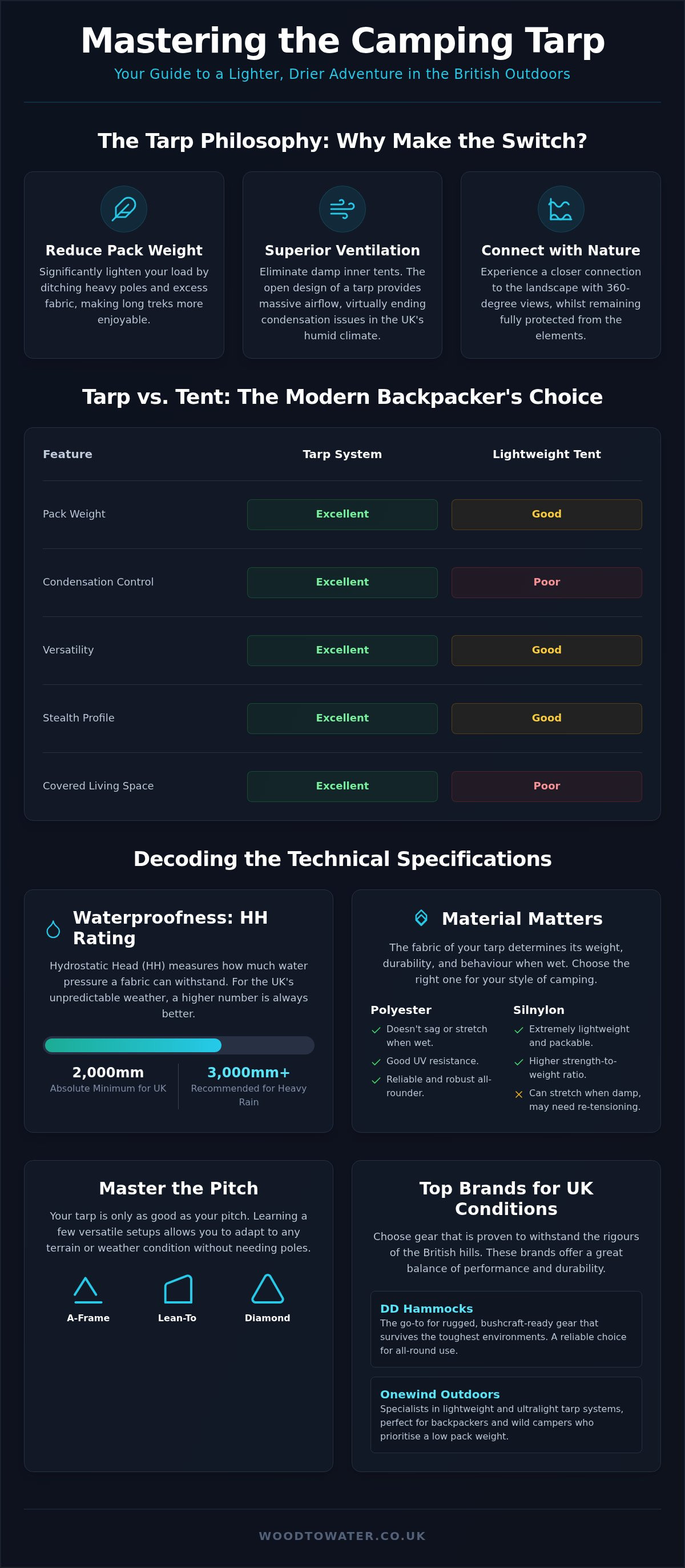
A camping tarp is more than just a waterproof sheet; it's the ultimate tool for the versatile backpacker. While you might wonder What is a Tarpaulin? in a general sense, a dedicated outdoor version is engineered for durability and lightweight performance. It's an essential bit of kit that replaces the rigid structure of a tent with a flexible, adaptable barrier against the elements. The "tarp philosophy" centres on three things: reducing pack weight, improving ventilation, and fostering a deeper connection to the landscape. It's about stripping away the layers between you and the wild whilst staying protected.
In the UK, where wild camping often requires a low-profile approach, a camping tarp offers a level of stealth that traditional tents simply can't match. You can pitch it low to the ground to hide from the wind or high to catch a breeze. Compared to even the lightest 1-man tents, a tarp system usually offers more covered space for a fraction of the weight and bulk. This flexibility makes it a favourite amongst the bushcraft community and weight-conscious hikers alike.
The Versatility of the Tarp System
One of the biggest draws is how many ways you can use it. If you're a ground-dweller, pairing a tarp with a bivvy bag creates a breathable, open-fronted shelter that feels incredibly spacious. For those who prefer sleeping amongst the trees, a tarp is a non-negotiable part of any hammock camping setup. It protects you from the rain while you're suspended, creating a dry cocoon. Beyond sleeping, it's perfect for creating a communal area for cooking or keeping your gear out of the mud. You can't easily cook inside a small tent, but under a tarp, you've got all the headroom you need.
Why British Weather Demands a Quality Tarp
British humidity is a tent's worst enemy. We've all woken up in a damp tent because of condensation. Because a tarp allows for massive airflow, it virtually eliminates this issue. You get to stay dry during a sudden downpour whilst still enjoying a 360-degree view of the fells. There's also a massive psychological benefit to having a dry porch area. Being able to sit under cover, organise your kit, or boil a kettle without being cramped makes a huge difference to your morale during a wet weekend in the Highlands. It turns a rainy day from a survival exercise into an enjoyable outdoor experience.
Technical Specifications: Materials, Waterproofness, and Size Selection
Choosing the right camping tarp requires a bit of technical knowledge to ensure you aren't left damp and disappointed. In the UK, rain isn't just a possibility; it's a guarantee. The first thing you should check is the Hydrostatic Head (HH) rating. This figure tells you how much water pressure the fabric can withstand before moisture starts seeping through. For the unpredictable British climate, a rating of 2,000mm is the absolute minimum. Many robust options, such as the DD range, offer 3,000mm or higher, providing a massive safety margin during a heavy Lakeland downpour.
Beyond waterproofness, you need to balance weight against durability. A tarp for a weekend bushcraft trip where you might be near a fire needs to be tougher than one used for a fast-and-light mountain marathon. If you're looking to upgrade your kit, you can browse our full range of camping tarps to find the perfect balance for your next outing.
Material Science: Polyester vs. Nylon
Most tarps on the market are made from either polyester or nylon. Polyester, often seen in 190T (thread count) variations, is a fantastic all-rounder. It's naturally UV resistant and, crucially, it doesn't sag when it gets wet. This means you won't have to get out of your sleeping bag at 3 am to re-tension your lines. It's the reliable choice for most UK campers.
Nylon, specifically Silnylon, is the go-to for the ultralight crowd. Brands like Onewind Outdoors and 3FULgear use this material because it's incredibly packable. It's stronger than polyester for its weight, but it does stretch when damp. When checking specifications, look for reinforced webbing loops rather than metal eyelets. Webbing loops distribute tension across the fabric much more effectively, which prevents the material from tearing when the wind picks up on the moors.
Choosing the Right Dimensions
Size matters when it's pelting down. The 3x3m tarp is widely considered the "Gold Standard" for solo campers and hammock users. It's large enough to create a variety of complex pitches whilst remaining manageable in high winds. If you're on a minimalist mission, a small 1.5m x 2.5m tarp is perfect for emergency bivvies or as a lightweight roof for a solo trekker. For those heading out in a group, a 4x4m tarp or larger is essential. These bigger sheets provide enough communal space for several people to cook and socialise comfortably, keeping the whole team's spirits high regardless of the weather.
Tarp vs Tent: Comparing Versatility and Weight for the Modern Backpacker
Choosing between a traditional tent and a camping tarp often comes down to your personal style of adventure. For many UK backpackers, the tent is a safety blanket. It offers a sealed environment and a familiar structure. However, once you experience the weight savings and freedom of a tarp, it's hard to go back. A standard 3x3m tarp usually weighs significantly less than even the most minimalist 1-man tents, freeing up precious space in your pack for better food or extra layers.
The Benefits of Tarp Camping
Ventilation is where the tarp truly shines. In the humid British climate, tents often become "sweat boxes" as breath condenses on the inner walls. A tarp allows for constant airflow, ensuring you wake up in a dry environment. There is also the adaptability factor. You can pitch a tarp on uneven ground or amongst tight clusters of trees where a tent footprint simply wouldn't fit. Plus, from a financial perspective, high-quality tarps are often much more affordable than technical, ultralight tents.
Stealth is another massive advantage for wild campers in the UK. A low-pitched, olive green camping tarp is almost invisible amongst the bracken and heather. It allows you to blend into the scenery, maintaining a low profile whilst you enjoy the sunset.
The Challenges and How to Overcome Them
The most common concern we hear is about protection from insects. While a tent is a sealed unit, a tarp requires a bit more thought. If you're camping during midge season in Scotland, you can integrate a Mora Bug Net to create a protected sleeping area. For ground-based bivvying, a simple bivvy bag provides the insect barrier you need without the weight of a full tent inner.
Wind protection is all about the pitch. By securing the windward side of your tarp directly to the ground, you create a sleek, aerodynamic wedge that sheds wind much better than many tall tents. If you really want the ultimate versatile setup, consider pairing your tarp with a DD Frontline Hammock. This combination keeps you off the cold ground and offers a modular system that you can adjust based on the nightly forecast. For those who want the best of both worlds, the "tarp-tent" hybrid is an emerging trend, offering the structure of a tent with the breathability of a tarp.
Mastering the Pitch: Essential Configurations and Hardware
The ridge line is your foundation. While some guides suggest you always need poles, a seasoned UK woodsman knows that a sturdy cord run between two trees is often more reliable. This "backbone" supports the entire weight of your camping tarp, keeping it taut even when the wind picks up. It's a simple, effective system that allows you to adjust your height and position in seconds. By running the line above or below the fabric, you can customise your setup to suit the evening's forecast.
Knots are the secret to a professional pitch. You don't need to be a sailor, but mastering the Taut-Line hitch and the Prusik knot is essential. The Taut-Line hitch allows you to adjust the tension of your guy lines without untying them; it's a lifesaver when the fabric stretches in the rain. Meanwhile, Prusik knots let you slide your tarp along the ridge line to find the perfect spot, locking firmly in place once tension is applied. These skills turn a floppy sheet into a drum-tight shelter.
The A-frame stands as the most reliable UK pitch because it provides maximum protection from wind and rain on both sides of your sleeping area.
Top 3 Tarp Configurations for the UK
The A-Frame is the classic choice for a reason. It sheds water perfectly and offers a sense of security that's hard to beat. If you're looking for a quick lunch stop or a windbreak, the Lean-To is your best friend. It's incredibly fast to set up and works brilliantly at reflecting heat from a camp stove back towards your seat. For those suspended in the trees, the Diamond Pitch is the favourite for hammock campers. It provides long diagonal coverage to keep your head and feet dry whilst using fewer pegging points.
Essential Hardware and Accessories
Your choice of pegs can make or break your night. British soil is rarely consistent; you might be dealing with boggy peat in the morning and rocky peaks by the afternoon. V-pegs offer great hold in soft ground, whilst beefier Y-pegs are better for wedging into hard, stony earth. We always recommend using reflective guy lines to prevent late-night trips around the camp. They're a small addition that makes a massive difference to your safety after dark. Pick up some high-quality hardware from our 3FULGear accessories collection to ensure your next setup is rock solid.
Choosing Your Ideal Setup: Top Brands and Maintenance
Selecting the right brand is the final step in your journey to mastering the camping tarp. While the market is flooded with cheap alternatives, we focus on gear that's been vetted for the realities of the British climate. A tarp is a simple piece of kit, but the quality of the stitching and the strength of the tie-outs make all the difference when a gale rolls in over the moors. Your choice should reflect whether you prioritise "bomb-proof" durability for bushcraft or a minimalist, ultralight setup for long-distance trekking.
Brand Spotlight: DD Hammocks vs. Onewind
DD Hammocks is a firm favourite amongst the UK bushcraft community. Their tarps are famously rugged and reliable; they're designed to survive the rough-and-tumble of dense forest environments. If you want a shelter that feels virtually indestructible and offers plenty of attachment points for creative pitching, DD is the go-to choice. They've built a reputation for gear that just works, regardless of the weather. It's a brand that understands the need for utility in the field.
If you're looking for something more technical, Onewind Outdoors gear offers innovative features and ultralight options. They specialise in integrated systems that are perfect for hikers who want to shave grams without sacrificing performance. Whether you need a massive group shelter or a tiny solo roof, you can find the right fit in our full camping tarps collection. These systems often include clever details like ridge line organisers that make living under fabric much more organised.
Caring for Your Waterproof Tarp
A quality tarp is an investment that can last for years if you treat it right. The "Never Store Wet" rule is the most important thing to remember. Packing away a damp tarp is a recipe for mould and delamination; it also creates a funky smell that's incredibly difficult to shift. If you have to pack up in a downpour, make sure you hang the fabric in a garage or over a banister as soon as you get home. It needs to be bone-dry before it goes back into its stuff sack to ensure the longevity of the waterproof coating.
Cleaning your gear is straightforward and shouldn't be overcomplicated. Use a soft sponge and mild soap to lift away mud, pine resin, or bird droppings. Don't put your tarp in a washing machine, as the agitation and heat will strip away the waterproof coating. For small field repairs, keep a roll of Tenacious Tape or a tube of seam sealer in your kit. These simple tools allow you to patch small tears or pinholes instantly, ensuring your camping tarp remains a reliable barrier against the elements for many seasons to come.
Final Purchase Checklist:
- Confirm the HH rating is at least 2,000mm for UK conditions.
- Check that the number of tie-out points matches your favourite pitch styles.
- Ensure the material (Polyester vs Nylon) suits your durability needs.
- Verify the weight and pack size fit your rucksack's capacity.
Ready to Elevate Your Wild Camping Setup?
Mastering the use of a camping tarp is a genuine game-changer for any British outdoor enthusiast. You've seen how the right material choice, such as durable polyester or ultralight silnylon, can keep you bone-dry during a sudden Highland downpour. By ditching the traditional tent for a versatile sheet, you're not just saving weight; you're gaining a closer connection to the landscape and solving the age-old problem of morning condensation. Whether you're bivvying on a ridge or hammock camping in the woods, these skills ensure you stay comfortable and protected.
As an authorised UK dealer for DD Hammocks and Onewind, we've personally vetted every item in our inventory to ensure it meets our high standards. Our team of fellow enthusiasts is always on hand to offer expert bushcraft advice, and we offer free UK delivery to get you on the trail faster. Ready to find your perfect shelter? Browse our curated range of professional Camping Tarps today. The fells are waiting, and with the right gear in your pack, you'll be ready for whatever the British weather has in store. See you out there!
Frequently Asked Questions
Is a tarp better than a tent for UK wild camping?
A camping tarp is often better if you prioritise weight savings and ventilation, especially in humid UK conditions where tents suffer from internal condensation. While a tent provides a sealed room, a tarp offers a more immersive experience and better stealth for wild camping. It's about flexibility; you can pitch a tarp in tight spots where a tent footprint won't fit. For many seasoned hikers, the lack of damp walls makes the tarp a clear winner.
What is the best size tarp for a single person?
The 3x3 metre tarp is widely considered the gold standard for a single person. This dimension provides ample room to keep yourself and your rucksack dry, even if the wind shifts during the night. Smaller tarps, such as 1.5m x 2.5m, are useful for minimalist bivvying or emergency cover, but they don't offer much living space. A 3x3m setup allows for complex pitches like the A-frame for maximum protection.
Do I need poles to set up a camping tarp?
You don't necessarily need poles to pitch a camping tarp. In wooded areas, you can use a ridge line between two trees to support the fabric. If you're camping on open moorland, your trekking poles are a perfect substitute for dedicated tarp poles. Many bushcrafters prefer using natural features and cordage as it reduces pack weight. However, carrying a single telescopic pole can add versatility to your setup when trees aren't available.
How waterproof should a camping tarp be for the UK?
For the unpredictable British weather, your tarp should have a Hydrostatic Head (HH) rating of at least 2,000mm. This ensures the fabric can withstand the pressure of heavy, sustained rain. If you're heading into the mountains or planning a winter trip, look for ratings of 3,000mm or higher. Robust brands like DD Hammocks often provide this extra level of waterproofing, giving you total peace of mind when the clouds start to turn grey.
Can I use a tarp with a regular camping hammock?
Yes, a tarp is an essential partner for any regular camping hammock. Without one, you're exposed to rain, wind, and falling debris. You can pitch the tarp in a diamond configuration for quick setup or use a standard A-frame for full side protection. Pairing a tarp with a DD Frontline Hammock creates a modular, off-the-ground system that's incredibly comfortable. It keeps your gear dry underneath and provides a sheltered space to cook.
What is the difference between a tarp and a basha?
A basha is a specific type of small, rugged tarp originally used by the British military. They are usually rectangular, made from heavy-duty materials, and designed for stealthy, low-profile shelters. While all bashas are tarps, not all tarps are bashas. Modern camping versions often use lighter materials like Silnylon and come in various shapes, whereas a traditional basha is built for durability and concealment in a tactical environment.
How do I stop my tarp from flapping in the wind?
To stop your tarp from flapping, you must achieve a drum-tight pitch. Start by positioning the windward side of the tarp low to the ground to prevent wind from getting underneath. Use Prusik knots on your ridge line to pull the fabric tight from both ends. Adding small loops of shock cord between your guy lines and the tarp loops can also help. These act as shock absorbers, taking the tension out of sudden gusts.
Are camping tarps allowed for DofE expeditions?
Camping tarps are usually not permitted for standard Duke of Edinburgh (DofE) expeditions. Most DofE supervisors require participants to use tents because they provide a fully enclosed, easily supervised environment for young people. While tarps are fantastic for independent wild camping and bushcraft, they don't meet the specific safety and group-management requirements of the DofE kit list. It's always best to check with your specific expedition leader before making a purchase.
