

How to Choose the Best 1 Person Tent for Solo Adventures
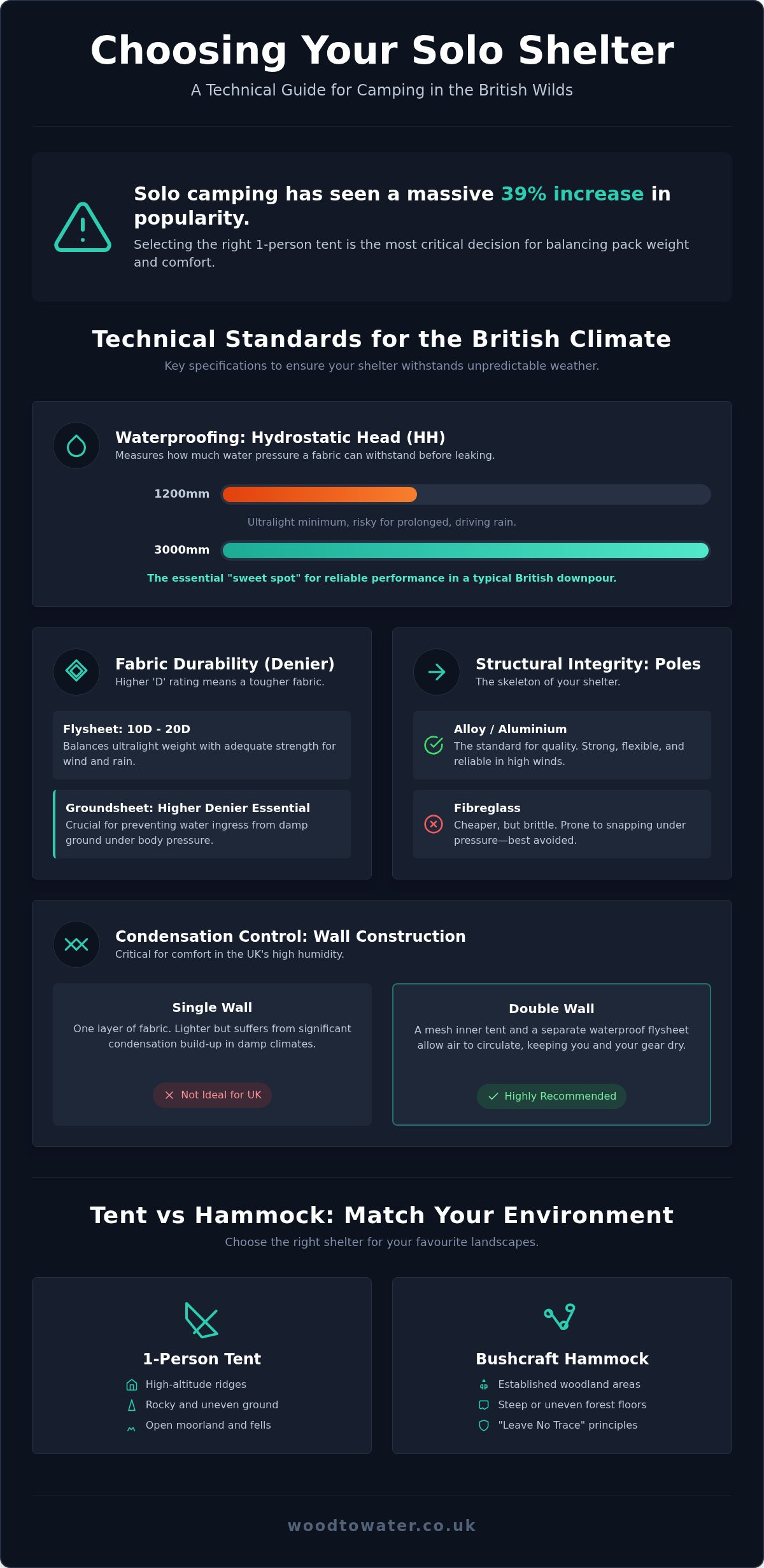
Did you know that solo camping saw a massive 39% increase in popularity recently? It seems more of us are craving the quiet solitude of the hills, yet the reality of carrying your entire life on your back can be daunting. Choosing the right 1 person tent is the most critical decision you'll make for your pack weight and your peace of mind.
We know the struggle of trying to find a shelter that doesn't feel like a coffin or weigh as much as a lead brick. It's frustrating when you're worried about condensation dampening your sleeping bag or wondering if your flysheet can actually handle a proper British downpour. You want a mobile sanctuary that feels secure when the wind picks up on a Lakeland ridge, not a flimsy bit of nylon that leaves you shivering.
This guide will show you how to select a lightweight, durable solo shelter that balances pack weight with the rugged demands of our environment. We'll dive into the essential technical specs, from Hydrostatic Head ratings to wind resistance; ensuring you have the confidence to pitch up anywhere. You'll learn how to pick a tent that fits in a small pack whilst still offering enough space to keep your gear organised and dry.
Key Takeaways
- Understand why a 3000mm Hydrostatic Head is the essential "sweet spot" for staying dry during a typical British downpour.
- Learn how to balance ultralight fabric weight with the rugged durability required for the varied terrain found amongst the UK's wilder spots.
- Discover how to choose a 1 person tent that matches your environment, comparing high-altitude shelters with woodland alternatives like the DD Frontline Hammock.
- Master the strategy for organising a small vestibule to keep your gear dry and manage condensation effectively whilst you're out in the wilds.
- Explore why professional-grade specs are now more accessible than ever with our curated selection of 3FULGear trekking-pole tents.
The Rise of Solo Wild Camping: Why a 1 Person Tent is Your Best Companion
Solo wild camping is experiencing a massive surge in popularity. Recent data from 2025 shows a 39% increase in solo campers, proving that more of us are seeking the quiet solitude of the hills. At its core, a 1 person tent is a specialised, compact shelter designed for one person and their essential gear. Whilst the history of tents stretches back millennia, the modern solo shelter is a technical marvel of weight reduction and weatherproofing. It is your mobile sanctuary, designed to be carried for miles without weighing you down or taking up excessive space in your rucksack.
Choosing a 1 person tent isn't just about saving space; it's about tactical freedom. Shedding 1 or 2kg from your pack weight completely transforms your hiking range. You'll find yourself reaching the summit with energy to spare, rather than feeling drained by a bulky, heavy kit. Smaller tents also offer a distinct advantage for those seeking discreet wild camping spots. Their tiny footprint makes it easy to pitch amongst the heather or on narrow rocky ledges where a larger tent simply wouldn't fit. This stealthy approach allows you to blend into the landscape, respecting the environment whilst enjoying the best views in the country.
Breaking the 'Isolation' Myth
Many people assume solo trekking is lonely, but it's actually a powerful form of mental reset. A dedicated solo shelter fosters a deep, uninterrupted connection to your surroundings. You aren't compromising on your pitch location or your pace for a group. Instead, you're building self-reliance and confidence. There's a unique sense of peace that comes from watching the sunset from your own private porch, knowing you've navigated the fells entirely on your own terms.
Practical Advantages of the Solo Shelter
The practical benefits are immediate. A solo tent packs down to the size of a large water bottle, leaving plenty of room for your stove and food. Because the internal volume is smaller, these tents are often easier to keep warm; your body heat doesn't have to fill a massive void. Speed is another lifesaver. When the British weather inevitably turns, you can get under cover in minutes. A quick pitch is the difference between a dry night and a miserable, sodden evening in the wilds.
Technical Standards for the British Climate: Hydrostatic Head and Durability
When you're out in the British fells, the weather doesn't just rain; it attacks from every angle. Choosing a 1 person tent requires a solid understanding of technical specifications to ensure your "mobile sanctuary" actually keeps you dry. The most quoted stat is the Hydrostatic Head (HH) rating. This measures how much water pressure a fabric can withstand before it leaks. Whilst some ultralight tents offer 1200mm, the "sweet spot" for the UK's persistent downpours is 3000mm. This rating provides a reliable buffer against driving rain and heavy winds that might otherwise force moisture through the fibres of a lesser flysheet.
Fabric durability is measured in Denier (D). Most solo shelters use 10D to 20D nylon for the flysheet to keep weight down. However, you need to be more selective with the groundsheet. A higher denier here is essential because your body weight creates pressure against the damp moorland, potentially forcing water through. When planning your Solo Wild Camping trip, understanding these specs is the difference between a restful night and a soggy rescue mission. If you're looking for gear that hits these high standards, you can explore our curated 1 person tent collection to see these technical specs in action.
The UK's high humidity levels make the choice between single-wall and double-wall tents critical. Single-wall tents are lighter but often suffer from massive condensation build-up in our damp climate. Double-wall designs, featuring a separate mesh inner and waterproof flysheet, allow air to circulate. This keeps your sleeping bag dry and comfortable. For structural integrity, alloy and aluminium poles are the standard. They offer the perfect balance of flex and strength, allowing the tent to bend slightly with the wind rather than snapping under pressure like cheaper fibreglass alternatives.
Weatherproofing Your Adventure
True weatherproofing goes beyond just the fabric rating. Look for taped seams and silicone coatings (SilNylon) that prevent leaks at the most vulnerable points. The shape of your tent matters too. Tunnel shapes are fantastic for shedding wind if pitched correctly, whilst geodesic designs offer the best stability during unpredictable mountain gusts. A high-quality groundsheet is your final line of defence against the saturated peat and moss common in the Highlands and the Lake District.
Weight vs. Durability: Finding the Balance
Every gram counts when you're trekking solo, but you shouldn't sacrifice safety for a lighter pack. High-tech nylons are incredibly strong for their weight, yet they require careful handling amongst gorse and rocky ground. It's also vital to understand the terminology used by manufacturers. Trail weight is the minimum weight of the tent, poles, and flysheet required for setup. Packed weight includes everything in the box, such as spare pegs, repair kits, and the stuff sack. Always base your calculations on what you'll actually be carrying up the hill.
The Great Debate: 1 Person Tent vs Hammock for UK Bushcraft
Deciding between the ground and the trees is a rite of passage for many solo adventurers. Whilst your choice often depends on where you plan to spend the night, the 1 person tent remains the undisputed king of the treeless landscape. If your heart is set on high-altitude treks in the Lake District or the exposed peaks of the Scottish Highlands, a tent is your only viable option. These environments offer little in the way of sturdy timber, making a ground-based shelter essential for safety and comfort. Understanding how to choose a backpacking tent for these harsher environments ensures you aren't left exposed when the wind begins to howl across the moorland.
In contrast, the woodland bushcraft scene often leans towards the DD Frontline Hammock. This system excels amongst the dense forests of the UK, where finding a flat, dry, and rock-free patch of ground can be nearly impossible. Setup times vary; a tent requires a clear footprint and well-driven pegs, whilst a hammock needs two sturdy trees spaced roughly four to five metres apart. Regardless of which system you prefer, integrating a camping tarp into your kit is a game-changer. It provides a dedicated dry area for cooking and gear maintenance, effectively doubling your living space without adding significant weight to your rucksack.
The Case for the Solo Tent
A 1 person tent provides a level of total protection that is hard to beat, especially when the midges are out in force. The fully enclosed mesh inner creates a bug-free sanctuary and shields you from ground-level drafts that can bypass a tarp-and-bivvy setup. Beyond the technical specs, there's a psychological benefit to the solo tent. It offers a genuine sense of 'home' and privacy during long, multi-day expeditions. Whether you're pitched in a valley or on a summit, the versatility of a ground shelter means you can find a spot to sleep almost anywhere the terrain allows.
The Hammock Advantage in the Woods
For the woodland enthusiast, hammocks are a fantastic way to practice 'Leave No Trace' camping. By staying off the forest floor, you avoid crushing delicate vegetation and disturbing local wildlife habitats. Hammocks also offer unparalleled comfort on sodden or uneven ground where a tent would be miserable. This setup pairs perfectly with ultralight gear like TOAKS Titanium Cookware. By keeping your kit minimal and efficient, you can enjoy a high-performance camp that fits easily into a smaller pack, leaving you more time to focus on your bushcraft skills rather than fussing with a complex pitch.
Maximising Your Space: How to Organise and Maintain a Solo Shelter
Living in a 1 person tent is an exercise in efficiency; it's about turning a few square metres into a functional home. When space is at a premium, a lack of organisation leads to damp gear and a miserable night. The most effective way to manage this is the 'Dirty Zone' versus 'Clean Zone' strategy. Your vestibule is the dedicated Dirty Zone. This is where muddy boots, wet gaiters, and sodden rucksacks live. By keeping these items outside the inner tent, you prevent moisture and grit from migrating to your sleeping area. The inner tent must remain a sacred, dry space. Keeping it pristine ensures your down sleeping bag stays lofted and warm throughout the night.
Moisture management is your next big challenge. In the damp British climate, condensation is a constant rival. According to a 2025 report from the Camping & Caravanning Club, 73% of UK campers rate waterproofing as their top priority, yet many forget that moisture often comes from the inside. Your breath and damp clothes release litres of water vapour overnight. If you don't manage this, you'll wake up to a literal indoor rainstorm. If you're looking for a shelter designed to handle these conditions, you can find our professional solo shelters here, featuring advanced venting systems.
Steps to Reduce Condensation
Airflow is your best friend. Always pitch your tent with the main vents facing the prevailing wind to encourage a steady through-draught. It's tempting to zip everything up tight when the temperature drops, but leaving vents even partially open makes a massive difference. Never bring wet gear inside the inner tent; the humidity will skyrocket instantly. If the weather allows, give the flysheet a quick wipe with a travel towel before you pack it away. This simple step reduces the weight you carry and prevents moisture from soaking into the inner mesh during transit.
Organising Your Mobile Home
Internal organisation keeps your essentials within reach in the dark. Most solo tents feature mesh pockets; use these for high-frequency items like your headlamp, phone, and earplugs. For everything else, utilise colour-coded dry bags. Knowing that your 'kitchen' is in the blue bag and your 'spare clothes' are in the red one saves you from rummaging through a dark rucksack. This system keeps your sacred sleeping area clear and ensures you can break camp quickly if the weather turns. Maintenance is equally vital for longevity. Never fold your tent the same way twice; folding creates permanent creases that eventually crack and leak. Instead, 'stuff' it into the sack to distribute the stress across the fabric. Always dry your tent thoroughly at home to prevent mould from ruining the technical coatings.
Choosing Your Mobile Sanctuary: Curated Solo Tents at Wood To Water Outdoors
Finding the right 1 person tent often feels like a balancing act between technical performance and your bank balance. At Wood To Water Outdoors, we don't believe in stocking every mass-market brand just for the sake of it. Instead, we act as passionate curators; selecting only the gear that we'd be happy to trust during a wild night on the fells. Our focus is on reliability over retail fluff, ensuring that every seam, pole, and zip in our collection is fit for the unique challenges of the British environment.
One brand that consistently delivers pro-level specs at accessible prices is 3FULGear. Their Lanshan series has quickly become a favourite amongst the UK's ultralight hiking community, and for good reason. These tents utilise your existing trekking poles for structure, which slashes the packed weight whilst maintaining impressive stability. Whether you're navigating the long-distance trails of the South West Coast Path or preparing for a surprise Scottish snowfall, our 1-man tents collection features options with the 4-season reliability you need to stay safe and dry.
The Ultralight Specialist: 3FULGear
The genius of the 3FULGear range lies in its weight-saving design. By removing heavy internal poles and using high-quality sil-nylon fabrics, they offer a setup that rivals much more expensive boutique brands. These materials are incredibly strong and offer excellent resistance to the persistent rain we discussed earlier. For the long-distance trekker, the modularity of these tents is a huge plus. They are easy to repair in the field and pack down so small that you'll barely notice them in your rucksack.
Expert Advice and Support
Choosing a shelter is a personal decision, and buying from a UK specialist ensures you get gear suited for our specific climate. We don't just shift boxes; we are active participants in the outdoor lifestyle. Every piece of kit in our inventory is vetted to ensure it meets our high standards for durability and ease of use. We are committed to testing gear on real UK trails, so you can pitch your tent with the confidence that it has already proven its worth in the wild. Explore our full range of 1 Person Tents today and start your solo adventure with a mobile sanctuary you can truly rely on.
Ready for Your Next Solo Peak?
Your journey into solo wild camping is more than just a trip; it's a chance to reconnect with the landscape on your own terms. Choosing the right 1 person tent is the foundation of that experience. By prioritising a 3000mm Hydrostatic Head and managing your internal space with a clear organisation strategy, you transform a simple shelter into a reliable mobile home. Whether you're chasing summits in the Lakes or seeking woodland silence, the right gear ensures you stay dry, warm, and ready for whatever the British weather throws your way. We know the value of kit you can trust when the sun goes down.
We are a 100% British-owned and operated specialist. Our team only stocks gear we've personally vetted for our unique climate. We want you to feel confident in every piece of kit you carry up the hill. When you're ready to shed the weight and expand your range, view our curated selection of 1 Man Tents. Don't forget that we offer free UK delivery on orders over £80 to help get your adventure started. The hills are calling. With the right shelter in your pack, you're ready to answer. See you out there!
Frequently Asked Questions
Is a 1 person tent big enough for me and my gear?
Yes, most modern solo shelters are designed with enough internal length for a standard sleeping mat and a vestibule for your rucksack. A typical 1 person tent will have an internal length of roughly 210cm to 220cm, which allows space at the head or foot for smaller items. Using the vestibule for your muddy boots and cooking kit is essential to keep the inner living area comfortable and clutter-free.
Can I wild camp in a 1 man tent in the UK?
Wild camping laws vary significantly across the UK. In Scotland, you can legally camp on most unenclosed land under the Scottish Outdoor Access Code. In England and Wales, wild camping is generally a civil offence without landowner permission, though it is tolerated in parts of Dartmoor National Park. Be aware that under the Police, Crime, Sentencing and Courts Act 2022, refusing to leave when asked can lead to criminal penalties.
What is the best weight for a 1 person backpacking tent?
For a balance of durability and comfort, aim for a trail weight between 1kg and 1.5kg. Truly ultralight models can weigh less than 900g, but these often use thinner fabrics that require more careful handling. If your shelter exceeds 2kg, you might find it unnecessarily heavy for long-distance trekking. Always check if the quoted weight includes the pegs and poles before you buy.
Are 1 person tents stable in high winds?
Solo tents are often more stable than larger shelters because they have a much lower profile and smaller surface area for the wind to catch. Geodesic or semi-geodesic shapes offer the best resistance to multi-directional gusts found on UK summits. To ensure stability, always use all available guy lines and choose a model with high-quality aluminium or alloy poles rather than cheaper fibreglass versions.
Do I need a footprint for my 1 person tent?
A footprint is highly recommended if your tent has a thin groundsheet with a low Denier rating. It provides an extra layer of protection against sharp rocks, gorse, and damp moorland. Whilst it adds a small amount of weight to your pack, it can significantly extend the life of your 1 person tent and helps keep the underside of your inner tent clean when pitching on muddy ground.
How do I stop condensation in a small solo tent?
Maximising airflow is the only effective way to prevent moisture build-up in a small space. Keep your tent vents fully open even when it is raining, as your breath can release a significant amount of water vapour overnight. Pitching your tent with the vents facing into the wind will encourage a steady through-draught. Avoid bringing wet clothing or boots into the inner sleeping compartment whenever possible.
What is the difference between a 1 person tent and a bivvy bag?
A tent offers a structured living space where you can sit up and change clothes, whereas a bivvy bag is essentially a waterproof cover for your sleeping bag. Tents provide much better protection from insects and wind, making them more comfortable for multi-day trips. Bivvy bags are lighter and more discreet but offer very little room for gear storage or comfort during a typical British downpour.
Can I use a 1 person tent for the Duke of Edinburgh (DofE) award?
You can use a solo tent for DofE, but it is best to check with your expedition leader first. Most DofE groups prefer participants to share 2 or 3 person tents to foster teamwork and share the weight of the poles and flysheet. However, solo tents are often permitted for Gold level expeditions or for participants with specific requirements that make a private sleeping space necessary.