

Fire-making Equipment: A Practical Buying Guide
The smallest fire starter isn’t always the easiest to use. A compact fire steel saves space, but takes practice; matches may feel more familiar, whilst a torch or firelighter may suit a different task. Choosing fire making equipment is about more than weight. It’s about what you can use confidently when the weather turns or your plans change.
If you’re deciding what to pack for your next trip, start with the conditions, available space and how comfortable you are using each tool. A complementary backup gives you another option if your primary fire starter gets wet, runs out or proves tricky to use.
This guide compares matches, fire steels, compact torches and firelighters by portability, ease of use and the situations each may suit. You’ll find practical ways to choose what to take, decide when a backup makes sense, and pack and use your kit responsibly while keeping local restrictions in mind.
Key Takeaways
- Match your fire-making equipment to the trip, likely conditions, pack space and your confidence using it.
- Know the difference between ignition tools and tinder or fuel, so you can pack every part your setup needs.
- Compare matches, fire steels, torches and firelighters by how they work, how they pack and what else they need.
- Your primary fire starter doesn’t have to cover every situation. A complementary backup gives you another option if conditions change.
- Check your kit before setting off, follow product instructions and respect site guidance and fire restrictions.
What fire-making equipment do you need outdoors?
Fire-making equipment covers the tools and materials used to create an ignition source outdoors and give it something suitable to catch. A fire starter is a broad term for a tool that helps create ignition, such as a fire steel or match. A lighter is one type of fire starter that creates a flame; a match is a single-use stick that ignites when struck.
In this guide, fire making equipment means the ignition tool and any supporting materials it needs. We compare equipment, rather than explain fire-building techniques or determine whether a fire is permitted at a particular site. For background on historical and modern fire making methods, Wikipedia offers a useful overview.
Which parts of a basic fire-starting setup do different jobs?
Each part has a separate role:
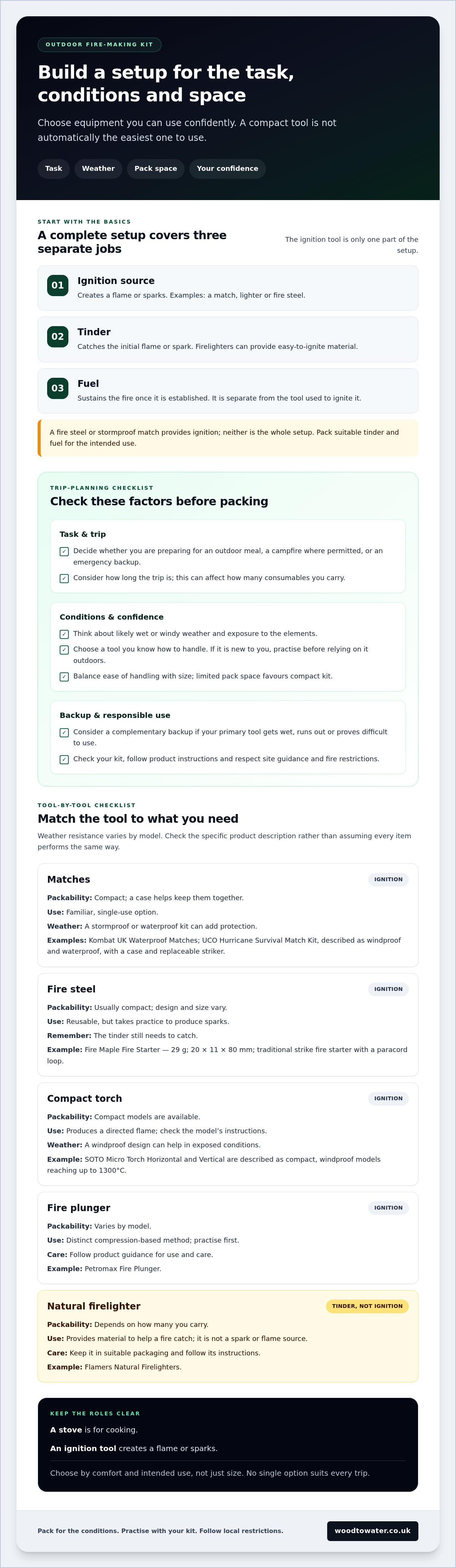
- Ignition source: creates a flame or sparks. A match, lighter or fire steel fits this role.
- Tinder: catches the initial flame or spark. Firelighters can provide an easy-to-ignite material.
- Fuel: sustains the fire once it’s established. This is separate from the tool used to ignite it.
A fire steel or stormproof match can provide ignition, but neither makes up the whole setup. You’ll also need appropriate tinder and fuel for your intended use. Thinking about these separate roles makes it easier to see what your kit covers and what you still need.
Why should your trip shape your equipment choice?
Start with the task. For an outdoor meal, you may want a compact, straightforward ignition option suited to your cooking setup. For a planned campfire, where permitted, tinder and suitable fuel matter as much as the ignition tool. If you’re carrying an emergency backup, a second method gives you another option if your primary one is difficult to use or unavailable.
Next, consider the conditions and who will use the kit. Wet or windy weather may make weather-resistant matches appealing, whilst a fire steel can suit someone comfortable creating sparks. Trip length can affect how many consumables you carry, and limited pack space favours compact kit. If you’re new to a tool, ease of handling matters as much as size, so practise with it before relying on it outdoors.
No single option suits every trip. Match your choice to the expected weather, your experience and the task, then decide whether a complementary backup is worth the space. For a broader view of what to take, explore the bushcraft essentials guide.
Fire making equipment compared: matches, fire steels, torches and firelighters
Each option balances convenience, pack space and user input differently. The table compares the main categories. Weather resistance varies by model, so check the specific product description rather than assuming every item performs the same way. For another overview of modern best fire starters, Popular Science compares several types of fire-starting gear.
| Type | Packability | Ease of use | Weather considerations | Role |
|---|---|---|---|---|
| Matches | Compact; a case helps keep them together | Familiar, single-use option | Choose a stormproof or waterproof kit for added protection | Ignition |
| Fire steel | Usually compact; design and size vary | Requires practice to produce sparks | No match head to light, but the tinder still needs to catch | Ignition |
| Blow torch | Compact models are available | Produces a directed flame; check the model’s instructions | A windproof design can help in exposed conditions | Ignition |
| Fire plunger | Varies by model | Distinct compression-based method; practise first | Follow product guidance for use and care | Ignition |
| Natural firelighter | Depends on how many you carry | Provides material to help a fire catch | Keep it in suitable packaging and follow its instructions | Tinder, not an ignition tool |
When do matches or a fire steel make sense?
Matches offer a familiar, straightforward option, while a strike-style fire starter can be reused but takes more technique. Kombat UK Waterproof Matches are one example of a protected match option. The UCO Hurricane Survival Match Kit is described as windproof and waterproof, with a case and replaceable striker. The Fire Maple Fire Starter is a traditional strike fire starter with a paracord loop; it weighs 29 g and measures 20 x 11 x 80 mm.
When might a torch or natural firelighter suit the task?
A compact torch produces a directed flame. The SOTO Micro Torch Horizontal and Vertical are described as compact, windproof models reaching up to 1300°C. Flamers Natural Firelighters provide material for lighting fires, rather than a spark or flame source. The Petromax Fire Plunger offers a different, compression-based ignition method. Choose by comfort and intended use, not just size.
A stove and a fire-making tool do different jobs: a stove is for cooking, while an ignition tool creates a flame or sparks. For help choosing a cooking system, see the Jetboil systems guide. To compare matches, torches, fire steels and firelighters, browse the fire-making equipment collection.
How to choose fire making equipment for your trip
The right choice fits your plans and is something you know how to use. Work through these questions before packing instead of expecting one tool to suit every trip and condition.
- Define the task. Are you preparing for a quick meal, planning a campfire where permitted, or carrying an emergency backup? Each may call for a different balance of speed, supporting materials and spare ignition options.
- Consider likely conditions. Think about exposure to wind or rain. Weather-resistant descriptions can help narrow the options, but they don’t guarantee a fire will light in every situation.
- Match the tool to your experience. Choose something you can handle confidently. If you’re new to a fire steel or fire plunger, practise using it before relying on it outdoors.
- Check pack space and consumables. A compact option may suit a small pack, whilst matches or firelighters need to be carried in suitable condition and quantity for your plans.
- Plan a backup. Consider a second, complementary method if your trip or the conditions make relying on one ignition option feel limiting.
Which questions help narrow down the right fire starter?
Decide what matters most: compact size, straightforward handling or having more than one attempt available. Then check what your kit needs. Do you need an ignition source, firelighter material or both? Your intended use will help you decide. Choose a tool you can operate as directed and make sure the rest of your setup supports it.
What common buying mistakes should you avoid?
Don’t treat “windproof”, “waterproof” and “stormproof” as interchangeable. Read the product description to understand its specific claims, and follow the instructions. A torch, match kit and fire steel each work differently, so don’t assume they’ll feel equally simple or suit the same conditions. A high headline temperature alone won’t tell you how easy a tool is to handle or whether it suits your trip.
One tool doesn’t have to do everything. Pairing a familiar primary option with a different backup can give you flexibility, especially on a longer or more exposed trip. Before setting off, check that both are in good condition and pack any required consumables. Choose fire making equipment for your actual plans, not just for the most impressive-sounding feature.
Standout fire making equipment in the collection
Different designs suit different preferences, from a directed torch flame to a strike-style starter or a separate firelighter. These examples show the range of fire making equipment available. Use the features that matter for your trip to guide your choice, rather than looking for one tool to do every job.
Compact torches and match kits for straightforward ignition
The SOTO Micro Torch Horizontal and Vertical are described as compact, windproof torches reaching up to 1300°C. They may suit you if you want a torch-style ignition tool in a compact form. The SOTO Pocket Blow Torch XT also reaches up to 1300°C and has an extendable burner head. Consider whether that design suits the way you prefer to handle a torch, and follow the instructions for each model.
For matches, compare the product descriptions closely. The Kombat UK Windproof Matches are identified as windproof, whilst the UCO Hurricane Survival Match Kit is described as windproof and waterproof, and comes with a case and replaceable striker. These are distinct product features, not a promise that either kit will light in every condition. Keep matches protected as directed and choose the description that best fits your expected use.
Strike starters and natural firelighters for a different approach
The Fire Maple Fire Starter is a traditional strike-style starter with a paracord loop. It’s listed at 29 g and measures 20 x 11 x 80 mm, so you can weigh its dimensions against your pack space. The Kombat UK Elite Fire Starter comes in an easy-to-carry waterproof container. Check the product instructions and practise with a strike starter before relying on it outdoors.
Flamers Natural Firelighters provide another part of the setup: material to help get wood fires started, rather than a match, flame or spark. They may suit plans that call for firelighter material alongside a separate ignition source. As always, consider the task and follow the site’s guidance.
To explore related Fire Maple equipment, browse the Fire Maple gear collection. You can also browse fire-making equipment to compare types and find an option that fits your plans.
Pack, use and choose your fire making equipment with confidence
A little preparation helps you head out with kit you understand and can reach easily. Before each trip, check your equipment and how you plan to use it. Product instructions matter, especially for tools with specific handling or storage requirements.
How should you prepare and carry fire-making tools?
Use this pre-trip checklist to cover the basics:
- Read the instructions. Know how each item is used and stored, including guidance for matches, firelighters or other consumables.
- Check its condition. Inspect your ignition tools and supporting materials. Don’t pack items that appear damaged or unusable.
- Pack what the method needs. Check that you have suitable tinder or firelighter material, along with any required fuel or consumables for the equipment you’re taking.
- Secure your kit. Pack items as their instructions specify. Keep a backup ignition option separate from your main one, but somewhere you can reach without unpacking everything.
- Check your plans. Follow site guidance and respect any fire restrictions in place. Carrying equipment doesn’t mean you can use it at every location.
Keep the rest of your outdoor setup in mind too. The Bushcraft Essentials collection can help you explore complementary kit for your trip.
What is the simplest next step when choosing?
Work through the decision in order: consider the trip and likely conditions, choose an ignition method you’re comfortable using, compare documented features and instructions, then decide whether a backup makes sense. Shortlist by task, not just by brand or appearance. A compact option may appeal, but the right choice is one that suits your plans and that you know how to handle.
You don’t need one tool for every situation. Compare the options in the fire making equipment collection and choose a practical combination for your next outing.
Choose a fire starter that fits your next trip
The right fire making equipment depends on your plans, expected conditions and the method you feel comfortable using. Matches, compact torches and strike starters offer different ways to create ignition, whilst natural firelighters support the setup rather than replace an ignition tool. A complementary backup can add flexibility without expecting one item to suit every situation.
Use documented features to compare options. The SOTO torch descriptions specify compact designs and temperatures up to 1300°C, while the Fire Maple Fire Starter’s listed weight and dimensions help you assess packability. These details are useful comparison points, but your choice should still depend on the task and how you’ll carry and use the equipment.
Ready to compare your options? Browse fire making equipment and compare matches, torches, strike starters and firelighters for your plans. Choose thoughtfully, check instructions and site guidance, and head out feeling prepared.
Frequently Asked Questions
Which fire making equipment is best for camping?
The best option depends on your trip, expected conditions and which tool you’re comfortable using. Matches can be a familiar, compact choice; a fire steel is reusable but takes practice, whilst a compact torch offers another ignition method. Consider whether you’ll need tinder or firelighters as well as an ignition source. There’s no single best fire starter for every camping setup, so match the equipment to your plans.
Are stormproof matches waterproof?
Not necessarily. “Stormproof” and “waterproof” describe different product claims, so check the specific match kit’s description rather than assuming one means the other. The UCO Hurricane Survival Match Kit is described as both windproof and waterproof, and includes a case and replaceable striker. Store matches as directed, even if the kit is designed to resist wet conditions, and follow the manufacturer’s instructions for use.
Can I use a fire steel in wet weather?
A fire steel may be an option in damp conditions, but success also depends on having tinder that can catch a spark. Wet or poorly prepared tinder can make ignition difficult, regardless of the tool. Check the fire steel’s instructions and practise with it before your trip so you’re familiar with how to use it. Consider carrying a complementary backup if the forecast or your plans make one ignition method feel limiting.
How do I choose between matches and a fire starter?
Choose matches if you prefer a familiar, ready-to-use option and are comfortable carrying a limited supply. A strike-style fire starter can be reused but may take practice to operate confidently. Compare the specific product’s size, storage requirements and documented weather-resistance claims. Consider whether you also have suitable tinder or firelighter material. The right choice is the one you can use as directed for your intended trip.
Do I need a backup fire starter when camping?
A backup can be useful if your trip is long, conditions may be challenging, or you’d rather not rely on one ignition method. Pairing different types, such as matches and a fire steel, gives you an alternative if one becomes difficult to use. Keep the backup separate from your main starter and accessible in your pack. Choose equipment you know how to handle, and don’t treat a backup as a guarantee of ignition.
What should I look for in a windproof lighter for camping?
Look for a clear, product-specific description of wind resistance, then consider whether the lighter’s size, handling and fuel requirements suit your trip. Check how it’s operated, stored and maintained, and read the instructions before packing it. “Windproof” doesn’t mean waterproof or effective in every condition. If space allows, consider carrying a different ignition method as a backup rather than relying on one lighter alone.
Are natural firelighters useful for outdoor fires?
Yes. Natural firelighters can provide material to help get a wood fire started, but they aren’t an ignition tool like a match, torch or fire steel. They’re most useful as part of a setup that includes both suitable firelighter material and a way to create a flame or spark. Follow the product instructions, and only use fire-making equipment where site guidance and current restrictions allow.