

Camping Mess Kit: How to Choose the Right Camp Kitchen Set
What if the best camping mess kit is the one that leaves half its pieces at home? The right setup depends on what you’ll cook, how many people you’re feeding and how much room you have to pack. Get that balance right, and camp meals feel simpler without carrying gear you won’t use.
It’s easy to confuse a mess kit with a cookware set. Some kits focus on plates, bowls, cups and utensils; others include pots and pans for cooking, sometimes with tableware packed inside. Neither format suits every trip, so choosing a ready-made bundle isn’t always the easiest route.
This guide will help you build a practical camping mess kit around your meals and cooking style. You’ll learn which pieces are useful for solo or group meals, how to compare titanium, aluminium and stainless steel, and what to consider for weight, durability and pack space. We’ll also look at ways to combine cookware, tableware and utensils, with examples including TOAKS titanium cookware, Petromax enamelware and a GSI long spoon. The aim is simple: choose the essentials, leave out the extras and feel confident packing for your next trip.
Key Takeaways
- Build your camping mess kit around the meals you plan to make, rather than buying a bundle for pieces you may not use.
- Separate cooking equipment from the plates, bowls and utensils you need to serve and eat.
- Balance weight and pack space against the cooking and serving your trip requires, comparing materials using product details.
- Choose between a complete set, individual pieces or a group-oriented setup based on convenience and how much flexibility you need.
- Plan meals, count diners and choose your cooking method before selecting pieces; then check for missing essentials and unnecessary duplicates.
Camping mess kit basics: what do you actually need?
A useful camping mess kit isn’t defined by how many pieces come in a box. It’s the reusable gear you need to prepare, serve and eat the meals you’ve planned outdoors. That might mean a pot and spoon for a hot meal, or just a bowl and eating utensils for food that’s ready to serve.
A mess kit is the cookware, tableware and utensils you need for outdoor meals; a complete camp kitchen may also include the equipment used to heat and prepare them. Keeping that distinction in mind makes it easier to pack what you’ll use instead of carrying a large bundle of overlapping items. Start with your meals, then account for the people eating, your cooking method and the space available in your pack.
Mess kit or camp cookware set: what is the difference?
A camp cookware set usually centres on vessels for heating food, such as a pot or pan. Tableware covers the items used to serve and eat, including plates, bowls and utensils. A mess kit can bring these functions together, but the term doesn’t always mean one fixed bundle.
You can assemble individual pieces around your routine. If you cook in a pot and eat from a bowl, those may be more useful than a set of extra plates. A solo camper and a group sharing meals will have different needs, too. Think about the job each item does, not simply how full a kit looks.
Start with the meals you plan to eat
Picture a typical day outdoors. A ready-to-eat meal may call for a bowl and a spoon, with no cooking vessel needed. If you’ll heat soup or another one-pot meal, add a suitable pot and a utensil for stirring or eating. A breakfast that needs frying may make a pan useful, while a simple lunch may not.
Consider how you’ll prepare food as well. A meal heated over a stove may need different cookware from one cooked over a fire, so match each piece to your intended method rather than assuming one set will suit everything. For more background on the range of approaches, see Outdoor Cooking Techniques and Equipment.
Stove selection is a separate decision from choosing cookware and tableware. If you’re planning stove-based meals, explore the Jetboil camping cooking gear alongside your meal plan. Keep the focus here on what you’ll cook in, eat from and need to serve it. That simple check helps prevent both missing essentials and unnecessary duplicates.
How to choose a camping mess kit: materials, weight and useful pieces
Choose each item for a job, then check how the pieces work together. A kit that suits your meals but takes up too much room can be awkward to carry. A compact setup that can’t handle the way you cook won’t be much use either. The aim is to find a practical balance, not the lightest or largest collection by default.
Quick checklist: match your kit to its use, the people eating, your cooking method and the pack space you have.
Which material suits your camping mess kit?
Material matters, but it’s most helpful to judge it through the particular item and role you’re considering. A TOAKS titanium pan is a lightweight cooking option, while Petromax enamel plates and bowls are examples of tableware. They serve different purposes, so comparing them as if they were interchangeable would miss the point.
Petromax cast iron skillets represent a heavier cooking format. That may make sense when the cooking plan suits the item and carrying weight is less of a concern. For titanium, aluminium or stainless steel, compare the product’s listed weight, dimensions, intended use and care instructions. Don’t choose from a material name alone; consider what the item does and whether it suits your trip.
Packability is about the whole setup, too. Nesting pieces can help keep loose items together, but don’t assume every pot, bowl or plate will fit inside another. Check the product dimensions and think through where each piece will go in your pack. Leave room for the rest of your gear.
Which pieces are essentials, and which are optional?
A useful starting point is a cooking vessel if your meals need heating, an eating surface and a utensil. Adjust that shortlist to the menu: a ready-to-eat meal may not call for a pan, while cooking a meal that needs stirring could make a long spoon useful. The GSI long spoon is one example of a utensil with a specific role.
Plates may be useful for meals you want to serve separately, while bowls can suit meals eaten from one vessel. Browse camping plates as you decide what fits your serving routine. Optional additions, such as a coffee press or food container, earn their place when you’ll use them. If they don’t support a planned meal or make the setup easier to manage, leave them behind.
Before packing, group the pieces by task: cooking, serving and eating. Look for duplicates, then consider whether a compact arrangement keeps the essentials together without forcing you to carry extras. Compare and combine cookware, tableware and utensils in the outdoor cookware collection to build a setup around what you’ll actually use.
Complete camping mess kit or individual pieces: which setup makes sense?
A ready-made set can make choosing simpler, whilst selecting individual pieces gives you more control over what goes in your pack. The best format depends on whether you want a coordinated starting point, already know your cooking routine or need enough kit for shared meals. Compare the options by what they help you do, not just by how many pieces they contain.
| Setup | Best suited to | Main advantage | Consider |
|---|---|---|---|
| Complete set | Campers who want a ready-made starting point | Convenience and a coordinated format | Whether the set suits your meals and pack space |
| Individual pieces | Campers with an established routine or specific menu | Flexibility to select only what you need | Remembering each useful item and avoiding gaps |
| Group-oriented setup | People sharing food and cooking duties | A setup planned around serving several diners | Allowing for varied meals and the gear everyone will use |
When does a complete mess kit make shopping simpler?
A complete set is a straightforward choice if you’d rather start with a coordinated cook-and-eat format than choose every item separately. The GSI Bugaboo Ceramic Camper is a cook-and-eat set for four, making it a useful example for campers planning meals as a group. Use its product details to understand the set’s components and check that its format suits your plans.
Convenience matters most when the set broadly matches your trip. Think about the number of diners and the meals you expect to share, then consider whether the set’s overall format works for your storage space. A complete set isn’t automatically the simplest option if you’ll leave much of it unused.
When is it better to build a kit piece by piece?
Individual pieces suit campers who already know what they cook and carry. A TOAKS titanium pan and a GSI Pouch Spoon are distinct examples: one is cookware, the other a utensil. Choose each for a role in your routine, then add serving pieces that fit the way you eat. For more on choosing titanium cookware, consult a guide focused on TOAKS titanium cookware.
Trip style can shift the balance. A solo outing may call for a small, personal setup; shared meals mean thinking about how food will be cooked and served across the group. A varied menu may also need different pieces from a routine built around similar meals. Decide whether a set’s convenience outweighs the flexibility of choosing each item yourself.
There’s no need to treat the choice as permanent. Start with the setup that suits your next trip, then adjust it as your meals or group change. A practical camping mess kit is one that works together without making you carry pieces that don’t earn their place.
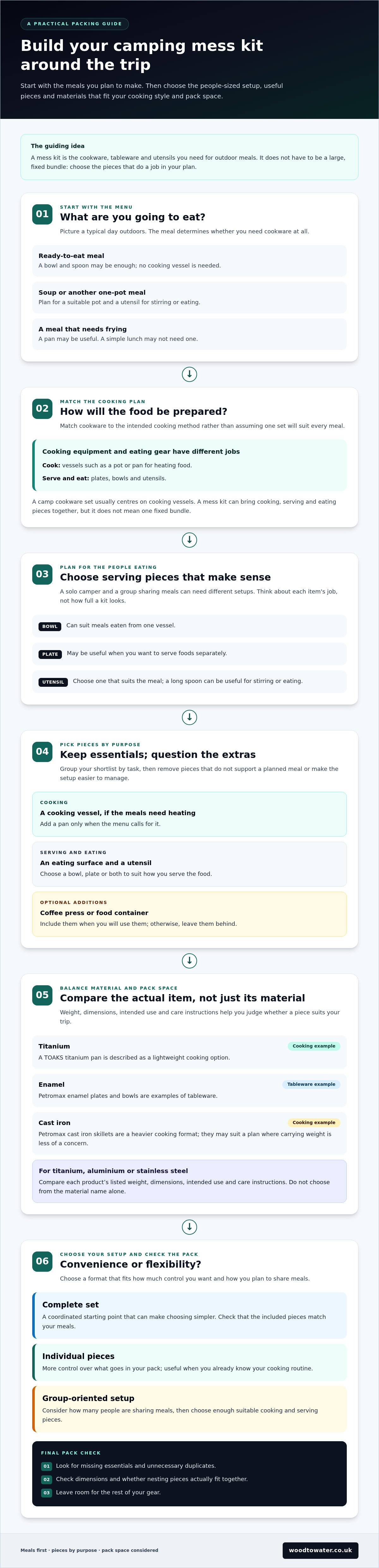
Build a camping mess kit for your trip and avoid common buying mistakes
A short plan can save you from packing a bulky set that doesn’t suit your meals, or reaching camp without a useful utensil. Work through these choices in order, then check that every piece has a clear job.
- Plan your meals. A pouch meal may need little more than a spoon, while a hot drink calls for a cup and a cooked meal may need a pot or pan as well as something to eat from. Think through the meals you’ll actually have, not every meal you could make.
- Count the diners. A solo meal and a shared dinner place different demands on serving and eating gear. Consider how people will share food, and whether everyone needs their own eating pieces.
- Choose your cooking method. Decide whether your meals will be ready to eat or heated using your planned method. That choice affects whether you need cookware or only items for serving and eating.
- Select the pieces. Match each item to a meal or task. Include the utensil you’ll need to stir, serve or eat, and leave out extras that have no clear purpose.
- Check your pack space. Arrange the pieces as you’d carry them. Make sure they fit alongside the rest of your gear and won’t leave essential items loose or difficult to reach.
How should solo campers and groups plan different kits?
For a solo trip, focus on the items you’ll use yourself and avoid carrying serving gear for diners who aren’t there. For shared meals, think beyond the cooking vessel: people also need a practical way to serve and eat. Match the setup to your group and menu rather than assuming one format fits every trip. A UK camping checklist can help with broader planning beyond the camp kitchen.
What common mess kit buying mistakes can you avoid?
Don’t choose by appearance or item count alone. A large set can include pieces that never make it into your meal routine, whilst an appealingly compact choice may leave out a utensil you rely on. Check for duplicates, too, especially if you already own suitable tableware or cookware.
Consider how you’ll clean, store and handle each item on your trip. Follow the product’s own care and safety guidance rather than assuming all materials can be treated alike. These checks help you build a camping mess kit that’s practical beyond the first outing.
Ready to put your plan into practice? Browse outdoor cookware and mess-kit essentials to bring together pieces for cooking, serving and eating.
Camping mess kit examples: standout cookware, tableware and utensils
Once you’ve settled on the meals and people your setup needs to serve, individual pieces are easier to assess by their role. Cookware helps prepare a meal; tableware and utensils help serve and eat it. These examples show how a few distinct formats can contribute to a practical camping mess kit without requiring every camper to carry the same combination.
Cookware and serving pieces for different meal styles
For a meal that needs frying, the Primus CampFire Frying Pan is a stainless steel cookware option. It has a clear role in a setup built around cooking in a pan, rather than simply serving food. Match it to your intended meals and cooking routine, and consider whether you’ll use it often enough to justify packing it.
The TOAKS Titanium D165mm plate / frying pan offers a dual-purpose format: it can serve as a plate or a pan. That makes it an example of one item with two potential roles. Think about which use matters most on your trip and how it fits alongside the rest of your gear.
For serving, Petromax enamel plates and bowls provide options for presenting meals. Choose the format that suits what you plan to eat, whether you’d rather serve food on a plate or from a bowl. The Petromax Frying Basket has a more specific role: it’s an accessory designed for the ft6 and ft9 Dutch ovens. It’s relevant only if that cookware is part of your setup.
Small additions that make camp meals more practical
Small utensils can make a noticeable difference to how you eat outdoors. The GSI Pouch Spoon is an example for stirring, scooping or eating from a pouch. If pouch meals are part of your plan, it has a direct use; if not, choose utensils around the meals you’ll actually prepare and serve.
For storing food, the Fire Maple Gear Tea & Coffee Container is a food-grade container with an airtight seal. Consider whether this kind of container has a job in your meal plan before adding it to your pack. Each extra piece should solve a practical need, not just make the kit look more complete.
The GSI Bugaboo Ceramic Camper is a cook-and-eat set for four, offering a different starting point from selecting individual items. It may suit a group setup, while a smaller or more specific menu could call for a hand-picked mix of cookware, tableware and utensils. Compare the role of each piece with your own plans, and review product details to understand how an item should be used and cared for.
Ready to put together a setup that fits your meals? Explore the outdoor cookware collection to browse options for cooking and dining outdoors.
Get your camp kitchen ready for the next trip
Your next step is to picture one real meal you’re looking forward to making outdoors. What will you cook or serve, and what would make eating it easier? Use that moment to decide which pieces deserve space in your pack. A camping mess kit doesn’t need to be finished all at once; you can build it around your routine and refine it as your trips change.
The outdoor cookware collection brings together equipment for cooking, eating and drinking, with options ranging from a cook-and-eat set for four to individual cookware, tableware and utensils. That gives you room to choose a coordinated starting point or put together a more personal setup, without losing sight of what your meals actually call for.
Compare the roles of the pieces and choose what will help make your next camp meal feel straightforward. Browse outdoor cookware and choose your camping mess kit, then pack for the food you want to enjoy and look forward to a more relaxed meal outdoors.
Frequently Asked Questions
Can I use a camping mess kit over an open fire?
Sometimes, but suitability depends on the specific item and its manufacturer’s guidance. A pan designed for cooking may have different use instructions from a plate or bowl intended for serving. Don’t assume tableware can sit over a direct flame. Before cooking over an open fire, distinguish cookware from eating pieces and read the care and use instructions supplied with each product. This helps you avoid exposing an unsuitable item to direct heat.
Is a camping mess kit suitable for backpacking?
Yes, a camping mess kit can suit backpacking if its pieces fit your meals, the people sharing them and your available pack space. A simple overnight menu may need less gear than a trip with cooked meals and shared serving. Prioritise useful pieces over a high item count, then compare the actual weights and dimensions in product information before deciding whether a set is manageable to carry.
How do I clean camping plates and cookware outdoors?
Clean each item according to its own care instructions, since materials and product designs can differ. Before setting off, think through where you’ll wash used cookware and how you’ll manage leftover food and washing water responsibly, without leaving waste behind. Enamel, titanium and cast iron shouldn’t automatically be cleaned in the same way. Check the guidance supplied with each piece rather than relying on one routine for everything.
Can I use one pan as both cookware and a plate?
Yes, if the product is specifically described for both roles. The TOAKS Titanium D165mm plate / frying pan is a dual-purpose plate and pan. That doesn’t mean every camping plate can be used for cooking. Check that the specific item is intended for your planned meal, and follow its use and care instructions, especially before using it as cookware.
What should a family camping mess kit include?
A family camping mess kit should reflect how many people are eating, what you’ll cook and how you’ll prepare it. Before shopping, make a short list of shared cookware, individual eating pieces and the utensils your meals call for. The GSI Bugaboo Ceramic Camper is a cook-and-eat set for four. Check its product details to see whether its components suit your family.
Are enamel bowls suitable for hot food?
The Petromax enamel bowls are intended for serving hot and cold food. Keep that statement specific to those bowls rather than assuming every enamel item has the same use. Before serving, handling or cleaning them, follow the product’s instructions. If you’re choosing tableware for a particular meal, check the details for that exact bowl so its described use fits your plans.
What is the difference between a mess kit and a picnic set?
The terms can describe different combinations of gear, so the label alone won’t tell you exactly what a set does. Inspect its pieces and consider whether they cover preparing, cooking, serving or eating outdoors. A set focused on eating may not include cooking vessels, whilst another may combine cookware and tableware. Match the actual contents to your trip rather than relying on a single standard definition.