

Bushbox XL vs Petromax Hobo Stove: Which Burns Wood More Efficiently?
The stove that looks more efficient on paper may not be the one that uses less wood on your trip. That’s the question behind bushbox xl vs petromax hobo stove wood burning efficiency, especially when comparisons use different fuel, cookware or weather. A result only tells you so much if the test conditions don’t match your own.
When comparing these stoves, consider how each design affects feeding the fire, airflow and flame control. Fuel size, cookware and damp conditions can also affect cooking performance. In practical terms, efficiency means getting useful cooking heat from a measured amount of wood, not simply producing a lively flame.
This guide compares the Bushbox XL and Petromax Hobo Stove using consistent criteria rather than relying on brand claims or mismatched tests. We’ll cover fuel, airflow, feeding, cookware, packability and conditions, then outline a fair way to test both. By the end, you’ll have a clearer idea of which stove fits your cooking needs and the trips you take.
Key Takeaways
- Wood-burning efficiency means useful cooking heat for the fuel used, not simply a strong flame or quick boil.
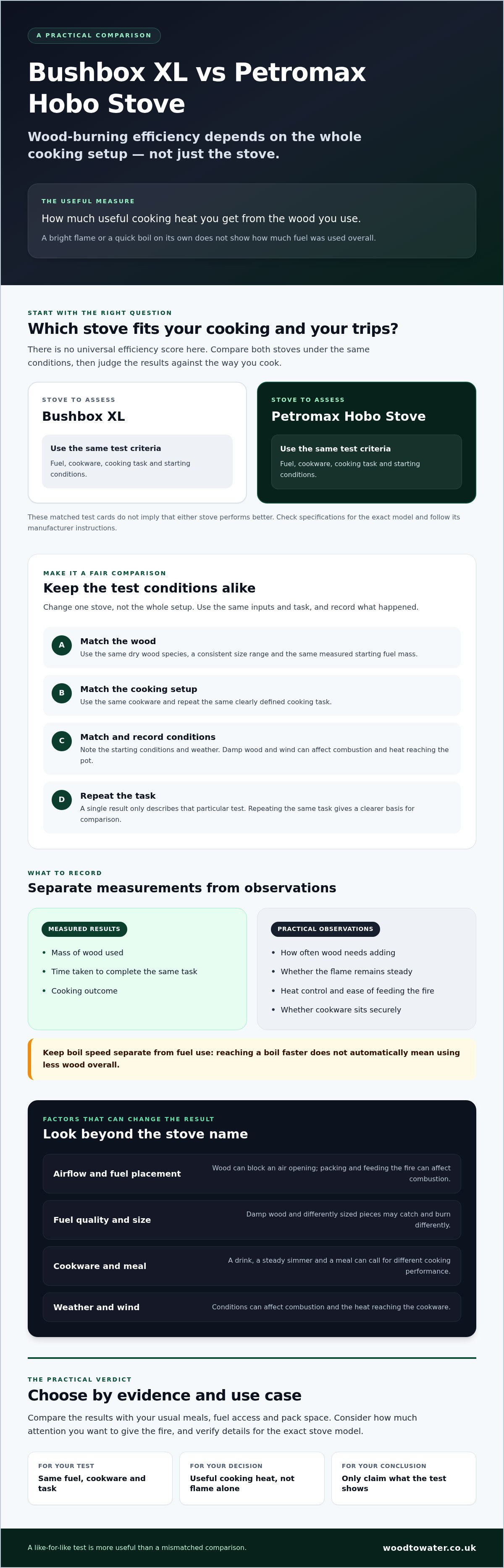
- Compare the Bushbox XL and Petromax Hobo Stove using the same wood, cookware, cooking task and starting conditions.
- Airflow, fuel placement and how often you tend the fire can all affect performance in real use.
- Use the bushbox xl vs petromax hobo stove wood burning efficiency comparison to weigh your cooking needs against fuel access and pack space.
- Check the exact model’s specifications and look for comparable test results before deciding which stove suits your trips.
Bushbox XL vs Petromax Hobo Stove Wood Burning Efficiency: What Does It Mean?
“Efficient” can mean different things around a campfire. For this comparison, practical wood-burning efficiency is the useful heat transferred to your cookware relative to the wood consumed. It isn’t a universal score printed on a stove, and you can’t judge it reliably from a bright flame or a single boil time.
A hobo stove is a portable wood-burning stove with a fire chamber that supports combustion and directs heat towards cookware. That broad description explains the format, but it doesn’t show how efficiently a particular model will cook. The result depends on the stove, fuel, pot and conditions working together.
What counts as an efficient wood-burning stove?
A useful comparison records measurable results, such as the mass of wood used and the time taken to complete the same cooking task. Keep the starting fuel and cookware consistent, then record the conditions and outcome. This gives you a clearer basis for comparison than impressions alone, although the results still apply only to that particular test.
Keep different measures separate. Boil speed tells you how quickly water reaches a boil, not how much fuel the stove uses overall. A strong flame may deliver heat quickly but could also burn through fuel faster. Heat control and ease of feeding matter too: they affect how manageable it is to simmer, cook a meal or keep the fire going, but are partly matters of user experience.
A faster boil doesn’t automatically mean less wood overall. The stove might use more fuel to reach that result, or the test might stop at the boil and leave out the wood needed for the rest of the meal. Define the task and method, and don’t generalise from one result to every outing.
Why one stove may not win every trip
Your cooking plans shape the comparison. Heating water for a drink is different from cooking a meal that needs steady heat. Pot size, desired speed and how much attention you’re willing to give the fire can all affect which stove feels like the better fit.
Fuel and weather matter too. Damp wood can behave differently from dry wood, and pieces of different sizes may catch and burn differently. Wind can affect combustion and the heat reaching the pot. For a fair Bushbox XL versus Petromax Hobo comparison, use like-for-like fuel and cookware, describe the conditions and repeat the task rather than relying on an isolated brand claim.
That’s the practical lens for bushbox xl vs petromax hobo stove wood burning efficiency: compare performance against your usual meals and conditions, not an abstract winner. Read the comparison in that spirit, verify model details and limit conclusions to the evidence available.
How Stove Design, Airflow and Wood Affect Bushbox XL and Petromax Hobo Efficiency
Stove design affects how air reaches the fire and how heat travels towards the pan, but appearance alone can’t tell you which model will use less wood. Before comparing the Bushbox XL and Petromax Hobo, check the current manufacturer instructions for the exact models. Confirm their construction, air openings, assembly and recommended fuel and cookware positions. Names can cover different versions, so don’t assume details from one model apply to another.
Air supply and fuel placement work together. Wood that blocks an air opening may change combustion. Pieces packed too tightly or added in large batches can make the fire behave differently from a steady feed of smaller pieces. These are factors to observe, not proof that either stove has superior airflow. The wood-burning efficiency principles described by the US Environmental Protection Agency also highlight the role of seasoned wood. Treat that as background on fuel quality, not as a direct test of either stove.
Airflow, fire chamber and fuel feeding
In a side-by-side trial, use each stove as its manufacturer recommends, then note what happens. Does the flame remain steady? How often do you need to add wood? Does the cookware sit securely, and does its position affect the flame or the heat reaching its base? Record observations separately from measurements such as fuel used and cooking time. A tidy-looking fire chamber or confident marketing claim isn’t evidence of better combustion.
Fuel quality and cooking conditions
For a fair comparison, prepare the same dry wood species in a consistent size range and start with the same measured fuel mass. Mixed sizes or damp pieces can make one trial burn differently from another, obscuring any difference between the stoves. Use the same cookware and water quantity, and follow the same feeding method for both.
Keep a simple log for each trial:
- Fuel: species, dryness, piece dimensions and starting mass.
- Conditions: wind exposure and ambient conditions.
- Setup: cookware, water quantity and position on the stove.
- Use: feeding intervals, flame stability, cooking time and fuel remaining.
Small changes in technique matter. Adding wood early, letting the fire run low or shifting the pot can alter the result. Repeat the same cooking task and record any unavoidable differences instead of presenting a single burn as a universal verdict. If you’re checking related equipment, Wood To Water Outdoors’ bushcraft essentials page offers a relevant place to browse. Verify the exact stove model and current availability before relying on a product listing.
Bushbox XL vs Petromax Hobo Stove: Compare Cooking Performance Fairly
A useful side-by-side test needs a clear method, not just two fires burning at once. Measure how much fuel each stove uses to complete the same cooking task, then consider the time and effort involved. No comparable, documented results are provided here, so the table below is a scorecard to fill in, not evidence that either stove has already proved more efficient.
Which comparison measures are useful?
Choose one cooking endpoint and use it for both stoves. For example, if the task is heating a set quantity of water, record the time until it reaches the same defined temperature, not simply the first bubbles. Weigh the fuel before use and any usable, unburned wood afterwards. Keep manufacturer specifications separate from your own test observations.
Design and testing methods are explored further in MIT D-Lab’s handbook on biomass cookstove design. For this comparison, use the exact current stove versions and their manufacturers’ instructions. Don’t assume a feature listed for one version applies to another.
| What to compare | Bushbox XL | Petromax Hobo Stove |
|---|---|---|
| Published details | Confirm exact model, configuration and manufacturer specifications. | Confirm exact model, configuration and manufacturer specifications. |
| Cooking result | Record endpoint, elapsed time and fuel consumed for each trial. | Record the same endpoint, elapsed time and fuel consumed. |
| Fuel remaining | Note usable unburned fuel; keep ash and char separate. | Use the same recording method as for the Bushbox XL. |
| Usability | Log setup, refuelling effort, stability and heat control. | Log the same observations, using the same cookware and task. |
How to read results without overclaiming
Repeat each trial under as similar conditions as practical. Report how many trials you completed, the fuel and cookware used, wind exposure and any changes in technique. A single burn can be skewed by a gust, an awkwardly sized stick or a different feeding rhythm. If model-specific details haven’t been verified, label them as unconfirmed rather than filling gaps with assumptions.
Interpret the figures together. Lower fuel use for the same cooking endpoint suggests an advantage in that test, while shorter cooking time or easier heat control may matter more on a particular trip. The bushbox xl vs petromax hobo stove wood burning efficiency comparison should describe what happened under the recorded conditions, not declare a universal winner based on one ideal-weather trial.
How to Choose Between the Bushbox XL and Petromax Hobo Stove for Your Trips
The right choice depends on the trips you take, not a headline efficiency claim. Consider what you cook, where your fuel comes from and how much room you have in your pack. The bushbox xl vs petromax hobo stove wood burning efficiency comparison is most useful when you weigh those practical needs alongside results from a fair test.
Match the stove to your cooking routine
Start with the job. For a quick hot drink, you may value a simple setup and quick heat. A meal that needs sustained cooking puts more emphasis on steady heat and ease of adding fuel. Consider how often you’re willing to tend the fire. If you’d rather focus on camp than manage fuel and flame, that preference may matter more than a small difference in a controlled test.
Check the manufacturer’s guidance for the exact model and version you’re considering. Confirm that your usual cookware is suitable, sits securely and can be positioned as recommended. Don’t assume a pot that works well on one stove will fit the other just as comfortably. Verify the relevant product details before buying, as the exact Bushbox XL and Petromax Hobo Stove models haven’t been confirmed as stocked by Wood To Water Outdoors.
Match the stove to your carrying and fuel constraints
Pack space can settle the decision. Compare verified packed dimensions and weight for the exact stove and included components, then consider them alongside your cookware and the rest of your kit. Avoid relying on specifications for a different material version or bundle. If possible, assess how the packed shape works with your own bag rather than judging by a figure alone.
Next, consider the fuel available on your planned route. Is suitable dry wood reliably available, and does the specific site permit a wood-burning stove? Conditions and guidance vary by location, so check current information from the land manager or site before setting out. If wood is unavailable or unsuitable, consider whether another cooking method better fits the trip, such as a stove from the camping gas stoves range.
For trips where wood-fired cooking suits your plans, build the rest of your kit around your stove and cookware needs. Browse bushcraft essentials for related outdoor equipment, and check exact model details and current availability before choosing. A good fit is a stove you can carry, fuel and use comfortably for the cooking your trips demand.
The Practical Verdict: Choose by Evidence, Use Case and Verified Model Details
There’s no defensible universal winner without comparable, documented test results. The Bushbox XL or Petromax Hobo Stove may suit you better if its verified features match your cooking routine and carrying priorities. Don’t assume either uses less wood based on its name, appearance or a test conducted in different conditions.
A clear decision framework, not a one-size-fits-all winner
Start with the meal you cook most often, the fuel you can reasonably use and the space available in your pack. Then check the exact model’s manufacturer specifications and instructions, including packed dimensions, weight, cookware fit and recommended setup. Details can vary between versions or configurations, so confirm them before buying. The supplied information doesn’t confirm that either exact model is stocked by Wood To Water Outdoors.
If burning less wood is your deciding factor, compare the stoves using the same cooking task, dry fuel, fuel quantity, cookware and starting conditions. Record fuel consumed and the time to the same cooking endpoint across repeat trials. Until comparable evidence is available, treat any efficiency verdict as specific to the test conditions, not a guarantee of performance on your next trip.
A simple rule: prioritise the model whose verified specifications suit your pack and cookware. Use measured fuel consumption to decide only when the tests are genuinely comparable. If key model details or independent results are missing, check with the manufacturer or retailer rather than filling the gaps with assumptions.
Explore compatible outdoor cooking kit
Wood won’t suit every trip. If you’re considering a non-wood option, compare the stove’s intended use and pack requirements with your needs in the Jetboil camping cooking range. Cookware also affects what you can carry and how you cook, so verify pan dimensions and stove compatibility before settling on a setup. Wood To Water Outdoors offers BE bushbox products, but check the exact model and current availability.
When planning your setup, browse outdoor cooking and bushcraft essentials. Choose the option that fits your trips, and base your decision on confirmed specifications and evidence that matches how you plan to cook.
Choose the Stove That Fits Your Next Trip
The bushbox xl vs petromax hobo stove wood burning efficiency question has no reliable universal answer without comparable test results. Fuel dryness and size, airflow, cookware, weather and feeding technique can all affect the outcome. For a useful comparison, measure the wood used for the same cooking task and endpoint, then weigh those findings against pack space, cookware fit and how much tending you’re comfortable with.
Before choosing, confirm the exact model’s current specifications and manufacturer guidance. Wood To Water Outdoors offers BE bushbox products, but check whether the specific Bushbox XL is available. Don’t assume the Petromax Hobo Stove is stocked. The retailer also offers outdoor cooking and bushcraft equipment to help you consider the wider setup.
Ready to plan your kit? Explore outdoor cooking and bushcraft essentials, check the details that matter for your trips, and choose equipment that suits the way you cook.
Frequently Asked Questions
Is the Bushbox XL more fuel-efficient than the Petromax Hobo Stove?
There isn’t enough comparable test evidence here to say that either stove is more fuel-efficient. The bushbox xl vs petromax hobo stove wood burning efficiency comparison depends on the exact models, fuel, cookware and conditions used. To judge them fairly, compare the wood each consumes to complete the same cooking task, using the same fuel and setup. Treat results as specific to those test conditions, not as a universal ranking.
How do you measure wood-burning stove efficiency fairly?
Measure how much wood each stove uses to complete the same defined cooking task. Use the same dry wood, starting fuel mass, cookware and quantity of water, and keep the starting conditions as similar as possible. Record the time to reach the same endpoint, plus usable unburned fuel and any refuelling effort. Repeat the test and document wind and other conditions. Boil time alone doesn’t show total fuel use.
Does wet wood make a camping stove less efficient?
Yes, damp wood can make a burn less effective for cooking. Energy is used to heat and evaporate moisture, which can leave less available for warming the cookware. Wet or unevenly sized fuel can also make results harder to repeat. For a fair stove comparison, use dry wood of the same species and similar dimensions, and record fuel conditions. Follow the stove manufacturer’s instructions for suitable fuel and operation.
Which stove boils water faster, the Bushbox XL or the Petromax Hobo Stove?
There’s no reliable answer without a controlled, comparable test of the exact models. Boil time can change with fuel dryness and size, water quantity, cookware, wind and how the fire is tended. Compare both stoves using the same pot, starting water conditions and fuel, and define the endpoint consistently. Record fuel used as well as elapsed time: the quickest boil doesn’t necessarily mean the least wood consumed overall.
Can you use the same cookware on both stoves?
Possibly, but check the manufacturer’s guidance and the precise dimensions and configuration of each stove before assuming a pot will fit both. Look for stable support and suitable positioning over the fire. Cookware that balances securely on one stove may not do so on another. For a performance comparison, use the same cookware only if it’s appropriate for both setups, and keep its position consistent between trials.
Is a wood-burning stove practical when dry fuel is hard to find?
It may be less practical if you can’t reliably access suitable dry wood, since damp or irregular fuel can make cooking less predictable. Check the specific site’s current guidance before planning to use a wood-burning stove, and consider how you’ll cook if fuel isn’t available or permitted. If carrying suitable fuel isn’t workable, compare a non-wood cooking option against your trip needs, including its packed size and required fuel.
What should I check before buying either stove?
Confirm the exact model and version, then check current manufacturer specifications and instructions. Verify packed weight and dimensions, cookware fit, stability, setup and recommended operation against your cooking needs and pack space. Look for comparable test results if fuel efficiency is your priority, and check current site guidance for planned use. If buying through a retailer, confirm exact model availability rather than assuming a product range includes either stove.