

Best Vegetarian Dehydrated Camping Meals for UK Hikers
Trail food should be a culinary highlight, not a compromise. For too long, UK hikers have settled for bland textures and insufficient protein just to keep their pack weight down. If you've ever found yourself staring at a grey, mushy mess after a long day in the Peaks, you know the struggle. Finding quality vegetarian dehydrated camping meals that actually taste like real food used to be a challenge; however, the market has changed significantly.
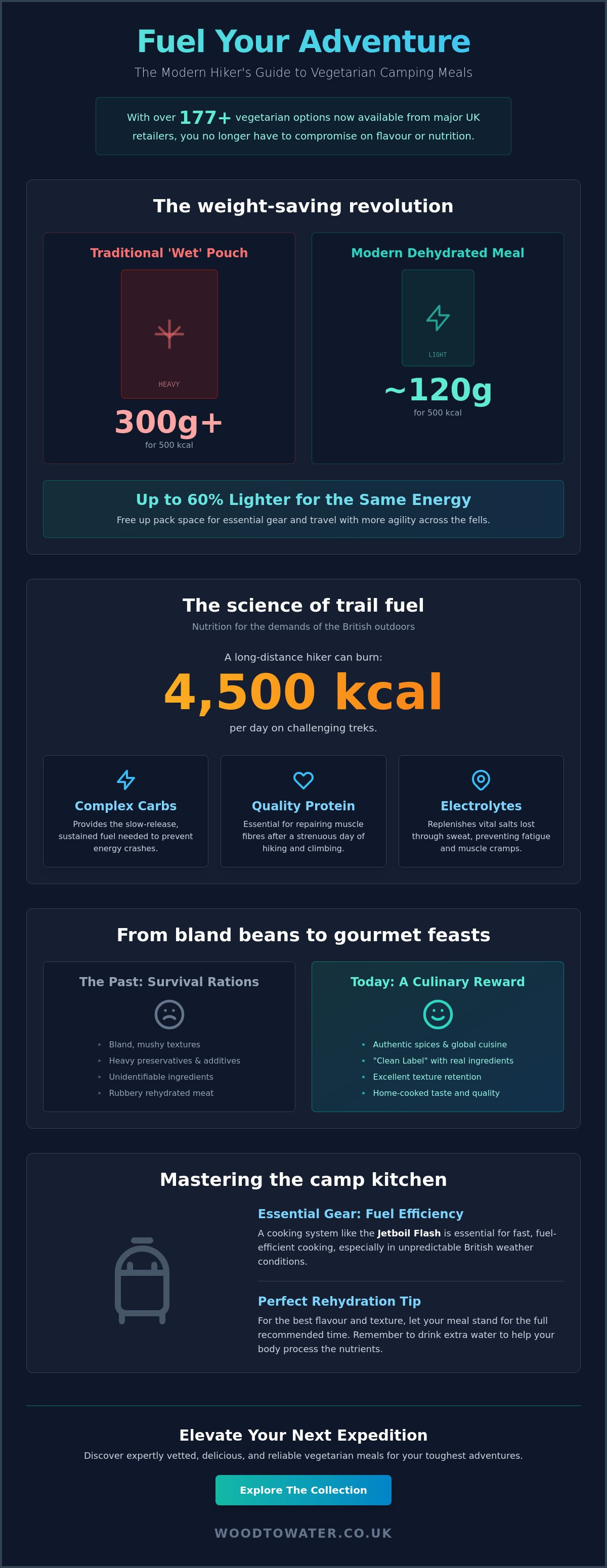
With over 177 vegetarian options now available from major UK retailers as of June 2026, you no longer have to compromise on flavour or nutrition. Whether you're burning through 4,500 calories on a long-distance trek or enjoying a quick wild camp, your body needs more than just empty carbs. We've vetted the best options to help you secure a lightweight pack and a meal that feels like a genuine reward at the end of the day. This guide explores the most nutritious, high-protein, and easy-to-prepare choices currently available for your next British expedition.
Key Takeaways
- Learn how to shed pack weight by swapping heavy ready meals for gourmet alternatives that don't compromise on texture or taste.
- Discover the specific nutritional balance of protein and complex carbs required to fuel your recovery after trekking through the Lake District or South Downs.
- Explore our top-rated vegetarian dyhydrated camping meals, including the authentic spices and high-quality ingredients found in the "5 Minutes to Delhi" range.
- Master the camp kitchen with expert tips on perfect rehydration and why a Jetboil Flash is the essential tool for fuel-efficient cooking in British conditions.
- Understand why choosing curated meals from a UK specialist ensures your food is reliable, delicious, and personally vetted for the toughest expeditions.
Why Switch to Vegetarian Dehydrated Camping Meals in 2026?
The landscape of outdoor nutrition has shifted dramatically in 2026. We've moved past the era of heavy, "wet" ready meals that weigh down your pack and leave you with a pile of non-recyclable waste. Today, savvy hikers are prioritising "clean label" options; these are meals made with recognisable ingredients and far fewer preservatives than the industrial pouches of the past. Choosing vegetarian dyhydrated camping meals isn't just about dietary preference anymore. It's a strategic choice for anyone wanting to move faster and eat better in the wild.
Modern hikers are also becoming more conscious of their environmental impact. Vegetarian choices naturally have a lower carbon footprint, and because dehydrated food is so compact, it requires significantly less packaging than bulky liquid-filled pouches. It’s a win for your pack and a win for the trails we love to explore.
The Weight-Saving Revolution
Weight is the ultimate enemy on a multi-day trek through the Highlands or the Lake District. A standard "wet" pouch containing 500kcal typically weighs upwards of 300g because you are essentially carrying the weight of the water used in the cooking process. In contrast, a dehydrated equivalent provides the same energy for roughly 110g to 130g. By stripping away the moisture through the science of food dehydration, manufacturers can offer a meal that is a third of the weight without sacrificing nutrient density. This reduction in bulk is a game-changer; it frees up space in your pack for higher-quality essentials like more robust 1-man tents or extra layers for the unpredictable UK weather. For the dedicated gram-counter, every ounce saved on food is an investment in a more comfortable and agile journey across the fells.
Flavour Profiles: No More Bland Beans
The days of mushy, unidentifiable vegetable stews are over. Modern trail food has embraced global cuisine, utilising authentic spices and traditional recipes that rehydrate beautifully. Interestingly, vegetarian ingredients often perform better than meat in the dehydration process. Whilst meat can sometimes become rubbery or chalky when dried and soaked, pulses, grains, and vegetables tend to retain their natural bite and texture. We're seeing a massive move towards "home-cooked" styles. Brands are now focusing on small-batch production rather than mass industrial processing, ensuring that your vegetarian dyhydrated camping meals feel like a proper dinner rather than a lab-grown survival ration. It’s about enjoying a rich, fragrant dhal or a zesty pasta whilst watching the sunset, knowing your meal has been prepared with care and quality ingredients.
The Science of Trail Fuel: Nutrition for the UK Hiker
Your body is an engine; on the trail, it's working overtime. Hiking through the Lake District or the Scottish Highlands isn't just a walk; it’s a high-intensity workout. Research suggests that a long-distance hiker can burn between 2,000 and 3,000 more calories than their baseline, often requiring a total daily intake of 4,000 to 4,500 kcal. Even on gentler terrain like the South Downs, the constant elevation changes and damp UK climate demand a steady stream of energy to maintain your core temperature.
For those relying on vegetarian dyhydrated camping meals, the focus must be on high-quality protein and complex carbohydrates. Protein is essential for repairing muscle fibres after a day of heavy climbing, whilst complex carbs provide the slow-release fuel needed to avoid the dreaded "bonk" halfway up a fell. Don't be afraid of higher sodium levels in these meals either. Whilst we often limit salt at home, you'll need to replenish the electrolytes lost through sweat to prevent cramping and fatigue. Remember that your body needs extra water to process these concentrated nutrients. You aren't just drinking for thirst; you're drinking to "reclaim" the water your meal absorbed during rehydration to keep your digestion moving smoothly.
Calorie Density: The Golden Ratio
When every gram in your pack matters, you should aim for a calorie density of roughly 4kcal per gram. This is the "golden ratio" for ultralight efficiency. Many vegetarian ingredients like red lentils, chickpeas, and pasta are excellent foundations, but they sometimes need a boost. A simple trick is to carry small packets of olive oil or coconut fat to stir into your dinner; this significantly increases the energy density without adding much bulk. Nuts and seeds are also fantastic additions, offering both healthy fats and a much-needed texture to your vegetarian dyhydrated camping meals.
Freeze-Dried vs. Dehydrated: Which is Better?
Understanding the technical difference helps you plan better expeditions. Dehydration uses heat to evaporate moisture, which can sometimes result in a denser, chewier texture. Freeze-drying involves freezing the food and then using a vacuum to remove ice crystals. This process often preserves the original shape and "crunch" of vegetables much better. Freeze-dried meals are typically lighter and rehydrate faster, making them ideal for high-altitude wild camps where fuel efficiency is critical. If you want to ensure your water reaches a rolling boil fast enough for perfect rehydration, it's worth investing in one of our high-performance camping gas stoves. Both methods provide a reliable, lightweight solution that will stay shelf-stable for years of adventure.
Top Vegetarian Picks: Our Favourite Meals for 2026
After a gruelling day navigating the fells, your evening meal should be more than just fuel; it should be a genuine culinary reward. We've moved far beyond the era of generic bean stews. The current market for vegetarian dyhydrated camping meals is bursting with global influences and high-quality ingredients that rival a home-cooked dinner. Whether you're craving the deep heat of a curry or the creamy comfort of a classic pasta, there is no longer a need to settle for second best just because you're eating from a pouch.
Breakfast has also seen a significant upgrade. Whilst porridge remains a reliable staple, many hikers are now opting for high-calorie fruit compotes or savoury breakfast hashes to kickstart their morning. For those looking for maximum comfort, the Summit to Eat Mac and Cheese (£7.45) remains a legendary choice for its rich sauce and reliable texture. If you prefer something with more of a kick, the Firepot Chilli Non Carne (£7.45) offers a robust, protein-packed alternative that rehydrates perfectly every time.
Authentic Indian Flavours on the Trail
For those who refuse to compromise on spice, the 5 Minutes to Delhi range is a total game-changer. Available right here at Wood To Water Outdoors, these meals are crafted with authentic recipes that capture the true essence of Indian street food. Unlike mass-produced options, they use traditional spices that retain their punch through the dehydration process. They're perfect for sharing at a wild camp; just make sure you've packed enough camping plates to go around. The depth of flavour in their dhal and vegetable curries provides that essential morale boost when the UK weather turns sour.
The Best of the Rest: European Classics
If your palate leans more towards the Mediterranean, there are some fantastic "hidden gems" currently available. Brands like LYO Expedition and Real Turmat have perfected the art of the trail risotto and pasta. A perfectly rehydrated risotto should offer a creamy consistency whilst maintaining a distinct, firm bite at the centre of each grain. These meals often use premium ingredients like wild mushrooms or aged hard cheeses to provide a complex flavour profile. For a truly high-end experience, the Real Turmat Asian Curry (£11.99) is a premium vegan option that delivers a sophisticated blend of ginger and coconut milk, proving that vegetarian dyhydrated camping meals can be just as exciting as any meat-based alternative.
Mastering the Camp Kitchen: Preparation and Gear
Preparing vegetarian dyhydrated camping meals perfectly is an art form that depends heavily on your choice of gear. It isn't just about adding water; it's about kit synergy. To get that "home-cooked" texture we discussed earlier, you need a system that delivers boiling water fast and maintains heat during the rehydration process. Many hikers make the mistake of rushing the wait time, resulting in crunchy lentils or chewy pasta. Patience is your best friend in the camp kitchen.
For maximum efficiency, integrated systems like Jetboil camping cooking gear are the gold standard. A Jetboil Flash can bring half a litre of water to a rolling boil in just 100 seconds, which is crucial when you're trying to conserve gas on a multi-day trek. Once the water is in the pouch, use the "cozy" method. Wrap your meal in a spare fleece or a dedicated thermal pouch to trap every bit of steam. This ensures the core temperature stays high enough to fully soften the ingredients, even in the biting winds of the Scottish Highlands.
Water management is equally vital. Whilst the UK is blessed with plenty of streams, you should always filter local water before adding it to your meal. Carrying the exact amount of water needed for your evening vegetarian dyhydrated camping meals saves you from hauling unnecessary weight during the final climb of the day. Plan your camp near a reliable source to make the evening routine seamless.
Choosing Your Cooking System
If you prefer cooking directly in a pot rather than a pouch, TOAKS Titanium Cookware is the ultimate partner for the ultralight hiker. Titanium is incredibly light and heats up almost instantly, though it requires a steady hand to avoid scorching delicate vegetarian sauces. In windy UK conditions, always use a windshield or tuck your stove behind a rock. This simple step can reduce your fuel consumption by up to 30%, ensuring you have enough gas for that essential morning coffee.
Leave No Trace: Waste and Packaging
Modern "compostable" packaging is a great step forward, but don't be fooled; these bags won't break down in the cold, damp soil of the UK fells. Always pack out what you pack in. To keep your kit clean, bring a small zip-lock bag specifically for used food pouches. This also helps minimise food smells that might attract local wildlife to your porch overnight. Organising your food bag by day ensures you aren't digging through your entire pack when you're tired and hungry.
Ready to upgrade your trail kitchen? Explore our full range of Jetboil systems to ensure your next meal is hot, fast, and perfectly rehydrated.
Elevate Your Expedition: Why Wood To Water Outdoors Curates the Best
At Wood To Water Outdoors, our philosophy is simple: we only stock gear and food that we'd trust in a storm. We've spent years navigating the fells and fens, so we know that a disappointing dinner can sap your morale faster than a headwind. While we've already covered the nutritional science and the gear needed for efficient cooking, the real value comes from our hands-on curation. We've personally vetted every range of vegetarian dyhydrated camping meals we carry, ensuring they meet our high standards for texture, spice, and ease of preparation. We aren't just retailers; we're enthusiasts who understand that a meal like the "5 Minutes to Delhi" range provides the authentic heat and comfort needed after a damp day in the Highlands.
Buying from a UK-based specialist gives you access to advice tailored specifically for our unique climate. Whether you're building a custom "meal deal" for a Three Peaks challenge or need to know which camping gas stoves offer the best wind resistance for a Lake District wild camp, we've got the experience to help. We focus on quality over quantity, selecting only the most reliable options that balance weight and energy density perfectly for the British hiker.
Beyond the Pouch: Essential Accessories
Success in the camp kitchen often comes down to the small details. A long-handled spoon is the one "luxury" we always recommend; it's the only way to reach the bottom of a deep pouch without getting sauce on your knuckles. We also suggest using insulated pouches to maintain the high core temperature required for perfect rehydration in cold weather. For the traditionalist, the rugged hobo stoves from Bushcraft Essentials provide a versatile alternative to gas, allowing you to enjoy the ritual of a small fire whilst your dinner soaks nearby.
Join the Community
Choosing Wood To Water Outdoors means you're tapping into a community that values expert advice and local expertise. We're here to help you plan your nutrition and gear synergy so you can focus on the trail ahead. Supporting a British business ensures you receive knowledgeable service from people who have actually stood where you're going. Explore our full range of vegetarian camping meals here and prepare for your next peak with confidence.
Fuel Your Next Adventure
Choosing the right food is just as critical as selecting your boots or tent. We've explored how modern dehydration technology preserves authentic global flavours and why strategic calorie density is essential for those high-mileage days across the fells. By matching your menu to an efficient cooking system, you ensure every evening at camp is a genuine reward rather than a chore.
High-quality vegetarian dyhydrated camping meals have become the gold standard for hikers looking to cut pack weight without sacrificing the joy of a hot, delicious dinner. Whether you're chasing a sunset in the Highlands or wild camping in the Peaks, having a meal you actually look forward to makes all the difference to your morale. It's about more than just survival; it's about enjoying the journey to the fullest.
Our entire inventory is expertly vetted for the specific demands of UK trails. With fast UK-wide shipping and friendly, knowledgeable customer service, we make it easy to stock up for your next big challenge. Browse our curated selection of vegetarian camping meals today to find your new trail favourite. The hills are waiting; make sure you're fuelled and ready for the journey ahead!
Frequently Asked Questions
How long do vegetarian dehydrated camping meals last?
Most vegetarian dyhydrated camping meals have a shelf life of two to five years; however, some specialised freeze-dried brands can last up to 25 years if stored in a cool, dry place. This makes them an excellent investment for emergency kits or long-term expedition planning. Always check the date on the pouch, but remember that the dehydration process is designed to prevent spoilage by removing the moisture bacteria need to grow.
Can I rehydrate camping meals with cold water if I run out of gas?
You can rehydrate these meals with cold water, but it requires significantly more patience. Whilst hot water takes about 10 minutes, cold water can take upwards of an hour to fully penetrate the dried ingredients. The texture might remain slightly firm or "grainy" compared to heat-treated meals. It's a useful survival hack if your gas runs out, but it won't be the gourmet experience you expected at the end of the day.
Are dehydrated meals healthy or just full of salt?
Modern options are increasingly focused on "clean label" ingredients with fewer artificial preservatives. While sodium levels can appear high, remember that hikers actually need extra salt to replenish electrolytes lost through sweat. A balanced meal should provide a mix of complex carbohydrates and healthy fats. Look for brands that prioritise whole food ingredients like lentils, chickpeas, and real vegetables to ensure you're getting high-quality fuel for your muscles.
How much water do I need to carry for a 2-day trip using dehydrated food?
For a two-day trip, you'll typically need around 400ml to 500ml of water per main meal for rehydration. For two breakfasts and two dinners, that's roughly two litres of water just for your food. This is in addition to your daily drinking requirements, which can be 3 to 4 litres depending on the terrain and weather. Plan your route around reliable water sources or carry a filtration system to avoid hauling excessive weight.
Do these meals contain enough protein for a vegetarian hiker?
Yes, many vegetarian dyhydrated camping meals are specifically formulated to provide 20g to 30g of protein per serving. This is achieved through nutrient-dense ingredients like quinoa, soy protein, beans, and lentils. These plant-based proteins are essential for muscle repair after a strenuous climb. If you're concerned about hitting your targets, look for meals that include nuts or seeds, which also boost the overall calorie count and healthy fat content for better recovery.
What is the best way to cook dehydrated meals in a Jetboil?
The most efficient way is to boil the water in your Jetboil and then pour it directly into the food pouch. Avoid cooking the meal inside the Jetboil pot; the concentrated heat can easily scorch the bottom and make a mess of the heat exchanger. Once you've added the water, stir thoroughly, seal the zip-lock, and place the pouch inside a thermal cozy or wrap it in a fleece to keep it hot whilst it rehydrates.
Are the pouches recyclable in the UK?
Most camping meal pouches are made from multi-layered laminates that cannot be recycled in standard UK kerbside bins. However, some brands are now using mono-plastic or compostable materials, though these often require industrial composting facilities. We recommend using a specialist recycling scheme like TerraCycle if your local council doesn't accept them. Always pack out your empty pouches and dispose of them responsibly at home to keep our trails clean and beautiful.
How can I stop my dehydrated meal from being crunchy or dry?
To avoid crunchy bits, ensure you stir the meal vigorously immediately after adding the water, reaching right into the bottom corners of the pouch. Many hikers don't use quite enough water; always follow the fill line or measurement guide precisely. If you're at a higher altitude or in cold conditions, wait an extra five minutes beyond the recommended time. Keeping the pouch insulated whilst it sits will also help the core temperature stay high.