

3F UL Gear Lanshan Tent Review: Lightweight Hiking Guide
Why are you still hauling a three-kilogram fortress across the Highlands when a sub-one-kilogram shelter can handle the same wind and rain? We've all felt that mid-afternoon fatigue whilst trekking up a steep glen, wondering if there's a way to lighten the load without emptying our bank accounts. The 3fulgear lanshan tent has become a legendary choice amongst the wild camping community for this exact reason. It offers a genuine ultralight experience at a fraction of the cost of high-end boutique brands; it's a practical solution for those who value both their knees and their budget.
You likely want to know if a budget-friendly trekking pole tent can actually keep you dry during a Lake District downpour. We agree that choosing between single-wall and double-wall designs is often confusing, especially when condensation is a constant battle in the UK. This review will help you discover which Lanshan model perfectly balances weight, space, and weather protection for your next adventure. We'll compare the Pro and non-Pro versions, explain the latest 2026 updates, and give you the confidence to pick a reliable shelter that won't let you down when the clouds roll in.
Key Takeaways
- Compare the Lanshan 1 and 2 to find your ideal balance between pack weight and internal living space.
- Learn why the 3fulgear lanshan tent is a cult favourite for tackling British weather.
- Decide between Pro and standard models by understanding how different wall designs handle condensation.
- Master the pitch. We'll show you the exact trekking pole heights needed for a stable shelter.
- Build a complete system by pairing your tent with TOAKS Titanium Cookware.
The Rise of 3F UL Gear Lanshan Tents in the UK
3F UL Gear hasn't just entered the outdoor market; they've completely disrupted it. For a long time, the term "ultralight" was synonymous with high price tags that put high-performance gear out of reach for many. The arrival of the 3fulgear lanshan tent changed that narrative entirely. It proved that you don't need to spend a month's wages to own a shelter that weighs less than a litre of water. Amongst UK wild campers, the Lanshan series has earned a dedicated cult following. It's now a common sight on the Pennine Way and tucked into quiet corners of the Lake District.
The latest 2026 version of the 3fulgear lanshan tent, which hit the market in July 2025, shows exactly why this brand stays ahead. They've listened to feedback from hikers who tackle harsh environments. The new models feature sleek waterproof zips that replace the older zip and storm flap design. They've also swapped out plastic hardware for durable metal hooks. These iterations aren't just for show; they're practical improvements designed to survive the unpredictable British weather. By using your existing trekking poles for support, these tents eliminate the need for heavy, dedicated pole sets, allowing for a much smaller pack volume.
What Makes a Tent Truly Ultralight?
To understand the Lanshan, you have to understand the core principles of Ultralight backpacking. This approach focuses on carrying the least amount of weight possible without sacrificing safety. A truly ultralight solo shelter should ideally sit in the sub-1kg weight class. The Lanshan achieves this by using high-quality SilNylon and SilPoly fabrics. These materials are incredibly thin yet surprisingly tough. Removing heavy fibreglass or aluminium poles is the real game-changer. It slashes your base weight and leaves more room in your rucksack for essentials like a warm sleeping bag or extra rations.
The 3F UL Gear Philosophy
The 3F UL Gear philosophy is built on balancing professional-grade materials with accessible prices. They use the same high-spec fabrics found in boutique brands but focus on efficient, user-led designs. It's a hands-on evolution that prioritises what hikers actually need in the field. At Wood To Water Outdoors, we carefully curate our selection of 3F UL Gear models. We look for the "essential" items that offer the best reliability for our specific climate. We want every hiker, from the seasoned pro to the local weekend explorer, to have confidence in their kit when the sun goes down over a Scottish glen.
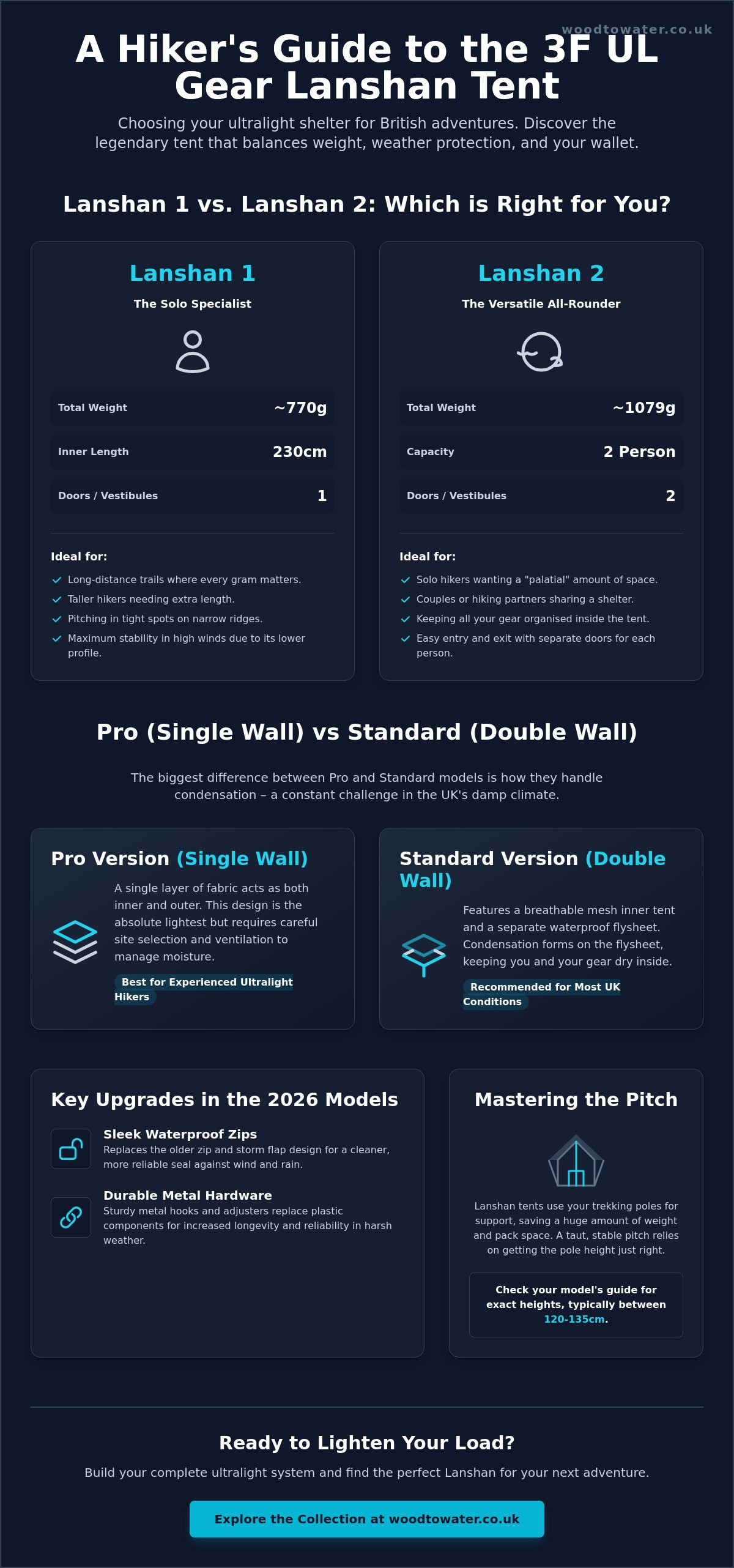
Lanshan 1 vs. Lanshan 2: Capacity and Weight Analysis
Deciding between the Lanshan 1 and the Lanshan 2 is the most common dilemma for hikers looking to upgrade their kit. Whilst the Lanshan 1 is the ultimate weight-saver, many solo trekkers find themselves drawn to the Lanshan 2 for its incredible weight-to-space ratio. It's often cited as the Best Ultralight Tent on a Budget because it offers enough room to keep all your gear inside without feeling cramped. Both models are remarkably packable; they disappear into a standard 40-50L rucksack with plenty of room left for your sleep system and cooking gear. Because they don't have rigid poles, you can simply stuff the fabric into the gaps in your pack to maximise every cubic centimetre of space.
Lanshan 1: The Solo Specialist
The Lanshan 1 is a masterclass in minimalism. With a 230cm inner length, it's a fantastic option for taller hikers who often find themselves touching the ends of standard tents. Its smaller footprint makes it easier to pitch on narrow ridges or tucked-away spots amongst the rocks where space is at a premium. When the rain starts, the single vestibule provides just enough cover to organise your boots and get a brew going. Because it has a lower profile than its larger sibling, it remains exceptionally stable in high winds, making it a reliable companion for long-distance trails like the West Highland Way where every gram counts over hundreds of miles.
Lanshan 2: The Versatile Duo
If you prefer a bit more luxury or you're sharing the load with a partner, the Lanshan 2 is the clear winner. For a solo hiker, it provides a "palatial" experience where you can spread out your kit and change clothes without performing gymnastics. The dual doors and vestibules are a massive advantage; they allow each person independent access and their own gear storage area. You do pay a slight weight penalty, with the 3-season 3fulgear lanshan tent body weighing approximately 1079g compared to the 770g of the solo version. However, for many, the benefit of superior interior organisation and extra shoulder room is well worth the extra few hundred grams. It makes those long, rainy evenings in the tent much more bearable.
If you're still unsure which size fits your hiking style, you can explore our full range of 3fulgear lanshan tent options to see the exact specifications side-by-side.
Single Wall (Pro) vs. Double Wall: Managing Condensation
Choosing between the standard and Pro versions of the 3fulgear lanshan tent often comes down to how you feel about a little bit of morning dew. The difference is simple; the standard model is a double-wall tent with a separate inner mesh and outer fly, whilst the Pro is a single-wall design where the mesh is sewn directly to the fly. This integration makes the Pro incredibly light and efficient, but it changes how you manage moisture. In the damp British climate, condensation isn't a design flaw; it's physics. When warm breath hits a cold tent wall, water forms. The 3fulgear lanshan tent fights this with its signature curved fly edges, which encourage constant airflow even when the vestibules are zipped shut. This ventilation is essential for keeping the interior as dry as possible during a soggy night in the Peaks.
Why Choose the Double Wall Lanshan?
For many, the double-wall version acts as a vital safety net. If you're a restless sleeper, that inner mesh prevents you from accidentally brushing against a damp fly in the middle of the night. It also offers fantastic versatility; you can leave the inner at home and pitch the fly on its own as a lightweight camping tarp. This setup is perfect for fast-and-light summer trips where you want maximum breeze. The double-layer system also provides better protection from "mist through" during heavy British downpours, where high-velocity raindrops can occasionally force a fine spray through a single layer of fabric. It's a reliable choice that offers peace of mind for those still perfecting their camping craft.
The Lanshan Pro: Mastery of the Single Wall
The Pro is the choice for those who have mastered the art of site selection. It uses a beefier 20D SilNylon for both the fly and the floor, making it surprisingly durable for its weight. Because there's only one layer to pitch, it's incredibly fast to set up when a storm is chasing you up a ridge. Experienced ultralight hikers prefer the Pro because it slashes pack weight without sacrificing structural integrity. However, using a single-wall tent requires a bit more thought. You'll need to avoid camping in boggy hollows where cold air pools or right next to moving water, as these spots are magnets for condensation. When pitched correctly in a spot with a gentle breeze, the Pro is a high-performance tool that makes light work of long-distance expeditions.
Mastering the Pitch: Setup Tips for Trekking Pole Tents
Achieving a taut, stable pitch is the difference between a peaceful night's sleep and a noisy, flapping mess. Unlike traditional tents with dedicated poles, the 3fulgear lanshan tent relies on the tension between your trekking poles and the ground stakes. Start by laying the tent flat and staking out the four corners in a perfect rectangle. It's essential to keep your guy lines at a 45-degree angle from the tent corners; this ensures the tension is distributed evenly across the fabric. Once the base is secure, insert your trekking poles into the reinforced peaks. For most users, setting your poles to a height of 120cm to 125cm provides the ideal balance of headroom and fabric tension.
One reality of using SilNylon is "fabric sag." This material naturally expands slightly when it gets damp or as the temperature drops overnight. You might have a drum-tight pitch at 7:00 PM, only to find the walls looking a bit limp by midnight. Don't worry; it's not a fault with your 3fulgear lanshan tent. Simply reach out from your sleeping bag and give the tensioners a quick tug to restore the structure. This small adjustment keeps the fly away from the inner mesh, which is vital for managing condensation in our humid climate.
Seam Sealing the Lanshan Pro
If you've opted for the Pro version, you'll notice the seams aren't factory-taped. This is because the high-performance silicone coating on both sides of the fabric won't bond with standard heat-tapes. You must seal these yourself using a specific silicone-based sealant, such as Gear Aid Seam Grip + SIL, to ensure a completely waterproof finish. Set the tent up on a dry, calm day and apply a thin, even bead of sealant along the exterior stitching. Let it cure for at least 24 hours before packing it away; this creates a permanent, flexible bond that will last for years of heavy use.
Optimising for the British Environment
The UK's terrain is notoriously varied, so your pitching strategy needs to adapt. If you're camping on soft, peaty moorland, you'll want longer, wider pegs to prevent them from pulling out under tension. On rocky ground, thin titanium skewers are your best friend. Always pitch the narrow "tail" of the tent into the wind to take advantage of its aerodynamic shape. You should also utilise the additional mid-panel tie-out points during a gale. These extra lines significantly increase wind stability and prevent the fly from being pushed against your inner mesh. For the best results in the field, make sure you're equipped with the right 3F UL Gear accessories before your next trip.
Completing Your Ultralight System with Wood To Water Outdoors
Your 3fulgear lanshan tent is a brilliant foundation, but it's only one part of the puzzle. To truly appreciate the freedom of a lightweight pack, you need to ensure your entire system is cohesive. If you're carrying a sub-1kg tent but still using heavy stainless steel pots, you're missing out on the full ultralight experience. We recommend looking at your kit as a single, integrated unit where every item earns its place through utility and weight efficiency. By refining your setup, you'll find that those steep climbs in the Lake District or the long miles on the South Downs Way become far more enjoyable.
The Ultralight Kitchen
Titanium and trekking pole tents go hand-in-hand. Both are designed for the hiker who wants to move faster and further with less strain. Pairing your tent with TOAKS Titanium Cookware is a logical step for your camp kitchen. Titanium is incredibly light yet durable enough to survive years of use on the trail. When selecting a stove, look for something compact that fits safely within your Lanshan's vestibule. A small canister stove from our camping gas stoves collection is ideal for quick boils whilst keeping your pack volume low. Organising your pack for efficiency means keeping your kitchen and shelter easily accessible for those mid-day tea breaks or sudden changes in weather.
Expert Support and UK Stock
Buying 3F UL Gear from a UK-based expert like Wood To Water Outdoors offers several practical advantages. You avoid the hidden costs of import fees and the frustration of waiting weeks for international shipping. We've personally vetted these tents to ensure they meet the standards required for British wild camping. We're active participants in the outdoor community, and we've spent plenty of nights in these shelters ourselves. This hands-on experience means we can offer genuine advice on everything from seam sealing to site selection. We're proud to support the growing community of UK hikers who are choosing smarter, lighter gear.
Before you head out for your first wild camp with your new 3fulgear lanshan tent, run through this final checklist:
- Practise your pitch in a local park or garden at least twice.
- Ensure your trekking poles are adjusted to the correct height for a taut fly.
- Check that you have the right pegs for your intended terrain.
- If you have the Pro model, verify that your seam sealing is fully cured.
Getting your gear right gives you the confidence to explore further. We're here to help you dial in your setup so you can focus on the adventure rather than the weight on your back. Whether you're planning a weekend in the Peaks or a multi-week expedition, the right kit makes all the difference.
Ready for Your Next Wild Camp?
Choosing a 3fulgear lanshan tent is a smart move for any hiker looking to shed weight without sacrificing reliability. You've seen how the Lanshan 2 offers a palatial solo experience whilst the Lanshan 1 remains the ultimate specialist for narrow ridge pitches. Whether you opt for the double-wall versatility of the standard model or the streamlined efficiency of the Pro, you're investing in a system that's proven to handle the unpredictable British environment. Mastering the pitch with your trekking poles is the final step to ensuring a dry, stable night under the stars. It's a favourite choice for trekkers who want to move further with less strain.
At Wood To Water, we're passionate about bushcraft and wild camping. We've expertly curated our range to ensure every piece of kit can survive a Scottish glen or a windy Lake District fell. Plus, you can enjoy free UK delivery on orders over £60. Explore the full 3F UL Gear Lanshan range at Wood To Water Outdoors and get ready to experience the freedom of a truly ultralight pack. We'll see you on the trail!
Frequently Asked Questions
Do I need specific trekking poles for the Lanshan tent?
You don't need a specific brand of trekking poles to set up your 3fulgear lanshan tent. Any adjustable poles that can reach a height of 120cm to 125cm will work perfectly. If you prefer not to use trekking poles, you can purchase dedicated carbon fibre support poles that serve the same purpose. Just ensure they are sturdy enough to maintain the necessary tension throughout the night.
Is the Lanshan 1 Pro big enough for a tall person?
Yes, the Lanshan 1 Pro is exceptionally spacious for taller hikers. It features a generous inner length of 230cm, which is significantly longer than many standard ultralight shelters. This extra room prevents your sleeping bag from touching the damp walls at the head or foot end. Even if you're well over six feet tall, you'll find plenty of space to stretch out without feeling restricted.
How do I stop condensation in my Lanshan tent during UK winters?
Maximising ventilation is your best defence against condensation during cold UK winters. Always keep the vents open and try to pitch in areas with a gentle breeze rather than in boggy hollows where damp air pools. Using a small microfibre towel to wipe down the inside of the fly in the morning is a common practice amongst winter campers. This simple step keeps your gear dry whilst you pack away for the day.
Does the Lanshan tent come with a footprint or groundsheet?
Most 3F UL Gear tents include a lightweight groundsheet in the package, but you should always verify the specific contents of your order before heading out. Whilst the tent floor is durable, using an additional footprint provides an extra layer of protection against sharp rocks and gorse. It also helps keep the bottom of your tent clean, which makes the pack-down process much easier on muddy moorland.
What is the difference between SilNylon and SilPoly in 3F UL Gear?
The main difference lies in how these fabrics react to moisture. SilNylon is incredibly strong and durable, but it can sag slightly when wet, requiring you to re-tension your 3fulgear lanshan tent guy lines. SilPoly is less prone to sagging and absorbs less water, though it generally has a slightly lower tear strength. 3F UL Gear selects these materials based on the specific performance needs and weight goals of each model.
Can the Lanshan 2 withstand high winds in the Lake District?
The Lanshan 2 is surprisingly capable in high winds if you use a proper pitching technique. Its low profile and aerodynamic shape allow it to shed wind effectively when the "tail" is pointed into the breeze. Always utilise the additional mid-panel tie-out points when camping in exposed areas like the Lake District fells. These extra lines provide the structural support needed to keep the tent stable and quiet during a gale.
How often do I need to re-apply seam sealer to the Pro version?
You typically only need to seam seal the Pro version once before its first use. A high-quality silicone sealant creates a permanent bond that should last for several years of regular hiking. You only need to re-apply it if you notice a specific leak or if the original sealant begins to peel over time. Inspecting your seams at the start of each season is a good habit to maintain for any single-wall shelter.
Is the Lanshan tent waterproof enough for heavy British rain?
These tents are fully waterproof and designed to handle heavy downpours. With a 5000mm waterproof rating on the fly and up to 6000mm on the bathtub floor, they exceed the requirements for even the wettest British weather. The factory-taped seams on the standard models and a proper manual seal on the Pro models ensure that you stay dry whilst the rain lashes down outside your glen campsite.