

X-Boil Lightweight Stove: Efficiency for Ultralight Hikers
Have you ever reached into your rucksack at the end of a long day on the fells, only to find your spare socks soaked in methylated spirits? It's a frustrating, smelly reality for many of us who love the simplicity of alcohol burners but dread the mess and bulk of traditional setups. We all want a kit that's lighter; however, we shouldn't have to sacrifice safety or reliability when the British weather turns. The x-boil lightweight stove is designed specifically to solve these exact headaches.
You're likely already looking for ways to trim your pack weight without losing the ability to brew a quick tea in a gale. We agree that a stove should be a reliable tool, not a liability in your pack. This article explains why this German-engineered system is revolutionising wild camping for ultralight hikers across the UK. We will explore the unique safety burner that prevents leaks, the minimalist design that weighs less than 100g, and how the entire system fits perfectly inside your favourite titanium pot for the ultimate compact cookset.
Key Takeaways
- Discover the genius of graphite felt technology that keeps your fuel secure and spill-proof; even if the burner tips over, your gear stays dry.
- Compare the x-boil lightweight stove against traditional gas systems to see how much weight you can actually save on your next expedition.
- Explore the flexibility of multi-fuel compatibility, from methylated spirits to bio-ethanol, and what that means for your real-world boil times.
- Learn how to select the ideal diameter to create a seamless, rattle-free cooking system that nests perfectly inside your favourite pot!
The Rise of the X-Boil Lightweight Stove in the UK
The British wild camping scene is witnessing a significant shift. For decades, bulky gas canisters were the standard for anyone heading into the hills, but a growing number of hikers are now embracing the ultralight movement. This isn't just about shaving grams; it's about reclaiming the simplicity of the trail. The x-boil lightweight stove has emerged as a favourite amongst those who value precision engineering and reliability when facing the unpredictable UK weather. By moving away from heavy, pressurized systems, campers are finding they can carry less and experience more.
Handmade in Germany, these stoves bring a level of craft and durability rarely seen in mass-produced outdoor gear. The design is rooted in a philosophy of silence, safety, and functional beauty. Whilst many high-performance burners sound like a jet engine taking off, the X-Boil offers a tranquil cooking experience. It's perfect for those quiet mornings on the moors when you want to hear the wind in the grass rather than the roar of a burner. The inclusion of a graphite felt pad inside the burner ensures that fuel is absorbed, making it far safer than traditional open-cup spirit burners.
What Makes the X-Boil System Unique?
The genius of this system lies in its total integration. Most setups require a separate pot stand and a flimsy windscreen, but the X-Boil combines these into a single, elegant piece of stainless steel. It's far more robust than a DIY beverage-can stove and eliminates the common failure points found in mechanical camping gas stoves, such as perished O-rings or blocked valves. For bushcraft enthusiasts, the minimalist aesthetic provides a "mobile campfire" vibe that feels much more connected to the natural environment than a clinical, industrial burner.
Why Weight Matters for Long-Distance UK Trails
When you're tackling the Pennine Way or the West Highland Way, every gram in your rucksack eventually takes its toll. Traditional gas setups are heavy; you're often carrying the dead weight of a steel canister even when it's nearly empty. Switching to an ultralight spirit system can save hundreds of grams across your entire pack weight.
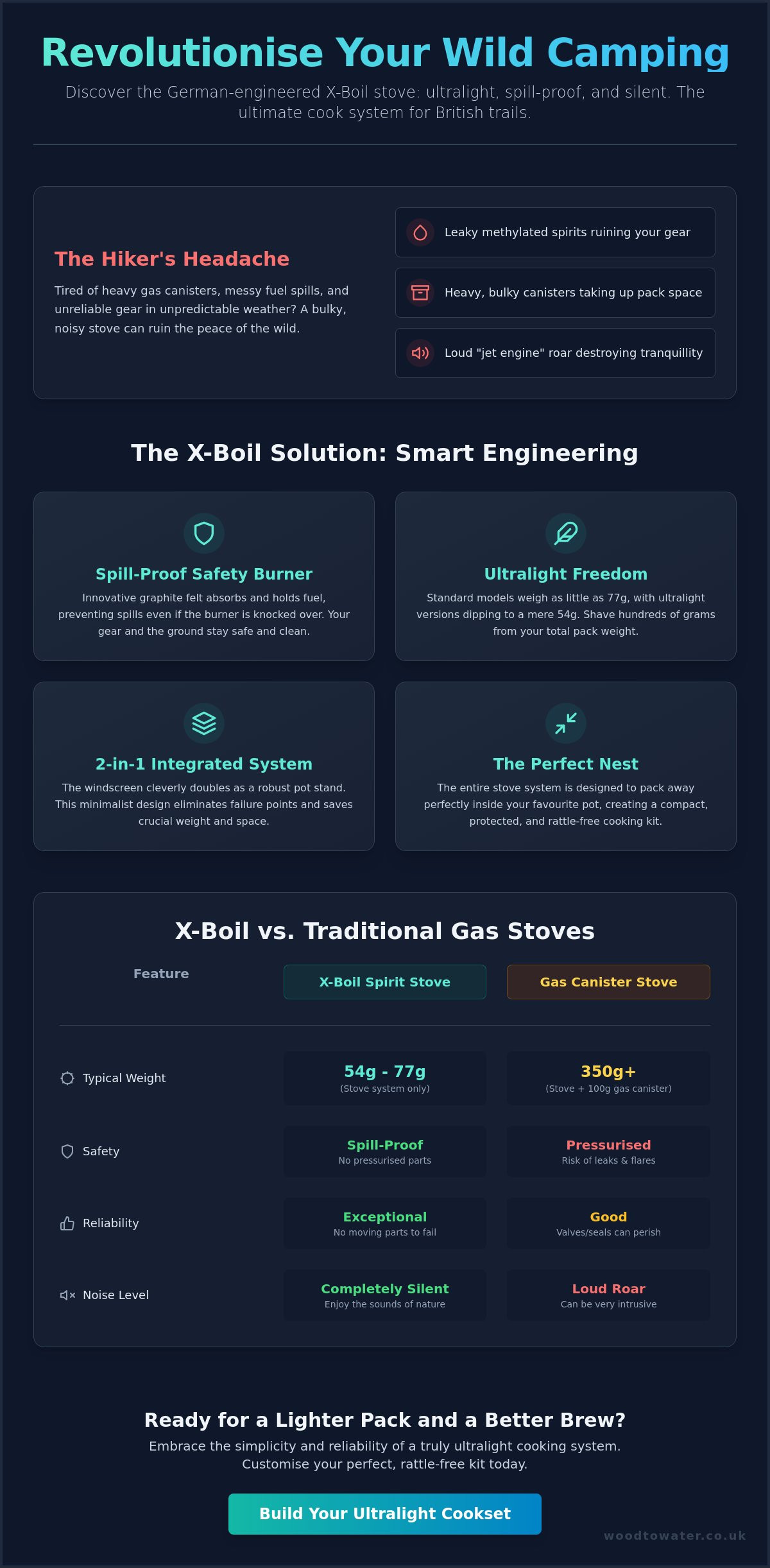
- Maximum Efficiency: The ultralight versions of the x-boil lightweight stove weigh as little as 54g, whilst standard options reach only 77g.
- Space Saving: The entire kit is designed to "nest" inside your pot, which protects the components and frees up valuable internal rucksack space.
- Improved Stamina: A lighter pack directly translates to better posture and more enjoyment during those final, steep ascents at the end of the day.
By removing the bulk, you aren't just walking faster. You're walking further with less strain on your joints, allowing the landscape to remain the focus of your journey rather than the weight on your shoulders.
Unpacking the Technology: Safety Burners and Windscreens
Reliability in the field comes down to smart engineering. The x-boil lightweight stove isn't just a simple container for fuel; it's a precision-built system designed to handle the realities of the trail. Whilst many alcohol stoves are essentially open cups that pose a significant fire risk if tipped, the X-Boil uses a sophisticated graphite felt insert. This technology changes everything for the safety-conscious hiker.
This felt pad works through capillary action. It absorbs the liquid fuel and holds it securely within the burner's structure. If you accidentally nudge your stove on a patch of uneven heather, the fuel stays put. This spill-proof design is a massive advantage when cooking in sensitive environments where a stray flame could be disastrous. This design also ensures a consistent burn rate. The felt acts as a wick that regulates how the fuel evaporates and ignites, providing a steady heat source regardless of how much fuel is left in the reservoir.
The Graphite Felt Safety Mechanism
The felt behaves as both a reservoir and a wick. When you're ready to cook, you simply pour your fuel directly onto the pad. For those frosty mornings in the Highlands, a quick tip is to leave a small pool of liquid on the surface to help with priming. This makes ignition effortless, even when the air is biting. Because the burner is crafted from high-grade stainless steel, it conducts heat 10 times less than aluminium. This means more energy is directed upwards to your pot, rather than being wasted through the base of the stove into the cold ground.
The 2-in-1 Windscreen and Pot Stand Design
The windscreen is the unsung hero of this kit. It uses a clever interlocking mechanism that allows a single sheet of stainless steel to transform into a rock-solid pot support. This 2-in-1 approach is why the system is so incredibly light. There are no moving parts to break and no separate stands to lose in the long grass. If you're looking to streamline your entire setup, you might want to explore our wider range of bushcraft essentials to find more gear that shares this minimalist philosophy.
Ventilation is another area where German engineering shines. The hole patterns are precisely calculated to balance wind protection with oxygen intake. This results in a clean, blue flame that minimises soot buildup on your pots. The distance between the burner and the pot is also factory-set for peak efficiency. This ensures you aren't wasting fuel by having the flame too close or too far from the heat-absorbing surface. It's a "set and forget" system that works every time you strike a match.
Fuel Versatility and Performance on the Trail
One of the most liberating aspects of using the x-boil lightweight stove is its incredible versatility with different fuel sources. Whilst many ultralight systems tie you to a specific canister or fuel type, this German-engineered burner is designed to be a multi-fuel workhorse. Whether you are picking up a bottle of methylated spirits from a local hardware store in the Highlands or using high-grade bio-ethanol, the system adapts to what you have available. This flexibility is essential for long-distance UK treks where specialized outdoor shops might be few and far between.
Managing your fuel effectively is the secret to a successful multi-day trip. We recommend using a small, graduated fuel bottle to measure exactly what you need for each meal. For a standard 500ml boil, 20ml to 30ml of liquid fuel is usually the sweet spot. By measuring precisely, you avoid carrying unnecessary weight and ensure you don't run dry before your final morning coffee. It's a simple habit that makes a massive difference to your pack's total carry weight.
Choosing Your Fuel: Spirits vs. Gels
Bio-ethanol is often the favourite choice amongst seasoned hikers because it burns incredibly clean. You won't find your pots covered in thick, black soot, which makes packing up much less messy. Methylated spirits are the practical, easy-to-find alternative available across the UK. If you're looking for maximum safety, fuel gels or pastes are excellent because they won't run if the stove is knocked. However, there is a vital rule to remember: you must remove the graphite felt pad when switching to solid fuels or pastes. The felt is strictly for liquid spirits; using it with gels will clog the fibres and permanently damage the burner's capillary action.
Real-World Efficiency and Boil Times
Performance in the wild is where the x-boil lightweight stove really proves its worth. In typical UK conditions with an ambient temperature of 10 degrees, you can expect 500ml of water to reach a rolling boil in approximately 8 to 10 minutes. When the temperature drops to freezing (0 degrees), this time may increase to 12 minutes. These figures are impressive for a spirit burner and are made possible by the integrated windscreen.
The windscreen does more than just protect the flame; it creates a chimney effect that focuses heat directly onto the base of your pot. To maximise this efficiency, we always suggest using a lid. It traps steam and prevents heat loss, which can shave minutes off your wait time. Choosing a thin-walled titanium pot also helps, as the material transfers heat to the water much faster than heavier alternatives. This combination of smart design and proper technique ensures you get a hot meal quickly, even when the wind is whipping across the ridge.
Comparing the X-Boil to Traditional Gas and Wood Stoves
Choosing a stove often feels like picking a side in a lifelong outdoor debate. Whilst some hikers swear by the raw power of gas, others prefer the primitive charm of a wood fire. However, when we look at the total system weight for a multi-day trek, the x-boil lightweight stove offers a compelling middle ground that's hard to ignore. It isn't just about how fast the water boils; it's about how much effort it takes to carry that capability over twenty miles of rugged terrain. Many people overlook the fact that a spirit burner system often results in a lighter overall pack than its gas-powered rivals.
X-Boil vs. Jetboil and Gas Systems
Gas systems are famous for their "burn and go" convenience. If you're prioritising raw speed and integrated heat exchangers, you might find Jetboil camping cooking gear more to your liking. But there's a catch. A standard 100g gas canister actually weighs about 200g when full, and that steel shell remains in your pack even when empty. In contrast, the x-boil lightweight stove allows you to carry spirit in a plastic bottle that gets lighter and smaller with every meal. Additionally, spirit stoves don't suffer from the frustrating pressure drops that plague gas canisters in sub-zero British winters. This makes the X-Boil a far more predictable performer when the frost settles on your tent.
X-Boil vs. Wood Burning Bushboxes
For those who enjoy the ritual of a small fire, Bushcraft Essentials offers fantastic wood-burning options. However, wood stoves can be tricky for UK wild camping. Many areas have strict "no fire" policies to protect peat and dry heather from accidental damage. The X-Boil provides a "Leave No Trace" alternative that's legal and safe across the fells. It also saves you from the desperate hunt for dry kindling in a Highland downpour or the struggle of finding fuel at high altitudes where the trees have long since disappeared. You get the warmth and flicker of a flame without the soot, smoke, or legal headaches.
One of the most underrated benefits is the silence. Gas burners often roar like a miniature jet engine, which can shatter the peace of a remote campsite. The X-Boil operates with a gentle, barely audible hiss that respects the quiet of the wilderness. Because there are no moving parts, valves, or seals to fail, it's arguably the most reliable tool in your kit. You can't break a piece of folded stainless steel, making it a dependable companion for expeditions where gear failure isn't an option. If you're ready to simplify your pack and enjoy a more tranquil camp, you can browse our full range of camping stoves to see how the X-Boil stacks up against the competition.
Building Your Ultralight Cooking Kit Around the X-Boil
Creating a truly efficient wild camping setup requires looking at your gear as a complete system rather than a collection of individual items. The x-boil lightweight stove is the heart of your trail kitchen, but its performance depends on how well it integrates with your other equipment. Because these stoves come in various diameters, such as the 90, 100, and 120 models, the first step is matching the stove to your favourite cooking vessel. This ensures that the windscreen fits snugly around the pot, creating the chimney effect needed for those impressive boil times we discussed earlier.
Organising your "kitchen bag" is a satisfying ritual for any minimalist hiker. Beyond the stove and pot, you only need a few essentials: a small fuel bottle, a long-handled spoon, and a reliable lighter. Many hikers find that a small piece of light-coloured sponge or a tiny microfibre cloth is invaluable for wiping condensation or soot off the windscreen before packing it away. By keeping everything together in a dedicated mesh bag, you prevent small components from getting lost in the depths of your rucksack during a late-night camp setup.
Pot Compatibility and the TOAKS Connection
Precision is key when selecting a pot. The most important factor is the "18mm rule"; you must ensure there is at least 18mm of clearance between the bottom of your pot and the start of any folding handles. If the handles sit too low, they will foul the top edge of the windscreen and prevent the pot from sitting securely. This is why TOAKS Titanium Cookware is widely considered the gold standard for this setup. Their dimensions are often a perfect match for X-Boil diameters, allowing for a rattle-free fit. If you find yourself needing to use a much wider pan than usual, a clever trail hack is to use two titanium tent pegs across the top of the windscreen as an improvised support grid.
Maintenance and Longevity
The x-boil lightweight stove is built from high-grade stainless steel, meaning it's incredibly tough. However, even the best gear benefits from a little care. If you notice a sticky residue building up inside the burner after using lower-quality methylated spirits, a quick soak in warm, soapy water usually does the trick. Just ensure the graphite felt is completely dry before your next trip. Storing the stove whilst it's still damp from rain isn't a problem for the steel itself, but it's good practice to air the kit out once you get home to prevent any funky smells from developing in your pot.
The graphite felt insert is designed to last for hundreds of burns. You won't need to replace it often, but if the fibres become visibly frayed or the wicking action seems to slow down after several seasons of heavy use, a fresh insert will restore the stove to its factory performance. This simple maintenance cycle ensures your cooking system remains a reliable part of your kit for years to can, rather than becoming another disposable piece of outdoor gear. It's a small investment in a system that rewards you with every silent, efficient brew on the trail.
Ready to Lighten Your Load?
Moving to a more refined cooking setup is about more than just shedding grams; it's about enhancing the connection you feel with the landscape. By integrating the x-boil lightweight stove into your gear list, you're choosing a system that prioritises safety and silence without compromising on the performance needed for the British fells. Whether you're brewing up on a misty morning in the Lake District or preparing a meal after a long day on the South West Coast Path, this stove delivers a level of reliability that mechanical systems simply can't match.
We take pride in offering gear that has been expertly curated by UK bushcraft enthusiasts who live for the trail. To help you get out there sooner, we provide next-day dispatch on your orders and free UK delivery on orders over £70. If you're ready to upgrade your outdoor kitchen with kit that's built to last, explore our full range of ultralight cooking gear at Wood To Water Outdoors. Here's to quieter camps and lighter packs on your next big adventure!
Frequently Asked Questions
Can I use the X-Boil stove inside a tent porch?
No, we strongly advise against using any spirit burner inside a tent porch due to the risk of carbon monoxide poisoning and accidental fire. Spirit burners produce a flame that can be difficult to see in bright light, making it easy to accidentally ignite synthetic tent fabrics. Always cook in a well-ventilated area outside your shelter to ensure your safety and protect your gear from damage.
How much methylated spirit should I carry for a weekend trip?
For a typical weekend trip involving four to five hot meals and a few brews, carrying 150ml of methylated spirit is usually plenty. Since each 500ml boil requires roughly 20ml to 30ml of fuel, this amount provides a comfortable safety margin for most hikers. Using a small, graduated bottle allows you to track your consumption precisely and avoid carrying unnecessary weight in your rucksack.
Does the X-Boil work with titanium pots or just aluminium?
The x-boil lightweight stove works brilliantly with both titanium and aluminium pots, provided they have a flat base for stability. Whilst aluminium conducts heat slightly more effectively, most ultralight hikers prefer titanium for its incredible weight savings and rugged durability. The stove's efficiency remains high regardless of the pot material, especially when you use the integrated windscreen to focus the heat.
What happens if I get the graphite felt wet with water?
If the graphite felt gets soaked with water, the stove will struggle to ignite and will not produce a consistent flame. You should gently squeeze out as much water as possible and allow the felt to air dry in the sun or wind before adding your fuel. Whilst the felt is very durable, moisture trapped in the fibres prevents the spirit from wicking correctly, which will significantly increase your boil times.
Is the X-Boil legal for use during UK fire bans?
In most cases, official UK fire bans prohibit all naked flames, which unfortunately includes spirit stoves. Whilst the x-boil lightweight stove is a contained system and far safer than a campfire, many National Parks may enforce total bans during extreme dry spells to protect peat and heather. It's essential to check the specific local bylaws of your hiking destination before you head out into the hills.
How do I extinguish the flame if I have fuel left in the burner?
To extinguish the flame, simply place your cooking pot or a metal lid over the top of the burner to snuff out the oxygen supply. Never try to blow the flame out, as this can spray burning fuel onto your clothes or the ground. Once the flame is extinguished, wait for the burner to cool completely before you attempt to recover any unburnt fuel or pack the kit away.
Can I use the X-Boil with Esbit or solid fuel tablets?
Yes, you can certainly use solid fuel tablets with this system by simply removing the graphite felt insert first. The stainless steel burner cup provides a stable, heat-resistant base for the tablet, whilst the windscreen ensures the heat is directed straight to your pot. Just remember to wipe away any sticky residue from the cup before you reinsert the felt for your next liquid fuel burn.
Which size X-Boil do I need for a 750ml pot?
For a standard 750ml pot, the 90-100 size is typically the most appropriate choice. You should measure the external diameter of your pot base to ensure it fits within the windscreen with enough clearance for the flame to wrap around the sides. Most 750ml titanium pots have a diameter of approximately 95mm, making the 90-100 model the most stable and efficient pairing for your ultralight kitchen.