

Waterproof Hiking Gaiters: How to Choose the Right Pair
The best waterproof hiking gaiters for your walk aren’t necessarily the tallest or most heavily built. Alongside waterproofing, consider your route, footwear and how the gaiters fasten. They help keep water, grit and snow out of your boots, but a poor fit can slip or leave gaps.
Choosing between ankle, mid-height and taller gaiters can feel tricky, especially if you’re not sure how they’ll sit over your boots and trousers. The best waterproof hiking gaiters match their coverage and closures to the conditions you expect, rather than simply looking rugged on the shelf.
This guide covers what to look for in height, fabric and fastening, how to check the fit with your own footwear, and the difference between waterproof protection and basic splash coverage. You’ll also find practical care advice and a look at Origin Outdoors Drytogo Gaiters. By the end, you’ll be better placed to choose gaiters that feel secure and suit the walks you actually take.
Key Takeaways
- Choose waterproof hiking gaiters to suit the wetness, terrain and debris you expect on your walks, not just the waterproof wording on the label.
- Compare low, mid and higher coverage by weighing the protection you need against comfort and freedom of movement.
- Try gaiters over the boots and walking layers you plan to wear. Check they stay secure and cover the gap between footwear and trousers as you move.
- Use the same fit and feature checklist when considering Origin Outdoors Drytogo Gaiters, so your choice suits your footwear and routes.
- Follow each product’s care instructions. Cleaning and proofing treatments aren’t automatically suitable for every item.
What are waterproof hiking gaiters, and when do they help?
Rain running off your trousers, muddy splashes, grit on a path and wet vegetation can all reach the gap between your trousers and footwear. Water or debris inside a boot can make a walk uncomfortable. Gaiters cover this vulnerable area, particularly on routes too wet or overgrown for bare ankles and trouser cuffs.
Waterproof hiking gaiters are coverings worn over footwear and the lower legs to help limit water, mud and trail debris from getting inside boots. They usually sit over the top of the boot and extend up the leg. For a broader overview of gaiters and their use in outdoor activities, see Wikipedia’s gaiters entry.
Gaiters add coverage, but they don’t replace waterproof boots or suitable walking trousers, and they can’t promise completely dry feet. Water may still enter around the top, through gaps or from footwear, depending on the conditions and how your kit fits together. Treat gaiters as one part of your wet-weather set-up, not a substitute for it.
What do hiking gaiters protect against?
Gaiters help reduce the amount of water, mud, grit and other trail debris that can get into footwear from above. They’re particularly useful on wet or overgrown paths, where brambles, long grass and muddy ground can brush against your lower legs. Their coverage can also help keep trouser cuffs cleaner. Pair them with boots and clothing suited to the conditions. Gaiters complement those layers, but won’t make unsuitable footwear waterproof.
When are gaiters useful on a walk?
Extra coverage can be welcome on an exposed, wet trail or a route through long, damp vegetation. Consider how long you’ll be outside, too. A brief crossing of wet grass may call for less protection than hours on a muddy route. On a dry, clear path, gaiters may add little and feel like unnecessary kit. Weigh the forecast, ground conditions, vegetation and time outdoors together.
Gaiters are most useful when a walk is wet, muddy or overgrown, particularly if repeated splashes, grit or vegetation could reach your boot tops. If the route is dry and clear, your usual boots and trousers may be enough. Check the conditions before setting off to decide whether extra lower-leg coverage will make a practical difference.
Which waterproof gaiter features should hikers compare?
Start with your route, not a claim on the packaging. Consider the stated waterproofing, breathability and intended use together. Waterproofing concerns resistance to water passing through the fabric; breathability describes how readily moisture vapour can escape. One doesn’t guarantee the other, so weigh both against how hard you’ll be walking and how wet the conditions are likely to be.
Next, assess the design as a whole. Height affects how much of your lower leg is covered, while closures and boot attachment points help keep the gaiter in place as you walk. Features to consider when choosing gaiters also depend on whether you’re looking for everyday hiking protection or something for more demanding conditions. No fabric or fastening suits every walker, so compare the details with your footwear, route and priorities.
How should gaiter height and fit affect your choice?
Low-cut footwear leaves more of your lower leg exposed than a taller walking boot, so consider how much coverage your route calls for. More height can shield a larger area, but may feel unnecessary on easy, clear paths. Check the maker’s sizing guidance against your footwear, calf shape and trouser layers. Gaiters should cover the boot opening securely without pinching, slipping or restricting your stride when you bend your ankles and knees.
Which fabrics and fastening details matter?
Read the fabric description carefully. A waterproof claim describes resistance to water, while breathability can matter during sustained, active walking. Check the stated intended use rather than assuming all waterproof hiking gaiters suit the same conditions. Care instructions are worth comparing, too: cleaning and proofing methods vary by fabric and finish, so follow the product guidance instead of applying a treatment by default.
Closures should stay secure through ordinary movement. A front zip or overlapping fastening should lie flat, and any top adjustment should hold the gaiter comfortably around your leg. Check how it attaches to your boot as well. The instep strap, hook or other attachment point should sit in the intended position and remain secure as you walk. A feature only helps if it works with your boots.
Use these details to narrow your options, then compare them with the footwear and layers you’ll actually wear. If you’re putting together kit for wet outings, browse the waterproof camping gear collection for related options.
Waterproof hiking gaiters compared: match the design to your walk
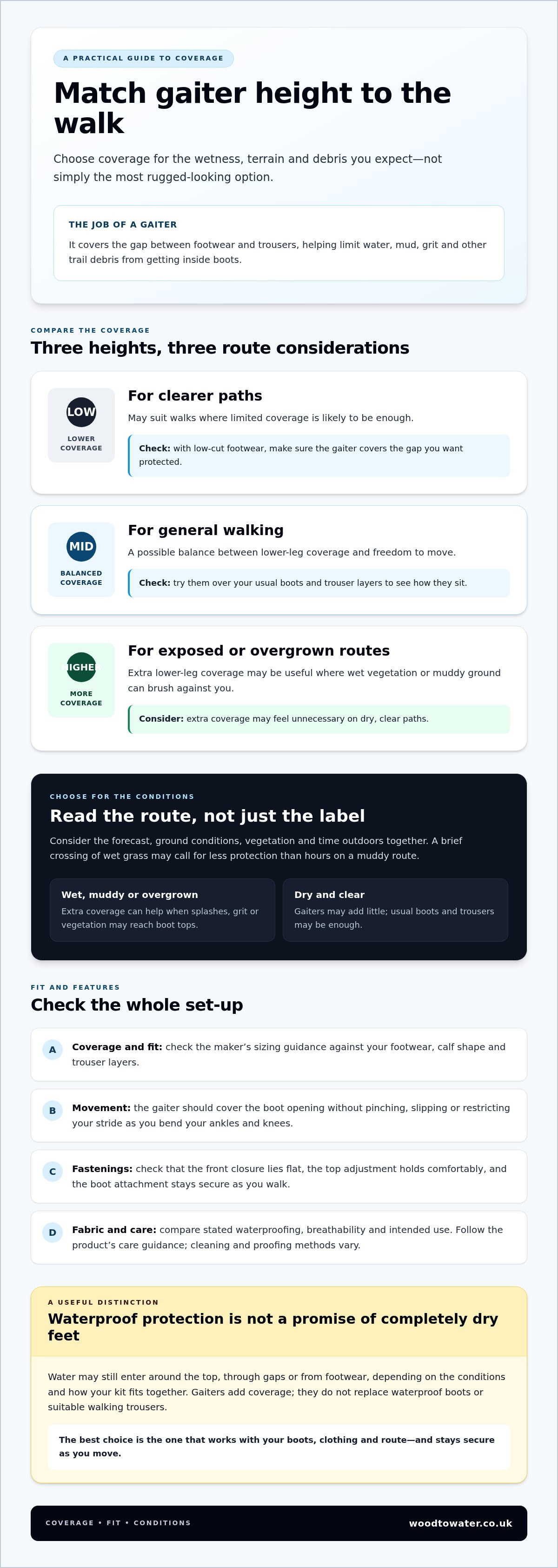
No single gaiter style suits every route. A short walk on a clear path calls for different coverage from a wet outing through long grass or muddy ground. Use this comparison as a starting point, then consider your footwear, clothing and expected conditions.
| Coverage | May suit | Consider |
|---|---|---|
| Low | Clearer paths and walks where limited coverage is likely to be enough. | With low-cut footwear, check that the gaiter covers the gap you want protected. |
| Mid | General walking where you want a balance of lower-leg coverage and freedom to move. | Try it over your usual boots and trouser layers to assess how it sits. |
| Higher | More exposed or overgrown routes where extra lower-leg coverage may be useful. | More coverage may feel unnecessary on dry, clear paths, so consider the activity. |
Do you need low, mid or higher gaiters?
Start with your footwear. Low-cut shoes leave more of the lower leg open, while taller boots cover more of it. Then think about what could reach your legs and boot tops on the route. Damp vegetation, mud and persistent wet conditions may make extra coverage useful. For a dry, well-cleared walk, a taller design may add bulk without solving a likely problem. Guidance such as REI’s How to Choose and Use Gaiters also highlights gaiter height as a factor in choosing for an activity.
Are waterproof gaiters always the right choice?
No. A waterproof label alone doesn’t tell you whether a pair will feel comfortable, breathe well enough for your pace or stay put over your footwear. Construction, fit and the layers beneath the gaiters all affect how they feel in use. Waterproof hiking gaiters can offer useful protection in wet conditions, but extra coverage may feel warm or restrictive on a dry walk. Choose them when their coverage addresses a real need on your route, and check that they work with your boots and stride.
Once you’ve settled on the coverage you need, browse the waterproof camping gear collection for kit to support wet-weather outings.
How to check gaiter fit and prepare them for the trail
Try your gaiters at home before wearing them on a wet path. Fit can change with different boots, socks and trouser layers, so test the combination you plan to wear rather than judging the gaiters on their own. This simple routine can help you spot slipping, gaps or awkward fastenings before setting off.
How can you check gaiters fit over your boots?
- Wear your walking layers. Put on the trousers and boots you expect to use, then fit the gaiters according to their instructions.
- Check the coverage. Look at how the gaiter sits over the boot and around your lower leg. Make sure it covers the area you want protected without leaving an obvious gap.
- Secure each fastening. Check that closures and boot attachment points sit in place and don’t press uncomfortably against your leg or footwear.
- Move as you would on a walk. Take a short walk, bend your knees and step up onto a low step. Notice any slipping, pinching, bunching or restriction.
- Practise taking them off. Undo and refit the gaiters so the process feels familiar before you need to manage them outdoors.
There’s no single fit standard for every boot and leg shape. Aim for practical coverage that stays in place through normal movement without feeling uncomfortably tight or interfering with your stride. If waterproof hiking gaiters shift during your test, revisit the fit and adjustment instructions before relying on them for a longer outing.
What should you do before and after a walk?
Before setting out, inspect the fabric, closures and boot attachment points for visible wear or damage. Check that all parts are secure, and practise fitting and removal if the design is new to you. A camping checklist can help you remember gaiters alongside other clothing and equipment suited to your route.
After use, follow the gaiters’ care instructions and let them dry as directed before storing them. Don’t assume a footwear cleaner or waterproofing treatment is suitable for gaiter fabric. Use a product only if its label says it’s appropriate. For a wider wet-weather set-up, camping tarps can provide a complementary shelter option.
Once you’ve checked the fit and prepared your kit, browse waterproof camping gear for equipment suited to wet-weather outings.
Origin Outdoors Drytogo Gaiters and a practical waterproof kit
Once you’ve worked out the coverage and fit you need, apply the same checklist to a specific option. Wood To Water Outdoors stocks Origin Outdoors Drytogo Gaiters. Consider them alongside your footwear, trouser layers and usual walking conditions. Rather than relying on the product name alone, read the listing details and assess how the gaiters fit you in practice.
What should shoppers know about Origin Outdoors Drytogo Gaiters?
Use the checks from earlier in this guide: consider the coverage you want, read the product information, then try the gaiters over the boots and clothing you plan to wear. Check that they sit securely, cover the boot opening as intended and let you walk comfortably without slipping or pinching. Fit can vary with footwear and layers, so a home try-on is more useful than relying on a general assumption about sizing. Choose based on how they work with your kit and the conditions you expect.
Which care products can support a wider wet-weather kit?
A practical wet-weather kit includes care for the equipment you use, but each product has a specific purpose. Nikwax Footwear Cleaning Gel is a footwear cleaner. Nikwax TX Direct is for waterproof clothing, while Storm Tent Proofer is for tents. These products aren’t interchangeable, and shouldn’t be used on gaiters unless the relevant label specifically says they’re suitable.
Before applying any cleaner or treatment, read its label and follow the instructions for the item you’re caring for. For gaiters, follow their own care guidance. Don’t assume a footwear product or clothing treatment is appropriate just because the materials look similar. After a wet walk, clean and dry the gaiters as instructed, then check their closures and attachment points before the next outing. This simple routine helps you care for your kit without mixing up products.
With your gaiter choice and care plan matched to your kit, explore the waterproof camping gear collection for gaiters and related wet-weather essentials.
Choose gaiters that are ready for your next walk
The right waterproof hiking gaiters suit your route, footwear and expected conditions. Compare coverage, fabric claims and fastening details, then try them with your walking boots and trousers. They should stay secure without restricting your movement. A waterproof label alone can’t guarantee a comfortable fit or keep every part of your kit dry.
Origin Outdoors Drytogo Gaiters are one option to consider as you work through those checks. Pair your choice with sensible kit care, following each product’s label for its intended use. The collection also includes waterproofing, cleaning and repair products for outdoor gear.
Browse waterproof camping gear and kit-care essentials to explore options for your wet-weather set-up. A little preparation can help you head out feeling more comfortable and ready for the trail.
Frequently Asked Questions
What are waterproof hiking gaiters used for?
Waterproof hiking gaiters cover the gap between footwear and lower-leg clothing, helping limit water, mud, grit and trail debris from entering boots. They can be useful on wet, muddy or overgrown paths, where vegetation and splashes may reach the boot opening. Gaiters add coverage, but don’t replace suitable boots or waterproof trousers, and they can’t guarantee dry feet in every condition.
Are waterproof hiking gaiters worth wearing on ordinary walks?
They’re worth considering if your regular routes are often wet, muddy or overgrown, or if you want extra coverage above your boots. On dry, clear paths, gaiters may add little and feel like unnecessary kit. Think about the conditions you commonly encounter, the footwear you wear and how extra layers feel as you walk. That should help you decide whether gaiters belong in your usual walking kit.
How should hiking gaiters fit over walking boots?
Try gaiters over the boots and trousers you’ll wear on your walk, and follow the product’s sizing guidance. They should cover the area you want protected, stay in place as you move and feel comfortable around your lower leg. Walk a short distance, bend your knees and step up to check for slipping, pinching or restricted movement. Fit varies by design, so don’t rely on a universal fit standard.
Can you wear gaiters with trail shoes?
Yes, gaiters can work with trail shoes if their design and attachment system are compatible. Check the product’s fitting guidance, then try the combination before setting off. Trail shoes may have different attachment points and leave a different amount of the lower leg exposed than taller boots. Check that the gaiters sit securely, provide useful coverage and remain comfortable as you walk your intended route.
Are waterproof gaiters breathable?
Breathability depends on the gaiter’s materials and construction. A waterproof claim alone doesn’t explain how comfortable the fabric will feel during active walking, and different designs may balance protection and ventilation differently. Compare the stated properties and intended use, then consider your walking pace and likely conditions. A pair suited to a slow, wet walk may not feel the same during a brisk outing.
How do you clean and care for hiking gaiters?
Follow the care instructions for your gaiters’ fabric and construction. Remove dirt after use, then dry them as directed before storing them. Check the fabric, closures and boot attachments for visible wear before your next walk. Don’t assume a footwear cleaner or waterproofing treatment is suitable for gaiters. Use a care product only if its label names that application, and avoid treatments that may be unsuitable for the material.
Do gaiters make boots completely waterproof?
No, gaiters don’t make boots or a clothing combination completely waterproof. They add coverage around the lower leg and footwear opening, but water may still enter elsewhere or in conditions beyond the gear’s intended use. Treat gaiters as one part of a wet-weather set-up, alongside boots and clothing suited to your walk. A secure fit helps, but it can’t guarantee that your feet will stay dry.