

Essential Outdoor Gear for UK Camping
The best outdoor kit for a UK trip isn’t necessarily the biggest or most expensive. A shelter suited to a calm campsite may not be right for an exposed night, while extra layers and cooking gear can add weight to a walking pack. Choosing outdoor gear UK campers can rely on starts with your route, the forecast and how much you can comfortably carry.
It’s easy to feel unsure about what’s essential when the weather can change and paths range from well-trodden tracks to wet, uneven ground. You don’t need to pack for every possibility, but dependable basics can make a real difference to comfort and preparedness.
This guide will help you match your kit to your plans, likely conditions and carrying capacity, so you can leave unnecessary weight behind. We’ll cover the main gear categories, how to assess what you already own and when specialist items, such as gaiters or compact cooking equipment, may earn their place. Whether you’re staying at a campsite, hiking overnight or planning a hammock setup, you’ll have a practical starting point for building a kit that works for you.
Key Takeaways
- Start with your trip, likely conditions and carrying capacity to decide what’s essential and which extras you can leave behind.
- Build your camping setup around connected functions, from shelter and sleep to cooking, navigation and safety.
- Compare outdoor gear UK options against the same trip requirements, considering pack size, durability and ease of use as well as headline features.
- Before buying, check that an item suits your plans, fits properly, works with your existing kit and has room in your pack.
- A considered selection process can help you find useful specialist equipment without duplicating gear you already own.
How to Choose Outdoor Gear in the UK for Your Kind of Trip
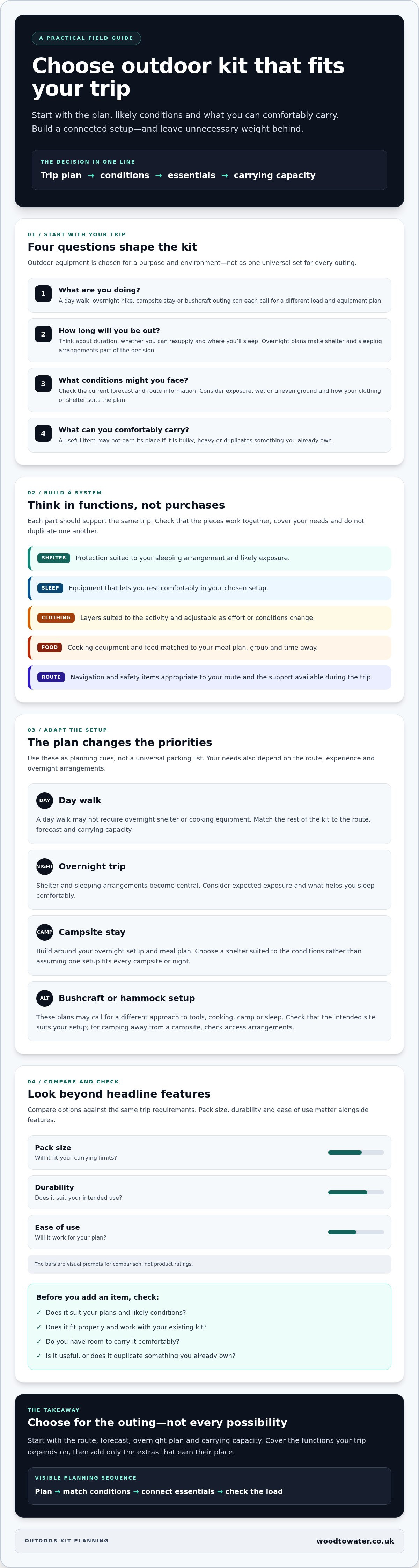
The right kit depends on three things: your activity, the conditions you expect and what you can comfortably carry. Outdoor gear is equipment chosen for a particular purpose and environment, not a universal set of items that works everywhere. Start with your trip plan, then choose outdoor gear UK walkers and campers can use confidently for that specific outing.
Separate essentials from comfort and convenience extras. Essentials are the items your plans depend on, such as suitable clothing or equipment for your overnight arrangements. Extras can make a trip more enjoyable, but may not be necessary every time. This guide is a way to make those choices, not a complete checklist; your needs will vary with the route, your experience and how you’ll spend the night.
Start with the activity, duration and overnight plan
A day walk usually needs a different load from an overnight camp. If you’re camping, shelter and sleeping arrangements become part of the plan. For a bushcraft outing, you may prioritise different tools or cooking equipment. Consider how long you’ll be out, whether you can resupply and where you’ll sleep. If you’re new to camping, a broad introduction to what camping involves can help you understand the different forms it can take.
Consider carrying capacity early. An otherwise useful item may not earn its place if it’s bulky, heavy or duplicates something you already have. A short walk, an overnight hike and a campsite stay each place different demands on your kit. Avoid relying on one universal packing list for all three.
What UK conditions mean for your kit choices
Weather can change, so adaptable clothing and suitable shelter are worth considering. What makes sense depends on the forecast, route and how exposed you’ll be, rather than on one idea of typical UK conditions. Check current forecast and route information before setting off, then adjust your layers and equipment to suit the plan.
Match each choice to the conditions you may face and the space in your pack. If cooking is part of your plan, consider what suits your meals and carrying limits. You can compare compact cooking equipment as one part of that decision. No single setup suits every season or activity. Keep the plan specific and choose items that help you carry it out comfortably.
Build a Reliable UK Outdoor Gear System Around the Essentials
Think in functions, not individual purchases. Shelter, sleep, clothing, food preparation, and navigation or safety all need to support the same trip. A compact cooking setup is only useful if it suits your meal plan, and your shelter needs to work with your overnight arrangements and expected conditions. Looking at your kit as a system helps you spot gaps and avoid carrying duplicates.
- Shelter: protection suited to your sleeping arrangement and likely exposure.
- Sleep: equipment that lets you rest comfortably in your chosen setup.
- Clothing: layers suited to the activity that you can adjust as conditions change.
- Food preparation: cooking equipment and food that match your meal plan and group.
- Navigation and safety: items appropriate to your route and the support available during the trip.
Priorities shift with the plan. A day walk may not require overnight shelter or cooking equipment. For an overnight trip, both can become central; a bushcraft outing may involve a different approach to camp and food preparation. If you plan to camp away from a campsite, check access arrangements before you go. The Campaign for National Parks explains wild camping regulations in National Parks in England and Wales.
Shelter and sleep gear for overnight trips
A tent and a hammock offer different ways to sleep outdoors, and neither is automatically the better option. Check whether your intended site suits your setup, consider how exposed it may be to the weather and think about what helps you sleep comfortably. If you’re considering a solo shelter, compare a one-person tent with your plans and the rest of your kit.
Clothing, cooking and small essentials
Layering gives you options: you can adjust what you wear as your effort level and the conditions change. For cooking, match the equipment to what you’ll prepare, how many people you’re catering for and how long you’ll be away. A short trip with simple meals calls for a different setup from a longer outing. The Jetboil systems guide offers a deeper look at trail cooking; a camping checklist can help you organise the rest of your packing.
Before setting off, consider how each item works with the others and whether it earns its place. Wood To Water Outdoors offers camping, hiking and bushcraft equipment, including the Jetboil Trailcook 1.2L. Choose components that fit your actual plans, then check that the complete setup is practical to carry and use.
Compare Outdoor Gear by Weight, Durability and Practical Use
Compare each item against the same trip requirements, not just its headline features. A small packed size may matter on a long walk, while ease of use may matter more at a campsite. Consider how often you’ll use the item, how you’ll carry it and whether you can care for it properly. There’s no single best balance for every outing.
Match each feature to a real trip need, then weigh the trade-offs against comfort, reliability and pack space.
| What to compare | Questions to ask |
|---|---|
| Weight | Will you carry it for much of the day, or mainly use it at camp? |
| Packed size | Does it fit in your pack alongside the rest of your planned kit? |
| Durability | Does its construction suit how often and in what conditions you expect to use it? |
| Ease of use | Can you set it up, pack it away or operate it confidently? |
| Repair considerations | Check the care guidance and whether repairs or replacement parts are practical to arrange. |
When lightweight outdoor gear is worth prioritising
Reducing pack weight can matter on longer or more demanding journeys, when you’ll carry your equipment further. But a lighter option isn’t automatically the right one. Consider whether it will remain comfortable and dependable for your intended use, and whether the weight saving is worth any trade-off in handling or upkeep. For a focused cookware example, explore the TOAKS titanium cookware guide.
How to assess materials and care needs
Materials alone don’t tell you whether an item will suit your trip. Read the product information and manufacturer’s care guidance before choosing. Think about how often you expect to use the item, how it will be packed and what maintenance it needs. Gear used regularly or in demanding conditions may call for different priorities from occasional campsite kit.
For example, consider whether you’re comfortable cleaning and storing cookware according to its care instructions, rather than choosing by material name alone. Wood To Water Outdoors offers TOAKS Titanium Cookware among its camping equipment. Check current product information for relevant details, then compare it with your cooking plans and packing needs.
Avoid Common Mistakes When Buying Outdoor Gear in the UK
It’s easy to be drawn to the most technical-looking item or assume a higher price means a better match. Extra features only help if they suit your plans. Before buying outdoor gear UK campers can rely on, run through this quick check:
- Trip: What activity are you planning, and how long will you be out?
- Conditions: What do the forecast and route information suggest you’ll need?
- Fit: Will the item fit and feel comfortable during its intended use?
- Compatibility: Does it work with your existing equipment and setup?
- Pack space: Can you carry it alongside the rest of your planned kit?
Buy for the trips you actually plan, not every scenario you can imagine. That keeps your kit focused and helps avoid a common mistake: choosing impressive features over practical usefulness.
Check fit, compatibility and what you already own
Try items on or check their fit where possible, especially footwear, clothing and sleep systems. Review product dimensions and compatibility before ordering. For example, check that components suit your intended shelter or cooking setup instead of assuming they’ll work together. Then take stock of your existing kit. An item you already own may do the job, helping you avoid unnecessary duplication.
Read the product and care information, too. It can explain how an item is intended to be used, stored and maintained. If a detail you need is unclear, seek clarification before buying.
Pack for conditions without overpacking
Use the forecast and your activity plan to choose clothing layers and sensible contingency items. A walk with a straightforward return plan may call for a different load from an overnight trip. Separate the safety provisions your route requires from optional comforts, then consider whether each extra earns its place in your pack.
Don’t add duplicate layers or equipment without a clear purpose just to prepare for every possible change in the weather. Equally, don’t leave out something your plan depends on simply to reduce pack size. Aim for a considered balance: suitable kit, enough room to carry it comfortably and no purchases for problems you’re unlikely to face.
Use the checklist to review your choices, then explore outdoor gear at Wood To Water Outdoors with your trip, fit and compatibility needs in mind.
Find Outdoor Gear in the UK That Suits Your Next Adventure
A good gear choice starts with a clear plan. Define the activity and overnight arrangements, check the conditions, prioritise essentials, then compare trade-offs in weight, pack space and practical use. This sequence helps you focus on outdoor gear your UK trip genuinely calls for, rather than buying equipment simply because it looks versatile.
Wood To Water Outdoors is a UK-based online retailer serving customers nationally, with camping, hiking and bushcraft equipment. Its range includes specialist items such as durable sleeping hammocks and Origin Outdoors ‘Drytogo’ Gaiters. Consider these when they suit your activity, rather than treating them as must-haves for every camper.
Match specialist equipment to the activity
A hammock may suit a trip where your planned sleeping setup and site make it practical. Gaiters may be useful for walks where muddy or wet ground is likely, while compact cooking equipment may suit outdoor meal preparation when you need to manage the weight and space of your kit. Start with the job an item needs to do, then check that it fits your wider setup. If a hammock suits your plans, browse the camping hammock range to compare options.
Make your next gear choice with confidence
Shortlist items against your trip requirements rather than browsing without a clear purpose. Note what you need, what you already own and which features matter most. Then check current product descriptions for exact specifications and availability, and make sure each item is compatible with your other equipment. If a detail affects fit or use, clarify it before ordering.
There’s no need to replace your whole kit at once. A focused addition that solves a real problem may be more useful than another general-purpose item. Wood To Water Outdoors brings camping, hiking and bushcraft equipment together in one national online shop, so you can explore specialist choices with your plans in mind.
Ready to compare options? Browse outdoor gear at Wood To Water Outdoors and choose what suits your next adventure.
Choose Your Kit and Get Ready to Head Outdoors
Dependable camping equipment starts with a realistic plan. Define your trip and sleeping arrangements, check the conditions, then prioritise essentials that suit your activity and carrying capacity. Compare practical details such as fit, packed size, durability and ease of use instead of choosing by headline features alone.
That approach makes it easier to build a useful kit without buying duplicates or packing for every possibility. The outdoor gear UK campers need will vary from one adventure to the next, so choose each item for a clear purpose and check current product details before ordering.
Wood To Water Outdoors is a UK-based online retailer serving customers nationally, with equipment for camping, hiking and bushcraft. If you’re ready to put your shortlist into action, browse outdoor gear for your next adventure.
Keep your plans in mind, pack with care and choose what helps you feel prepared. Then enjoy getting outdoors.
Frequently Asked Questions
What outdoor gear do I need in the UK?
Choose kit according to your activity, trip length and expected conditions, rather than relying on one universal list. For an overnight trip, consider shelter, sleep equipment, suitable clothing, food preparation and what you need for your planned route. Check the forecast and review your existing kit before adding extras. A camping checklist can help you review your pack, but not every listed item will be essential for your plans.
How do I choose outdoor gear for changeable UK weather?
Choose adaptable layers and shelter that suit your activity, then check the current forecast and route conditions close to departure. Consider how exposed your route or campsite may be and whether you can adjust or shorten your plans if conditions change. No clothing or shelter setup suits every season and activity. Use the manufacturer’s product guidance, your experience and the needs of the specific trip to make your choice.
Is lightweight outdoor gear always the best choice?
No, lighter gear isn’t automatically the best choice. Saving weight can be valuable if you’ll carry equipment over longer distances, but comfort, durability, reliability and ease of use matter too. Compare options against the conditions and frequency of use you expect. For example, cookware that’s easy to handle may suit your plans better than an alternative chosen for weight alone. Choose a lighter option when its trade-offs make sense for your trip.
What should I check before buying camping gear online?
Check the item’s intended use, dimensions, compatibility, care guidance and current product specifications before ordering. Consider whether it will work with your existing setup and whether you already own something that serves the same purpose. Product names and headline features don’t always show whether an item will suit your trip. If a detail that affects fit or use is unclear, ask the retailer for clarification before you buy.
Can the same outdoor gear work for camping, hiking and bushcraft?
Some equipment can be useful across activities, but a whole kit rarely transfers unchanged. A day hike has different carrying needs from an overnight camp, while bushcraft plans may call for different tools or shelter choices. Start with the activity and conditions, then reuse suitable equipment you already own. Check that each item is appropriate for the specific plan, and don’t carry something simply because it appeared on another trip’s packing list.
How can I avoid carrying too much outdoor gear?
Write down what your trip requires, check the forecast and separate essential safety provisions from optional comforts. Review the equipment you already own, then remove duplicates that don’t serve a clear purpose. For longer or more demanding journeys, balance portability with comfort and reliability. A practice pack can help you spot unnecessary bulk before departure, giving you time to adjust your load without leaving out something your plans depend on.
Where can I buy outdoor gear in the UK?
Choose a retailer with equipment suited to your planned activities and product information that helps you compare options. Wood To Water Outdoors is a UK-based online retailer serving customers nationally, specialising in camping, hiking and bushcraft equipment. When comparing outdoor gear UK retailers offer, check current product descriptions for specifications and availability. Wood To Water Outdoors also has a dedicated customer service team if you need help comparing suitable options.