

Bushcraft Gear UK: Essential Kit for Every Expedition in 2026
The best bushcraft kit isn’t the one with the most gadgets; it’s the one you can use confidently when conditions change. Choosing bushcraft gear UK explorers can depend on can feel daunting, with endless options and no single setup for every trip. It’s easy to pack too much and still miss something useful.
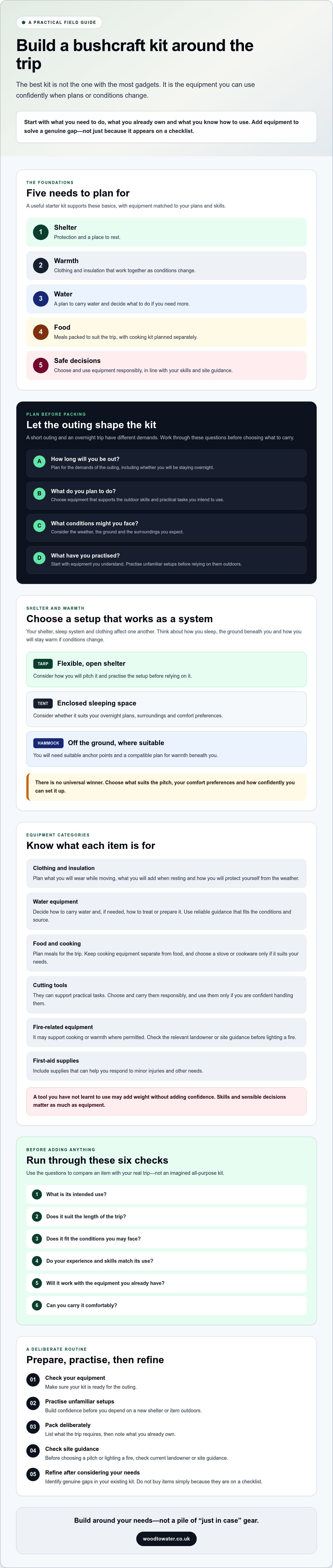
You don’t need to buy everything at once. Start with the trip: how long you’ll be out, what you plan to do, the weather you may face and the skills you’ve practised. A short outing has different demands from an overnight trip, and your shelter, clothing and cooking kit should work together for the conditions.
This guide covers the main categories of bushcraft equipment, explains how to choose for your plans and offers a practical way to keep your load manageable. You’ll also find reminders about safety, responsible preparation and testing your setup before setting off. Build around your needs, not a pile of “just in case” gear.
Key Takeaways
- Build your starter kit around shelter, warmth, water, food and sound decisions. Choose equipment that supports the skills you’ll use.
- Compare shelter and clothing options with your sleeping preferences, ground conditions and the changeable weather you may encounter.
- Before adding anything to your pack, check its intended use, trip length, conditions, your experience, compatibility with existing kit and carrying comfort.
- Prepare your bushcraft gear UK kit by checking equipment, practising unfamiliar setups and packing deliberately. Check current landowner or site guidance before choosing a pitch or lighting a fire.
- Identify genuine gaps in your existing kit before exploring suitable equipment. Don’t buy items simply because they appear on a checklist.
Bushcraft gear UK: what belongs in a practical starter kit?
Useful bushcraft kit supports five basics: shelter, warmth, water, food and safe decision-making. It isn’t a fixed checklist or a collection of impressive tools. A practical bushcraft kit is the equipment you can use confidently to meet the needs of a particular trip and practise relevant outdoor skills.
This distinction helps separate essentials from comfort items and specialist extras. Shelter and suitable insulation may be central to an overnight outing; additional cooking options or specialist tools may not be. Choose for your plans, abilities and conditions, rather than packing every item that could conceivably come in handy. For a broader introduction to Bushcraft skills, including shelter-building and firecraft, see the linked overview.
Which gear categories should beginners understand first?
Start by understanding what each category is for. Shelter provides protection and a place to rest. Insulation and suitable clothing help you manage warmth as conditions change. Cutting tools can support practical tasks, but choose and carry them responsibly, and only use them if you’re confident handling them. Fire-related equipment may support cooking or warmth where permitted. Check the relevant landowner or site guidance before lighting a fire. Water equipment helps you carry, treat or prepare water, while first-aid supplies can help you respond to minor injuries and other needs.
The right choices depend on your skills, the conditions you expect and your trip plan. A tool you haven’t learnt to use may add weight without adding confidence. Start with equipment you understand, then practise with unfamiliar items before relying on them outdoors.
How does a bushcraft kit differ from a general camping kit?
There’s plenty of overlap. Both may include shelter, sleep equipment, cooking kit and clothing. A bushcraft setup may also support hands-on outdoor tasks, such as preparing materials or practising firecraft, alongside overnight comfort. That doesn’t mean every trip calls for a specialist tool or a fire. Let the skills you intend to use and the guidance for your chosen site shape those choices.
A focused category can help you explore options without treating every item as essential. Wood To Water Outdoors’ bushcraft essentials collection is one place to review relevant equipment. For cooking-related kit, you can also browse the Fire Maple gear range. Compare each item with your actual needs before adding it to your pack. First list what the trip requires, then note which items you already own.
Build a UK bushcraft gear kit around shelter, warmth and daily needs
Your shelter, sleep system and clothing work as a team. Choose shelter and insulation together: the right setup depends on how you sleep, the ground beneath you and how you’ll stay warm if conditions change. A shelter that suits one pitch or preference may not suit another, so consider the whole overnight arrangement before packing.
Choosing between a tarp, tent or hammock setup
A tarp can suit a flexible, open shelter setup, but you’ll need a suitable way to pitch it and should practise before relying on it. A tent provides an enclosed sleeping space, while a hammock can keep you off uneven ground where suitable anchor points are available. Hammock campers also need a compatible plan for warmth beneath them. There’s no universal winner: consider the surroundings, your comfort preferences and how confidently you can set up each option. Explore the camping hammocks collection if this style suits your plans.
Packing warmth, hydration and cooking essentials
Plan clothing as a system rather than relying on one warm layer. Consider what you’ll wear while moving, what you’ll add when resting and how you’ll protect yourself from the weather. Conditions can shift during an outing, so choose layers that suit the forecast and your plans. Your insulation choices should work with your sleep setup as well as your daytime clothing.
Keep daily needs distinct as you plan:
- Hydration: Decide how you’ll carry enough water for your route and what you’ll do if you need more. Choose a treatment approach using reliable guidance and the conditions, rather than assuming one method suits every source.
- Food and storage: Plan meals for the trip and pack them in a way that suits your needs. Keep cooking equipment separate from food itself.
- Cooking: Select a stove or cookware only if it suits your meal plan and the guidance for your chosen site. The JetBoil Trailcook 1.2L and TOAKS Titanium Cookware are examples of products available from Wood To Water Outdoors, not necessities for every kit.
Personal essentials come first; extra cooking convenience and comfort items are optional. Before settling on a pitch or considering a fire, check current landowner or site guidance. The British Mountaineering Council offers further advice on camping responsibly on UK trips. If you’re comparing options, Wood To Water Outdoors’ outdoor equipment can be a useful place to explore relevant kit after defining what the trip calls for.
How to choose bushcraft gear without overpacking or buying blindly
A longer kit list doesn’t automatically make you better prepared. Useful equipment suits the trip, works with what you already carry and is familiar enough to use when needed. To choose bushcraft gear UK shoppers can put to use, decide what each item is for before buying or packing it.
Run each potential purchase through this filter: intended task, expected conditions, trip duration, your skills, compatibility and carrying comfort. If you can’t explain what an item adds, or don’t know how to use it, pause before packing or buying it. A short outing in settled conditions and a longer trip with an overnight stay won’t call for identical choices.
What should you check before choosing an item?
Start with the job. Does the item support shelter, warmth, cooking, navigation or another genuine need? Next, check whether it fits your existing setup: cookware should suit your planned cooking method, and shelter components need to work together. Consider pack space and how comfortable the load feels when carried. Read the manufacturer’s instructions for use and care, and compare durability information rather than relying on appearance alone.
| Choice | May suit | Check before choosing |
|---|---|---|
| Familiar, simple equipment | Trips where you want a straightforward setup you already know how to use | Whether it covers the needs of this outing and works with your other kit |
| Specialist tool | A specific task you expect and have practised | Its purpose, safe use, care needs and whether it’s appropriate for the trip |
| Extra comfort item | Trips where added convenience matters to you | Whether the comfort is worth the space and carrying effort |
Which bushcraft items are essentials, and which are optional?
There’s no universal essentials list. Classify items against your needs and trip plan: equipment is essential if it addresses a real requirement you can’t reasonably meet another way. Spare comfort items and specialist tools may be useful in some circumstances, but they aren’t automatic additions to every kit.
Before adding unfamiliar equipment, learn its intended use and limitations, then practise with it in an appropriate setting. For knife-specific considerations, consult reliable guidance and check current rules that apply to your circumstances. Wood To Water Outdoors’ bushcraft essentials collection offers a relevant category to browse once you’ve identified a genuine gap. Choose deliberately, then reassess after each trip: what proved useful, what stayed packed and what would you change next time?
Prepare and use bushcraft gear responsibly on UK trips
A little preparation helps you spot missing kit before you’re outdoors and avoid carrying items you don’t know how to use. A reliable pre-trip gear check means matching your kit to the plan, testing it and packing only what you can use safely and confidently.
How can you check and practise with your equipment?
Use this sequence to prepare your bushcraft gear UK kit:
- Plan for the outing. Note the expected conditions, how long you’ll be out and what you intend to do. Use that plan to identify your practical needs.
- Check each item. Look for damage, missing parts or signs that equipment needs attention. Make sure your chosen kit works together, including shelter components and cooking equipment.
- Practise unfamiliar setups. Pitch your shelter, adjust its fastenings and organise your pack before setting off. If you plan to cook, learn how to set up and handle your equipment in an appropriate place.
- Pack deliberately. Put essentials where you can access them, protect items that need to stay dry and remove extras that don’t serve the trip plan.
Follow the manufacturer’s instructions for each product, especially for setup, use and care. Handle cutting and cooking equipment carefully, and don’t rely on unfamiliar kit until you’ve learnt its purpose and limitations. After each outing, check your equipment again. Clean and dry it as directed, then repair or replace items if their condition gives you reason to.
How should you approach fire, cooking and site guidance?
Before choosing a pitch or using fire or cooking equipment, check current guidance from the landowner or site. Requirements and conditions can vary, so don’t assume what was acceptable elsewhere applies to your next trip. If guidance doesn’t permit a planned activity, adjust your plan rather than taking a chance. Choose a cooking method that fits the site instructions and equipment you know how to use.
For fire-starting, seek dedicated instruction and practise only where the relevant guidance allows. During your trip, keep your equipment under control, use it as directed and avoid leaving a mess or causing damage. Pack out your waste and leave the site as you found it.
Once you’ve identified the equipment your trips call for, browse Wood To Water Outdoors’ bushcraft essentials to explore relevant kit. Assess each item against your plan before adding it to your setup.
Choose bushcraft gear for your next trip, then refine your kit
You don’t need to assemble a complete kit before heading out. Build your bushcraft gear UK setup around a real trip, use what you already own if it’s suitable, then add equipment only to fill a clear need. That keeps your choices practical and gives you the chance to learn each item properly.
How can beginners build a kit gradually?
Before your next outing, work through a simple plan:
- Define the trip. Note its length, planned activities, likely conditions and where you’ll be staying.
- List what you need. Consider shelter, warmth, food, water and safety in light of that specific plan.
- Check your existing kit. Inspect what you own, confirm it suits the task and practise with anything unfamiliar before relying on it.
- Fill genuine gaps. Choose new equipment only when you can explain what need it meets and how it will work with the rest of your setup.
After the trip, jot down what you used, what you missed and what you carried without needing. Those notes make your next packing list more personal and help you avoid buying duplicates or extras that don’t earn their place. Gradual refinement is a practical alternative to purchasing a complete collection of equipment all at once.
Where can readers explore relevant gear next?
Once you’ve identified a specific need, compare equipment within the relevant category and check current product information before choosing. For example, a quality woodland hammock may be worth considering if an elevated sleeping setup fits your plans and preferences. The Petromax Charcoal Maker is another product available from Wood To Water Outdoors, but it’s an optional example, not a requirement for every bushcraft trip. Neither choice replaces checking that a product suits your intended use.
Wood To Water Outdoors is a UK-based retailer of outdoor equipment. It sells gear, not outdoor survival training, equipment rental or campsite bookings. If your list has revealed a genuine gap, you can explore bushcraft essentials as a starting point for comparing relevant equipment. Keep your trip plan in view as you browse, and let practical needs, familiarity and fit guide your choice.
Build a bushcraft kit that’s ready for your next trip
Good bushcraft gear UK choices start with your plans, not a packed shopping basket. Match shelter, warmth and daily essentials to the outing, then check what you already own before filling genuine gaps. Equipment you know how to use is often more useful than extra kit you’ve never practised with.
Keep refining your setup after each trip. Make a note of what you used, what you missed and what you carried unnecessarily. Those observations will help you create a practical kit that suits your experience and the conditions you’re preparing for.
When you know what your next trip calls for, explore bushcraft essentials at Wood To Water Outdoors. The UK-based retailer specialises in camping, hiking and bushcraft equipment, with a dedicated customer service team and expert reviews to help you compare relevant options. Browsing is a useful next step, not a reason to buy more than you need.
Start with the trip, choose thoughtfully and practise with your gear. You’ll build confidence one outing at a time.
Frequently Asked Questions
What gear do you need for bushcraft in the UK?
Choose gear that meets your trip’s needs for shelter, warmth, water, food and safety. Your bushcraft gear UK kit might include suitable shelter and a sleep system, weather-appropriate clothing, water-carrying equipment, food and cooking items, first-aid supplies and tools for tasks you’re equipped to handle. The exact choices depend on trip length, conditions and your skills. Practise with unfamiliar items before relying on them outdoors.
What is the difference between bushcraft gear and camping gear?
The categories overlap, but bushcraft gear is often chosen to support practical outdoor skills as well as overnight comfort. Both types of kit may include shelter, sleep equipment and cooking gear. A bushcraft outing may also involve equipment for specific tasks, depending on what you plan to do and know how to do. There’s no rigid boundary, so choose items for the trip rather than the label.
Can beginners go bushcrafting with basic camping equipment?
Yes, familiar camping equipment can be a useful starting point if it suits the planned outing. Check that your shelter, sleep system, clothing and other essentials meet the conditions you expect, and practise setting them up before you go. Add bushcraft-specific tools only when you have a clear task for them and understand how to use them. Check current site or landowner guidance for your planned activities and pitch.
How do I choose a shelter for a bushcraft trip?
Choose a shelter based on where you’ll pitch, the ground and surroundings, your sleep preferences and your confidence setting it up. A tent offers an enclosed space; a tarp needs a suitable pitching arrangement, whilst a hammock requires appropriate anchor points and a compatible plan for staying warm. Consider shelter and insulation together, then practise the complete setup before relying on it outdoors.
Do I need a bushcraft knife to get started?
No. A bushcraft knife isn’t essential for every trip, especially if your plans don’t involve tasks that require one or you haven’t practised safe handling. If you choose to carry a knife, check current UK rules and understand what counts as a valid reason to carry it in public. Most knives require a good reason or lawful authority; the limited exception for some small folding knives has specific conditions.
Is it safe to use a camping stove or make a fire outdoors?
Either can involve risk, so follow the equipment maker’s instructions and check current landowner or site guidance before cooking or lighting a fire. Rules and conditions vary across the UK. In England and Wales, don’t light a fire without the landowner’s explicit permission; in Scotland, local restrictions and conditions also matter. Use cooking equipment only where permitted, and never assume an open fire is acceptable.
How can I avoid carrying too much bushcraft gear?
Start with a plan for the trip: note its duration, likely conditions and activities, then list what you need for each. Check your existing equipment before buying anything, and leave out items without a clear purpose. After the outing, record what you used, what you missed and what stayed packed. Use those notes to refine your kit gradually, rather than trying to assemble a complete setup at once.