

Bushcraft Explained: How It Differs from Camping and Survival Skills
What if bushcraft isn’t about surviving without a tent, but about becoming more capable outdoors? The term is used in different ways, so it’s easy to assume it means specialist skills, expensive kit or taking unnecessary risks. In practice, bushcraft is a skills-led way to spend time outside, and it can fit comfortably alongside ordinary camping.
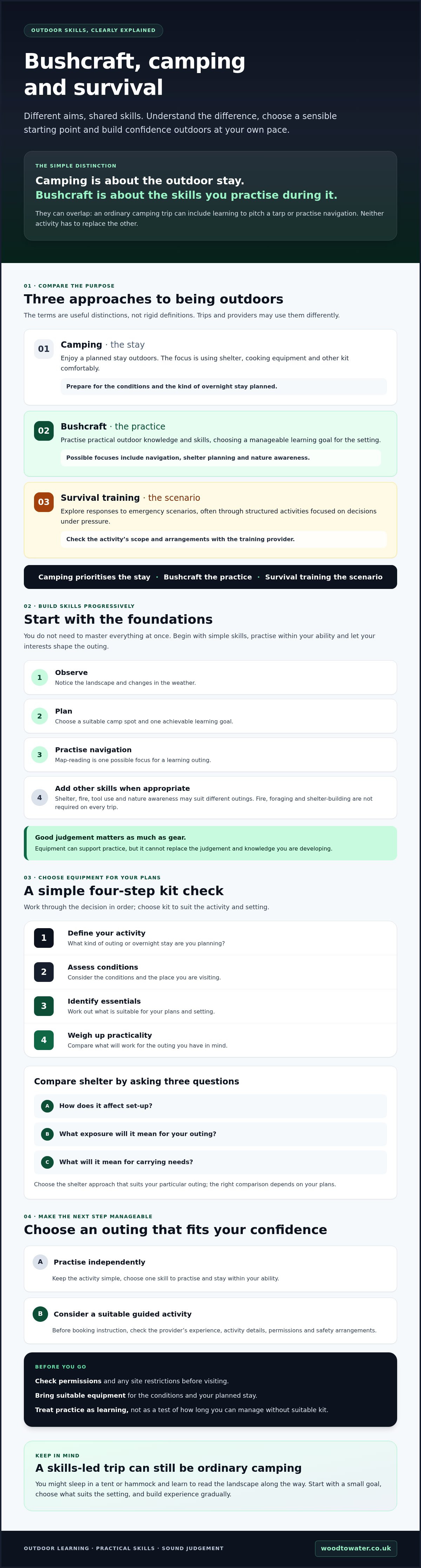
If you’re wondering how bushcraft differs from camping or survival skills, you’re not alone. Camping usually focuses on enjoying a stay outdoors with suitable shelter and equipment. Bushcraft puts more emphasis on practical knowledge, such as choosing a suitable camp spot and using resources responsibly. Survival skills, by contrast, tend to focus on responding to an emergency rather than shaping every trip around self-reliance.
This guide explains what bushcraft involves, where it overlaps with camping and survival activities, and how to get started sensibly. You’ll find beginner-friendly skills, ways to choose equipment for your plans, and reasons to give good judgement as much attention as gear. You don’t need to master everything at once. Begin with simple skills, practise within your ability, and check permissions and site restrictions before you go.
Key Takeaways
- Use a simple four-step kit check: define your activity, assess conditions, identify essentials, then weigh up practicality.
- Compare shelter options by setup, exposure and carrying needs to find what suits your outing.
- Build bushcraft skills progressively, starting with observation, planning and navigation before taking on more complex tasks.
- Choose a first outing that matches your confidence, from practising independently to joining a suitable guided activity.
- Before booking instruction, check the provider’s experience, activity details, permissions and safety arrangements.
What is bushcraft, and how does it differ from camping?
Bushcraft is about developing practical outdoor knowledge and applying it thoughtfully in the natural environment. Camping describes spending time outdoors, often overnight. The activities can overlap: on a camping trip, you might practise navigation or learn to pitch a tarp without making the whole outing a skills course.
Camping is about the outdoor stay; bushcraft is about the skills you practise during it. Neither is better, and they don’t have to be separate pursuits. You could sleep in a tent or hammock while learning to read the landscape, for example. For an overview of the term’s history and range, see this guide to bushcraft.
What does bushcraft involve in practice?
Possible areas include shelter, fire, navigation, tool use and nature awareness. The mix depends on the setting, your experience and what you want to learn. One outing might focus on map-reading and noticing changes in the weather; another could be a chance to practise setting up a tarp. Fire, foraging and shelter-building aren’t required parts of every trip.
Start with activities that suit your confidence and the place you’re visiting. Equipment can support practice, but it can’t replace the judgement and knowledge you’re developing. A bushcraft essentials selection may help you explore relevant kit as your interests take shape.
Is bushcraft the same as survival training?
No. Bushcraft is often planned learning or recreation: you choose a skill to practise and have time and equipment to do so. Survival training tends to focus on responding to emergency scenarios and making decisions under pressure. The two can share skills, such as finding shelter or managing resources, but their purposes and conditions differ.
Learning outdoor skills can build experience, but it can’t guarantee safety or prepare you for every emergency. Treat a practice outing as a chance to learn, not a test of how long you can manage without suitable equipment. If you want structured instruction, look for an appropriate external provider and check what the activity covers.
Bushcraft vs camping vs survival: compare the purpose and approach
These activities can share equipment and practical skills, but their main aims differ. Camping is generally about an outdoor stay; bushcraft focuses on learning and applying outdoor skills; survival training usually uses emergency-style scenarios to practise decision-making. These are useful distinctions, not rigid definitions: people and providers may use the terms differently.
| Approach | Primary purpose | Learning focus | Preparation and typical experience |
|---|---|---|---|
| Camping | Enjoy a planned stay outdoors. | Using shelter, cooking equipment and other kit comfortably. | Pack for the conditions and the kind of overnight stay planned. |
| Bushcraft | Practise practical outdoor knowledge and skills. | Depending on the outing, this could include navigation, shelter planning or nature awareness. | Choose a manageable learning goal and bring suitable equipment for the setting. |
| Survival training | Explore responses to emergency scenarios. | Practise decisions and skills in a structured, scenario-focused activity. | Check the activity’s scope and arrangements with the training provider. |
In short, camping prioritises the stay, bushcraft the practice, and survival training the scenario, although real trips can combine elements of all three. A camper might use shelter and cooking skills without turning a relaxed overnight into a formal lesson. For an educational perspective on skills and learning, see the Bushcraft Basics guide from Wilderness Awareness School.
Which approach suits a relaxed outdoor trip?
If your priority is a comfortable overnight, a planned campsite visit or simply time outside, make camping the main activity. You can still add one small skill goal, such as practising how you pitch your shelter or prepare a simple meal. If a hammock suits your plans, browse the range of camping hammocks and choose kit to match your intended use.
When does a skills-led outing make sense?
Choose a skills-led outing if you’d enjoy giving your trip a learning focus. Pick one achievable aim, such as planning a suitable shelter or practising navigation, rather than trying to master several skills at once. You can build experience on familiar outings; you don’t need a remote setting or an extreme challenge. Recreational skills practice is distinct from formal survival instruction. If you’re seeking guided teaching, check the provider’s experience, activity details, permissions and safety arrangements.
Which bushcraft skills should beginners learn first?
Start with skills that help you understand a place before changing or using it. Observation, planning and navigation make a useful foundation: notice the terrain and conditions, decide what you want to practise, and make sure you can find your way around your chosen area. These habits support later activities and help you recognise when a plan needs to change.
Once those basics feel familiar, explore practical skills progressively. Shelter planning can begin with choosing and assessing a suitable spot. Cooking can focus on preparing a simple meal with appropriate equipment. Tool awareness means learning about safe handling and care from a competent instructor or reliable guidance. You don’t need to try all of these on one outing. Equipment, including items from a bushcraft essentials range, can support practice, but it isn’t a substitute for knowledge.
How can you build skills progressively?
Choose one clear learning objective for each session. For example, spend an outing improving your map-reading, then review what went well and what still feels uncertain before adding another challenge. Practise in a suitable, permitted setting, and seek supervision if a task is beyond your experience. A measured pace helps you build confidence without turning a day outdoors into a test.
How do you keep bushcraft responsible?
Before you go, check landowner permission and any current restrictions that apply to the specific site and activity. Keep your impact low and leave the place as you found it. Don’t assume an activity is allowed just because it’s commonly associated with outdoor skills.
Fire, foraging and tool use need particular care, and relevant guidance can depend on the location and circumstances. Check current information from an authoritative source, such as the land manager or appropriate public body, before attempting them. If you’re unsure, leave the activity out or learn from a suitably experienced instructor. Good judgement is part of the skill set, too.
How should you compare bushcraft equipment for your first outings?
Choose kit for the trip you’re actually planning, not an imagined expedition. This simple four-step check can help keep your setup practical:
- Define the activity: decide whether you’re walking, staying overnight or practising a particular skill.
- Check the conditions: consider the forecast, setting and any site-specific restrictions.
- Identify essential kit: account for shelter, insulation, water, food, navigation and first-aid needs for your plans.
- Review weight and practicality: check that you can carry, set up and use each item confidently.
Equipment should support your preparation and learning, not replace them. A suitable shelter or cooking system won’t make an activity appropriate if you lack the knowledge, permissions or experience it requires.
How do shelter choices change the experience?
A tarp can offer a flexible shelter option. A hammock setup depends on suitable trees and can be affected by exposure and how comfortable you find sleeping suspended. A tent-based shelter doesn’t rely on trees, but its suitability still depends on the ground, conditions and your preferences. Compare setup, exposure, carrying needs and comfort for the specific outing. There’s no single best choice for every site or person.
If a tarp fits your plans, explore the available camping tarp options. For hammock camping, consider whether suitable anchor points are available and check the site’s permissions and restrictions first.
What should you prioritise in a basic kit?
Begin with the demands of your route and overnight plan. Think through where you’ll sleep, how you’ll stay warm, how you’ll carry water and food, how you’ll navigate, and what first-aid provision is appropriate. The right choices vary with the conditions, duration, location and your experience, so don’t treat a generic list as a complete answer.
Before setting off, practise using unfamiliar equipment in a suitable setting. Check that your shelter setup works for you and that you understand how to use your cooking and navigation kit. If you’re weighing up a tarp, consider its setup and carrying needs alongside the rest of your load. A considered kit list keeps the focus on useful equipment rather than packing for every possibility.
How to choose your next step in bushcraft
Choose an approach that suits what you want from your next outing. If you’re still deciding whether you enjoy the activity, plan a straightforward camping trip and set yourself one manageable skill goal. If you’re comfortable learning independently, practise at a permitted location and choose a task within your experience. For more structure or feedback, consider a guided activity that clearly matches the skill you want to develop.
Your first step doesn’t need to be an ambitious expedition or a major kit purchase. A familiar setting, realistic objective and suitable preparation can give you a useful starting point. Build on what you learn rather than trying to prove how much you can manage.
Should you learn independently or join a guided activity?
Independent practice gives you flexibility to learn at your own pace, while a suitable instructor may offer structure, demonstrations and feedback. Think about what you want to learn and how much support you need. Before booking, check the provider’s relevant experience, the activity details, permissions for the site and the safety arrangements. Make sure the instruction suits your current ability, not just your ambitions.
When does a dedicated bushcraft kit make sense?
Consider buying specialist items once you know which activities you’ll pursue, the conditions you expect and what your current equipment lacks. A dedicated setup may help when it solves a specific need, but more kit won’t automatically build skill. Wood To Water Outdoors is a retailer of outdoor equipment, not a training provider; anyone seeking instruction should choose a suitable external provider.
If you’ve identified a genuine equipment gap, browse the bushcraft essentials range to explore relevant kit. Compare each item with your plans and existing gear before deciding whether it belongs in your pack. The best next step may simply be to practise with what you already have.
Choose a practical first step outdoors
Bushcraft is best approached as a steady learning process, not a test of how much you can do without equipment. Camping can be a comfortable way to spend time outside while practising one skill, and a focused outing can help you build knowledge at a manageable pace. Start with observation, planning and navigation, then choose practical skills and kit to suit your experience, conditions and permissions.
Equipment supports preparation; it doesn’t replace sound judgement or outdoor knowledge. Before adding specialist items, work out what you’ll do and what your current setup is missing.
Wood To Water Outdoors is a UK-based retailer with a dedicated bushcraft essentials category and a range that includes quality camping tarps and outdoor gear. If you’ve identified kit that fits your plans, explore bushcraft essentials for your next outing.
Keep your first goal simple, learn at your own pace and enjoy building confidence outdoors.
Frequently Asked Questions
What is bushcraft?
Bushcraft is the practice of developing and applying practical skills for spending time outdoors. Depending on your interests and setting, that could include planning shelter, navigating, preparing food, understanding tools and observing nature. It isn’t a fixed checklist or a test of endurance. Start with one manageable skill, practise it in an appropriate place, and build experience at a pace that suits you.
Is bushcraft different from camping?
Yes, although the two can overlap. Camping usually means staying outdoors, whilst bushcraft focuses more on learning and applying practical outdoor skills. You can camp without practising bushcraft, or use a camping trip to practise navigation or plan a shelter. The purpose of the outing is often the clearest distinction, rather than a strict boundary between the terms.
Can beginners try bushcraft without specialist equipment?
Often, yes. You may be able to practise a simple skill with equipment you already own, provided it suits the activity and conditions. Decide what you want to learn before buying more kit, then check whether anything you have is unsuitable or missing. For activities involving tools, fire or challenging conditions, seek reliable guidance and check landowner permission and any current site-specific restrictions first.
What should I learn first in bushcraft?
Begin with preparation, awareness of your surroundings and navigation suited to your activity. These help you understand the place and plan your outing before taking on more complex tasks. Next, choose one practical skill, such as planning a shelter or preparing a simple outdoor meal. Your starting point should reflect your experience, the conditions and the guidance available; there’s no single learning sequence that suits everyone.
Do you need a bushcraft course to get started?
No, a course isn’t the only way to get started, but suitable instruction can be valuable for unfamiliar or higher-risk skills. Check the provider’s experience, what the activity teaches, how it’s supervised and whether the setting suits your ability. Wood To Water Outdoors is a retailer of outdoor equipment, not a training provider, and it doesn’t offer survival training or campsite bookings.